


Here’s a number I wish someone had given me before I got Pickle: roughly $1,500 to $3,000 for the first year, for a medium-sized dog, if nothing goes wrong. And something always goes a little bit wrong. My actual first-year total landed just under $2,800 — and that was with an adopted mutt, no emergencies, and me being fairly careful with money.
Most guides wildly underestimate this. They’ll tell you “food and a few vet visits” and leave out the crate, the enzyme cleaner, the chewed-up phone charger, and the fact that puppies need a series of vaccinations, not just one. So let’s do this properly: an honest, line-by-line breakdown of dog cost in the first year, based on real spending, with ranges for the US (and rough equivalents for the UK and Europe where it matters). No judgment, no scare tactics — just the numbers, so you can plan.
Published: May 22, 2026 | Last updated: May 22, 2026
Quick Tips
- Budget $1,500–$3,000 for year one; the first month is the most expensive.
- Adoption ($50–$300) usually includes spay/neuter and first vaccines — a genuine bargain.
- Recurring costs (food, insurance, preventives) run $80–$200/month.
- Keep a $500–$1,000 emergency buffer separate from your planned budget.
- Pet insurance is cheapest when bought young and healthy.
- The most expensive dog is the one you didn’t budget for — plan first.
The Upfront Costs: Getting the Dog Home
The first month hits hardest because everything happens at once. Here’s what to expect:
Adoption or Purchase Fee
Shelter/rescue adoption: $50–$300 (roughly £50–£250 in the UK). This is genuinely one of the best deals in pet ownership — the fee usually covers spay/neuter, initial vaccinations, and a microchip. Pickle’s adoption fee was $150, and the included vet work alone would have cost me triple that privately.
Breeder purchase: $800–$3,000+ depending on breed. Reputable breeders health-test their dogs and the price reflects that. If someone offers you a purebred puppy for $200 in a parking lot, that isn’t a bargain — it’s a future vet bill wearing a disguise.
Initial Supplies: $200–$500
Crate, bed, bowls, collar, leash, ID tag, baby gates, brush, nail clippers, enzyme cleaner, poop bags, and a starter toy collection. I spent about $320, and I was buying mid-range everything. You can go cheaper with secondhand crates and beds (wash thoroughly), but don’t skimp on the ID tag or the enzyme cleaner — those earn their keep immediately.
First Vet Visits and Vaccinations: $200–$600
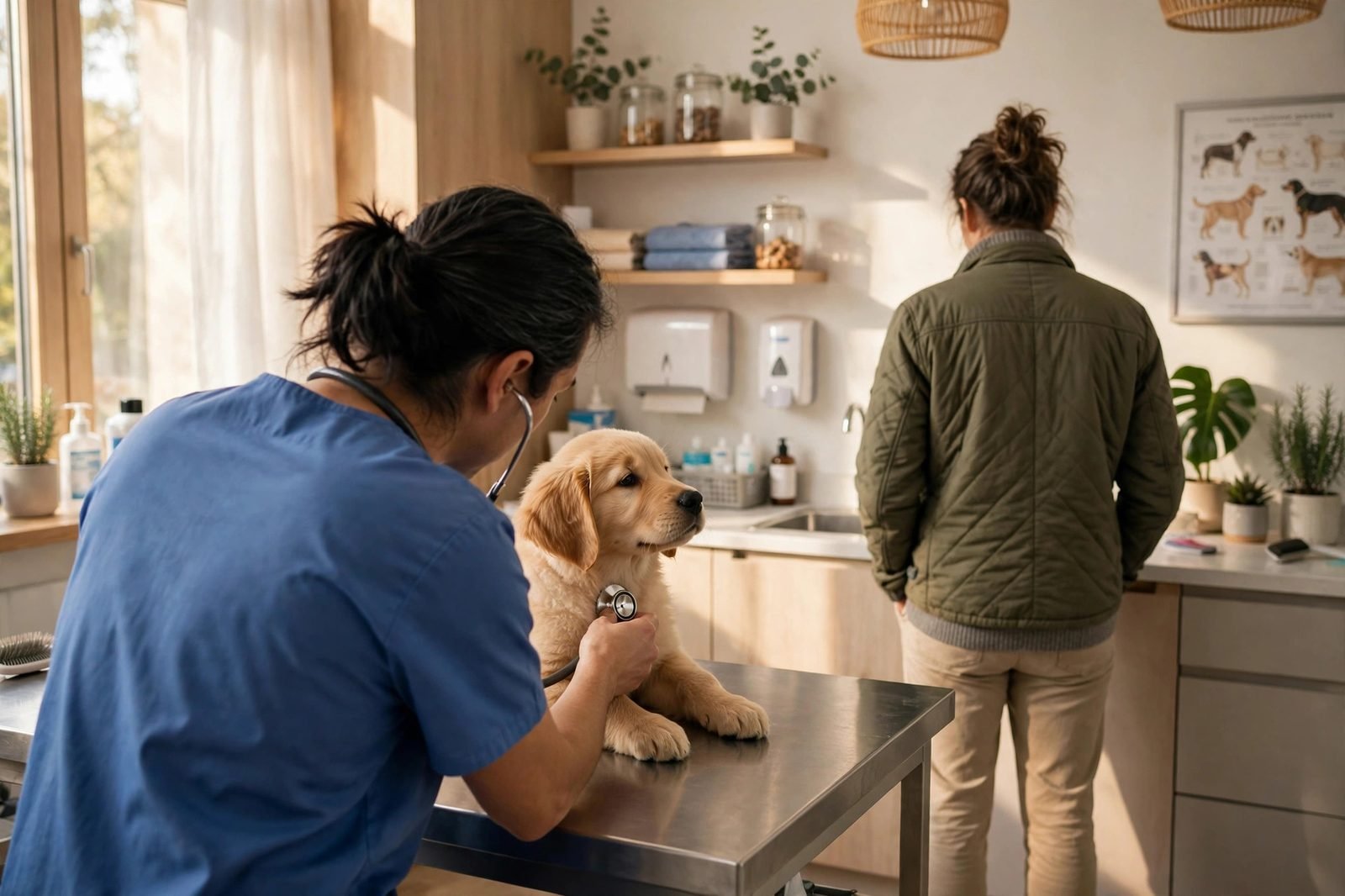
Your first-year vet costs are front-loaded. The initial wellness exam runs $50–$100, and a puppy needs a series of vaccinations over their first few months — not a single jab. Each vaccine visit typically costs $75–$150 depending on your area. If your dog wasn’t spayed/neutered before adoption, add $200–$500 for that procedure (many areas have low-cost clinics that do it far cheaper — worth calling around).
I’ve detailed the typical timeline in my puppy vaccination schedule guide, and if the whole clinic thing feels daunting, my walkthrough on preparing for the first vet visit covers what to expect and what to bring. Budget for the full series upfront so the second and third visits don’t ambush you.

The Monthly Recurring Costs
After the initial avalanche, costs settle into a monthly rhythm. For a medium-sized dog, expect:
Food: $40–$80/month. This varies enormously by dog size and food quality. A Chihuahua eats like a bird; a Great Dane eats like a horse. Pickle (22 pounds) ran me about $50 a month on a decent mid-range kibble. Buy the best food you can comfortably afford, but don’t let anyone guilt you into the $120 bag — a mid-range complete food from a reputable brand is perfectly fine.
Pet insurance: $30–$70/month. This is the line item people skip and later regret. Insurance is cheapest when your dog is young and healthy — pre-existing conditions generally aren’t covered, so waiting until something goes wrong defeats the purpose. I pay $42 a month for Pickle’s accident-and-illness plan, and it paid for itself the year he swallowed a sock (surgery: $2,400; my share after insurance: the deductible).
Flea, tick, and heartworm preventives: $20–$40/month. Year-round in most climates. Your vet will recommend what’s appropriate for your area. This isn’t optional — treatment for the diseases these prevent costs far more than the preventives.
Treats and chews: $15–$30/month. Training treats, dental chews, the occasional bully stick. It adds up quietly. Buy training treats in bulk and cut large treats into smaller pieces — your wallet will thank you.
Toys and replacements: $10–$25/month averaged. Some months zero, some months your dog destroys three toys in a weekend. Budget the average and don’t stress the spikes.
Grooming: $0–$80/month. Short-coated dogs: basically just nail trims and the occasional bath at home. Doodle, poodle, and long-coated breeds: professional grooming every 6–8 weeks at $60–$100 a pop. This is the cost most new owners underestimate. If you’re considering a poodle mix, factor grooming into the decision — it’s a permanent line item, not a one-time thing.
All in, the monthly rhythm lands around $115–$325 depending on your dog’s size, breed, and your choices. Call it roughly $1,400–$3,900 a year in recurring costs alone — which is why the first-year total climbs so fast.
The Surprise Costs Nobody Warns You About
Every dog owner has a “well, I didn’t budget for that” story. The common ones:
The swallowed object. Socks, toys, corn cobs — puppies eat the absurd. An emergency vet visit for a foreign body runs $500–$3,000+ depending on whether it passes or needs surgery. This is the single best argument for pet insurance and for puppy-proofing like your wallet depends on it (it does).
Training classes: $150–$300 for a group course. Not strictly mandatory, but for a first-time owner, a six-week basic obedience class is some of the best money you’ll spend. Private sessions run $50–$100 per hour. I did a group class with Pickle and it fixed problems I didn’t even know I was creating.
Damaged belongings. Chewed shoes, scratched doors, a carpet that will never be the same. Budget a couple hundred dollars of “puppy tax” in year one, or puppy-proof aggressively — ideally both.
Boarding or pet sitters: $30–$75/day. The first vacation you take without the dog is a financial event. A week of boarding can cost $300–$500. Factor this in before you book the flights.
Emergency vet fund. Even with insurance, deductibles and exclusions mean you need cash on hand. Knowing when it’s time to call the vet versus when something can wait until morning is a skill that saves both money and panic — but when in doubt, always call.
How to Save Money Without Cutting Corners
Being smart about costs doesn’t mean being cheap about care. The savings that actually work:
Adopt, don’t shop — the included spay/neuter, vaccines, and microchip save hundreds upfront.
Buy supplies secondhand where hygiene allows: crates, gates, and carriers are all fine used. Skip secondhand for anything that goes in the mouth or on the skin unless you can sanitize it properly.
Learn basic grooming at home. Bathing, brushing, and nail trims are all learnable from a good video and some patience. Even doing half your grooming at home saves hundreds a year.
Buy food and preventives in bulk or on subscription. The per-unit savings are real, typically 10–20%. Just check expiration dates on preventives.
Use low-cost clinics for routine things like spay/neuter and vaccinations. Many humane societies run them, and the quality of care is the same — the price difference is about overhead, not skill.
What not to cut: vet care when something’s wrong, preventives, decent food, and insurance. Saving $30 a month by skipping heartworm preventive can become a $1,000+ treatment bill. That’s not saving — that’s gambling.
So… Is It Worth It?
My first-year total: just under $2,800. Was it worth it? I look at Pickle asleep on the couch as I write this — thirteen years of companionship ahead of us, amortized over a decade-plus of daily joy — and the math isn’t even close. But I’m glad I knew the number going in rather than discovering it one panicked credit card statement at a time.
A dog is one of the few expenses in life that pays you back in a currency that matters. Just go in with your eyes open, your emergency fund intact, and your enzyme cleaner stocked. The rest, you’ll figure out — we all did.
Frequently Asked Questions
What is the average cost of a dog in the first year?
For most owners, $1,500–$3,000 covers the first year: adoption or purchase fee, initial supplies, the puppy vaccination series, spay/neuter if needed, and roughly a year of food, preventives, and insurance. Large breeds and breeder puppies land at the higher end; adopted small dogs at the lower end. Emergencies can push it higher — which is why an emergency buffer matters.
What is the most expensive part of owning a dog?
Over a lifetime, it’s veterinary care — routine care adds up, and one emergency surgery can cost thousands. In the first year specifically, the upfront cluster (adoption fee, supplies, vaccination series, spay/neuter) usually exceeds any single later expense. Pet insurance exists precisely because vet costs are the big unpredictable line item.
Is pet insurance worth it for a puppy?
In my experience, yes — and puppyhood is the cheapest time to buy it, before any pre-existing conditions exist. You’re essentially betting against a $2,000+ emergency, and puppies are statistically the most likely to generate one (swallowed objects, accidents, puppy illnesses). Compare a few plans, check what’s excluded, and pick a deductible you could actually pay tomorrow.
How much does it cost per month to own a dog after the first year?
Roughly $100–$300 a month for a medium dog: food, insurance, preventives, treats, toys, and averaged grooming costs. Large breeds cost more (mostly food), and high-maintenance coats add grooming bills. The first year is the most expensive because of all the one-time setup costs — year two onward is mostly the monthly rhythm.
Are some dog breeds cheaper to own than others?
Significantly. Small, short-coated, healthy breeds cost the least: less food, cheaper medication doses (many are weight-based), minimal grooming. Giant breeds eat enormous amounts of food and everything costs more at scale. Breeds prone to health issues or needing professional grooming (doodles, bulldogs, German shepherds) carry higher lifetime vet and grooming bills. If budget matters, breed choice is one of the biggest levers you have.
Can I own a dog on a tight budget?
Honestly? It depends on how tight. If you can reliably cover $100–$150 a month plus keep a small emergency buffer, an adopted healthy adult dog is very doable — adults skip the expensive puppy vaccine series and the destruction phase. What’s risky is having zero margin: a dog with no financial buffer behind them is one emergency away from a heartbreaking decision. Be realistic about your numbers before you commit.