
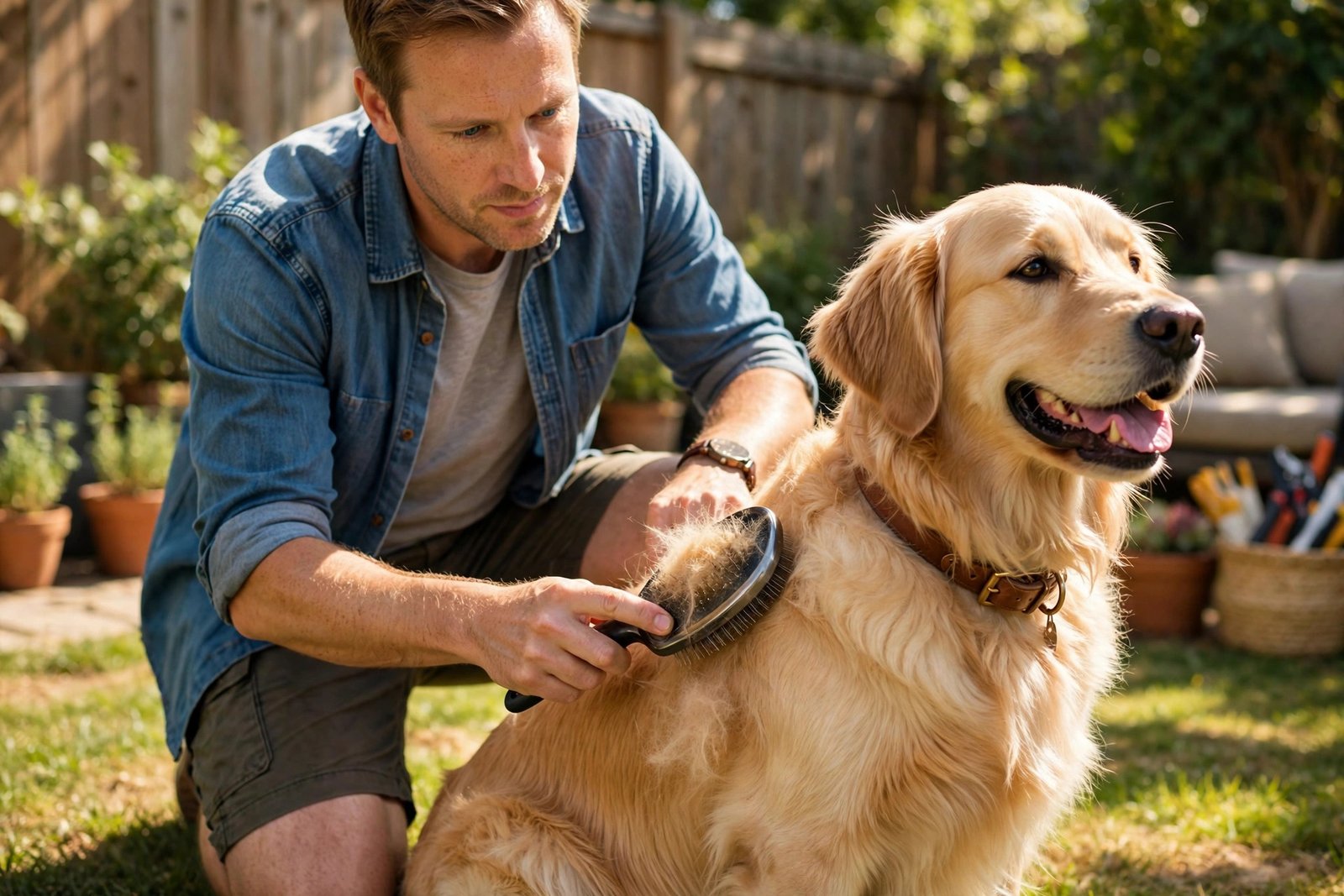

Dog Brushing Guide: The Right Brush for Every Coat Type
Walk into the grooming aisle and you will find a wall of brushes that all claim to be the one your dog needs. Slicker brushes, bristle brushes, pin brushes, rakes, deshedding tools, rubber curry combs — it is genuinely confusing, and picking the wrong one is not just ineffective, it can scratch skin or damage the coat. The good news: once you know your dog’s coat type, the choice narrows to one or two tools.
This dog brushing guide matches the right brush to every coat type — short, long, curly, wiry, and double — plus how often to brush, the technique that actually works, and the mistakes that make brushing a battle instead of a bonding session.
Quick Tips
- Match the brush to the coat type — one brush does not fit all dogs.
- Short coats: rubber curry or soft bristle brush, weekly.
- Long and double coats: slicker brush plus steel comb, several times a week.
- Curly coats: slicker brush, then comb to check for hidden mats.
- Always brush in the direction of hair growth; never yank through mats.
- Brush before baths, not after — water tightens mats.
First: What Coat Type Does Your Dog Have?
Everything follows from this. Most dogs fall into one of five coat categories:
Short smooth coats — think Labradors, Boxers, Beagles, Dalmatians. Hair lies flat, close to the body, usually under an inch long. These coats shed more than people expect (short hairs weave into fabric beautifully) but they are the lowest-maintenance to brush.
Long silky coats — think Yorkshire Terriers, Afghan Hounds, Maltese, spaniels. Fine, flowing hair that tangles and mats easily. High maintenance, gorgeous when kept up.
Curly or wavy coats — think Poodles, Doodles, Portuguese Water Dogs, Bichons. Hair that curls or waves and grows continuously like human hair. Sheds very little but mats aggressively if neglected — the classic “non-shedding but high-maintenance” tradeoff.
Wiry coats — think Terriers (Jack Russell, Schnauzer, Airedale), Wirehaired Pointing Griffon. Harsh, bristly outer coat, often with a softer undercoat. Traditionally maintained partly by hand-stripping, but pet trims and brushing work for most family dogs.
Double coats — think Huskies, Golden Retrievers, German Shepherds, Chow Chows, Samoyeds. A dense soft undercoat beneath a longer guard-hair topcoat. Built for insulation, legendary for shedding — especially during the twice-yearly “blowing coat” seasons.
Mixed-breed dogs often blend two types, in which case brush for whichever trait dominates — or the one causing the most trouble (usually the matting-prone one).
The Brush Lineup: What Each Tool Actually Does
Here is the honest breakdown of the main brush types, without the marketing:
Slicker brush. Fine wire pins on a flat or curved pad. The workhorse for long, curly, and double coats — it reaches through the topcoat to pull out loose undercoat and tease apart small tangles. The most versatile brush in the lineup, and the one most owners should own first.
Bristle brush. Clusters of natural or nylon bristles, like a human hairbrush. Best for short smooth coats — it removes loose hair and dust and adds shine. Useless on thick or long coats (the bristles cannot reach through).
Pin brush. Looks like a human paddle brush with metal pins. A gentler option for long silky coats between slicker sessions — good for finishing and fluffing, not for detangling.
Undercoat rake. Wide-spaced rotating metal teeth designed to reach through the topcoat and pull loose undercoat from double-coated breeds. The single best tool for Husky/Golden/Shepherd owners during shedding season.
Steel comb. Fine and coarse teeth on one tool. Not a primary brush — it is the inspector. After brushing, run the comb through; if it snags, there is still a tangle. The comb finds what the brush missed, especially behind ears, under collars, and in armpits.
Rubber curry brush. Soft rubber nubs, often in a palm-held pad. Excellent for short coats — it grabs loose hair through static and massages the skin. Many short-coated dogs love it. Also useful in the bath to work shampoo through any coat.
Deshedding tools (like the Furminator-style blades). Effective at pulling undercoat, but easy to overuse — pressing too hard or using too often can damage the topcoat and irritate skin. A useful occasional tool for heavy shedders, not a daily driver. If shedding feels unmanageable even with the right tools, my dog shedding management guide covers the full strategy beyond brushing.

Matching Brush to Coat (The Cheat Sheet)
Short smooth coat: rubber curry brush or soft bristle brush, once a week. Five minutes. These coats are easy — the main job is managing the surprising amount of short hair they deposit on furniture.
Long silky coat: slicker brush for detangling, then steel comb to verify, 3–4 times a week. Work in sections, brushing from the skin outward — surface-only brushing leaves mats forming underneath, which is how owners end up shocked at the groomer.
Curly/wavy coat: slicker brush thoroughly, then steel comb everywhere — the comb test is mandatory for curly coats because mats hide invisibly in the curl. Every 2–3 days minimum; daily is better for Doodles and Poodles in full coat.
Wiry coat: slicker brush weekly for maintenance, plus periodic trimming or hand-stripping per breed norms. Wiry coats mat less than silky ones but the texture needs the right technique — brush with the grain, and do not over-soften a coat that is supposed to be harsh.
Double coat: undercoat rake for the undercoat, slicker for the topcoat and trouble spots, 2–3 times a week normally and daily during coat-blowing season. Never shave a double coat to “solve” shedding — the coat regulates temperature both ways, and shaving can damage regrowth.
Brushing Technique That Actually Works
The tool matters, but technique matters more. The method professionals use:
Work in layers, skin outward. Part the hair and brush from the skin out to the tips, section by section. Brushing only the top layer — the classic beginner move — leaves the undercoat untouched, which is where mats form. If you have a long or double-coated dog, think of it as brushing in rows, lifting each layer as you go.
Follow the grain. Brush in the direction the hair grows. Brushing against the grain is uncomfortable and breaks hair.
Never yank a mat. When you hit a tangle, stop. Hold the base of the hair (between the mat and the skin) so you are not pulling skin, and work the mat apart gently with the slicker or your fingers, starting from the outer edge of the tangle inward. For a mat you cannot work through, a mat splitter or careful trimming is kinder than ripping. And if the coat is matted to the skin across large areas, that is a groomer or vet job — cutting close to skin with scissors is how lacerations happen.
Check the friction zones. Behind the ears, under the collar, armpits, behind the legs, around the tail base — these are where mats start, because movement rubs the hair together. Give these spots extra attention every session.
End with the comb test. Run the steel comb through the brushed areas. Snag-free means done. This thirty-second check is what separates “looks brushed” from “is brushed.”
Brush before baths. Water tightens mats like nothing else — a small tangle becomes a felted lump once wet. Always brush thoroughly before bathing, never after. (Bathing frequency itself is a separate question; my dog dental care guide covers another “how often” routine owners tend to guess at.)

How Often Should You Brush?
The honest answer depends on coat, season, and lifestyle — but here are sane baselines:
Short smooth coats: weekly. Quick, easy, mostly about hair management around the house.
Long silky coats: 3–4 times per week. Skipping a week invites mats.
Curly/wavy coats: every 2–3 days at minimum; daily for full-coated Poodles and Doodles.
Wiry coats: weekly brushing, plus breed-appropriate trimming or stripping on schedule.
Double coats: 2–3 times per week normally; daily during the spring and fall coat blow, when the undercoat comes out in handfuls.
Increase frequency during shedding seasons, after muddy adventures, and for dogs that swim frequently (wet-then-dry cycles tangle coats). Decrease nothing — there is no coat type that benefits from being brushed less than its baseline.
Making Brushing Something Your Dog Tolerates (or Enjoys)
Dogs that hate brushing were usually introduced to it badly — too much, too fast, with the wrong tool. The fix is the same desensitization that works for everything:
Start with the right tool. A slicker dragged across a short-coated dog’s skin is unpleasant. Match the tool to the coat first, and half the battle is won.
Keep early sessions ridiculously short. Thirty seconds of gentle brushing, treat, done. Build duration over days, not minutes. The goal is a dog that sees the brush and relaxes, not one that sees it and leaves the room.
Brush the easy spots first. Back and sides before belly, legs, and tail. Get the pleasant part established before tackling the sensitive zones.
Watch the pressure. Slicker pins scratch if you press hard. Let the tool do the work — light, repeated strokes beat firm scrubbing. If the skin looks red afterward, you pressed too hard.
Never punish fidgeting. A dog that squirms is communicating. Adjust — lighter pressure, shorter session, better treats — rather than restraining harder. Brushing should be maintenance, not a dominance exercise.
Frequently Asked Questions
Can I use the same brush for my dog and cat?
Generally no — or at least, not ideally. Cat coats and dog coats have different textures and skin sensitivity, and the brush matched to your dog’s coat is unlikely to suit your cat. A slicker used gently can cross over for some long-coated pairs, but dedicated tools work better and avoid transferring skin oils between animals.
Why does my dog hate being brushed?
Usually one of three reasons: the wrong tool (too harsh for the coat), bad technique (yanking through tangles), or a bad introduction (too long, too soon). Go back to basics — right brush, short positive sessions, treats — and most dogs come around within a couple of weeks.
Is it okay to brush a wet dog?
Brush before the bath, not during or right after. Wet hair stretches and breaks more easily, and moisture tightens existing mats. After bathing, towel-dry and let the coat dry substantially before brushing through it.
How do I get mats out without hurting my dog?
Hold the hair at the base (between the mat and the skin) to prevent pulling, and work from the outer edge of the mat inward with a slicker or your fingers. For stubborn mats, a mat splitter tool or careful trimming beats ripping. If mats are tight against the skin over large areas, see a groomer — this is not a DIY situation.
Do short-haired dogs need brushing at all?
Yes, just less of it. Weekly brushing with a rubber curry or bristle brush removes loose hair (reducing what lands on your furniture), distributes skin oils, and gives you a regular hands-on health check. It takes five minutes and the dog usually enjoys it.
What is the difference between a slicker brush and a pin brush?
A slicker has fine bent wire pins designed to penetrate the coat and remove tangles and undercoat — it is a working tool. A pin brush has straight metal pins like a human paddle brush — gentler, better for finishing and fluffing already-detangled long coats. Most owners need the slicker first; the pin brush is a nice-to-have.
[…] a detailed breakdown of tools and technique per coat type, this dog brushing guide by coat type walks through exactly which brush to buy and how to use it. And if shedding is your main battle, […]
[…] ever been detangled. If you’re not sure what tools suit your dog’s coat, this guide to brushing different coat types walks through which brushes work for which coats and how often to use […]
[…] Finally, a grooming mitt or glove is a handy low-pressure option for nervous beginners or dogs that are new to brushing. You simply pet the dog with the textured mitt. It will not grab as much hair as a curry brush, but for a first-timer it is an easy, non-intimidating way to start the routine. To understand how coat differences change your approach, have a look at our dog brushing guide by coat type. […]