

Helping Pets Through Fireworks and Thunderstorms
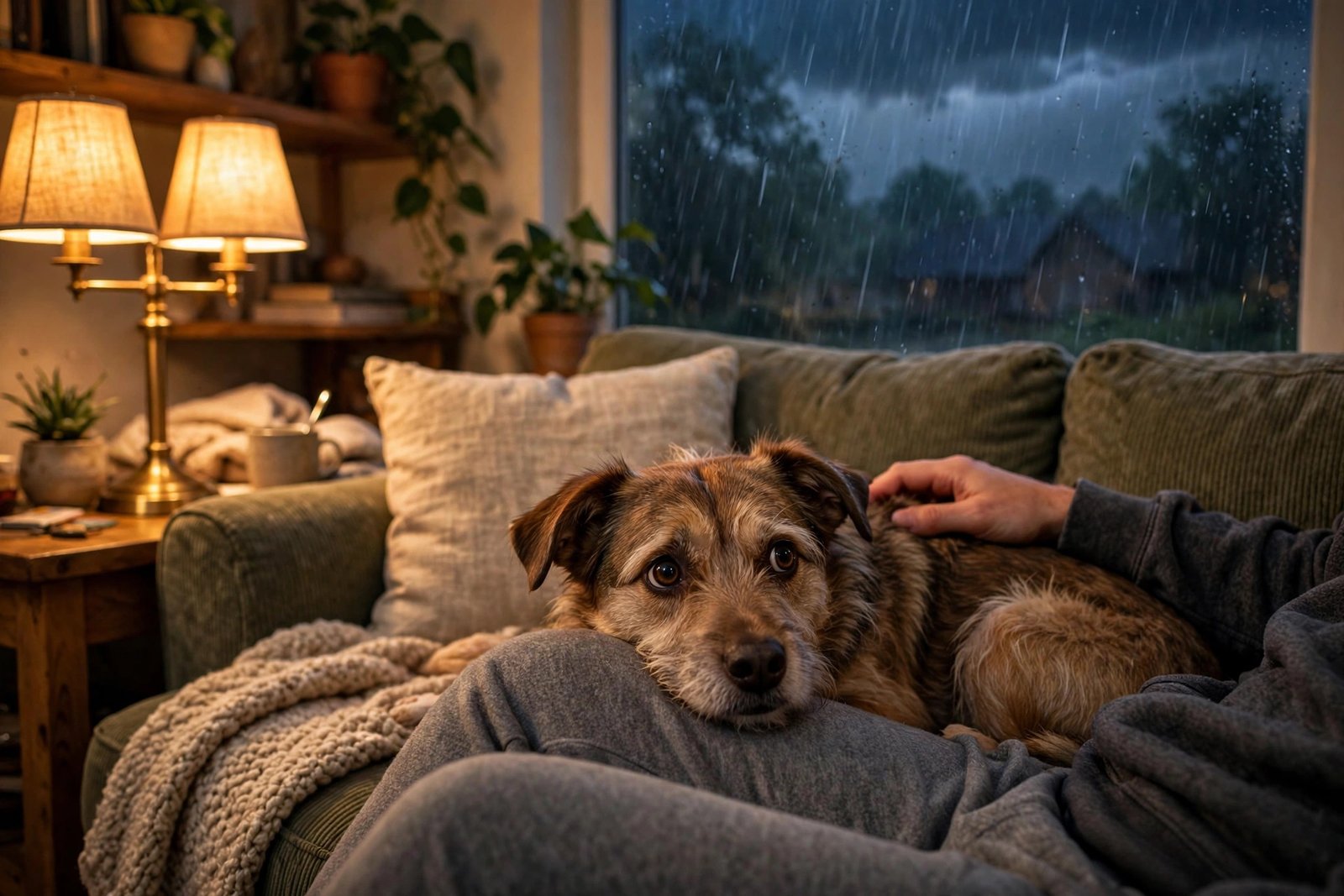
Every year, the same scene plays out in living rooms everywhere: the first boom of fireworks or the first crack of thunder, and a previously relaxed pet transforms into a trembling, panting, hide-under-the-bed creature. Noise fear is one of the most common behavioral issues in dogs, and plenty of cats suffer through it too — they just hide it better. If your pet falls apart every Fourth of July or thunderstorm season, you are far from alone.
The good news is that pets scared of fireworks and storms can be helped — a lot, in most cases. You cannot reason with a frightened animal, but you can change their environment, build positive associations over time, and have a plan ready before the sky starts exploding.
Quick Tips
- Create a safe den space well before storm or fireworks season starts.
- Exercise your dog earlier in the day so they’re calmer by evening.
- Close windows and play background noise to muffle booms and rumbles.
- Stay calm yourself — your pet takes cues from your behavior.
- Never punish fearful behavior; comfort that is calm and matter-of-fact is fine.
- For severe anxiety, talk to your vet well before the next event.
Why Loud Noises Terrify Pets
It helps to understand what your pet is experiencing. Dogs hear frequencies we cannot and at volumes that hit them harder — a firework that is startling to you can be physically overwhelming to them. Add the unpredictability, the flashes of light, and the vibration through the floor, and you have a full sensory assault. Thunderstorms add pressure changes that some dogs seem to sense before the first rumble, which is why your dog may start pacing while the sky still looks fine to you.
Cats experience the same fear but express it differently. A terrified dog pants, drools, paces, and tries to escape — sometimes destructively, through doors or fences. A terrified cat goes still and vanishes: under the bed, behind the washing machine, into the smallest gap they can find. Both are fear responses; the cat’s is just quieter. Do not mistake a hidden cat for a calm cat.
Noise fear also tends to get worse over time if nothing changes. Each bad experience teaches the pet that the scary thing is indeed scary, and the fear can generalize — a dog that started with fireworks may add thunderstorms, then any sudden bang. That is the strongest argument for addressing it rather than hoping they grow out of it.
Build the Safe Space Before You Need It
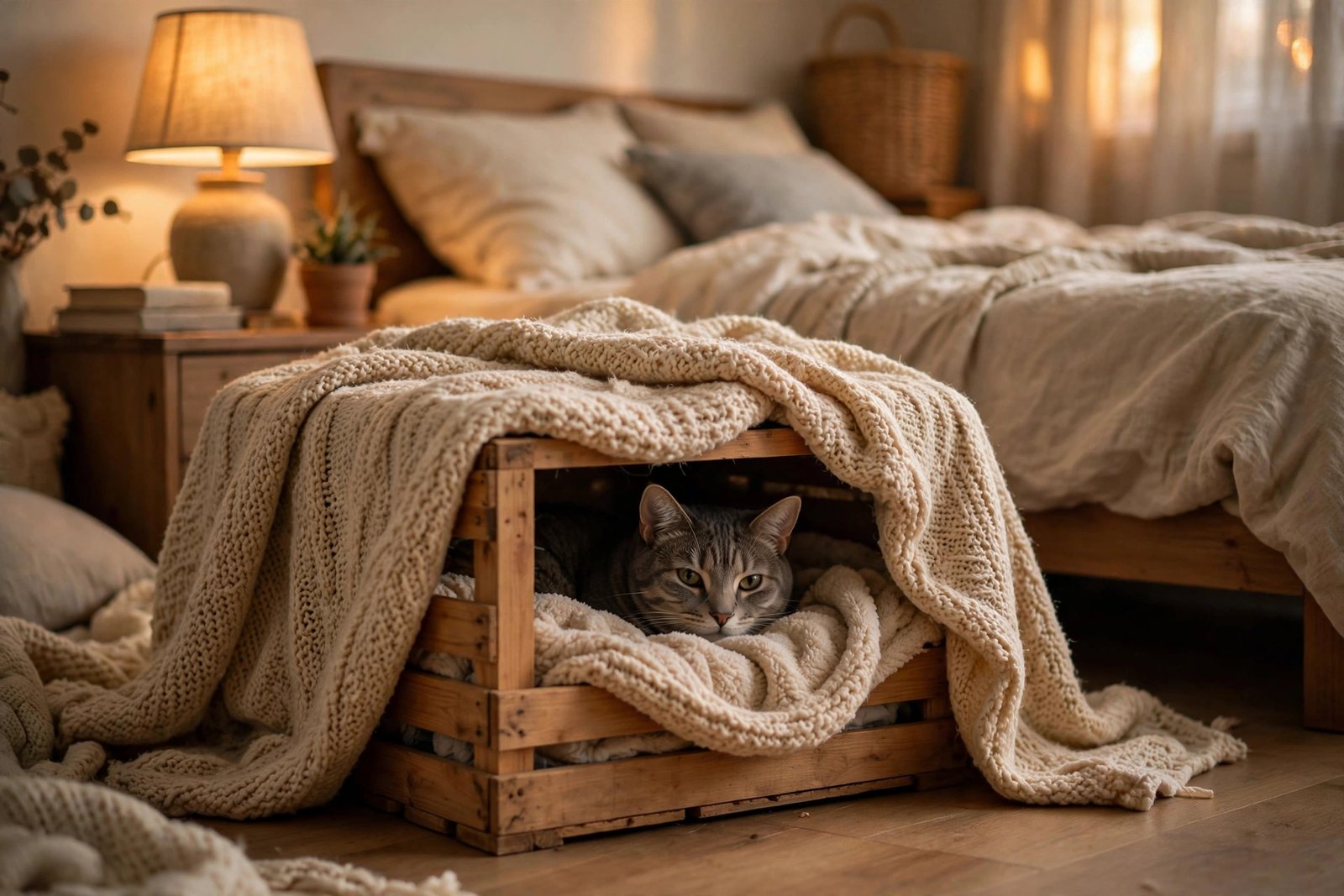
The single highest-value thing you can do is create a den — a small, enclosed, comfortable spot your pet associates with safety — weeks before fireworks season or storm season. Do not build it the day of; a brand-new crate in a panic moment reads as a trap, not a refuge.
For dogs, an interior room or a crate works well. Cover a wire crate with blankets to make it den-like, leaving the door open so it is a choice, not a confinement. Put familiar bedding inside, add an item that smells like you, and feed treats and meals there for a couple of weeks so the association is solidly positive. Let the dog choose their preferred spot; your job is to make it as comfortable as possible.
For cats, the principle is the same with feline preferences: small, hidden, warm. A box with a blanket in a closet, a covered bed on a shelf, a carrier left open with bedding inside. If your cat has an established hiding spot they always choose during storms, do not block it — upgrade it with a soft blanket instead.
Location matters: choose the quietest part of the house, away from windows where flashes and booms are strongest. Basements are excellent for this if you have one.
During the Event: Your Game Plan
When the noise starts, your job is to be boring. Seriously — calm, normal, unruffled. Pets read our body language constantly, and an owner who jumps up fussing “oh no, poor baby!” confirms that something is indeed wrong. Quiet company, a relaxed posture, and normal activity tell your pet that you are not worried, which is the most reassuring message you can send.
Comforting a scared pet is fine — the old advice that comforting “rewards” fear is outdated. You cannot reinforce an emotion the way you reinforce a behavior. Gentle petting, calm talking, or just sitting nearby is perfectly okay. What does not help is frantic coddling that mirrors the panic, or dragging a pet out of hiding to “show them it’s fine.” Let them hide — hiding is a coping strategy.
Practical steps for the night itself: exercise your dog well earlier in the day — a tired dog has less nervous energy to burn. Feed the evening meal a bit early. Close windows, curtains, and blinds to muffle sound and block flashes. Turn on background noise — TV, music, a fan — to smooth out the sharp peaks of booms. Make sure ID tags and microchip details are current before fireworks season, because escape attempts spike on loud nights. And keep cats indoors.
Between Events: Reducing the Fear Long-Term
The real progress happens on quiet days. Desensitization — gradually exposing your pet to the scary sound at very low intensity while pairing it with good things — is the standard approach trainers and behaviorists recommend, and it works for many pets if done patiently.
The basic method: find recordings of fireworks or thunder sounds. Play them at a volume so low your pet barely notices — while feeding treats, playing, or eating meals. Over days and weeks, increase the volume in tiny steps, always staying below the threshold where fear appears. If the pet shows stress, you went too fast; drop back down. Rushing this process is the main reason it fails — think weeks, not days.
Counter-conditioning pairs naturally with this: the scary sound appears, then something wonderful happens (high-value treats, a favorite game). Over time the emotional response shifts. This is genuinely effective for mild to moderate noise fear. For severe cases — pets that injure themselves or panic for hours — work with a professional trainer or veterinary behaviorist rather than going it alone.
Calming Aids: What Might Help
There is a whole market of calming products, and honest assessment: results vary by individual pet. Pressure wraps (the snug vests that swaddle the torso) help a meaningful subset of dogs. They are inexpensive, drug-free, and worth trying; introduce the wrap on calm days first so it is not associated only with scary events.
Calming chews, diffusers, and sprays with ingredients like pheromones or herbal blends have mixed evidence but are low-risk for most pets, and some owners report real benefit. White noise machines and through-a-dog’s-ear style music are similarly low-risk. None of these are magic, and none replace the environmental management and desensitization work above — think of them as supporting players, not the main act.
For pets with severe noise phobia, talk to your vet well before the next fireworks holiday or storm season. There are situational options that can make events bearable while the longer-term training work continues — but many work best when given before the fear peaks, which means planning on a schedule your vet sets in advance. Bring it up at a routine visit, not on July 3rd.
Thunderstorm-Specific Notes
Storms deserve a couple of extra considerations beyond the fireworks playbook. First, many dogs react to storms before you hear thunder — pacing, whining, clinging while the sky still looks okay. Trust the dog; they are likely sensing pressure drops you cannot feel. Starting your calming routine at the first signs buys you valuable lead time.
Second, storms can mean power outages and flooding, so the preparedness angle matters. Keep the safe space somewhere that does not flood, and if you live somewhere with severe weather, include pet supplies in your household emergency kit — food, water, medications, carrier or leash, and vaccination records. Summer storm season overlaps with heat season, so if the power goes out on a hot night, have a plan for keeping pets cool — my guide to keeping your dog cool in summer covers low-tech cooling methods that work without AC.
Third, some dogs develop a specific fear of rain or wind sounds separate from thunder. The desensitization approach works the same way — recordings at low volume, paired with good things, built up slowly. And as always, the broader warm-weather safety picture is in my summer safety for pets guide, since storm season and heat season arrive together.

Frequently Asked Questions
Should I comfort my dog when they’re scared of fireworks?
Yes — calm, matter-of-fact comfort is fine. The old idea that comforting rewards fear doesn’t hold up; you can’t reinforce an emotion like you reinforce a behavior. Quiet petting, calm talking, or just staying nearby helps. What’s not helpful is frantic fussing that mirrors the panic, or forcing a hiding pet out into the open.
Do anxiety wraps actually work for pets scared of thunder?
They help a meaningful subset of dogs — the gentle constant pressure seems to have a calming effect for some individuals, similar to swaddling. They’re inexpensive and drug-free, so they’re worth trying. Introduce the wrap on calm days first, and treat it as one tool among several rather than a standalone fix.
How can I desensitize my dog to fireworks sounds?
Play recordings at a volume so low your pet barely notices, while giving treats or playing. Over weeks, raise the volume in tiny steps, always staying below the fear threshold — if they show stress, drop back down. The goal is many boring repetitions pairing the sound with good things. Rushing is the main reason this fails; think weeks, not days.
Why is my cat hiding during storms if cats aren’t usually scared?
Many cats are scared of loud noises — they just express it by vanishing instead of panting and pacing. A hidden cat is a coping cat, not a calm cat. Let them hide in their chosen spot and don’t drag them out. Keeping cats indoors during fireworks and storms is the safest move.
When should I talk to my vet about noise anxiety?
If your pet injures themselves, destroys doors or crates, panics for hours, or can’t eat or settle at all during events, that’s beyond what home management alone usually fixes. Talk to your vet well before the next fireworks holiday or storm season — situational support options work best when planned in advance, not improvised on the day.
How do I keep my pet from running away during fireworks?
Keep pets indoors with windows and doors secured, and make sure ID tags and microchip registration are current before fireworks season. Escape attempts spike on loud nights — a frightened dog can bolt through an open door or jump a fence they’d normally respect, so double-check gates and leashes.