

Automatic Pet Feeders: Are They Worth It?
An automatic pet feeder promises something every pet owner has dreamed about: meals served on time, in the right portions, whether you are home or not. No more 5 a.m. wake-up calls from a hungry cat. No more rushing home at lunch to feed the dog. Just fill the hopper, set the schedule, and let the machine do the work.
It sounds almost too good to be true, and in some ways it is. Automatic feeders genuinely solve real problems — but they also introduce new ones, and they are not right for every pet. Before you spend the money, it helps to know what these machines do well, where they fall short, and whether your pet and lifestyle actually fit.
This guide walks through the honest pros and cons, the different types of feeders, what features matter, and the mistakes that trip people up. By the end you will know whether an automatic feeder deserves a spot in your kitchen — or whether your old-fashioned scoop is doing the job just fine.
Quick Tips
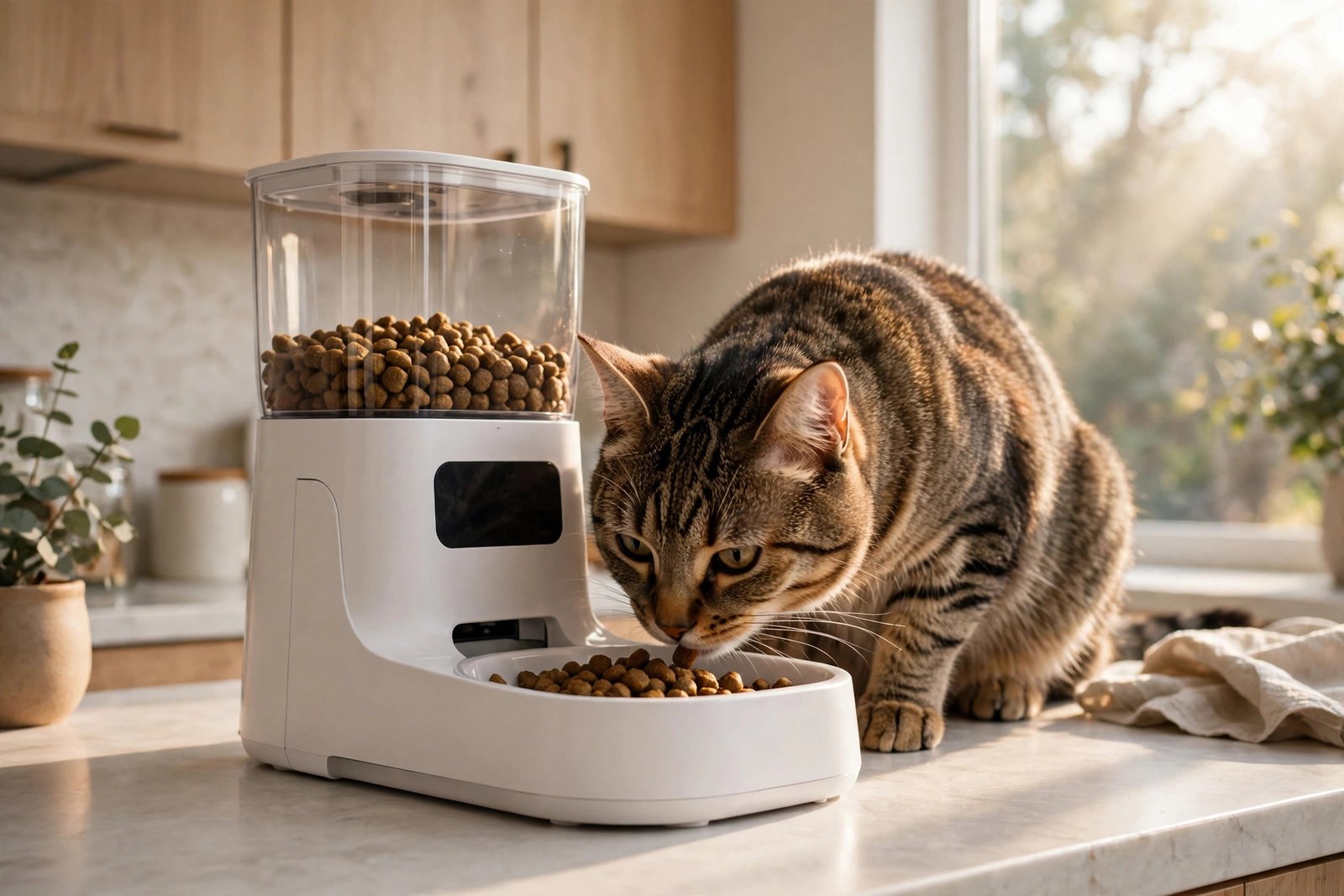
- Programmable feeders portion and schedule meals; gravity feeders just keep the bowl full.
- Best for healthy adult cats and dogs on a consistent dry-food diet.
- Skip automatic feeders for pets who need monitored eating, special diets, or wet food.
- Test any feeder for a week while you are home before trusting it while away.
- Look for jam-proof dispensing, a secure lid, and battery backup for power outages.
- Clean the feeder every week or two — old kibble dust and oils build up fast.
What an Automatic Pet Feeder Actually Does
At its core, an automatic pet feeder stores dry food in a sealed hopper and releases measured portions at times you set. The programmable kind has a clock, a portioning mechanism (usually a rotating disc or an auger), and a little control panel or app where you schedule meals — say, a quarter cup at 7 a.m., noon, and 6 p.m.
Fancier models add Wi-Fi so you can adjust feeding from your phone, a built-in camera to watch your pet eat, and even a voice recording that plays your “dinner time!” call at each meal. These extras are nice, but the core job is always the same: consistent meals, consistent portions, on schedule, without you physically being there.
The Real Pros
Consistency is the biggest win. Pets thrive on routine, and a feeder delivers the same amount at the same time every day. For cats especially, scheduled meals beat free-feeding — my cat feeding frequency guide explains why.
Early mornings get easier. If your cat has ever staged a 4:30 a.m. protest on your pillow, a feeder set for 5 a.m. changes your life. The pet learns that food comes from the machine, not from harassing you, and the pre-dawn wake-ups often fade within a couple of weeks. This alone is why many cat owners buy one.
Long days and odd schedules stop being a crisis. Nurses, shift workers, and anyone with a commute that stretches past dinner time can stop worrying about a late meal. The feeder bridges the gap on ordinary busy days — not as a substitute for care, but as a reliable backup.
Portion control gets honest. Most of us eyeball portions and drift upward over time. A feeder dispenses the same measured amount every time, which makes weight management plans much easier to follow.
The Honest Cons
Machines jam. This is the number-one complaint. Kibble pieces wedge in the dispensing mechanism, especially with oddly shaped or very large kibble, and the feeder happily “serves” an empty bowl. Cheap models jam more; even good ones can. This is why you never trust a new feeder for a weekend away until you have watched it work flawlessly for at least a week.
You can miss health warning signs. When you feed by hand, you notice things: the pet who suddenly eats less, the water bowl that has not been touched. A feeder removes that daily observation, and reduced appetite is often one of the earliest signs something is wrong. If you use a feeder, build in a deliberate daily check — glance at how much was eaten and watch your pet for a minute.
Dry food only. Nearly all automatic feeders handle dry kibble only. If your pet eats wet food, raw food, or a prescription diet that must be served fresh, most feeders are useless to you. A few refrigerated wet-food feeders exist, but they are expensive, hold only a couple of meals, and have mixed reviews.
They need maintenance. Kibble leaves behind dust and oils that go stale and rancid. A feeder that is never cleaned starts serving food that smells off, and some picky pets will refuse it. Plan on a full wash every one to two weeks, plus wiping the dispensing chute.
Gravity Feeders vs. Programmable Feeders
These are really two different products, and the distinction matters more than the brand name.
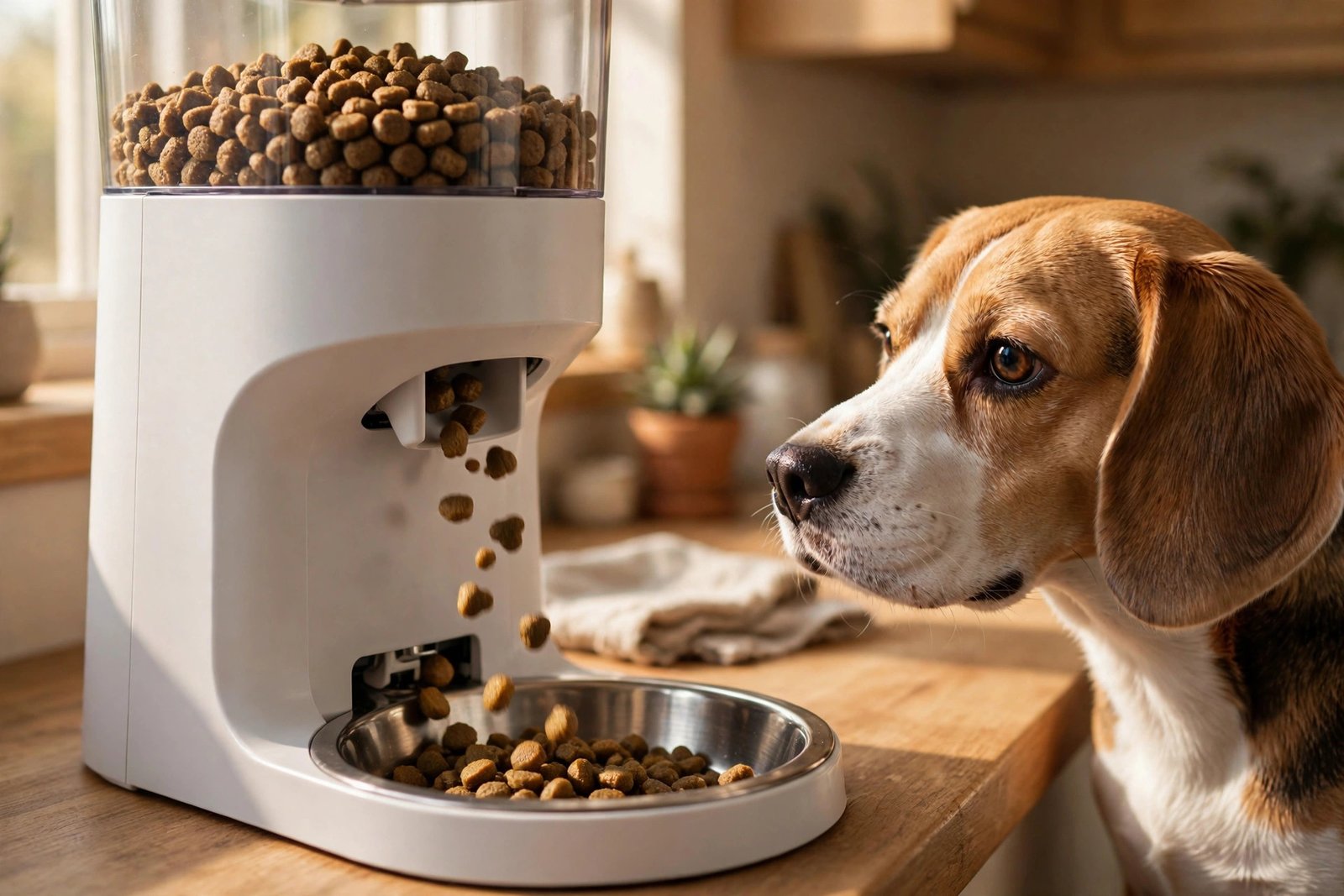
Gravity feeders are the simple jug-on-a-bowl design. Food flows down as the pet eats, so the bowl is always full. They are cheap and have no electronics to fail. The downside is significant: they are free-feeding machines with no portion control at all, and for most indoor pets an always-full bowl leads straight to overeating. They make sense mainly as an emergency backup, not a daily feeding method.
Programmable feeders are the real deal: timed, portioned meals. A rotating disc or auger drops a set amount at set times, and you control both. These are the feeders that deliver the consistency and portion-control benefits described above. They cost more, need power (outlet plus battery backup is the standard setup), and have more parts that can jam — but they are the only type that genuinely replaces you at mealtime.
If you are buying one, buy programmable. A gravity feeder solves the “I forgot to fill the bowl” problem; a programmable feeder solves the “meals on time, right portions, every day” problem. Only the second one is worth paying for.
Who Automatic Feeders Work Best For
The ideal candidate is a healthy adult cat or a small-to-medium adult dog eating a consistent dry-food diet, in a household where someone is generally around but the schedule has gaps. Think: the cat owner who works ten-hour days, the couple whose dinner plans keep shifting, the household where weekend sleep-ins are sacred.
Feeders are less suitable — or need serious caution — for puppies and kittens (their nutritional needs change fast), pets on prescription or wet-food diets, pets whose appetite must be watched closely, and multi-pet homes with unresolved food guarding or stealing. Senior pets can do fine with feeders, but the daily observation habit matters even more for them.
For dogs, my best feeding schedule for adult dogs covers how meals fit into the broader daily rhythm — a feeder can deliver the meals, but it does not build the rhythm.
What to Look for When Buying
Jam-resistant dispensing. Read reviews specifically mentioning jamming with your kibble’s size and shape. Auger-style dispensers generally handle varied kibble better than rotating-disc ones, though both can jam.
A genuinely secure lid. Twist-lock or locking lids keep clever paws and persistent noses out of the hopper. A lid that just sits on top is an invitation.
Battery backup. Feeders that die in a power outage and forget their schedule are worse than no feeder. Look for models that run on batteries, or plug-in models with battery backup that keep the clock and schedule alive.
Easy to clean. Removable, dishwasher-safe food tray and hopper. If it is a pain to wash, you will not wash it, and then you have a rancid-kibble problem.
Right capacity for your pet. A feeder that holds two weeks of food for a cat is convenient; one that holds two weeks for a large dog barely exists. Match the hopper size to your pet and your refill routine — and remember that kibble goes stale, so bigger is not always better.
Skip or scrutinize the smart features. Wi-Fi and cameras add failure points — a feeder that needs your home Wi-Fi to serve dinner skips dinner when the router reboots. A camera is useful for checking meals were eaten while away, but it does not substitute for your daily health glance.
Setting It Up Without the Common Mistakes
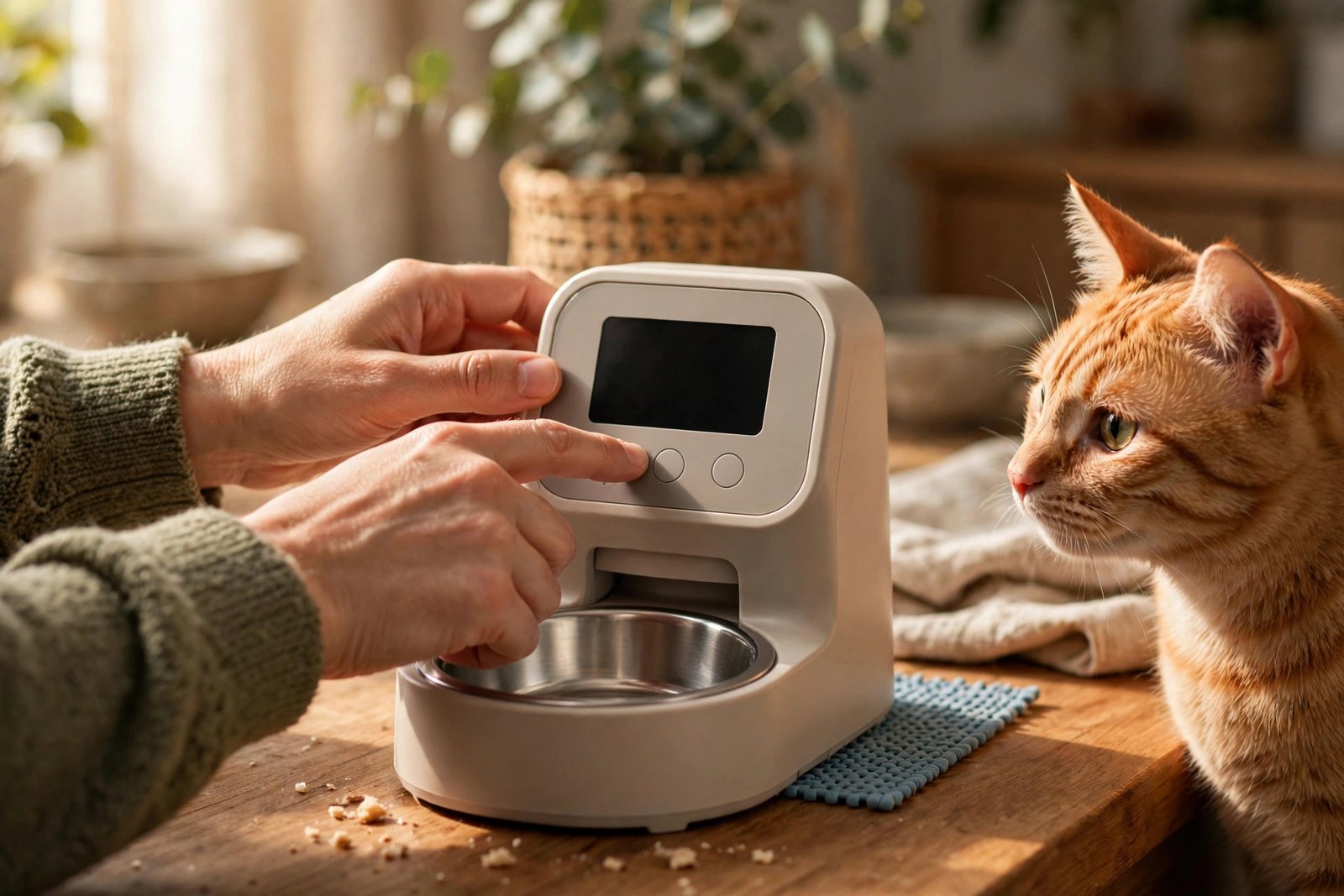
Measure what it actually dispenses. “One portion” on the dial is a manufacturer’s guess. Dispense into a measuring cup, check it against the amount your pet should actually eat, and calibrate. Recheck after switching kibble brands, since piece size changes the volume per portion.
Run a supervised trial week. Set the schedule and verify every meal lands correctly for at least seven days while you are home. Only after a clean week should you trust it for a workday — and even then, have a backup plan for longer absences.
Keep the manual feeding habit alive. Use the feeder for the meals you cannot be there for, and feed at least one meal by hand each day when you are home. That daily hands-on moment is your health check, your bonding time, and your early-warning system. The feeder is a tool, not a replacement owner.
Frequently Asked Questions
Can I leave my pet alone for a weekend with just an automatic feeder?
A feeder plus plenty of water can cover a healthy adult cat’s meals for a weekend, but it is not ideal — feeders jam, water gets knocked over, emergencies happen. For dogs it is generally not recommended, since they need bathroom breaks, exercise, and human contact. A pet sitter who checks in daily is safer; the feeder is the sitter’s backup, not the sitter.
Are automatic feeders good for cats specifically?
Often yes — cats adapt to feeders well, and scheduled portioned meals are healthier for most indoor cats than free-feeding. The 5 a.m. wake-up cure is real for many owners. Just keep the daily observation habit, since cats are masters at hiding illness and appetite changes are a key early signal.
Will an automatic feeder help my pet lose weight?
It can help a lot by removing the human tendency to over-portion. Set portions to your vet’s recommended daily amount and the machine will not give in to begging the way you might. But the calorie target itself should come from your vet — too-fast weight loss can be dangerous for cats in particular.
What if my pet is scared of the feeder?
Pretty common, especially with cats and the dispensing noise. Leave the feeder out unplugged for several days with treats on and around it, then run it manually a few times while nearby with treats and calm praise. Most pets come around within one to two weeks; one that stays genuinely terrified may simply not be a feeder candidate.
How often should I clean an automatic feeder?
Wipe the bowl tray every few days and fully wash the hopper, tray, and dispensing parts every one to two weeks, drying completely before refilling. Kibble dust and oils turn rancid — if your pet suddenly snubs the feeder, a deep clean is the first thing to try.
Do I still need to feed my pet myself sometimes?
Yes — at least one hands-on meal or feeding check daily when you are home. That moment is when you notice appetite changes, check water, and actually interact with your pet around food. The feeder covers the gaps in your schedule; it should not cover your entire relationship with feeding.