

Best Cat Water Fountains: Choosing the Best Cat Water Fountain for Your Cat
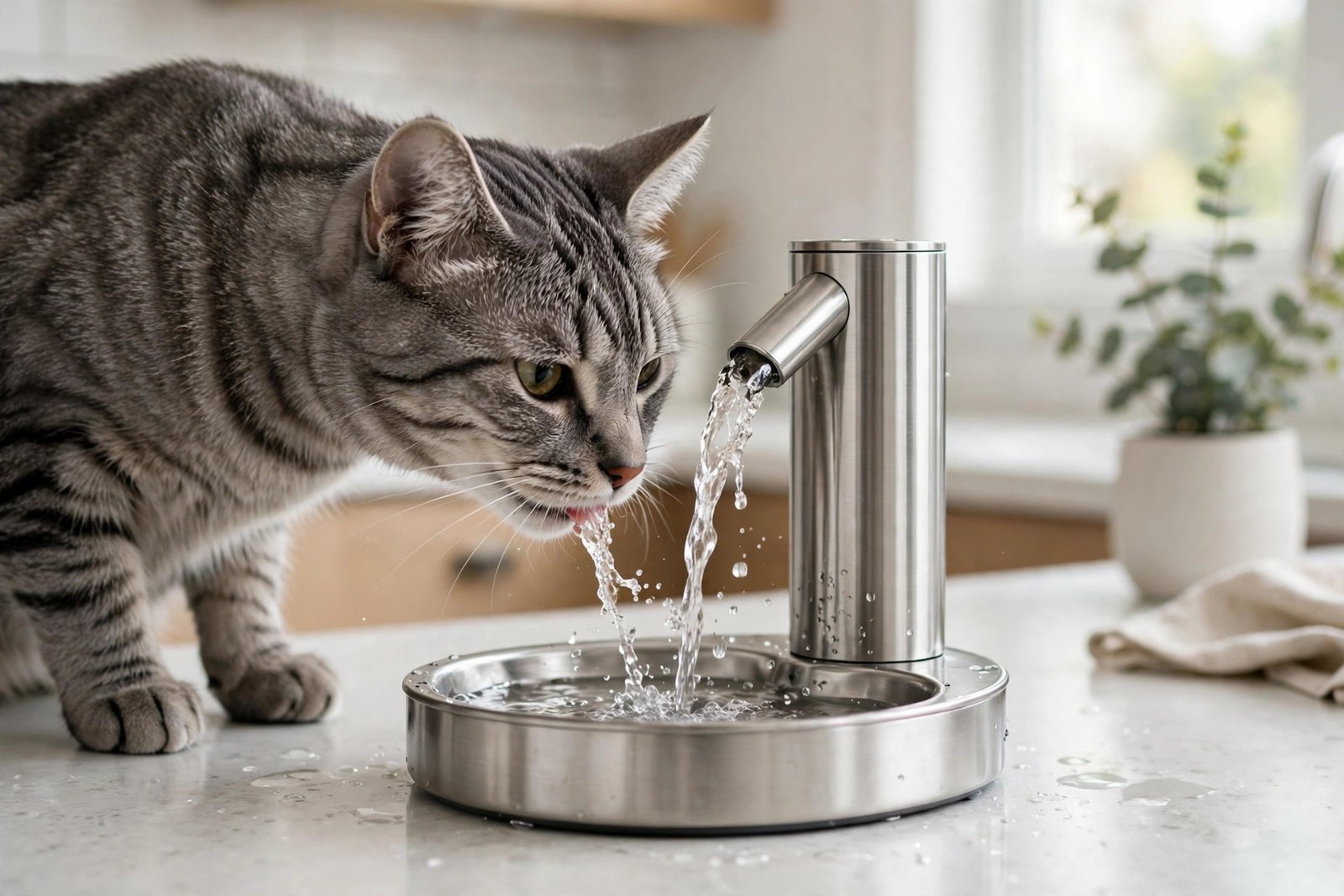
Cats are famously fussy about water. Many will walk straight past a full bowl, then drink from a dripping tap or a glass you left on the counter. That pickiness has a practical side: cats that don’t drink enough can be harder to keep well-hydrated, especially if they eat mostly dry food. The best cat water fountain works with feline instincts instead of against them — the moving, filtered water appeals to cats in a way a still bowl often doesn’t, and many owners find their cats simply drink more once a fountain arrives.
A fountain isn’t a magic fix for every cat, and it won’t replace good nutrition or veterinary care. But as a piece of everyday gear, it’s one of the simplest upgrades you can make to your cat’s routine. This guide covers why fountains appeal to cats, the main types and materials, what to look for before you buy, how to keep one clean, and how to win over a skeptical cat.
Quick Tips
- Stainless steel and ceramic fountains are easier to keep hygienic than plastic and less likely to cause chin irritation.
- Choose a fountain with a quiet pump — a buzzing fountain in a quiet home will annoy you and may spook your cat.
- Size the water capacity to your household: one cat does fine with 2 liters; multi-cat homes want 3+ liters.
- Clean the fountain weekly and change filters on schedule — a dirty fountain defeats its own purpose.
- Keep the old water bowl out for a week or two while your cat adjusts; don’t force the switch overnight.
- If your cat suddenly drinks much more or much less water, mention it to your vet — big changes can signal health issues.
Why Cats Prefer Running Water
In the wild, still water is more likely to be stagnant or contaminated, while flowing water tends to be fresher — and cats seem to have kept that preference. Many owners notice their cats pawing at a water bowl to make it move, or waiting by taps. A fountain gives them that appealing movement on demand, which is the main reason fountains succeed where bowls fail.
There’s also a sensory element. The sound and sight of trickling water attracts curious cats, and the aeration keeps the water tasting fresher than water that’s been sitting in a bowl all day. Some cats also dislike their whiskers touching the sides of a deep bowl — a wide, shallow fountain basin avoids that annoyance entirely.
None of this means every cat will take to a fountain instantly — some genuinely prefer a simple bowl. But for the many cats that under-drink from bowls, a fountain is a reliable nudge toward better hydration habits. Good hydration supports overall wellness, and if you ever have concerns about your cat’s drinking or urinary health, your vet is the right person to talk to.
What to Look for in the Best Cat Water Fountain
Material is the first big decision, and it matters more than most buyers expect. Plastic fountains are the cheapest and most common, but plastic scratches over time, and those scratches harbor bacteria that simple rinsing won’t remove. Some cats also develop chin irritation from plastic dishes. Stainless steel and ceramic cost more but stay hygienic far longer and are generally the better long-term choice.
Pump noise is the second thing to check, and it’s the most common complaint in fountain reviews. A pump that’s silent in a showroom video can hum annoyingly in a quiet kitchen at midnight. Look for models marketed as ultra-quiet, read reviews specifically mentioning noise, and remember that low water levels make every pump louder — keeping the fountain topped up is the easiest noise fix there is.
Capacity, filtration, and ease of cleaning round out the checklist. A bigger reservoir means less frequent refilling, which matters if you travel or just don’t want a daily chore. Multi-stage filters (foam plus carbon) keep water tasting fresh, but only if you actually replace them on schedule. And a fountain with lots of nooks and crannies will test your patience every cleaning day — simpler designs with dishwasher-safe parts save real time.
Stainless Steel Fountains
Stainless steel is the material vets and experienced cat owners recommend most often, and it’s easy to see why. It doesn’t scratch the way plastic does, it resists bacterial buildup, it’s dishwasher safe, and it looks decent on a kitchen counter. The best cat water fountain for most households is very often a stainless steel one.
The main trade-offs are price and weight. Steel fountains cost more upfront, and a full one is heavier to carry to the sink. Some designs also show water spots. But for durability and hygiene, steel is hard to beat — a good steel fountain can last for years with just pump and filter replacements.
When shopping steel, check that it’s food-grade stainless (304 is the common standard) rather than a thin plated coating. Solid steel basins with a simple spout or waterfall design are the easiest to clean and the least likely to develop problems.
Ceramic Fountains
Ceramic fountains are the design-forward option — they come in attractive glazes and sculptural shapes, like the flower-style fountains many cats love, and they sit happily in a living room without looking like pet equipment. Like steel, ceramic is non-porous, hygienic, and dishwasher safe.

The downside is fragility. A ceramic fountain dropped on a tile floor is a broken fountain, so they’re best for calm households rather than homes with rambunctious dogs or toddlers. They’re also typically the priciest option. But if aesthetics matter to you and your cat is the graceful type, ceramic is a lovely choice.
One practical tip: check that replacement pumps are available for the specific model before you buy. Ceramic bodies last nearly forever, but pumps wear out every year or two, and a beautiful fountain is useless if you can’t source a new pump for it.
Plastic Fountains: Budget-Friendly but Higher Maintenance
Plastic fountains dominate the budget end of the market, and they’re how many owners first try the fountain concept. They work — the water flows, the filter filters — and for a cat that you’re not sure will even use a fountain, a cheap plastic model is a reasonable experiment before investing in steel or ceramic.
The maintenance burden is real, though. Plastic needs more frequent deep cleaning to stay hygienic, scratched basins should be replaced rather than scrubbed, and filters may need changing more often. If your cat takes to the fountain and becomes a daily drinker, plan to upgrade to steel or ceramic within the year. Think of plastic as the trial version, not the permanent solution.
Keeping Your Fountain Clean
A fountain only does its job if the water in it is actually fresh, which means cleaning is non-negotiable. The standard routine: rinse and refill every two to three days, full disassembly and wash weekly, filter changes per the manufacturer’s schedule (usually every two to four weeks). It sounds like a lot, but a simple design makes the weekly wash a ten-minute job.
Watch for biofilm — the slippery, slightly slimy layer that forms on fountain surfaces. It’s normal, it’s not an emergency, but it’s the reason weekly washing matters: biofilm is where bacteria thrive. A bottle brush for the spout and crevices, plus a vinegar soak for mineral scale if you have hard water, covers nearly all cleaning needs.
Pump maintenance deserves its own mention. Hair and debris clog pump intakes, making the pump noisy and shortening its life. Most pumps open up for cleaning — do it monthly. And never run a fountain dry or nearly dry; pumps burn out fast without water, and a burned-out pump is the most common reason fountains get thrown away.
Helping a Skeptical Cat Accept the Fountain
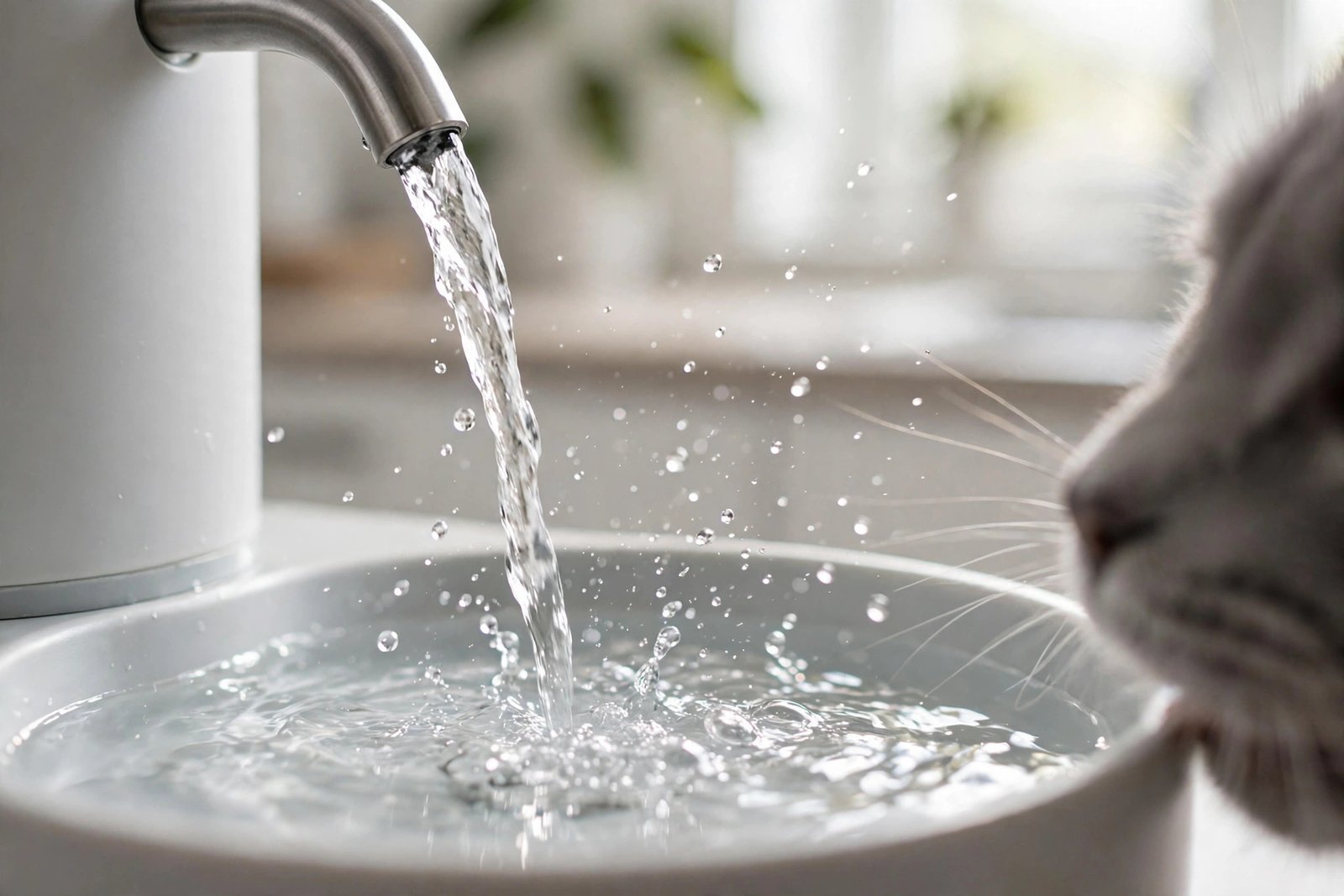
Some cats march straight up and drink; others regard the new buzzing object with deep suspicion. Both reactions are normal. Set the fountain up near — not in place of — the old water bowl, fill it, and let it run. Curiosity usually wins within a few days, especially if you make the water appealing by keeping it fresh.
Don’t force the issue. Never push a cat’s face toward the water or remove the old bowl abruptly — that creates a negative association that can take weeks to undo. Once you see your cat drinking from the fountain regularly for several days, you can retire the old bowl. Most transitions take one to two weeks.
A few cats never take to fountains, and that’s fine too. Wide, shallow ceramic bowls placed away from food (cats often prefer water sources separated from their food, another wild instinct) are the best fallback. The goal is a cat that drinks comfortably, whatever vessel they choose. Diet plays a role in hydration too — our wet vs. dry cat food comparison explains how food choice affects water intake.
Fountains in Multi-Cat Homes
With more than one cat, size up. A good rule of thumb is at least a liter of capacity per cat, with three liters as a practical minimum for two cats. More cats also means faster filter exhaustion and more frequent cleaning — plan on the weekly wash being genuinely weekly, not aspirational.
Consider placement as well. In multi-cat homes, a single water station can become a guarded resource if one cat is territorial. Two smaller fountains in different rooms often work better than one giant one, and it gives a shy cat a safe alternative. While you’re optimizing the cat’s environment, our comparison of the best cat litter types can help with the other end of the hydration equation.
Frequently Asked Questions
Do cats really drink more from a fountain than a bowl?
Many do, though not every cat. The moving, filtered water appeals to feline instincts, and owners commonly report increased drinking after switching. If your cat is a reluctant drinker, a fountain is one of the most reliable things to try — alongside checking with your vet if you’re concerned about hydration.
Are plastic cat fountains safe?
Food-grade plastic fountains are generally safe, but they need more diligent cleaning than steel or ceramic because scratches harbor bacteria. Some cats develop chin irritation from plastic. For long-term daily use, stainless steel or ceramic is the better choice.
How often should I clean my cat’s water fountain?
Rinse and top up every two to three days, do a full disassembly wash weekly, and replace filters every two to four weeks per the manufacturer’s guidance. In multi-cat homes or warm weather, lean toward the more frequent end of each range.
Why is my cat’s fountain getting slimy?
That slippery layer is biofilm, a normal buildup of microorganisms on wet surfaces. It’s the main reason weekly washing matters. Disassemble the fountain, scrub all parts with a bottle brush, and soak in diluted vinegar if you see mineral scale.
My cat is scared of the fountain. What should I do?
Give it time and don’t force it. Keep the old bowl available, let the fountain run nearby, and allow curiosity to work. Try a quieter model if the pump noise seems to be the issue. Most cats come around within a week or two; a few never do, and that’s okay.
Can a water fountain replace wet food for hydration?
No — they’re complementary, not interchangeable. Wet food contributes significant moisture to a cat’s diet, while a fountain encourages drinking. Many owners use both. If you’re weighing the options, our wet vs. dry cat food guide breaks down the hydration angle in detail.