

Best Training Treats for Dogs (That Actually Motivate)
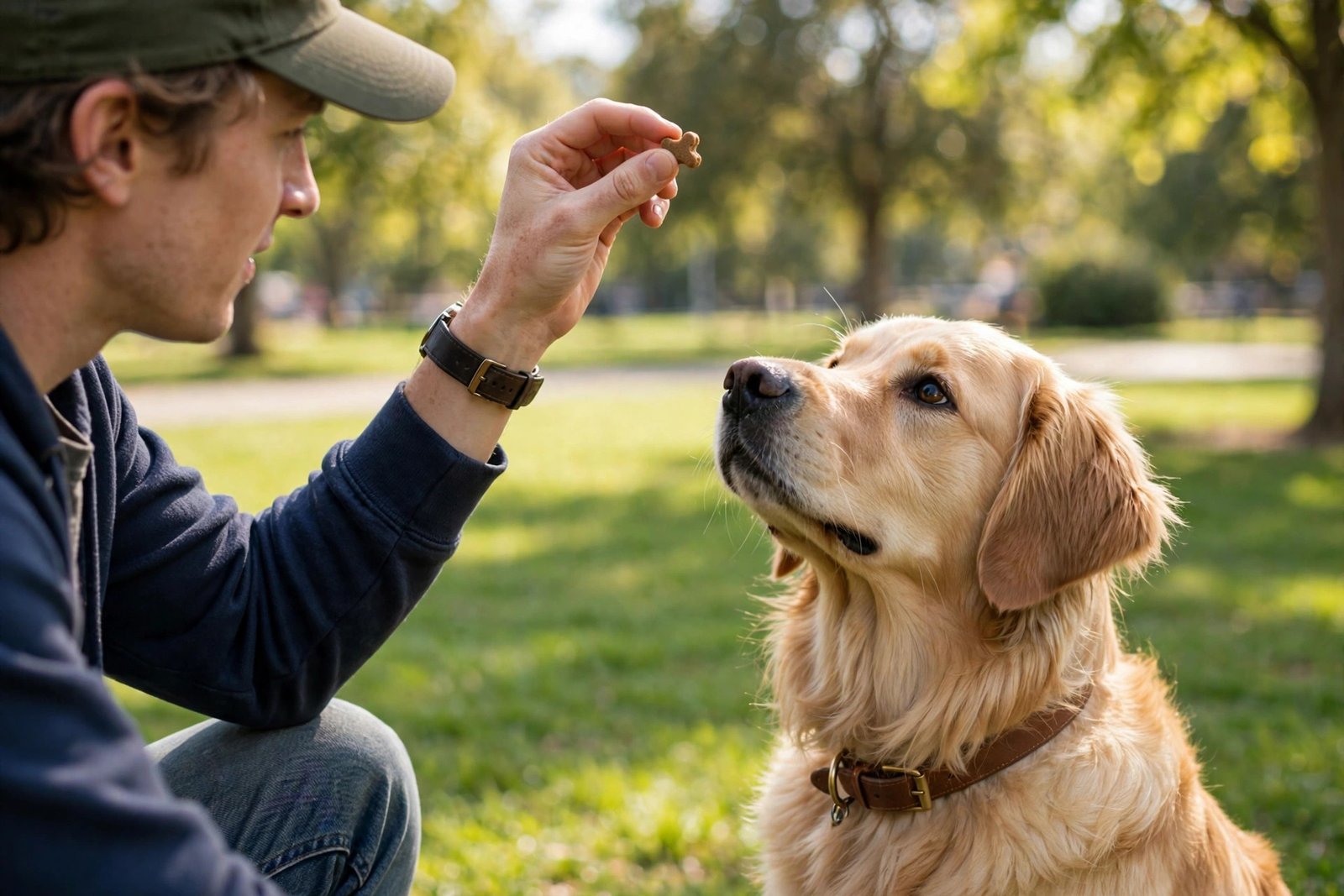
Here is a scene most new dog owners know well: you are standing in the kitchen holding a treat, asking your dog to sit, and your dog is staring at you blankly. The treat is not the problem — the wrong treat is. A dry, crumbly biscuit is not going to cut it when you are trying to teach a distracted puppy to pay attention in a busy park.
The best training treats for dogs share a few traits: they are small, soft, smelly, and exciting enough that your dog would cross the room for them. This guide breaks down what actually makes a treat motivating, the best options for puppies, picky eaters, and sensitive stomachs, and how to use treats without accidentally overfeeding your dog.
Quick Tips
- The best training treats are small (pea-sized), soft, and aromatic.
- Save high-value treats (cheese, chicken, freeze-dried meat) for hard tasks and distractions.
- Use your dog’s regular kibble for easy, at-home repetitions.
- Keep training treats to roughly 10% of daily calories — shrink meals on heavy training days.
- Rotate treat types so your dog doesn’t get bored of the same reward.
- Avoid treats with xylitol (birch sugar), excess salt, or artificial sweeteners.
What Makes a Training Treat “Motivating”?
Dogs do not work for free. In training, a treat is a paycheck, and like any employee, your dog works harder for a paycheck worth having.
Motivation comes down to four things trainers talk about constantly. Size: treats should be pea-sized so dozens can be delivered in a session without filling the dog up. Texture: soft beats crunchy — a soft treat disappears in half a second, so the reward lands right at the moment of the behavior instead of after a long chew. Smell: aromatic treats like real meat, cheese, or fish hold attention far better than bland, floury biscuits. Novelty: rotating between a few treat types keeps the “what is it this time?” excitement alive, and that excitement is fuel for training.
High-Value vs. Low-Value Treats: Using a Reward Hierarchy
Professional trainers think in terms of a reward hierarchy — a sliding scale from “meh” to “oh wow” — and it is one of the most useful concepts a beginner can learn. Low-value treats (kibble, plain biscuits, bits of carrot) suit behaviors your dog already knows, practiced in calm settings. Medium-value treats — standard soft commercial training treats — are your workhorse rewards for teaching new behaviors at home. High-value treats (real cooked chicken, tiny bits of cheese, freeze-dried liver) come out for the hard stuff: recall training, polite behavior around other dogs, anything where the distraction is strong.
The point is strategy. If you pay chicken for everything, chicken stops being special. If you pay kibble for everything, your dog stops trying when things get hard. Match the paycheck to the job, and your dog learns that bigger effort earns bigger rewards.
The Best Training Treats for Puppies
Puppies are training machines in the first months home, which means they go through an enormous number of treats. A young puppy might earn 50 to 100 tiny rewards in a day between sit practice, potty training rewards, crate games, and name recognition. That makes treat choice especially important — every one of those calories counts toward a growing body.
For puppies, look for treats that are soft enough to eat instantly, small enough to portion easily, and gentle on young stomachs. Many owners simply use a portion of the puppy’s daily kibble ration as training treats — measure the day’s food first, set aside a handful for training, and feed the rest as meals. Freeze-dried single-ingredient treats (chicken, beef liver) are another good option, since the simple ingredient list helps if the puppy’s stomach is sensitive.
One caution: very rich treats (cheese, fatty meats) in large quantities can upset a young digestive system, so introduce new treats in small amounts. And if your puppy has ongoing digestive issues, that is a vet conversation, not a treat-brand conversation.
The Best Training Treats for Picky Dogs
Some dogs are not food-motivated in the way the textbooks assume. You offer a treat and the dog sniffs it, looks away, and goes back to staring at the squirrel. This is frustrating, but it is usually a solvable problem rather than a fixed trait.
First, check the basics: is the dog actually hungry? Training right after a big meal is like trying to motivate someone with pizza right after Thanksgiving dinner. Many trainers have their best sessions before meals, when the dog’s appetite is naturally higher. Also consider whether the dog is stressed — a nervous dog in a new environment often will not eat at all, and no treat fixes that until the dog feels safe.
For genuinely picky dogs, experiment upward on the value scale. Try real meat: boiled chicken breast, tiny bits of steak, freeze-dried fish. Try smelly options: cheese, liver, tripe treats. Many owners discover their “unmotivated” dog was simply unimpressed by bland commercial biscuits and transforms completely for real chicken. Also consider that some dogs are toy-motivated rather than food-motivated — a quick game of tug can be a stronger reward than any treat, especially for high-energy breeds.
Healthy Options (and What to Avoid)
The treat aisle is overwhelming, and the marketing is louder than the nutrition. A few guidelines cut through the noise:
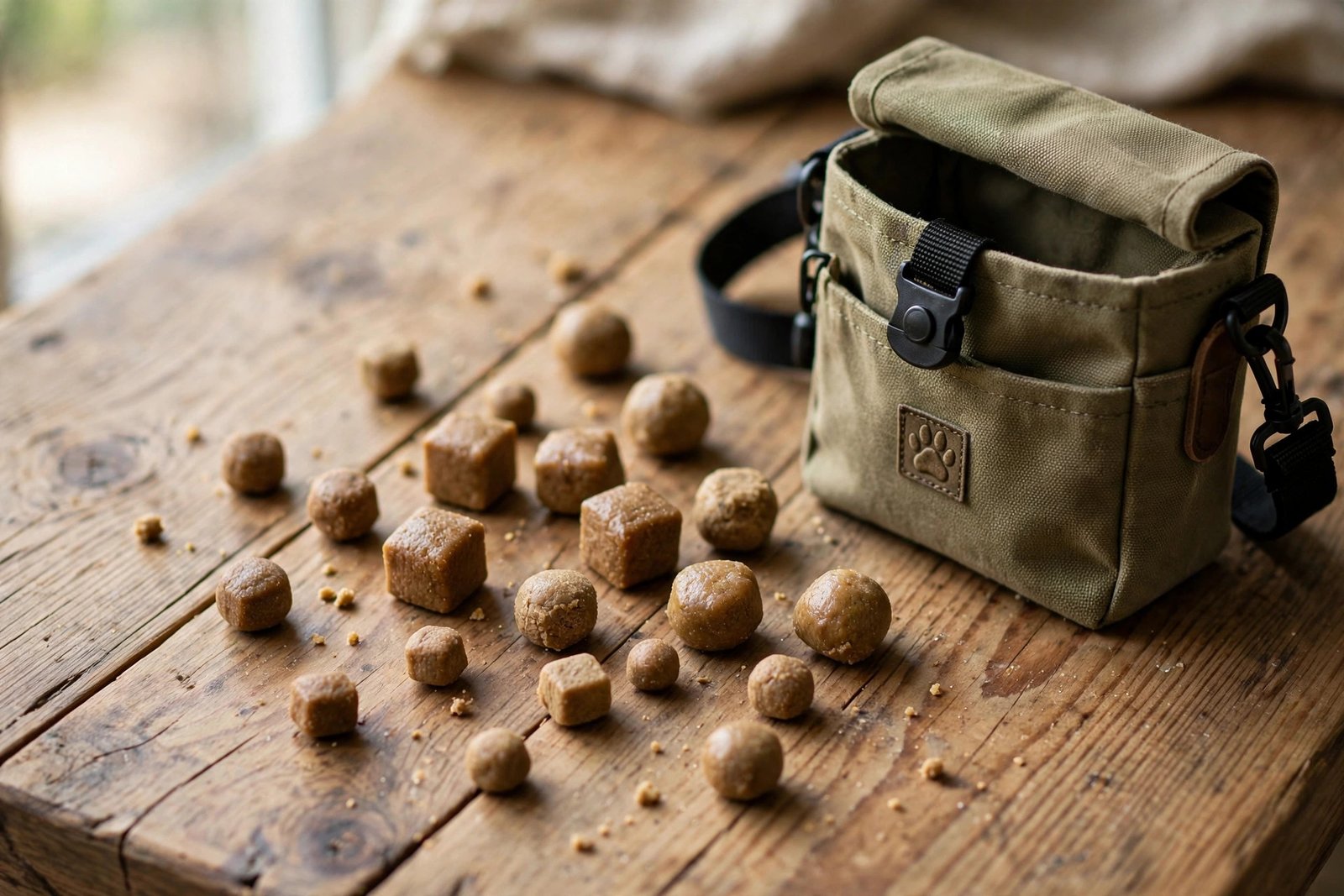
Short ingredient lists win. The best training treats have a handful of recognizable ingredients. If the label reads like a chemistry exam, keep walking. Single-ingredient freeze-dried meats are the gold standard for simplicity.
Watch the calorie math. The widely used guideline is that treats should make up no more than about 10% of a dog’s daily calories. On heavy training days, that means shrinking regular meals a bit to compensate. An overweight dog is a health risk no training goal justifies, so if you are unsure about portions, ask your vet — they can do the math for your specific dog in about thirty seconds.
Absolutely avoid xylitol. Xylitol (also labeled as birch sugar) is extremely toxic to dogs, even in small amounts. It shows up in some sugar-free human foods and occasionally in products marketed around dogs, so check labels on anything you did not buy in the pet aisle.
Go easy on salt, sugar, and artificial anything. Dogs do not need seasoned snacks. Garlic and onion in concentrated amounts are also problematic for dogs, so skip treats (or table scraps) that lean heavily on those flavors.
Homemade treats are great — with boundaries. Boiled chicken breast, baked sweet potato cubes, and blueberries are all popular homemade rewards. Keep pieces tiny, skip seasonings, and introduce new foods gradually. If your dog has food allergies or a sensitive stomach, run homemade treat plans past your vet first.
How to Use Treats Without Overfeeding
This is the part many owners get wrong, and it is worth being deliberate about. Training treats add up fast. Fifty pea-sized treats can easily equal a meaningful chunk of a small dog’s daily food, and “a few extra” every day turns into weight gain over months.
The practical system: measure first, train second. At the start of the day, measure out your dog’s full daily food portion. Set aside a training ration from it — a handful of kibble, or the calorie equivalent in treats. Train from that ration. Feed the rest as meals. On days with big training sessions, the meal bowl gets a little lighter, and the total stays balanced.
Also learn to fade treats over time. Treats are for teaching and proofing behaviors, not for paying rent forever. Once your dog reliably sits on cue at home, start rewarding only the fastest, crispest sits, then phase in real-life rewards — going outside, a game of fetch — for behaviors the dog already knows cold.
One more technique that stretches your treat budget: reward placement matters more than reward size. A tiny treat delivered instantly, right at the moment of the behavior, teaches faster than a big treat delivered three seconds late. Timing beats quantity every time — which is exactly why trainers pair treats with a marker signal like a clicker. If you have not explored that yet, this beginner’s guide to clicker training explains how the marker-treat pairing works, and the classic teaching your dog to sit walkthrough is the perfect first behavior to practice your treat timing on.
Storing Treats and Training on the Go
A quick practical note: soft treats dry out fast once the bag is opened, so reseal them well, and in warm weather meat-based treats can spoil in a hot car or pocket after a few hours — freeze-dried options or a small insulated pouch earn their keep in summer.
Get a treat pouch that clips to your waistband. Fumbling in a zip-lock bag while your dog is doing the right thing kills your timing, and timing is everything. A pouch keeps treats accessible in the half-second window when the reward needs to land — one of the cheapest, highest-impact purchases in all of dog training.
Frequently Asked Questions
How many training treats can I give my dog per day?
There is no fixed number — it depends on treat size and your dog’s size. The standard guideline is that treats should stay within roughly 10% of daily calories. With pea-sized treats, most medium dogs can earn several dozen in a session without issue, especially if you reduce meal portions slightly on training days.
Can I use my dog’s regular kibble as training treats?
Absolutely — it is one of the smartest options. Kibble works well for easy repetitions in low-distraction settings, it keeps the diet balanced, and it is free. Just reserve higher-value treats for harder tasks, since kibble alone rarely motivates a dog past serious distractions.
Are human foods like cheese and chicken safe as dog training treats?
Plain cooked chicken breast and small bits of cheese are widely used as high-value training rewards and are generally fine in small amounts. Keep pieces tiny, skip seasonings, and watch for digestive upset when introducing anything new. Avoid anything with xylitol, excess salt, onion, or garlic. If your dog has allergies or health conditions, check with your vet first.
What if my dog isn’t motivated by treats at all?
First try training before meals and experimenting with higher-value options like real meat or cheese — many “unmotivated” dogs just haven’t met the right treat yet. If food truly doesn’t move the needle, try toy rewards like tug or fetch, which some dogs value more. And if your dog won’t eat in training contexts but eats fine at home, stress or anxiety in the environment may be the real issue.
Should puppies get different training treats than adult dogs?
The principles are the same — small, soft, motivating — but puppies go through far more treats per day, so calorie awareness matters more. Using part of the puppy’s measured daily kibble as training rewards is a popular approach. Choose treats labeled safe for the puppy’s age, introduce new treats gradually, and keep rich foods modest to avoid upsetting a young stomach.
When should I stop giving treats for a learned behavior?
Once the behavior is reliable in easy settings, start rewarding intermittently — only the best repetitions — and introduce real-life rewards like play, walks, and access to fun things. Keep treats in reserve for new behaviors and genuinely challenging situations. Fading gradually preserves reliability; stopping cold turkey can cause the behavior to fall apart.