
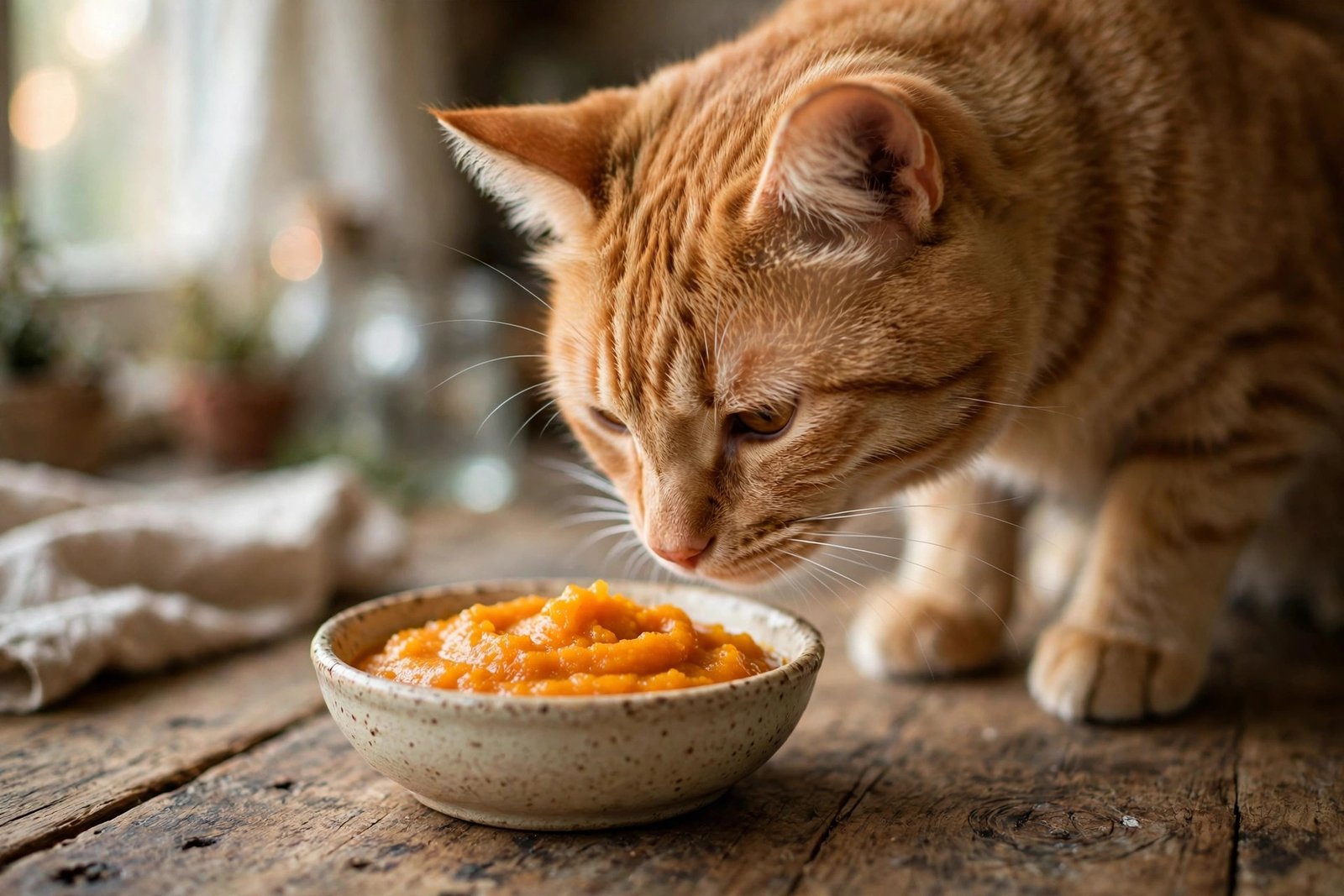

Can Cats Eat Pumpkin? Benefits, Serving Tips & Cautions
If you have ever carved a pumpkin in October while your cat supervised from the counter, you may have wondered: can cats eat pumpkin? It is a fair question, because cats are famously picky about anything that is not meat — and yet pumpkin keeps showing up in conversations about pet digestion. The short answer is yes: plain, cooked pumpkin is generally considered safe for most cats in small amounts.
That does not mean your cat needs pumpkin, or that most cats will even show interest in it. Cats are obligate carnivores, so their nutrition comes from animal protein, not vegetables. But pumpkin does have a legitimate, if modest, role — mostly around fiber and digestion — and it is worth knowing how to offer it properly, how much is sensible, and which pumpkin products to keep away from your cat entirely.
Quick Tips
- Yes — plain cooked pumpkin (or plain canned pumpkin) is safe for most cats in small amounts.
- Offer about 1 to 2 teaspoons mixed into food, a few times a week at most.
- Use only plain pumpkin — never pumpkin pie filling, which contains sugar and spices.
- Introduce it gradually and watch your cat’s litter box for changes.
- Pumpkin is a fiber extra, not a meal replacement — your cat’s diet should stay meat-based.
- If your cat has ongoing digestive issues, talk to your vet rather than self-treating with pumpkin.
Is Pumpkin Safe for Cats?
Pumpkin is not toxic to cats. Plain cooked pumpkin — the flesh of the vegetable, baked or steamed with nothing added — is considered safe, and so is plain canned pumpkin (the kind that lists only pumpkin as the ingredient). Many owners keep a can in the pantry for the occasional digestive wobble, and vets often mention it as a gentle fiber option.
The important distinction is between plain pumpkin and pumpkin-flavored products. Pumpkin pie filling, pumpkin spice lattes, pumpkin bread, and pumpkin-flavored treats are a different story: they contain sugar, spices like nutmeg and cinnamon, and sometimes xylitol, none of which belong in a cat’s diet. If it came from a bakery or a coffee shop, it is not cat food.
Raw pumpkin is technically not toxic either, but it is hard, fibrous, and difficult for a cat to digest — most cats would not touch it anyway. Stick with cooked or canned, and keep the seeds and stem out of reach. Pumpkin seeds are not poisonous, but they are a choking hazard and too rich for a cat’s stomach in quantity.

Why Do People Give Pumpkin to Cats?
Pumpkin’s reputation in the pet world comes almost entirely from one thing: fiber. And fiber, in modest amounts, can be genuinely useful for cats at both ends of the digestive spectrum.
For mild constipation. The soluble fiber in pumpkin absorbs water and can help add bulk to stool, which may help things move along in a cat that is mildly constipated. Many owners report that a teaspoon of pumpkin in wet food helps their cat stay regular. That said, constipation can also signal something more serious — dehydration, a blockage, or an underlying condition — so if your cat is straining, going days without a bowel movement, or seems uncomfortable, that is a vet visit, not a pumpkin project.
For mild loose stools. The same fiber that adds bulk can also help firm up slightly soft stools by absorbing excess water in the gut. It is a gentle, food-based option for the occasional off day, not a treatment for persistent diarrhea, which always deserves veterinary attention.
For hairballs. Some owners use a little pumpkin to help move hair through the digestive tract, since fiber keeps things moving. It is not a proven hairball remedy, but as a gentle digestive aid it is a reasonable thing to try — alongside regular brushing, which does far more for hairballs than any food ever will.
A useful reality check: pumpkin is a helper, not a healer. It can support normal digestion in small amounts, but it does not diagnose or treat anything. If a digestive issue lasts more than a day or two, or keeps coming back, your vet needs to see your cat.
Can Cats Eat Pumpkin Regularly? How Much Is Right
So, can cats eat pumpkin as a regular part of their diet? They can have it regularly in the sense of a small, occasional extra — but it should never become a dietary staple. A cat’s digestive system is designed for meat, and too much plant fiber can actually interfere with nutrient absorption if overdone.
A Sensible Serving Guide
For an average adult cat, 1 to 2 teaspoons of plain pumpkin mixed into their regular food, two or three times a week, is plenty. Start with half a teaspoon the first time so you can see how your cat’s stomach responds. Kittens, senior cats, and cats with health conditions should get even smaller amounts — and a quick check with your vet first is never a bad idea.
Mix the pumpkin into wet food rather than serving it solo. Most cats will ignore a lonely spoonful of orange puree, but stirred into something meaty, many will eat it without noticing. If your cat eats dry food, a teaspoon of pumpkin can be mixed with a splash of warm water and poured over the kibble. Speaking of food formats, if you are still deciding between the two, our breakdown of wet vs. dry cat food walks through the pros and cons of each.
What About Pumpkin Every Day?
A tiny daily amount is unlikely to cause harm in a healthy cat, but there is little reason to do it. Pumpkin works best as an as-needed fiber boost — during shedding season for hairballs, or when stools look a little off — rather than a permanent fixture. Variety in extras is fine; dependence on one is not.
Which Pumpkin Products Are Safe (and Which Aren’t)
The pumpkin aisle can be confusing, so here is the simple version:
Safe: plain canned pumpkin (ingredients: pumpkin, nothing else), fresh pumpkin you cook yourself (baked or steamed, no seasoning), and plain pumpkin baby food with no onion or garlic powder. These are all fine in the small amounts described above.
Not safe: pumpkin pie filling (sugar, spices, sometimes preservatives), pumpkin spice anything, pumpkin bread or muffins, and any product sweetened with xylitol. Also skip raw pumpkin chunks and the stem — they are hard to digest and a potential choking risk.
When buying canned pumpkin, read the label every time. Cans of “pumpkin pie mix” sit right next to plain canned pumpkin on the shelf, and the packaging looks nearly identical. One lists pumpkin; the other lists sugar, cinnamon, nutmeg, and cloves. Grab the wrong can and you have brought home the wrong product entirely.

What If My Cat Won’t Touch Pumpkin?
Plenty of cats take one sniff of pumpkin and walk away, and that is completely normal. Cats did not evolve eating vegetables, and many simply do not recognize plant matter as food. Do not force it — a cat that will not eat pumpkin is not missing out on anything essential.
If you were hoping pumpkin would help with hairballs or digestion and your cat refuses it, there are other routes. More brushing during shedding season, a hairball-formula food, or simply making sure your cat drinks enough water can all help. And if the digestive issue you were targeting persists without the pumpkin, that is useful information for your vet, not a reason to keep pushing the orange stuff.
On the flip side, some cats genuinely like it. If yours licks the spoon clean, there is no need to worry — just keep portions small and occasional, as part of an otherwise meat-based diet. And remember that fish-based treats come with their own portion questions too — if tuna is your cat’s weakness, our guide on whether cats can eat tuna covers how much is sensible.
Frequently Asked Questions
Is it okay to give my cat pumpkin every day?
A very small daily amount is unlikely to harm a healthy cat, but pumpkin works better as an occasional fiber boost than a daily habit. A teaspoon or two, a few times a week, is the sweet spot for most cats. If you feel your cat needs it daily to stay regular, mention it to your vet — that pattern is worth a professional look.
Is canned pumpkin safe for cats?
Yes, as long as it is plain canned pumpkin with no added sugar, spices, or sweeteners. Check the ingredient list: it should say pumpkin and nothing else. Avoid pumpkin pie filling, which looks similar on the shelf but contains sugar and spices that cats should not eat.
Can kittens eat pumpkin?
In tiny amounts, plain pumpkin is generally considered safe for kittens too — think half a teaspoon mixed into food. But kittens have sensitive, developing digestive systems, so introduce it slowly and keep portions minimal. If your kitten has digestive trouble, your vet should be your first call, since young kittens can dehydrate quickly.
Will pumpkin help my cat’s constipation?
It may help with mild, occasional constipation, since the fiber adds bulk and moisture to stool. Many owners use it successfully for this. But constipation that lasts more than a day or two, straining, crying in the litter box, or loss of appetite are signs to see your vet promptly — those can indicate something pumpkin cannot fix.
My cat ate pumpkin pie — should I worry?
A small lick or bite is unlikely to cause serious harm, but watch for vomiting or diarrhea from the sugar, fat, and spices. The bigger concern would be xylitol, which is extremely toxic to pets — though it is more common in dogs’ products, check the pie’s ingredients if you are unsure. If your cat ate a large amount or seems unwell, call your vet.