

Can Dogs Eat Eggs? Safe Treat Guide
Eggs sit in that interesting category of human foods that feel like they should be fine for dogs — they are natural, protein-rich, and dogs in the wild would absolutely eat them given the chance. And the short answer is reassuring: yes, dogs can eat eggs, and eggs are one of the better human foods you can share. But as with most things in dog nutrition, the details matter: how they are cooked, how many, and how often.
This guide covers the full picture — the nutritional upside, the raw-versus-cooked debate, safe serving methods, and the mistakes that turn a healthy treat into a problem.
Quick Tips
- Yes — cooked eggs are safe and nutritious for most dogs.
- Serve eggs cooked; raw eggs carry salmonella risk and a biotin concern.
- Keep it plain: no butter, oil, salt, onion, or seasoning.
- Eggs are treats, not meals — keep extras under 10% of daily calories.
- Introduce slowly; some dogs have egg sensitivities.
- Crushed eggshells can add calcium, but ask your vet about amounts first.
Why Eggs Are Good for Dogs
Eggs are close to a nutritional perfect score for a treat food. They are packed with high-quality, easily digestible protein — the kind with a complete amino acid profile, which is exactly what dogs need for muscle maintenance. They also carry vitamin A, vitamin D, B vitamins (including riboflavin and B12), iron, selenium, and fatty acids that support skin and coat health.
Many owners notice the coat effect first: a dog getting the occasional egg often develops a visibly glossier coat within a few weeks. That is the fatty acids and biotin doing their work. It is one of those rare cases where the folk wisdom (“eggs are good for the coat”) lines up neatly with the nutritional science.
Eggs are also gentle on digestion for most dogs, which makes them useful in specific situations — a bland, easy protein when a dog’s stomach is mildly unsettled (alongside the usual vet guidance), or an appetite enticer for a picky eater. A crumbled hard-boiled egg over regular food has revived the appetite of many a fussy dog.
Raw vs Cooked: Settle It Once and For All
You will find passionate advocates for raw eggs online, usually citing what wolves do. Here is the practical view: cooking addresses the two main concerns with raw eggs, and it costs you almost nothing nutritionally.
Salmonella risk. Raw eggs can carry salmonella, which can make dogs sick — and, importantly, a dog shedding salmonella in its stool is a risk to the humans in the house, especially kids and immunocompromised people. Cooking to a firm yolk greatly reduces this risk.
The biotin question. Raw egg whites contain avidin, a protein that binds biotin (a B vitamin) and can interfere with its absorption if fed in large amounts over time. Cooking denatures avidin, removing the concern. An occasional raw egg is unlikely to cause a deficiency, but regular raw-egg feeding without cooking is a needless gamble when the fix is so simple.
The verdict: serve eggs cooked. Scrambled (plain, no butter or oil — use a nonstick pan or a splash of water), hard-boiled, or poached all work. The dog does not care about your culinary technique; it cares that the egg exists and is now in its mouth.
How Many Eggs, How Often
Eggs are calorie-dense — a large egg has around 70 calories, most of it from fat and protein. For a medium dog eating 800–1,000 calories a day, one egg is roughly 7–9% of daily intake, which fits neatly inside the “treats under 10%” guideline. The practical rule most vets suggest: a few eggs per week for medium and large dogs, fewer for small dogs.
Small dogs (under 20 pounds) do well with half an egg a couple of times a week. Medium dogs can handle one egg a few times weekly. Large dogs can have an egg most days if the rest of the diet is balanced — though variety in treats is still better than a single food on repeat.
Eggs should supplement a complete diet, not replace part of it in large amounts. A dog eating mostly eggs would miss nutrients that a formulated dog food provides. Think of eggs the way you think of any excellent treat: a great addition, a poor foundation. For the treat landscape more broadly, my peanut butter guide covers another owner favorite with the same honest breakdown.
Serving Ideas Dogs Love
The topper. Chop or crumble a hard-boiled egg over the regular meal. Simple, effective, and the fastest way to make boring kibble exciting. Batch-cook a few eggs at the start of the week and refrigerate them — they keep for about a week peeled.
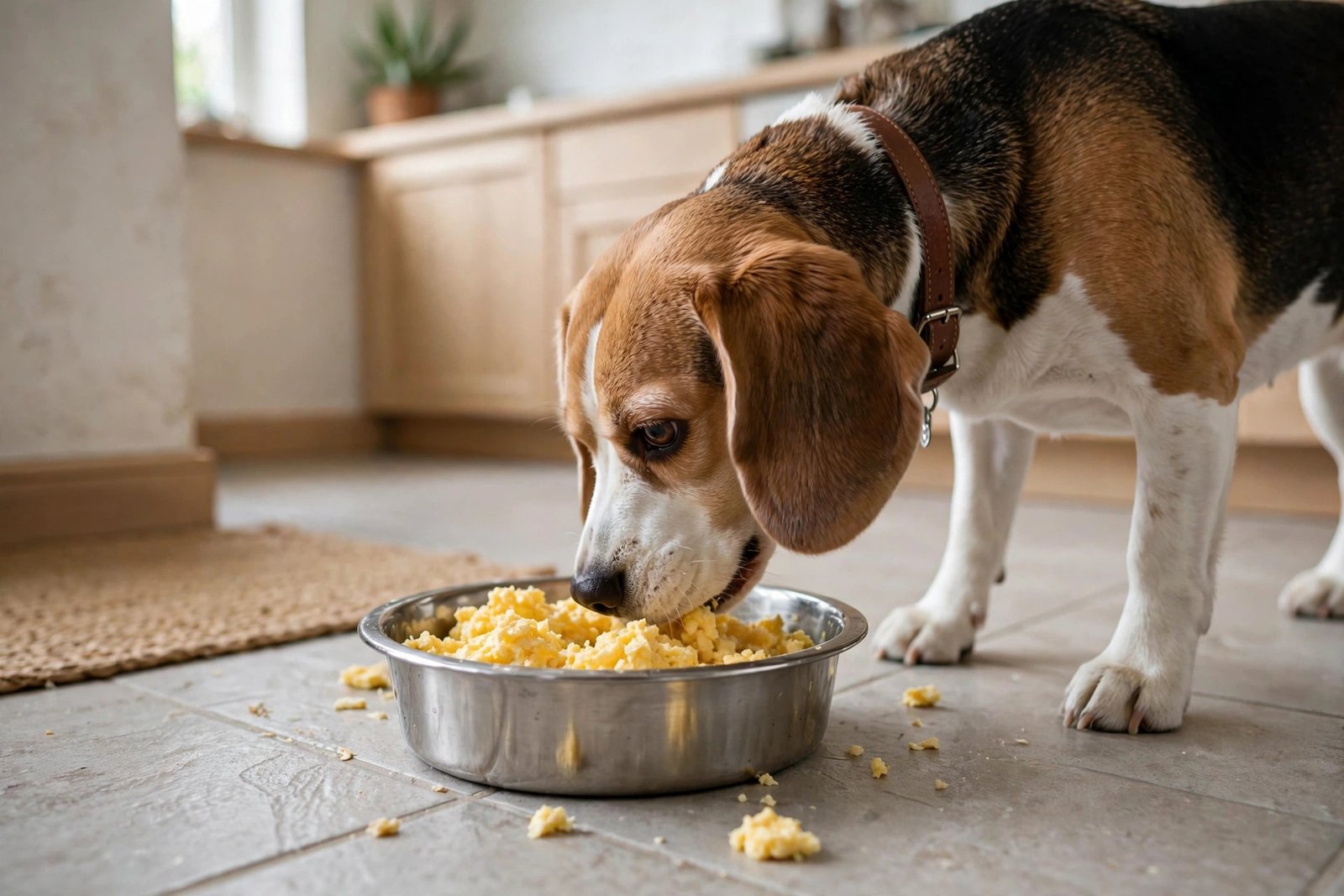
Plain scrambled. Scramble in a nonstick pan with no fat, or microwave-beat with a splash of water. Let it cool before serving — dogs are enthusiastic but not heat-resistant. This is the best format for hiding medication, by the way; most dogs inhale scrambled egg without noticing the pill.
Frozen enrichment. Mix beaten egg with a little plain pumpkin or banana, pour into a Kong, and freeze. It is a long-lasting puzzle that combines protein with licking enrichment.
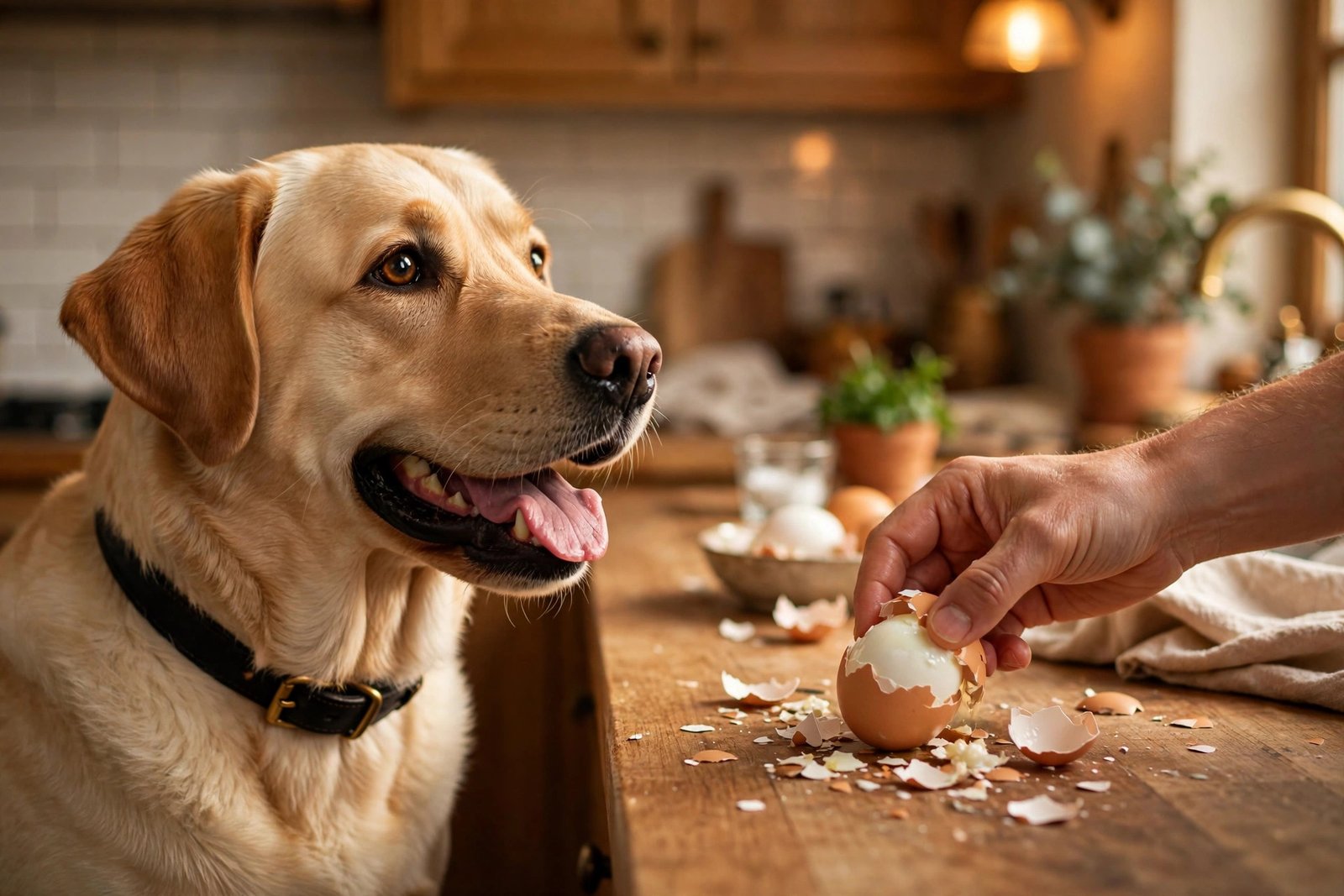
Shells for calcium. Baked, crushed eggshells are a natural calcium source — bake empty shells at low heat until dry and brittle, then grind to a fine powder. A pinch over food adds calcium, but amounts matter and too much calcium causes its own problems, so check with your vet about whether your dog’s diet even needs it before making this a habit.
When to Be Careful
Egg sensitivities. Some dogs do not tolerate eggs well — the signs are the usual food-sensitivity cluster: itchy skin, ear inflammation, or digestive upset after eating them. If you are introducing eggs for the first time, start with a small amount and watch for 24–48 hours. A dog that reacts does not need eggs; there are plenty of other treats.
Dogs with specific health conditions. Dogs with pancreatitis history, very high cholesterol concerns, or kidney issues are often on carefully managed diets where extras need vet approval. Eggs are rich — wonderful for a healthy dog, potentially problematic for a dog on a restricted diet. When in doubt, the vet who knows your dog’s history outranks any guide, including this one.
Keep it plain. The danger is never the egg; it is what humans add to eggs. Butter and oil add unnecessary fat, salt is unneeded, and onion and garlic — common in omelets — are toxic to dogs. If you are sharing from your own breakfast, the dog’s portion comes out of the pan before your seasoning goes in. My toxic foods list covers the full lineup of kitchen ingredients to keep away from dogs.
Frequently Asked Questions
Can dogs eat raw eggs?
It is safer to cook them. Raw eggs carry a salmonella risk and contain avidin, which can interfere with biotin absorption over time. Cooking eliminates both concerns with minimal nutritional loss. An occasional raw egg is unlikely to cause harm, but there is no advantage to it — cooked is strictly better.
Can puppies eat eggs?
Yes, in small amounts. A little scrambled or boiled egg is fine for puppies as an occasional treat, but puppies have precise nutritional needs for growth, so treats should stay minimal and the diet should be overwhelmingly a complete puppy food. Introduce any new food in tiny amounts and watch for reactions.
Are eggshells safe for dogs?
Yes, when prepared properly — baked until dry and ground to a fine powder. Sharp shell fragments can irritate the mouth and throat, so grinding matters. Eggshell powder is a natural calcium source, but check with your vet about whether your dog needs supplemental calcium before adding it regularly.
How many eggs can a dog eat per day?
Many owners offer eggs a few times a week as a treat, with smaller portions for small dogs — your vet can suggest a sensible amount for your dog’s size and overall diet. Remember the 10% treat rule: all extras combined, eggs included, should stay under about 10% of daily calories.
Can dogs eat fried eggs?
Plain fried eggs in minimal oil are not toxic, but the added fat is unnecessary and can upset sensitive stomachs. Scrambled (no fat), boiled, or poached are better preparations. Never serve eggs cooked with onion, garlic, or heavy seasoning — those additions are the real hazard.
Do eggs help a dog’s coat?
They can — eggs are rich in fatty acids, biotin, and protein, all of which support skin and coat health, and many owners report a glossier coat after adding occasional eggs. It is not magic, and it does not replace good overall nutrition, but as a coat-supporting treat it has genuine merit.