
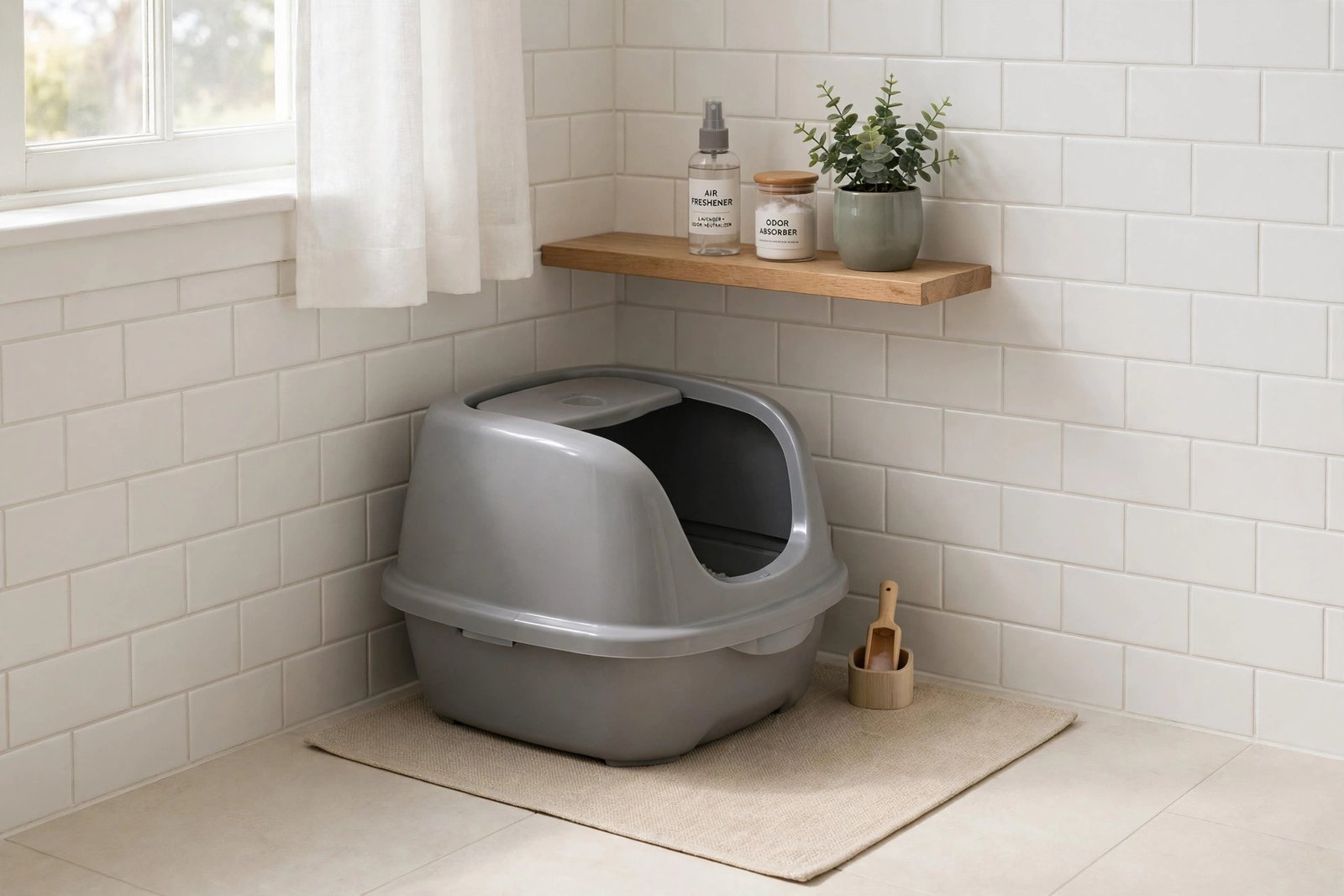

How to Keep Litter Box Area Clean and Odor-Free
Figuring out how to keep litter box area clean and smelling fresh is one of those things every new cat owner quietly worries about. You picture guests walking in and catching a whiff, or you notice the smell yourself and wonder if the whole house smells like that to visitors. The good news: a smelly litter area is almost always a fixable routine problem, not an inevitable part of having a cat.
Odor comes from a handful of predictable sources — waste sitting too long, too little litter in the box, the wrong litter for your situation, and boxes that are overdue for a deep wash. Tackle those four, and most litter areas become completely unnoticeable to human noses. This guide walks through the daily and weekly habits, setup choices, and odor-fighting extras that keep the corner of your home smelling like nothing at all.
Quick Tips
- Scoop every day — ideally twice — because waste sitting in the box is the number one source of odor.
- Keep litter at least 3–4 inches deep so urine clumps fully instead of pooling at the bottom.
- Change all the litter and wash the box with mild soap every 2–4 weeks.
- Put the box in a ventilated spot, never in a sealed closet or tiny unventilated bathroom.
- Use a litter mat to catch tracked granules so the surrounding floor stays clean.
- Skip heavily perfumed litters and plug-in fresheners — cats have sensitive noses, and masking scents rarely fix the source.
Why Litter Areas Smell (and What’s Normal)
Cat urine has a strong ammonia smell when it sits, and feces add their own contribution — that is simply chemistry, not a sign anything is wrong. A well-kept litter area will have a brief, faint smell right after use that fades quickly, and that is completely normal. What is not normal is a persistent smell that hits you at the front door, or a sour odor that lingers even after you scoop. Those are signals that something in the routine needs adjusting.
Many owners assume the litter itself is the problem and start cycling through brands, but the litter is usually only part of the story. The bigger factors tend to be how often the box gets scooped, how deep the litter is, and whether the box gets a proper wash often enough. Fixing those basics first saves a lot of money on specialty products that promise the world.
One thing worth noting: if the smell changes suddenly and sharply — or if your cat starts going outside the box — it can occasionally be worth a vet check, since urinary issues sometimes announce themselves that way. But for steady, everyday odor, the answer is almost always housekeeping, not medicine.
How to Keep Litter Box Area Clean: Daily and Weekly Habits
If there is one habit that matters more than everything else combined, it is daily scooping. Removing waste once or twice a day keeps odor from building up and keeps the box pleasant for your cat, which also protects against litter box avoidance. A box that smells bad to you smells far worse to a cat, whose nose is dramatically more sensitive.
Keep a scoop with a small lidded trash bin right next to the box so the job takes under a minute — friction is the enemy of consistency here. When you scoop, take the full clump plus a small margin of surrounding litter, and give the box a quick shake afterward to level the surface. If you notice the litter sticking to the bottom or smelling sour even right after scooping, that is usually a sign the litter level is too low or the whole batch needs replacing. For a full breakdown of timing, see our guide on how often to clean the litter box.

Choose the Right Litter for Odor Control
Not all litters handle smell equally. Clumping clay litters are the most popular choice for a reason: they form tight, removable clumps that take odor out with them, and many include odor-absorbing additives like activated charcoal. Unscented versions tend to be the better pick, since heavy perfumes can bother cats and sometimes trigger box avoidance — a much bigger problem than mild odor.
Natural litters made from corn, walnut, or wood can control odor well too, and some owners prefer them for lower dust. They often cost more per pound and can be lighter, so tracking may increase. Crystal (silica) litters absorb moisture and control smell between full changes, but they need stirring and a complete change on schedule. Whichever type you use, depth matters more than brand: three to four inches of litter gives urine room to clump fully instead of seeping to the box floor, which is where the worst lingering smells come from. When owners ask how to keep litter box area clean, litter depth is the answer they least expect — but it makes one of the biggest differences. Compare the options in detail in our cat litter types comparison.
Getting the Litter Depth Right
Most owners under-fill. Aim for a consistent three to four inches, and top up as scooping removes volume over the week. A shallow layer means clumps hit the bottom of the box and break apart when you scoop, leaving smelly residue behind. Mark the ideal fill line with a piece of tape on the inside of the box if it helps you stay consistent.
Set Up the Area for Freshness
Where you put the box and what surrounds it matters as much as the litter itself. Choose a spot with some airflow — a laundry room, a ventilated bathroom corner, or a quiet hallway nook — rather than a sealed closet or a tiny powder room with no ventilation. Ventilation is an underrated part of how to keep litter box area clean: good air circulation carries the brief post-use smell away before it can settle into fabrics.
A washable litter mat under and around the box catches tracked granules and stray bits, keeping the surrounding floor genuinely clean rather than just looking clean. Shake the mat out over the trash every few days, and machine-wash it according to its label when it starts to look dingy. Many owners also find that an enclosed litter box cabinet — a piece of furniture with a cat-sized entrance that hides the box inside — dramatically reduces how noticeable the area is, both visually and smell-wise, because the enclosure contains litter scatter and slows air exchange right at the box. Just make sure any enclosure still has ventilation, and introduce it gradually so your cat accepts it.

Using Air Purifiers and Fresheners Wisely
A small air purifier with a carbon filter near the litter area can genuinely reduce lingering odor, and it helps with dust too. Be cautious with plug-in air fresheners, scented sprays, and essential oil diffusers: many strong fragrances are irritating to cats, and some essential oils are not safe around them. If you want a scented product, choose one marketed as pet-safe, keep it away from the box itself, and watch that your cat still uses the box happily.
The Weekly and Monthly Deep Clean
Even with diligent scooping, the litter itself gradually absorbs odor it cannot release. Every two to four weeks, empty the entire box, wash it with warm water and a mild unscented dish soap, rinse thoroughly, and dry it completely before refilling with fresh litter. Plastic boxes are porous enough to hold onto smell over time, so if a box still smells after a proper wash, it may simply be time to replace it — many owners swap boxes every six to twelve months.
During the deep clean is also the time to wash the litter mat, wipe down the surrounding floor and walls (urine spray can land in surprising places), and check the area for any tracked litter that escaped your daily sweep. Keep a small handheld vacuum or broom by the station to make the daily tidy a thirty-second job. A clean area around the box matters because visitors notice the surroundings first — a spotless floor and fresh mat make the whole corner read as clean even before anyone thinks about smell.
Frequently Asked Questions
How often should I scoop the litter box to prevent odor?
At least once a day, and twice a day is even better in multi-cat homes. Odor builds as waste sits, so daily scooping is the single most effective thing you can do. The routine works best when the scoop and a small trash bin live right next to the box, so it takes less than a minute.
Why does my litter box smell even right after I scoop?
Usually one of three things: the litter is too shallow for urine to clump properly, the litter batch is old and saturated, or the plastic box itself has absorbed odor over time. Try topping up to three or four inches of fresh litter first; if the smell persists, do a full change and wash the box, and replace the box itself if it still smells after washing.
Is scented or unscented litter better for odor control?
Unscented is generally the better choice. Scented litters mask odor with perfume rather than removing it, and strong fragrances can irritate cats or even cause them to avoid the box. Unscented clumping litter with an odor absorber like activated charcoal handles smell at the source without the downsides.
How many litter boxes do I need to keep smells down?
The common guideline is one box per cat plus one extra. More boxes mean waste is spread out, each box stays fresher between scoops, and your cat always has a clean option. In a multi-cat home, adding that second or third box often does more for odor than any product upgrade.
Are covered litter boxes better for odor?
Covered boxes can contain smell in the short term, but they trap odor inside, which can make the box unpleasant for your cat and lead to avoidance. If you use one, scoop extra diligently and consider removing the door flap to improve airflow. Many owners find that good scooping habits plus an open box in a ventilated spot beats a covered box that gets neglected.