

Dog Raincoats and Boots: Does Your Dog Need Them?
Somewhere between the first autumn downpour and the third muddy-paw cleanup of the week, most dog owners have the same thought: should I just buy the dog raincoat? And what about those little boots? The pet store aisle makes it all look essential — rows of tiny yellow slickers, as if every dog is one rainstorm away from ruin.
The honest answer: some dogs genuinely benefit, some merely tolerate it for your convenience, and some need nothing at all. It depends on the dog’s coat, size, health, and what a rainy walk looks like where you live.
This guide breaks down which dogs actually need raincoats and boots, how to choose gear that fits and works, and the situations where you are better off skipping the outfit and just keeping a good towel by the door.
Quick Tips
- Dogs with thin, short, or no undercoat benefit most from raincoats in cold rain.
- Boots help most against road salt, hot pavement, and rough terrain — rain alone rarely requires them.
- Fit matters more than brand: measure chest, neck, and back length before buying.
- Introduce any gear gradually with treats — never force it on a stressed dog.
- A good towel and paw wipe routine handles most rainy walks without any gear.
- Skip rain gear for thick-coated breeds in mild rain; they are built for it.
Does Your Dog Actually Need a Raincoat?
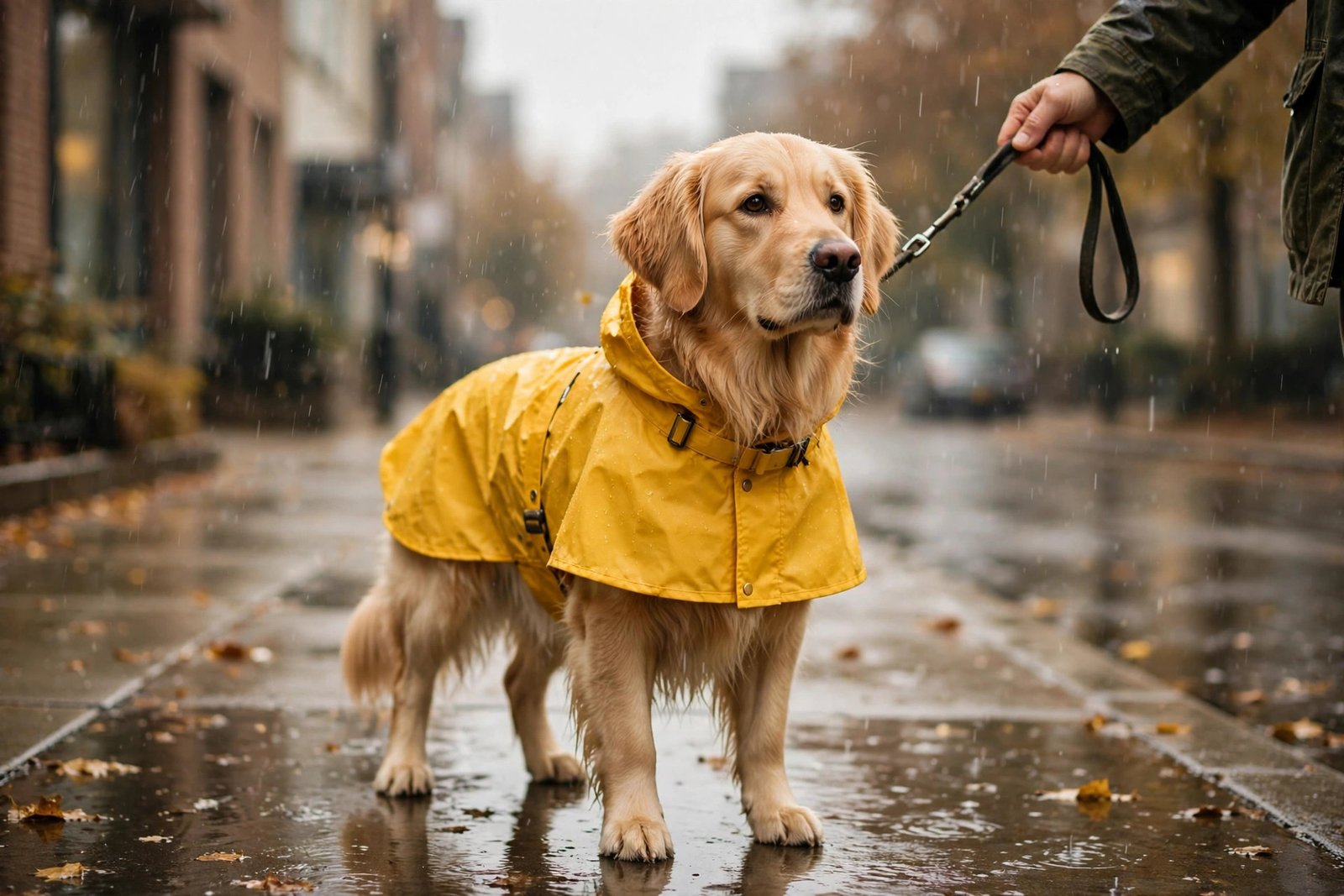
Start with the dog in front of you, not the marketing. Dogs with dense double coats — huskies, golden retrievers, shepherds, Newfoundlands — have natural weatherproofing. Their outer coat sheds water and their undercoat insulates. In mild or moderate rain these dogs are fine without a coat, and many actively dislike wearing one.
The dogs that genuinely benefit are the ones nature left underdressed: greyhounds, whippets, and Italian greyhounds with their paper-thin coats and almost no body fat; short-coated breeds like boxers, vizslas, and Dalmatians in cold rain; hairless breeds like the Chinese crested; puppies whose temperature regulation is still developing; and senior dogs, who often feel the cold more. For these dogs, a raincoat in cold, driving rain is not fashion — it is comfort and genuinely protective.
Then there are the dogs whose owners benefit: a long-haired dog that comes home from every rainy walk smelling like a wet basement and tracking mud everywhere is a candidate for a raincoat on household-hygiene grounds. That is legitimate — just make sure the dog is comfortable wearing it rather than merely enduring it.
What About Boots?
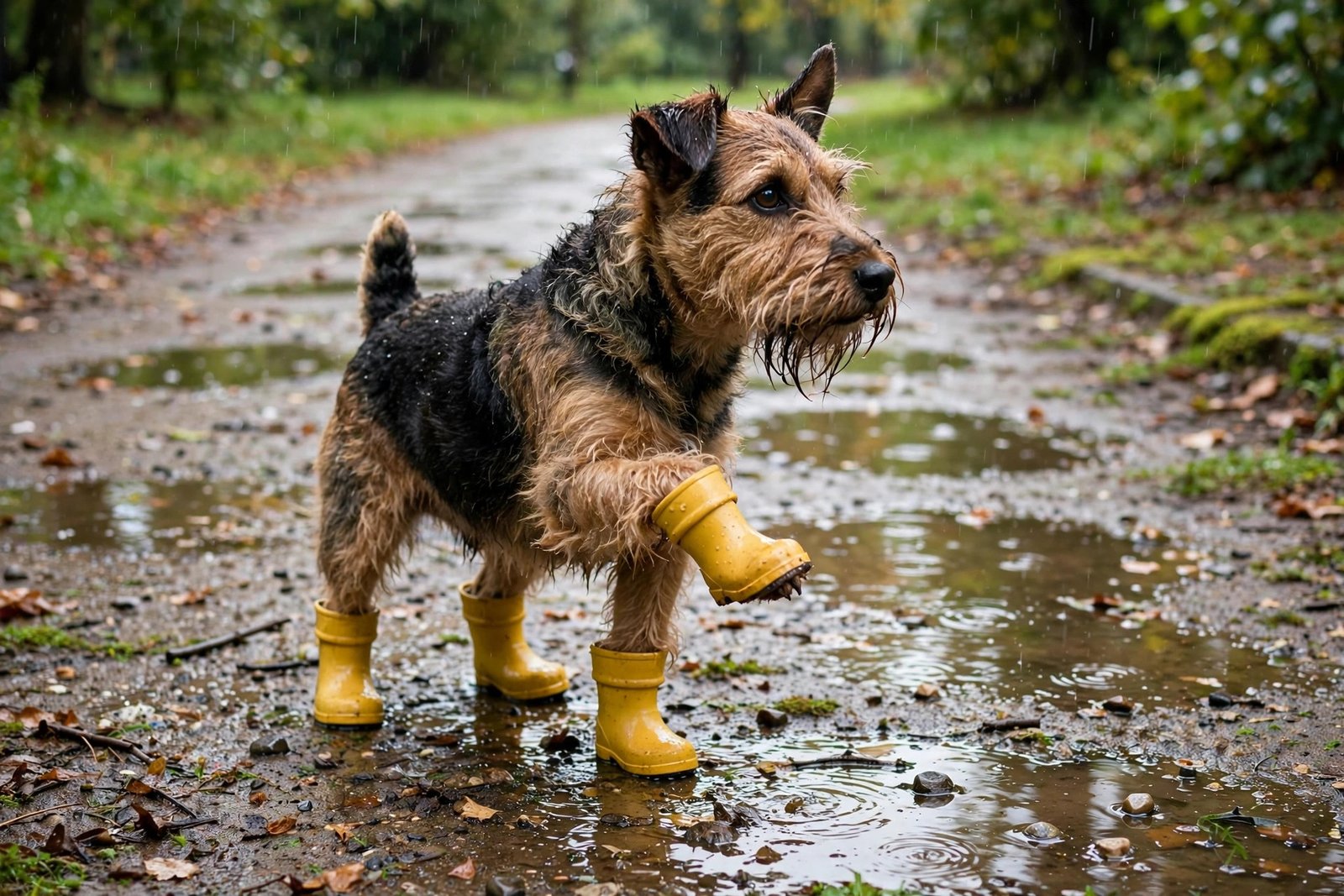
Boots are a harder sell for rain specifically. Dogs’ paws handle wet ground just fine in most conditions — they evolved for it. Where boots genuinely earn their place is against specific hazards: road salt and chemical de-icers in winter, which can irritate and crack paw pads; scorching pavement in summer; rough terrain like sharp gravel or thorn-covered trails; and dogs with injured or healing paws that need protection on walks.
For a deeper look at keeping paws healthy through every season — including when boots help and when simple paw care is enough — my seasonal dog paw care guide covers the full routine from winter salt to summer heat.
The honest downside of boots: most dogs hate them at first, some never accept them, and a poorly fitted boot is worse than no boot — it rubs, slips, and changes the dog’s gait. If your only concern is muddy paws after rain, boots are overkill. A towel and a paw-washing routine at the door will do the job with far less drama.
Choosing a Raincoat That Actually Works
Most dog raincoats fail on fit, not quality. A coat that is too short leaves the rear soaked; too long and the dog pees on it or trips. Measure back length (base of neck to base of tail), chest girth, and neck circumference, then compare against the size chart — do not just buy by breed.
Coverage. Look for a coat that covers from neck to tail base with a belly panel or strap that keeps the underside reasonably dry without restricting leg movement. Full-leg coverage exists but most dogs find it annoying; for most situations, torso coverage is the sweet spot.
Waterproof vs. water-resistant. “Water-resistant” means light rain for a short walk. “Waterproof” with sealed or taped seams means real rain for a real walk. In genuinely wet climates, waterproof is worth paying for. Check whether the belly strap area is protected, since that is where splash-up soaks through first.
Warmth layer. Many raincoats are just a shell — fine for cool rain on a dog that runs warm. For thin-coated dogs in cold rain, look for a fleece or quilted lining. Some designs have a removable liner, which is the most versatile option across seasons.
Ease of getting it on. Step-in designs or simple Velcro belly straps beat complicated multi-buckle affairs — if suiting up takes five minutes of wrestling, you will stop using it.
Visibility. Rain often means grey, dim conditions. Reflective strips or a bright color make your dog visible to traffic on evening walks. This is a small feature with real safety value.
Choosing Boots Without the Regret
If you have decided boots are warranted — salt, heat, injury, rough terrain — fit and introduction matter more than the specific product.
Measure the paws. Trace the paw on paper while the dog is standing (paws spread under weight) and measure width. Boots sized by weight or breed alone are a gamble. The boot should be snug enough not to twist or slip off, with room for the paw to spread naturally.
Pick the right style for the job. Thin rubber balloon-style booties are cheap, disposable-ish, and good for short salt exposure — but they tear and many dogs chew them off. Sturdier fabric boots with Velcro closures stay on better and suit longer walks. Heavy-duty hiking boots with soles are for serious terrain. Match the boot to the actual hazard, not the cutest design.
Expect a comedy phase. Nearly every dog does the high-stepping boot dance on first wearing — lifting each leg like stepping over invisible obstacles. This is normal and usually fades within a few sessions. What should not be ignored is persistent limping, chewing at the boots, or refusal to walk after several tries; those signal bad fit or a dog that is genuinely distressed, not just dramatic.
Introducing Gear the Right Way
The number-one mistake is strapping everything on five minutes before a walk in a downpour and expecting gratitude. New sensations — the rustle of the coat, the weird feeling on the paws — need to be introduced the way you would introduce anything unfamiliar: gradually, with good associations.
Lay the raincoat on the floor and let the dog sniff it. Treat. Drape it over the dog’s back for a few seconds. Treat. Fasten one strap, treat, take it off. Build up over several short sessions before the first real walk. For boots, start with one boot on one paw for a minute indoors, with treats and play, then build to all four for short indoor sessions before venturing outside.
Watch the dog’s body language throughout. A dog that is merely unsure will loosen up with repetition and treats. A dog that freezes, pants, tucks its tail, or shuts down is telling you this is too much — back up a step, slow down, and consider whether the gear is truly necessary. No raincoat is worth a dog that dreads walks.
When to Skip the Gear Entirely
Plenty of rainy walks need nothing but a route and a towel. Light rain on a healthy, thick-coated dog? Just walk. Warm summer rain? Many dogs love it, and the main risk is you getting wet — my guide to keeping your dog cool in summer covers the actual warm-weather hazards, which are heat-related rather than rain-related. A quick backyard potty trip in drizzle? Definitely not a four-boot production.
Also skip gear when it creates more stress than it prevents — an anxious dog that panics in a raincoat is worse off than a damp dog. The gear serves the walk; the walk does not serve the gear.
And remember what gear cannot do: a raincoat does not make thunderstorms less scary, does not protect against lightning, and does not make flooded areas safe. If conditions are genuinely severe — heavy flooding, hail, dangerous winds — the right call is skipping the walk, not suiting up for it.
The Towel-by-the-Door System
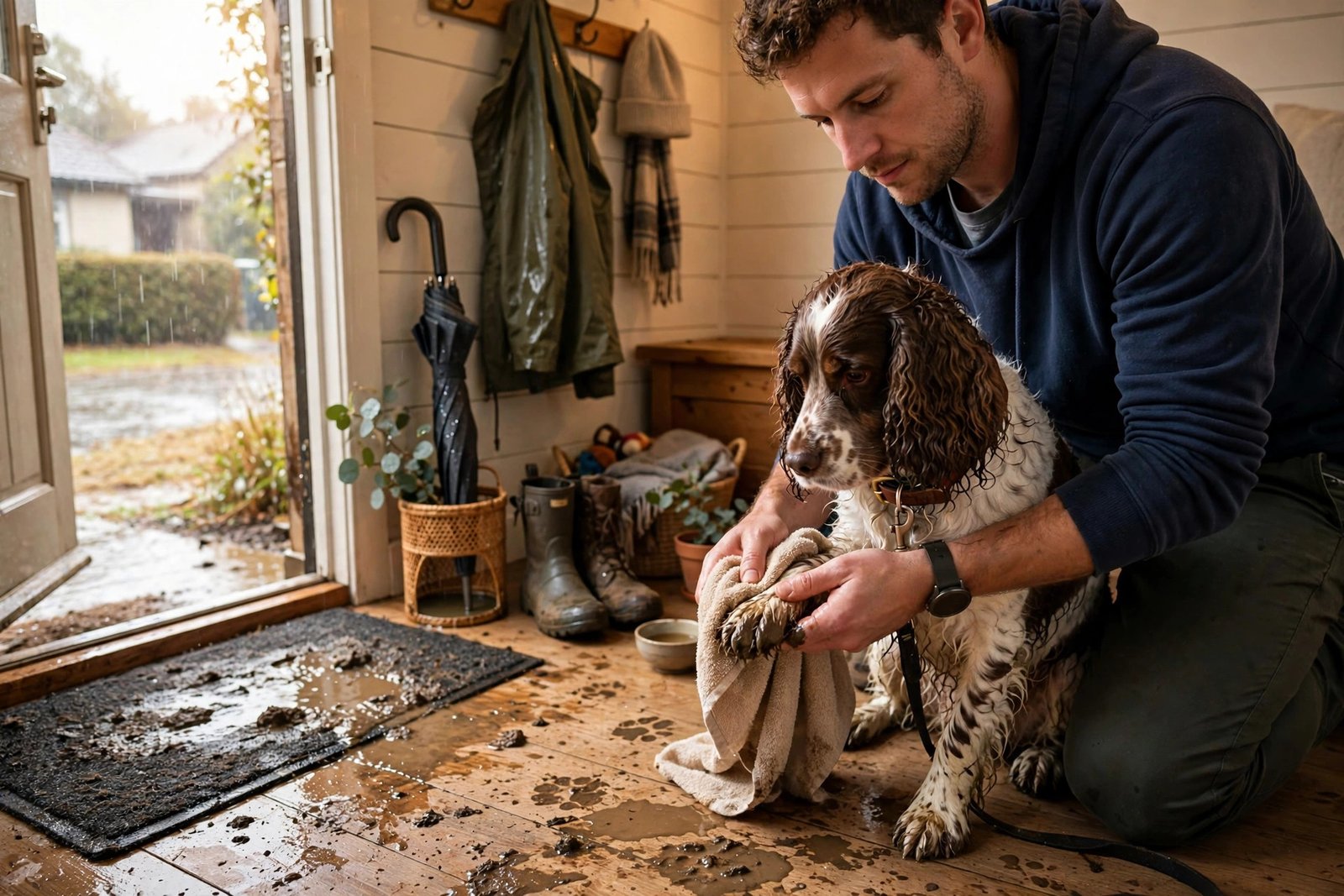
For most owners, the real rainy-day essential is not a wardrobe — it is a routine. Keep a dedicated dog towel by the door (microfiber absorbs far more than old bath towels). When you come in: paws first, wiping between the toes where mud hides, then belly and legs, then a general rub-down. For very muddy days, a shallow paw wash in a basin beats wiping.
Dry the ears’ outer flaps gently — moisture trapped in and around ears can contribute to irritation, especially in floppy-eared breeds — and check the paws for anything picked up on the walk. The whole routine takes two minutes once it is a habit, and it handles 90% of what rain gear promises to solve.
Frequently Asked Questions
Does my dog need a raincoat for every rainy walk?
No. Healthy dogs with decent coats are fine in light to moderate rain without one. Raincoats matter most for thin-coated, small, young, senior, or health-compromised dogs in cold or heavy rain. Match the gear to the dog and the conditions, not the forecast alone.
Are dog boots necessary in the rain?
Almost never for rain alone. Dogs’ paws are built for wet ground. Boots become worthwhile for specific hazards: winter road salt and de-icers, hot pavement, sharp or rough terrain, and injured or sensitive paws. If muddy paws are the only issue, a towel routine at the door is simpler and kinder.
How do I get my dog to keep boots on?
Fit is everything — measure the actual paws and choose boots that fasten securely without cutting circulation. Introduce them gradually indoors with treats over several days before the first outdoor walk. Some loss and chewing is normal at first; persistent refusal after a fair trial usually means the fit is wrong or the dog simply will not accept them, and that is okay.
Can a raincoat make my dog overheat?
In warm weather, yes — a waterproof shell traps body heat, and dogs cool themselves mainly by panting. Do not put a raincoat on a dog in warm rain; the overheating risk outweighs any benefit. Raincoats are for cool and cold conditions.
What is better for winter: a raincoat or a winter coat?
They solve different problems. A winter coat insulates against cold; a raincoat sheds water. Cold rain needs both — which is why lined raincoats exist. Dry cold needs insulation without necessarily needing waterproofing. If you live somewhere with cold, wet winters, a waterproof coat with a warm lining (or a removable liner) covers both bases in one garment.
My dog freezes and refuses to walk when wearing gear. What should I do?
Stop and reassess. Some dogs never accept wearable gear, and a dog that shuts down is not benefiting. Go back to basics: desensitize more slowly, try a simpler garment, or accept that this dog is a no-gear dog and invest in the towel routine instead. A walk the dog enjoys without gear beats a walk the dog dreads with it.