


How to Help Dog Settle Into New Home
Whether you’ve just adopted a rescue or moved across town with a dog you’ve had for years, the first weeks in a new place can be rough. Dogs thrive on predictability, and a new home scrambles everything they know: the smells are wrong, the sounds are unfamiliar, and their favorite napping spot doesn’t exist anymore. If you want to help dog settle into new home life faster, the secret isn’t doing more — it’s doing less, more calmly, and giving them time.
This guide covers a realistic timeline for adjustment, how to set up the house before your dog arrives, and the small daily habits that build confidence. Whether your new housemate is a shy shelter dog or your own dog in unfamiliar surroundings, the principles are the same: safety first, routine second, and patience throughout.
Quick Tips
- Learn the 3-3-3 rule: 3 days to decompress, 3 weeks to learn routines, 3 months to feel at home.
- Set up a quiet safe space (crate or corner bed) before your dog ever walks in the door.
- Keep the first week boring — short leashed explorations beat overwhelming freedom.
- Stick to consistent feeding, walking, and bedtime times from day one.
- Introduce new people, pets, and places gradually over weeks, not all at once.
- Expect some regression (accidents, barking) — it’s normal stress, not bad behavior.
The 3-3-3 Rule: A Realistic Timeline
Shelter workers and trainers often talk about the 3-3-3 rule, and it’s one of the most useful frameworks for new dog owners. In the first 3 days, your dog is likely overwhelmed — they may not eat much, may hide, and probably won’t show their real personality. This is decompression time, not training time. Don’t invite the neighbors over or throw a welcome party; let the dog simply exist in the new space.
By 3 weeks, most dogs start settling into routines. They’re learning when meals happen, where the door to the yard is, and which couch is theirs (or isn’t). You’ll start seeing their true personality emerge — playfulness, quirks, maybe some testing of boundaries. This is when many owners think “we’re through it,” and often they mostly are, but the deeper settling is still ahead.
At 3 months, the dog generally feels at home. They know the drill, trust the routine, and have bonded with the household. Some dogs get there faster, some slower — shy or previously stressed dogs can take longer, and that’s fine. The 3-3-3 rule isn’t a deadline; it’s permission to be patient. If you’re adopting, our shelter dog adoption guide walks through the whole process from choosing a dog to these first months at home.
Set Up a Safe Space Before They Arrive
The single most helpful thing you can do is prepare a spot that’s entirely the dog’s before they arrive. A crate they’re already comfortable with is ideal — covered with a blanket, with a soft bed inside, placed in a quiet corner. If you don’t use a crate, a bed in a low-traffic corner works the same way. The point is a place where nothing is demanded of them: no visitors reaching in, no kids climbing on, just quiet.
Dog-proof the main living areas the way you’d baby-proof for a toddler: move tempting items out of reach, secure trash cans, check for gaps in fences, and put away anything chewable at dog height. Keep the dog’s world small at first — one or two rooms with baby gates, expanding access as they prove comfortable. A whole empty house can feel enormous and stressful; a smaller, well-set-up zone feels manageable.
Have the essentials ready: the same food they’ve been eating (switch brands gradually over a week or two if you plan to change), familiar-smelling bedding if you can get it, a couple of sturdy chew toys, and treats for rewarding calm behavior. Familiar smells are surprisingly powerful for dogs — a blanket from the shelter or their old home can make the first night noticeably easier.
How to Help Dog Settle Into New Home in the First 48 Hours
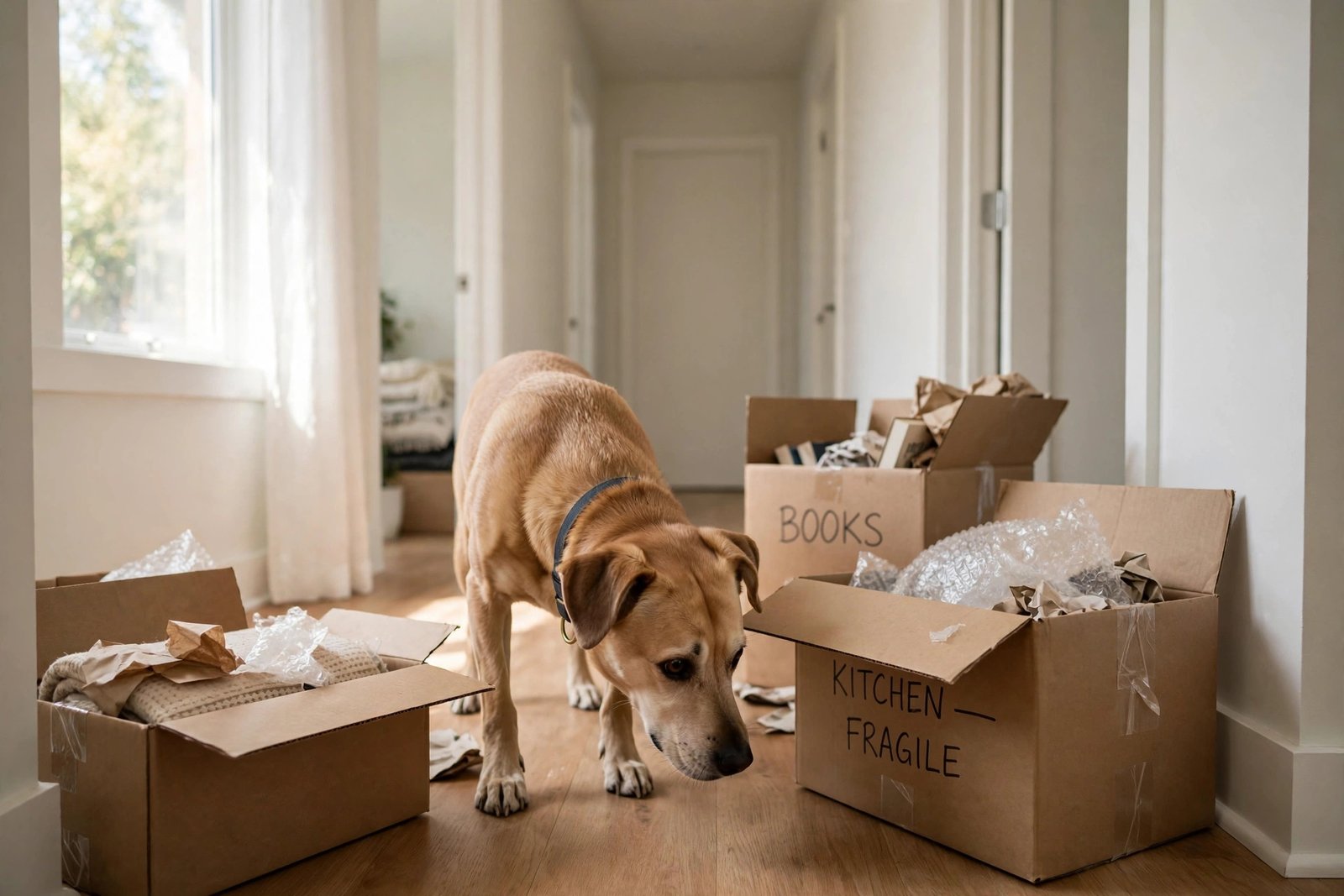
Arrival day sets the tone, so keep it calm. Let the dog explore the yard or the main room on leash first, sniffing at their own pace. Don’t drag them room to room for a grand tour — they’ll discover the house gradually over the coming days. Show them where water is, where their bed is, and where the door to go outside is. Then give them space.
That first evening, keep things quiet. A short walk, a calm dinner, some gentle company, and an early night. Many new owners make the mistake of overcompensating with excitement — constant petting, new toys every hour, visitors dropping by. It comes from love, but an overwhelmed dog reads it as more chaos. Calm, predictable, and a little bit boring is exactly what a stressed dog needs.
Night one can be the hardest, especially for puppies or dogs used to sleeping near people. If the dog cries, a calm presence nearby often helps more than caving completely or ignoring them entirely. Some owners sleep on the couch near the crate for the first few nights, gradually moving back to bed. There’s no single right answer — the goal is helping the dog feel safe enough to sleep, since rest is when stress hormones come down. Our puppy’s first week survival guide has night-by-night tips if your new arrival is a young pup.
Routines, Walks, and Exploring the Neighborhood
Once the first couple of days pass, routine becomes your best tool. Feed at the same times, walk at the same times, bedtime at the same time. Dogs can’t read clocks, but they absolutely learn sequences, and predictability is calming. A dog who knows what happens next doesn’t have to stay on edge wondering.
Start walks short and close to home. The neighborhood is full of new smells, dogs, and noises, and a long adventure can overstimulate a dog who’s still adjusting. Walk the same route for the first week or two so it becomes familiar territory, then gradually expand. Let the dog sniff — sniffing is how dogs process their world, and a “sniffy walk” is genuinely tiring in a good way. If your dog is nervous about traffic, other dogs, or city sounds, keep distance generous and reward calm behavior; there’s no rush to do the big park yet.
Begin gentle training early, but keep expectations low. Short sessions teaching (or refreshing) basics like sit, recall, and loose-leash walking give the dog mental work and build your communication. Training is also bonding — working together on simple tasks builds trust faster than almost anything else. Five minutes, a few times a day, with plenty of treats, is plenty in the settling-in period.
Common Bumps and When to Worry
Some regression is completely normal. A house-trained dog may have accidents in the first week — new smells, new doors, new routines. Clean them without fuss and go back to basics: frequent outdoor trips, praise for going outside. Most dogs sort this out within a couple of weeks once they learn the new layout. Similarly, barking at unfamiliar hallway noises or whining at night usually fades as the house becomes familiar.
Appetite dips are common in the first few days. A dog who skips a meal or two while adjusting is usually fine, but if they refuse food for more than about 48 hours, or seem lethargic, call your vet — it’s worth ruling out anything medical rather than assuming it’s just stress. The same goes for diarrhea from the stress of change: often mild and short-lived, but your vet can advise if it persists.
Know the difference between normal adjustment stress and signs a dog is truly struggling. Hiding constantly, shutting down, refusing to engage after a couple of weeks, or escalating fear behaviors deserve professional input — first your vet, to rule out medical causes, then a qualified trainer or behaviorist if needed. Most dogs don’t need that level of help; they just need time. But there’s no prize for waiting too long if your gut says something isn’t right.
Frequently Asked Questions
How long does it take a dog to adjust to a new home?
Most dogs show major improvement within three weeks and feel fully at home by three months, following the 3-3-3 rule. Shy, senior, or previously stressed dogs may take longer. Consistency and patience matter more than any specific timeline.
Should I let my new dog explore the whole house right away?
It’s better to start small. Give them one or two rooms at first and expand access gradually over the first week or two. A smaller space feels safer to an overwhelmed dog, and it makes house training and supervision much easier for you.
My new dog won’t eat. Should I be worried?
Skipping meals for a day or two during adjustment is common. Try offering the food they’ve been eating, keep mealtimes calm, and avoid hovering. If they refuse food for more than about 48 hours or seem lethargic, check with your vet to rule out anything medical.
Is it okay to have visitors meet the dog in the first week?
Keep visits minimal for the first several days. Your dog is already processing a lot, and new people add pressure. When introductions do happen, let the dog approach the visitor rather than the other way around, and keep it brief and low-key.
When can I start training my newly adopted dog?
You can start gentle, reward-based training from day one — short sessions of basics like name recognition and sit. Just keep expectations realistic during the decompression period. The first week is about building trust; formal training goals can wait until the dog is eating, sleeping, and relaxing normally.