
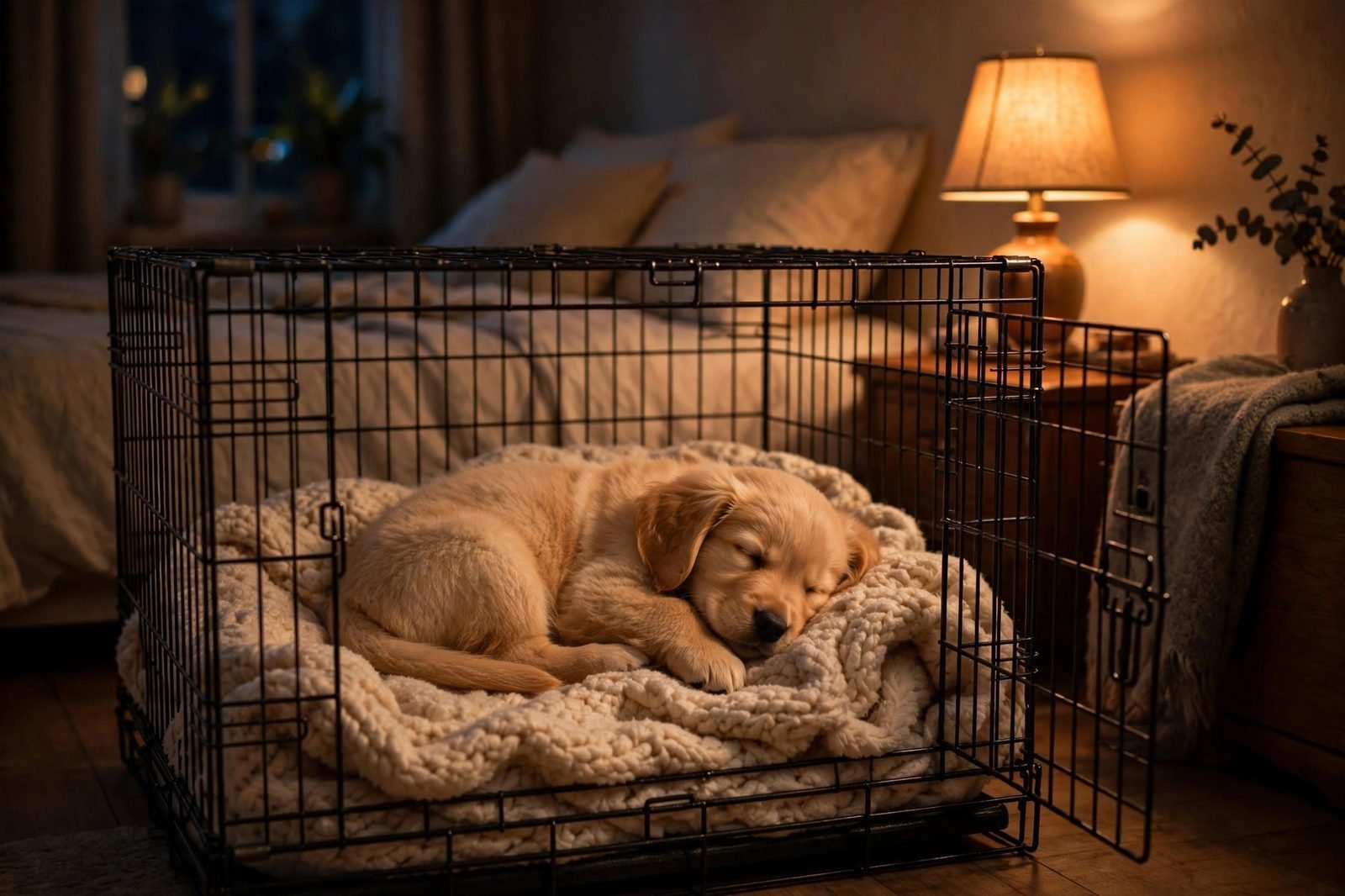

Nobody warned me about the crying. I’d read the books, watched the videos, bought the supplies — and still, at 2:47 a.m. on our first night together, I sat on the kitchen floor next to Pickle’s crate while he howled like I’d abandoned him in the wilderness, and I thought: what have I done?
If that sounds familiar — or if your puppy hasn’t come home yet and you’re trying to prepare — breathe. The first week is the hardest week. It’s also the week that sets the tone for everything after. This is my honest, day-by-day puppy first week home survival guide: what each day actually looks like, what to prioritize, and the small things that make a huge difference when you’re running on three hours of sleep.
Published: May 21, 2026 | Last updated: May 21, 2026
Quick Tips
- Take the puppy to the potty spot before you even enter the house.
- Keep the first week boring: same routine, same food, same quiet rooms.
- Puppies need 18–20 hours of sleep — enforce naps or they’ll turn feral.
- Take them out after waking, eating, drinking, and playing. Every time.
- Don’t invite visitors over for the first few days — let the puppy decompress.
- Write down the vet’s number and the emergency clinic’s number on day one.
Day 1: Arrival Day (Lower Your Expectations)
Pickup day is exciting for you and completely overwhelming for the puppy. They’ve just left everything they’ve ever known — their mother, their littermates, every familiar smell. Expect some combination of clinginess, hiding, refusal to eat, and possibly vomiting in the car. All normal.
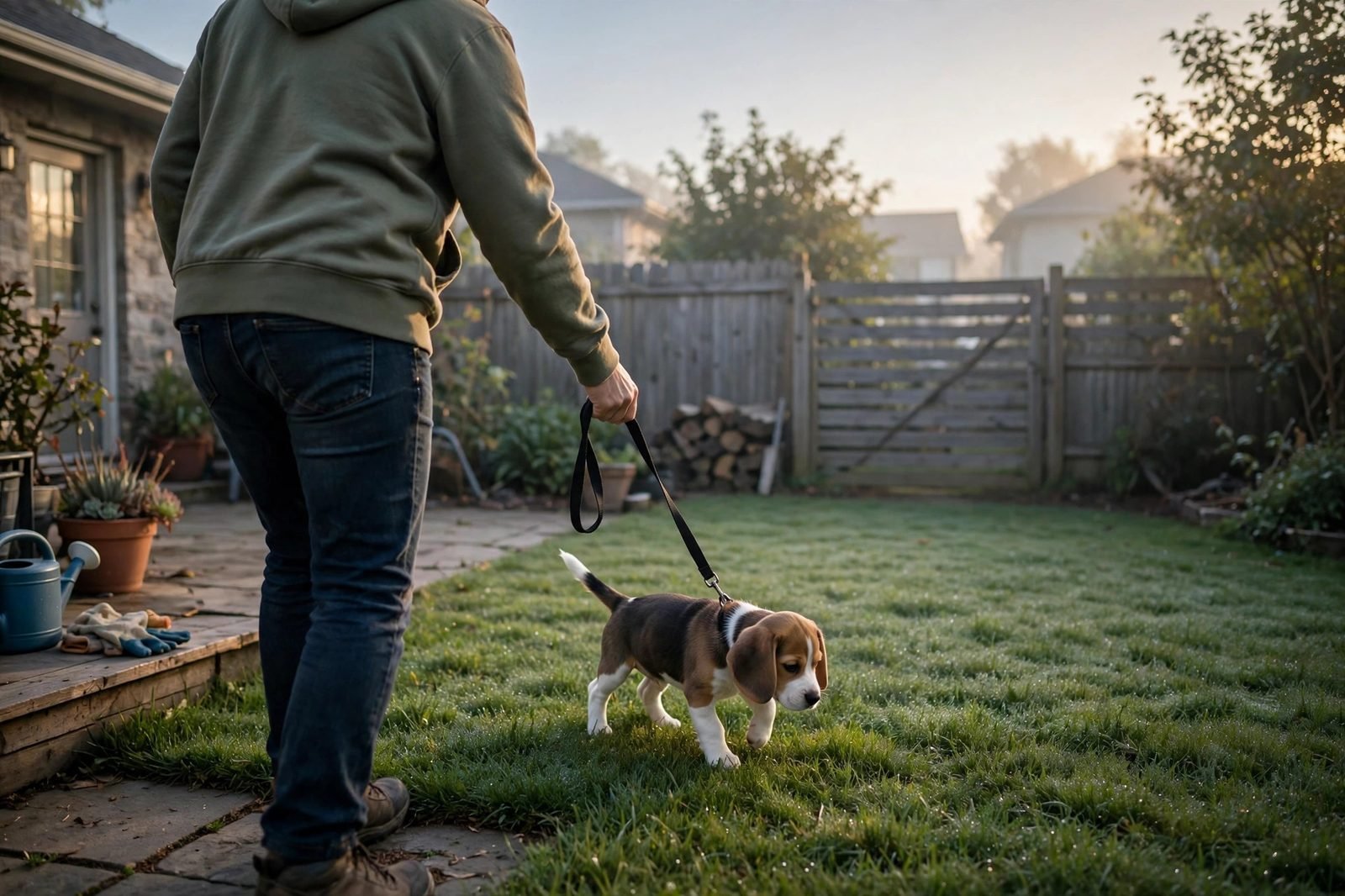
When you get home, take the puppy straight to the potty spot before going inside. This is the single most important arrival-day move. Let them sniff around, and when they go, praise them warmly and give a treat. You’ve just taught lesson one: this is where the bathroom is.
Inside, keep it calm. Show them the water bowl, the crate or bed, and one small area to explore. Don’t do the grand house tour. Don’t invite the neighbors. Let the puppy approach you rather than scooping them up constantly. Pickle spent his first two hours under my coffee table, and I just sat on the floor nearby reading, letting him decide when he was ready. He came out eventually. They always do.
That night, expect crying. A puppy’s first night away from their littermates is genuinely distressing for them. What helped us: the crate right next to my bed, close enough that Pickle could hear me breathing and I could dangle my fingers through the door. A ticking clock wrapped in a towel (mimics a heartbeat) and a warm water bottle also help. The crying peaked on night one, faded by night three, and was gone within a week. It feels endless at 3 a.m. It isn’t.
Days 2–3: The Routine Begins
This is when you establish the rhythm that will carry you through the whole first month. Puppies thrive on predictability — it tells them the world makes sense. Here’s the skeleton schedule that worked for us:
Morning: Wake up, immediate potty trip (carry them if needed — bladders are tiny), breakfast, potty again 10–15 minutes after eating, then play and training for 15–20 minutes, then enforced nap.
Midday: Potty on waking, lunch for young puppies (under 12 weeks usually eat 3–4 times a day), potty after, play, nap. Repeat the cycle.
Evening: Dinner (not too late — you want the last potty trip to actually empty the tank), final play session, wind-down, last potty trip right before your bedtime, then crate.
Night: Set an alarm for a middle-of-the-night potty break for the first week or two. A young puppy physically cannot hold it all night. Keep it boring — no lights, no playing, just out, potty, praise, back to bed. Pickle needed one 3 a.m. trip for about ten days, then started sleeping through.
The Potty Schedule Is Everything
House training in week one isn’t really “training” — it’s management. Take the puppy out after every sleep, every meal, every drink, every play session, and every 1–2 hours in between. When they go outside, celebrate like it’s the greatest achievement in history. When they have an accident inside (they will), clean it with enzyme cleaner and say nothing — punishment only teaches them to hide it from you.
If you want the full deep-dive on the method, my house training guide walks through the whole process step by step. Week one is just the foundation: frequent trips, big praise, zero scolding.
Days 4–5: The Personality Emerges
Around day four, something shifts. The scared, shut-down puppy starts showing you who they actually are. Pickle went from hiding under the coffee table to stealing socks and sprinting away with them, and honestly the sock thief was a relief — it meant he felt safe enough to be naughty.
This is also when overtired craziness usually peaks. Here’s what nobody tells you: puppies need 18–20 hours of sleep a day, and an overtired puppy doesn’t get sleepy — they get wild. Biting everything, zooming in circles, barking at nothing. If your puppy turns into a tiny demon every evening around 7 p.m., they’re probably not evil. They’re exhausted. Enforce naps in the crate or a quiet pen, even if they protest for a few minutes. They’ll conk out, and you’ll get your sweet puppy back.
Start Tiny Training Sessions
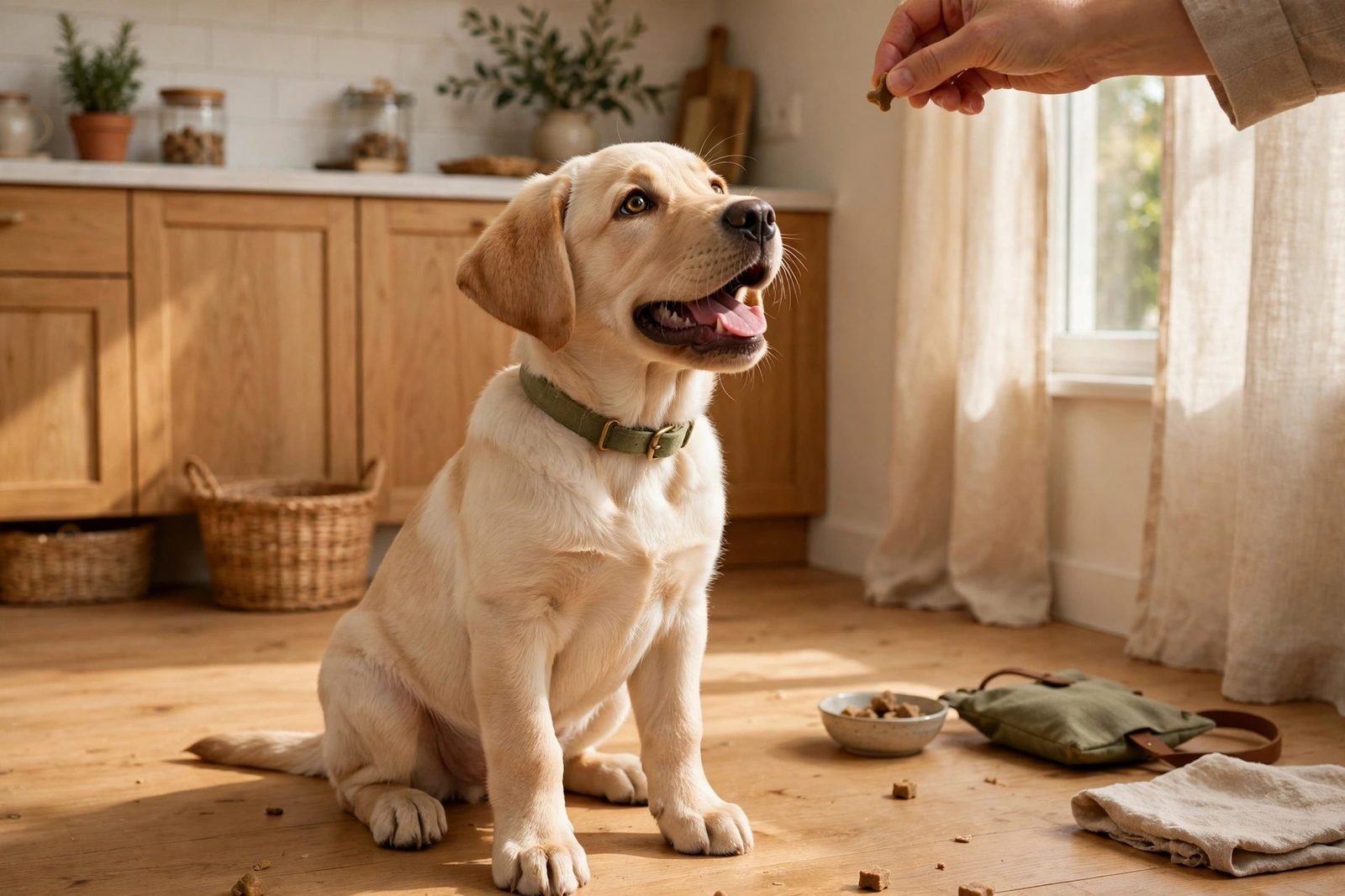
By mid-week, start two or three five-minute training sessions a day. The first things to teach: their name (say it, treat when they look), and “sit” (hold a treat over their nose, move it back over their head, their butt drops, treat). That’s plenty. My guide to teaching sit breaks down the lure technique if you want the details — it’s the foundation for everything else you’ll teach later.
Keep sessions short and end on a win. A puppy’s attention span is about as long as a commercial break. Five great minutes beats twenty frustrated ones.
Days 6–7: Finding Your Rhythm
By the end of the week, you’ll have a routine, the night crying will be fading, and you’ll start to feel like maybe — maybe — you’ve got this. A few week-one closing tasks:
The vet visit. If you haven’t gone yet, this week is the time. Bring vaccination records, ask about the schedule going forward, and get your forty questions answered. A calm first visit sets the tone for a lifetime of vet trips.
Start thinking about socialization — carefully. The socialization window is real and it closes fast, but a not-fully-vaccinated puppy can’t just go to the dog park. Carry them through busy areas, let them watch the world from your arms, invite one calm vaccinated dog over. There’s nuance here around what’s safe before vaccines are complete — I cover the timing in my article on when puppies can go outside.
Introduce gentle handling. Touch the paws, look in the ears, lift the lips — briefly, with treats. You’re building the foundation for a lifetime of easy grooming and vet exams. Two minutes a day now saves years of wrestling later.
What Week One Feels Like (Honestly)
Let me be straight with you: week one is wonderful and terrible in equal measure. You’ll feel overwhelming love when the puppy falls asleep on your chest. You’ll feel despair when they pee on the rug thirty seconds after coming inside from a twenty-minute potty trip. You’ll question your life choices at 4 a.m. You’ll also laugh more than you have in months.
Everyone goes through this. Every experienced dog owner you admire once sat on a kitchen floor at 3 a.m. wondering what they’d done. The secret is that it passes faster than you think. By week three, Pickle was sleeping through the night and sitting on cue, and I was already telling people “oh, the first week wasn’t that bad.” It was that bad. I just forgot, the way you forget anything worth doing.
Frequently Asked Questions
How long does it take a puppy to adjust to a new home?
Most puppies show their real personality within 3–5 days, settle into a routine within two weeks, and feel fully at home within a month. The old “3-3-3 rule” (3 days to decompress, 3 weeks to learn the routine, 3 months to feel at home) is a useful rough guide, especially for rescues. Don’t worry if your puppy seems timid at first — it isn’t their final personality.
Should I let my puppy cry it out at night?
For the first few nights, comfort them. A brand-new puppy crying in a strange place is genuinely distressed, not manipulating you. Having the crate next to your bed, offering a finger through the door, and keeping a calm presence nearby all help. As they settle in over the first week, you can gradually increase distance. Most puppies stop night crying within a week or two once they learn the routine is safe.
How often should a new puppy eat?
Young puppies (8–12 weeks) typically eat three to four small meals a day. Keep the same food and schedule they had before coming home for at least the first couple of weeks — consistency matters more than perfection right now. Always have fresh water available.
When can I start walking my puppy outside?
Short, carried outings for socialization can start right away, but walking on the ground in public areas depends on vaccination status — your vet will advise based on disease risk in your area. Until then, your yard or garden (if secure and not visited by unknown dogs) is fine for potty trips and play.
My puppy bites everything — is this normal?
Completely. Puppies explore with their mouths, and biting peaks during teething. Redirect onto appropriate chew toys every single time, keep sessions calm when the biting escalates (overtired puppies bite hardest), and never punish — it doesn’t teach them anything except to fear hands. The intense mouthing phase usually eases significantly by 5–6 months.
Is it normal to feel regret after getting a puppy?
So normal it has a name: the puppy blues. Sleep deprivation plus constant vigilance plus a creature that pees on your rug is a brutal combination. It typically lifts within two to four weeks as routines solidify and sleep returns. If the feelings persist or feel overwhelming, talk to someone — fellow dog owners, a trainer, or a counselor. Struggling in week one doesn’t mean you made a mistake; it means you’re a normal human adjusting to a huge change.