
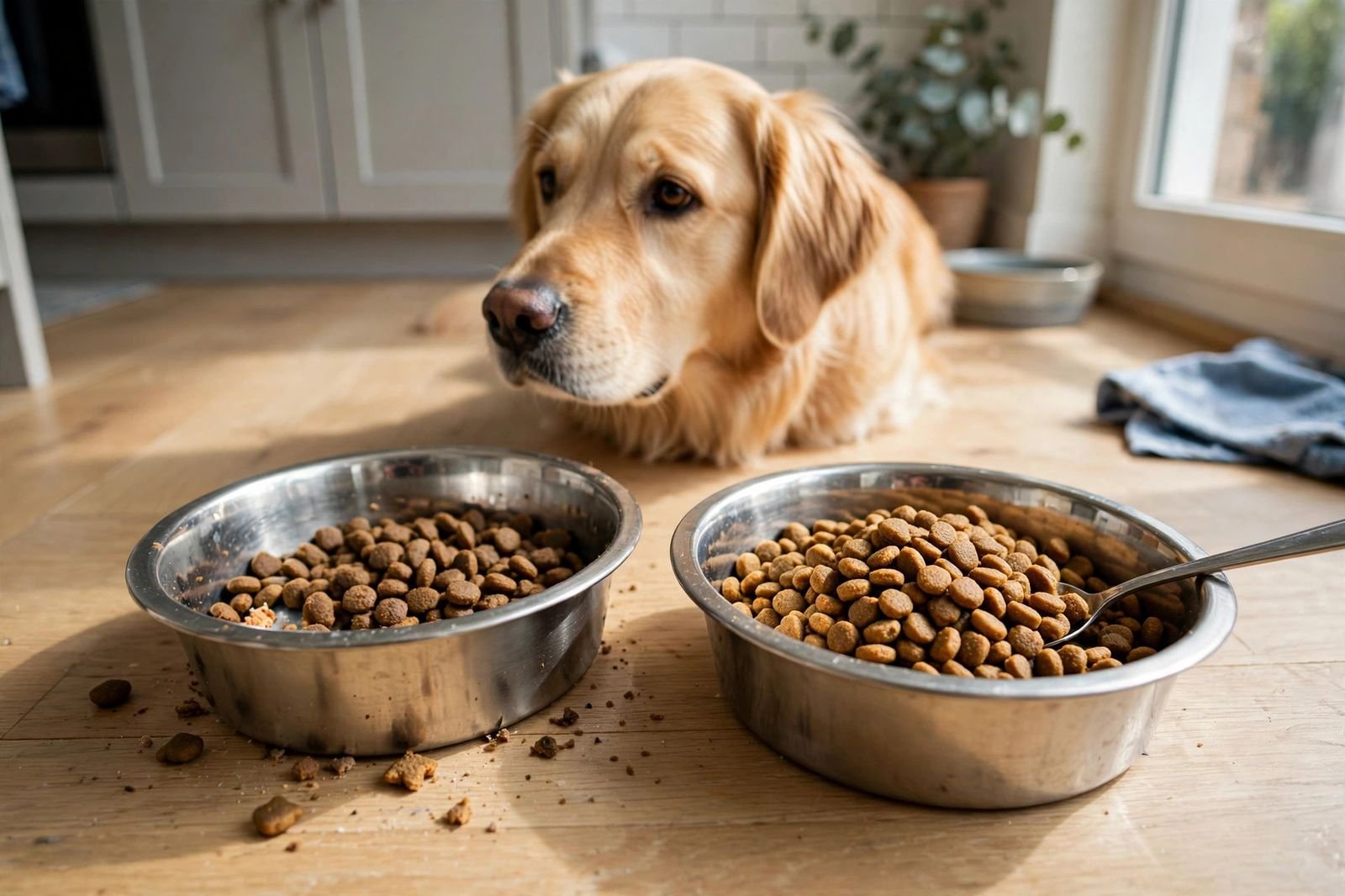

How to Switch Your Dog’s Food Without Upset Stomachs
Many owners learn about food transitions the hard way — standing in the yard at 5 a.m. with a flashlight and a roll of poop bags. The classic mistake goes like this: bring home a new bag of kibble — better ingredients, great reviews — and swap the dog’s food cold turkey that same evening. By morning, the dog’s stomach has filed a formal complaint. What follows is usually three days of loose stools, a gassy dog, and a worried midnight search for “did I break my dog.”
Nothing is broken. The skipped step is the one rule that makes switching dog food uneventful: transition gradually. A dog’s digestive system adapts to what it eats regularly, including the specific gut bacteria that handle that food. Change the food overnight and you pull the rug out from under that whole system. Do it over 7–10 days and most dogs sail through without a single soft stool. Here is the exact schedule, plus what to do when things still go sideways.
Published: June 1, 2026 | Last updated: June 1, 2026
Quick Tips
- Transition over 7–10 days minimum — longer for puppies, seniors, and sensitive stomachs.
- Start with 75% old food and 25% new, shifting the ratio every few days.
- Keep everything else constant during the switch: same schedule, same treats, same portions.
- Mild soft stools during transition are common; persistent diarrhea is not — slow down or stop.
- Always have enough of the old food left to complete the transition — buy the new bag early.
- Match the new food to your dog’s life stage and size; the “best” food is the one that suits your dog.
Why Sudden Switches Cause Problems
A dog’s gut is home to a whole community of bacteria tuned to digesting its regular diet. Different foods — different protein sources, fiber types, fat levels — favor different bacterial populations. When you change food abruptly, the gut community needs time to reshuffle, and in the meantime digestion gets sloppy. The classic symptoms: soft stools, diarrhea, gas, gurgling stomach, and sometimes vomiting or a skipped meal.
Most healthy adult dogs bounce back within a few days even after an abrupt switch. But puppies, seniors, and dogs with sensitive stomachs can have a rougher time, and a bad transition can put a dog off the new food entirely through sheer association. The gradual method avoids all of this, and it costs you nothing but a little patience and some measuring.
The 7–10 Day Transition Schedule
This is the standard schedule recommended by vets and nutritionists, and it works for the vast majority of dogs. The principle is simple: change the ratio a little every few days, giving the gut time to adjust at each step.
Days 1–3: 75% old, 25% new
Mix a quarter of the new food into the usual portion of old food. At this ratio most dogs notice nothing at all. Serve at the normal mealtimes — this is not the moment to also change the feeding schedule. If you are still figuring out the right daily amount for a growing dog, my puppy feeding amounts guide will help you get portions right before the switch complicates things.
Days 4–6: 50% old, 50% new
Move to a half-and-half mix. This is the stage where sensitive dogs sometimes show mild soft stools. That is normal and not a reason to panic — it is the gut adjusting. If stools stay formed, carry on. If they get loose, hold at this ratio for an extra two days before moving on.
Days 7–9: 25% old, 75% new
Now the new food dominates. By this point most dogs are fully comfortable. Appetite should be normal, energy normal, stools normal. If your dog is enthusiastic about the new food, you might be tempted to jump ahead — resist it. The last stretch is where impatient owners get caught.
Day 10: 100% new
Full switch. Keep an eye on things for another few days — stools, appetite, energy, coat — since some sensitivities only show up once the old food is completely gone.
When to go slower
Some dogs need 14 days or even three weeks: puppies under six months, seniors, dogs with a history of digestive sensitivity, and dogs switching between very different food types (say, from a chicken-based kibble to a fish-based one, or from kibble to wet food). There is no prize for finishing fast. If your dog has ever had a rough transition before, default to the slow version.
Setting Up the Switch for Success
The schedule is the core, but a few setup details make the difference between smooth and bumpy.
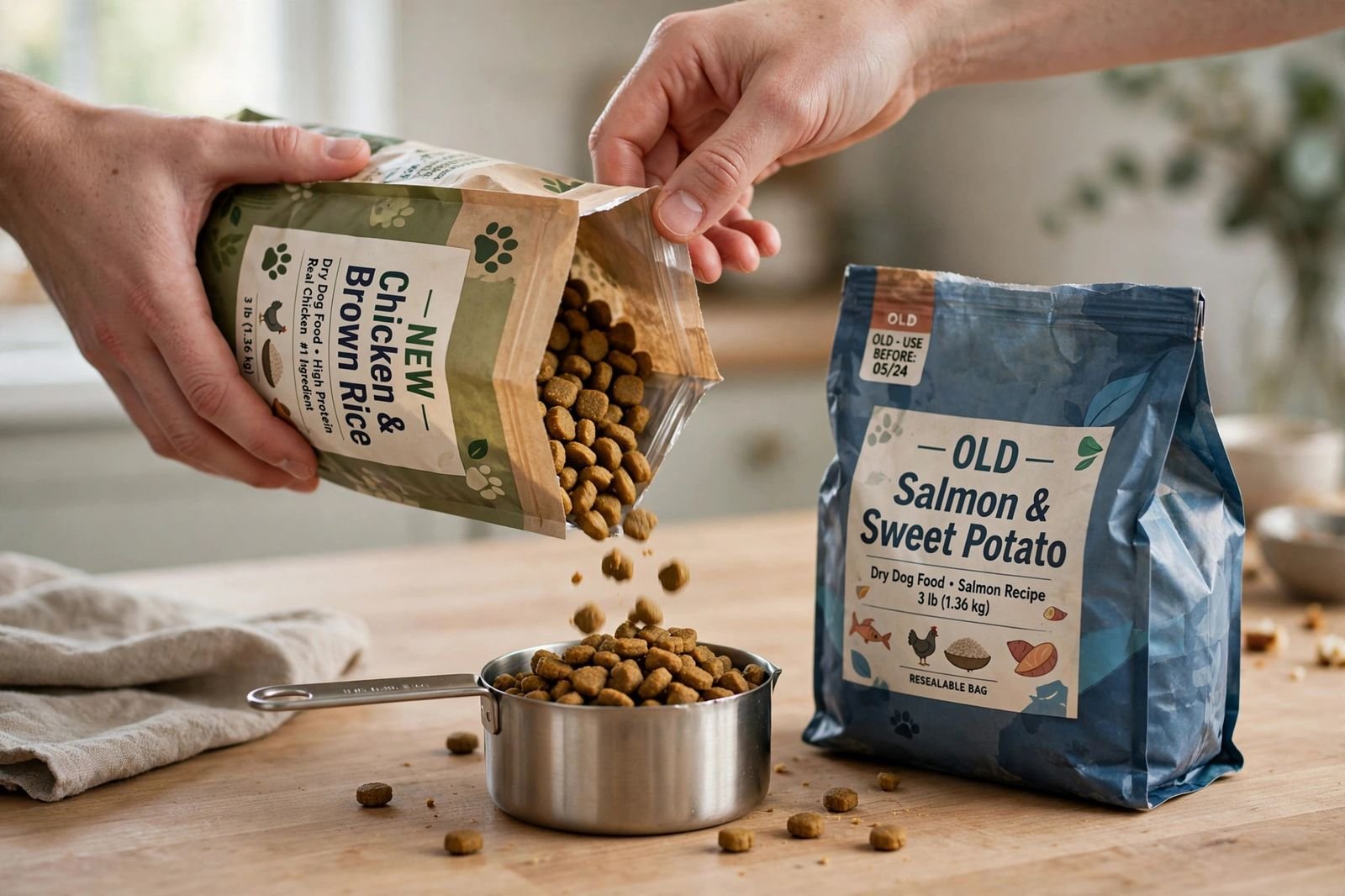
Buy the new food before the old runs out. The most common reason transitions get rushed is an empty bag of old food and a full bag of new. When you decide to switch, check that you have at least two weeks of the old food left. This sounds obvious and is ignored constantly.
Change nothing else. During the transition, keep mealtimes, portion sizes, treats, and table scraps exactly as they were. If something goes wrong you want exactly one variable to blame. This is also a good moment to make sure the feeding routine itself is solid — my adult dog feeding schedule guide covers timing and frequency if yours needs a tune-up first.
Measure, do not eyeball. Ratios only work if the total amount stays consistent. Use a measuring cup and keep the total daily portion the same as before, just divided between the two foods in the day’s ratio. Dogs that get “a bit extra of the new stuff to try” are getting an uncontrolled experiment.
Store both foods properly. Keep kibble in its original bag (which is designed to preserve it) inside a sealed container, in a cool dry place. A transition derailed by stale or rancid new food is a frustrating way to conclude the new brand is bad when the storage was the problem.
Troubleshooting: When the Transition Goes Wrong
Even with a gradual switch, things occasionally go sideways. Here is how to read the signals:
Mild soft stools
Slightly soft but formed stools during the middle days of transition are the most common hiccup and usually resolve on their own. Slow the schedule — hold the current ratio for 2–3 extra days before advancing. Do not go backward unless things worsen.
Diarrhea
Watery diarrhea means the gut is overwhelmed. Drop back to the previous ratio that produced normal stools and hold there for several days. If diarrhea persists beyond 24–48 hours, or if there is blood in the stool, stop the transition and talk to your vet — that is beyond “adjustment” territory. Knowing when a symptom warrants a vet call is one of the most useful judgment calls a new owner can develop.
Vomiting or food refusal
An occasional skipped meal during transition is not alarming — some dogs are suspicious of change. But repeated vomiting or refusing food for more than a day needs attention. Try warming the food slightly or adding a spoonful of warm water to release aroma; sometimes it is a palatability standoff rather than a digestive problem. If the dog was enthusiastic about the new food as a treat but rejects it as a meal, the issue may be the ratio change rather than the food.
Itchy skin, ear redness, or excessive gas after the switch is complete
These can signal a sensitivity to an ingredient in the new food rather than a transition problem — they show up after the old food is fully gone. Give it a week or two on the full new diet; if symptoms persist, the food itself may not suit your dog, and it is worth discussing alternatives with your vet rather than cycling through random bags.
Special Cases Worth Knowing About
Switching a puppy to adult food
Puppies typically move to adult food around 12 months (longer for large and giant breeds — often 18–24 months, since they mature more slowly). Use the same gradual schedule, and time the switch for a calm period — not the week of a move, a new family member, or vaccinations. Puppy stomachs are less forgiving of abrupt change than adult ones.
Kibble to wet food (or the reverse)
Changing food texture as well as formula is a bigger leap for the gut. Extend the transition to a full two weeks minimum. Note that portion volumes differ enormously between wet and dry food — go by the feeding guidelines and your dog’s condition, not by matching cup-for-cup.
The “my dog won’t eat the mix” problem
Some dogs are expert food sorters, eating around the new kibble and leaving it in the bowl like a protest. Slightly moistening the mix with warm water helps the flavors blend and makes sorting harder. Mixing thoroughly rather than layering helps too. And if your dog genuinely loves the new food and picks out only that — congratulations, but still keep the ratios gradual. Enthusiasm is not the same as digestive readiness.
Switching because the old food was recalled or discontinued
Sometimes you do not get a graceful timeline. If the old food is gone or unsafe, do the best transition you can with whatever you have — even 3–4 days of mixing beats a cold switch. In a true emergency switch, smaller and more frequent meals for the first few days are gentler than two big ones.
Frequently Asked Questions
How long does it take to switch dog food?
Plan on 7–10 days for most adult dogs, using a gradual ratio shift from mostly old food to all new food. Puppies, seniors, sensitive-stomach dogs, and big formula changes (like kibble to wet) do better with 14–21 days. Rushing is the number one cause of transition diarrhea.
What happens if you switch dog food too fast?
Most commonly diarrhea, soft stools, gas, and stomach gurgling for a few days as the gut bacteria adjust. Most healthy dogs recover on their own, but puppies and sensitive dogs can have a harder time. If diarrhea lasts more than a couple of days or contains blood, see a vet.
Can I mix two dog foods together long-term?
Yes — many owners permanently feed a mix of two foods, and there is nothing wrong with it as long as both are complete and balanced and the total daily portion is right. Just be aware that mixing long-term makes it harder to identify which food is causing a problem if sensitivities develop later.
Should I switch my dog’s food gradually even if it’s the same brand?
Yes, if the formula is different — a chicken recipe to a lamb recipe is a real change to the gut even under the same brand name. If it is literally the same product in a new bag, no transition is needed. When in doubt, transition; it costs nothing.
My dog has diarrhea from the new food. Should I go back to the old food?
First try slowing down: return to the last ratio that produced normal stools and hold it for several days. Only abandon the new food if digestive upset persists at every ratio or continues beyond a few days on the full new diet — at that point the food itself may not agree with your dog. Persistent diarrhea, blood in stool, or vomiting warrants a vet visit.
Do I need to transition between flavors of the same food?
A short transition of 4–5 days is a sensible middle ground. Different flavors usually mean different protein sources, which is enough of a change to upset sensitive stomachs. Hardy dogs may handle it fine, but the gradual approach is cheap insurance.