


How to Keep an Indoor Cat Happy and Active
Every indoor cat owner has wondered it at some point: is my cat actually happy in here? Cats are clever, curious little hunters, and four walls can start to feel small for them. The good news is that indoor cats can live wonderfully full lives — they just need us to bring a bit of the outside world inside. Here’s how to do it, without spending a fortune or remodeling your home.
Quick Tips
- Play with your cat 10–15 minutes twice a day — short interactive sessions beat one long one.
- Rotate toys every week or two so old ones feel new again.
- Add vertical space: a tall scratcher or cat tree makes a small home feel much bigger.
- Set up a window perch — watching the world go by is genuine entertainment for a cat.
- Keep the litter box scooped daily and placed somewhere quiet and easy to reach.
- Stick to a predictable routine; cats find real comfort in knowing when meals and play happen.
Why Indoor Cats Need More Than Food and a Litter Box
Food, water, and a clean litter box cover survival — but a cat’s brain was built for more. In the wild, cats spend their days patrolling, stalking, pouncing, climbing, and solving small problems. Remove all of that and you can get a bored cat, and boredom in cats rarely looks like boredom. It shows up as 3 a.m. hallway sprints, chewed houseplants, a shredded sofa arm, overeating out of sheer nothing-better-to-do, or sleeping far more than seems right.
Many owners mistake these behaviors for a “bad” cat when the cat is really just under-stimulated. The fix is giving them outlets for instincts they already have: hunting, climbing, scratching, exploring, and resting somewhere high and safe. Let’s walk through it.
1. Make Play a Daily Habit
This is the single biggest lever you have. Most behavior quirks in indoor cats improve noticeably once the cat has a real play routine — and by real, I mean interactive play where you’re holding the other end of the toy.
A wand toy with feathers or ribbon is the gold standard because it moves like prey. Mimic how prey behaves: let the “bird” flutter, freeze, dart behind furniture, and occasionally get caught. A toy dragged in a straight line is boring; a toy your cat stalks, misses twice, then finally catches is the payoff their brain is wired for.
Aim for two sessions of 10–15 minutes, morning and evening, when cats are naturally most active. End with a small meal or treat — hunt, catch, eat, groom, sleep is the natural cycle, and feeding after play helps everyone sleep better. If you’re stocking up, our guide to the best toys for bored indoor cats covers the types that hold attention longest.
2. Rotate Toys So Old Ones Feel New
Cats lose interest in toys fast. A predator’s brain stops noticing things that never change, so even the best feather teaser gets ignored after a few days. The cheap fix: split toys into two or three groups, put one out, stash the rest. Swap every week or two and the returning toys feel brand-new.
Pay attention to what your cat actually loves and double down on it — crinkly tunnels, small mice to carry around, or just cardboard boxes. If your cat’s favorite toy is a balled-up receipt, that’s a win. It was free.
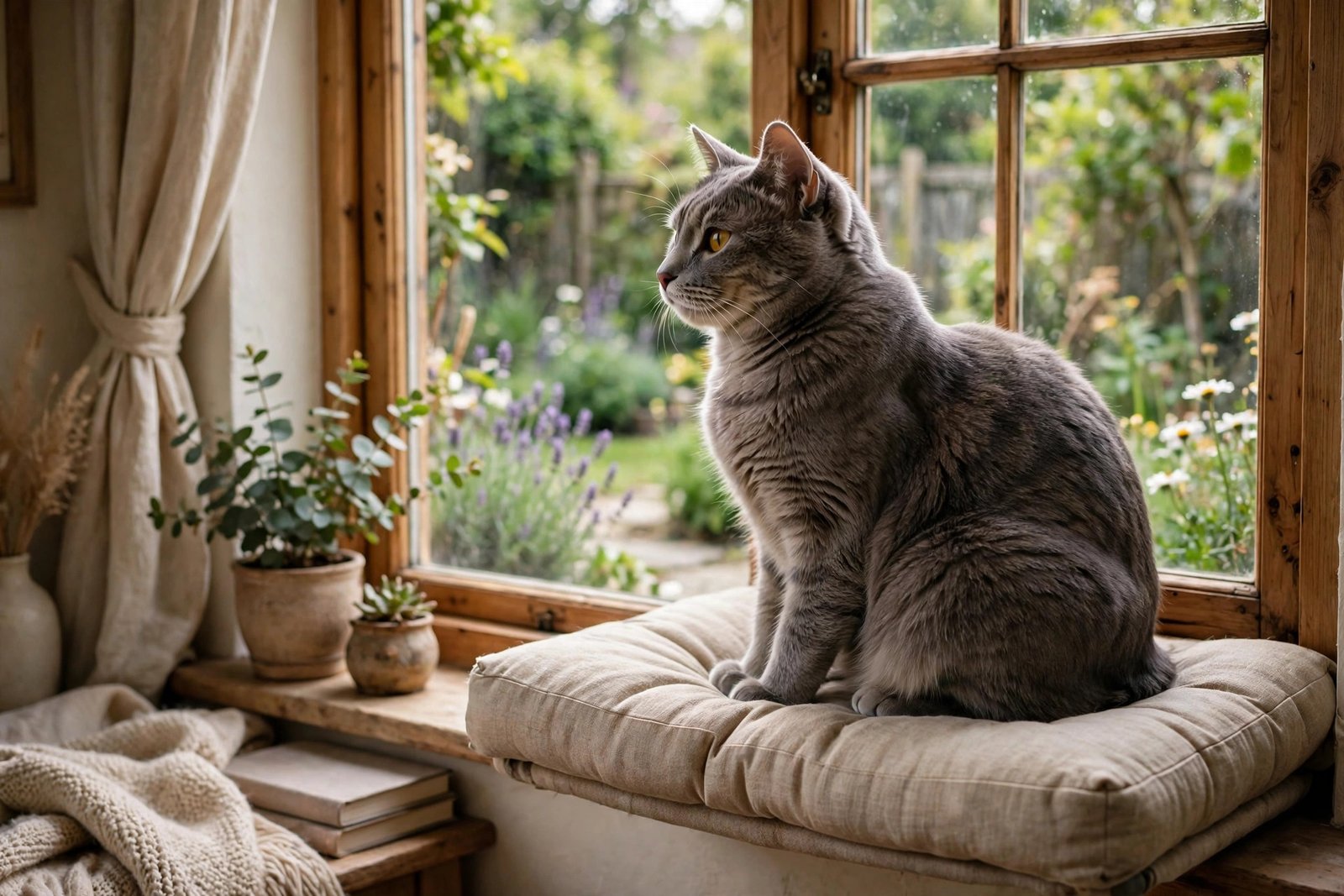
3. Add Vertical Space and a Window With a View
Cats think in three dimensions. A tall scratching post or modest cat tree in a corner can completely change how a cat uses a room, and placed near a window it becomes a lookout tower. Tight on floor space? A sturdy cleared-off shelf works too — just make sure it’s rock solid, because cats won’t trust a wobbly perch.
Speaking of windows: a huge number of indoor cats spend hours at the glass, and it’s basically cat television — birds, leaves, neighbors, the occasional squirrel drama. A suction-cup perch or a cat tree by the window is one of the easiest enrichment wins there is. A bird feeder outside that window upgrades it to a premium channel. Just keep windows securely screened — an open unscreened window plus a passing bird is how indoor cats get lost or hurt.
4. Put Scratchers Where They’ll Actually Be Used
Scratching isn’t misbehavior; it’s maintenance — claw care, a full-body stretch, and scent marking in one. A cat shredding the sofa usually just needs a better option nearby. Placement matters more than the scratcher itself: cats like to scratch right after waking and near their hangouts, so put one by the favorite nap spot and another near (not across the room from) the targeted sofa.
Match the style to the cat. Vertical scratchers need to be tall enough for a full stretch — the foot-high ones are too short for most adults. Horizontal fans do great with a flat cardboard scratcher. A sprinkle of catnip on a new one speeds up discovery, and a calm “good” plus a treat when they use it builds the habit far better than scolding ever will.
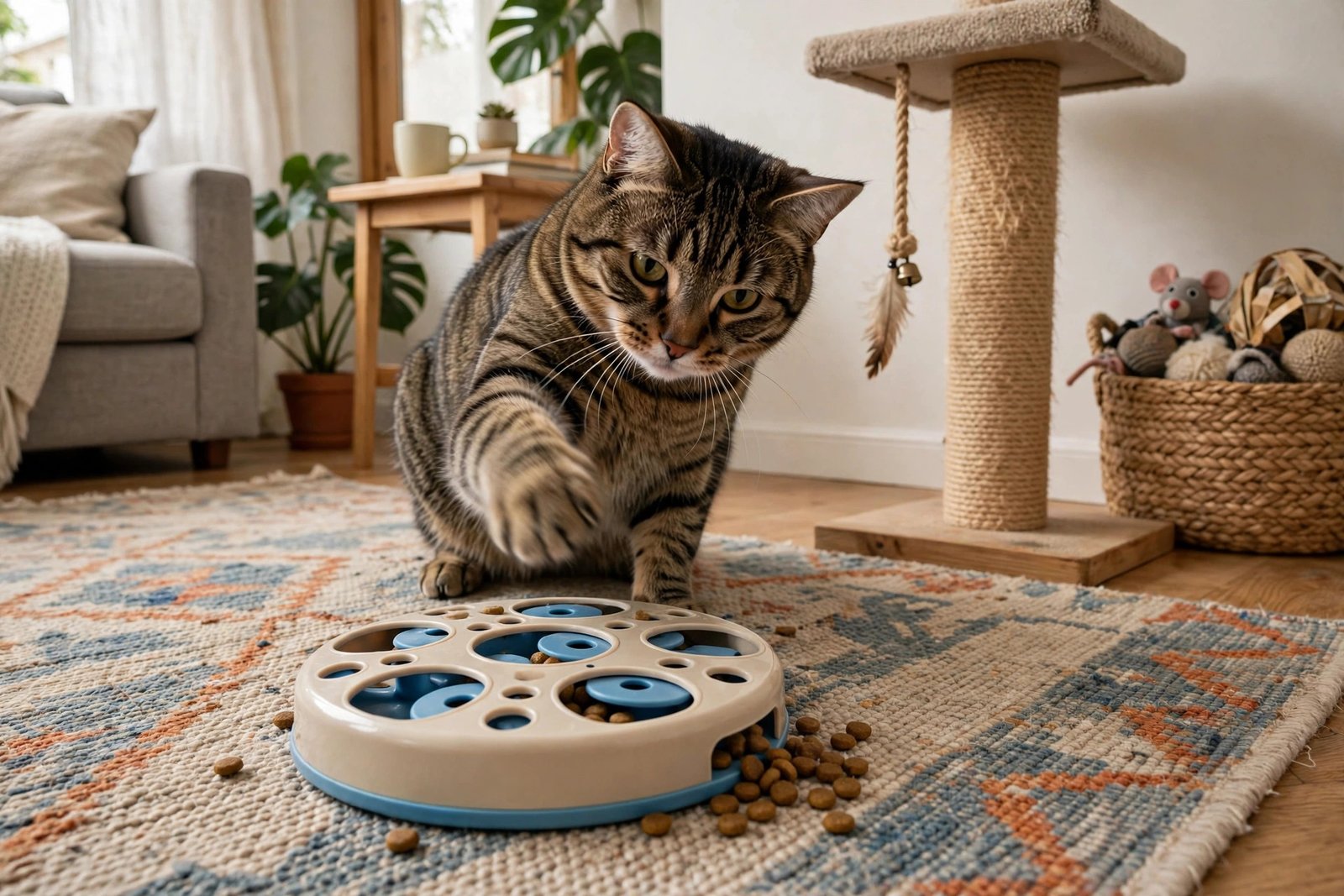
5. Make Mealtimes a Little More Interesting
A wild cat might make a dozen small “kills” a day; we put a full bowl down twice and call it done. Puzzle feeders bridge the gap — your cat bats a ball to release kibble or fishes pieces from compartments, working a little for dinner. Start easy (a frustrated cat just demands the bowl back) and level up once they’re confident.
It also slows down fast eaters and turns food into part of the day’s entertainment rather than something that just appears. For cats who graze out of boredom, that’s a meaningful change.
6. Offer Hiding Spots and Keep a Steady Routine
A confident cat isn’t one with nowhere to hide — it’s one who knows they can hide whenever they want. Boxes, a blanket draped over a chair, an igloo bed in a quiet corner: these give your cat a retreat, and that option is what makes the rest of the house feel safe. Never drag a hiding cat out for cuddles; let the den be sacred and they’ll emerge on their own terms.
Cats also run on routine more than most first-time owners expect. You don’t need a timetable — just keep the anchors consistent: meals at roughly the same times, play in the same part of the day, a calm evening wind-down. A chaotic schedule can genuinely stress a cat, showing up as clinginess or appetite changes. When life changes (new job hours, a move), keep everything else steady for a week or two while they adjust.
7. Consider a Buddy — or Safe Outdoor Access
“Should I get a second cat?” Sometimes — if you do it right. A well-matched companion can be wonderful, but cats are territorial and a rushed introduction can mean months of stress. The slow, scent-first method (separate rooms, swapped bedding, feeding on opposite sides of a closed door) over days or weeks is what makes it work. And plenty of single cats are perfectly happy solo, provided their human steps up with play.
For the outdoor itch, middle-ground options exist: an enclosed “catio,” harness walks after patient training, or a fully secured balcony. They give sunshine, fresh air, and bug-watching without the risks of free roaming. Our indoor vs. outdoor cats comparison lays out the trade-offs if you’re weighing it up.
8. Brush, Bond, and Watch for Changes
Regular brushing does double duty: it prevents mats (which get painful if ignored) and it’s calm together-time most cats enjoy. Keep sessions short and pleasant, especially at first — a few strokes, a treat, done. It’s also a natural moment to notice lumps, bald patches, or flaky skin worth mentioning to your vet.
Speaking of noticing: cats hide problems, so watch for gradual changes — sleeping much more, eating much less (or more), hiding when they used to be social, or litter box shifts. Anything lasting more than a day or two deserves a vet call, not panic. And learn what contentment looks like too: slow blinks, kneading, a relaxed belly-up sprawl, and that deep purr when you hit the spot behind the ears. That’s your evidence it’s all working.
Start Small
You don’t need to do everything this week. Add one thing — a daily play session is the highest-impact start — then a scratcher by the sofa or a perch by the window next week. Small improvements stack fast. For fresh ideas along the way, revisit our guide to the best toys for bored indoor cats — a new toy in the rotation every couple of weeks keeps things interesting.
Frequently Asked Questions
Is it cruel to keep a cat indoors?
Not at all — indoor cats live longer on average, avoiding traffic, fights, and many diseases. What matters is whether the indoor environment meets the cat’s needs for play, climbing, and stimulation. An enriched indoor home beats a neglected outdoor life every time.
How much playtime does an indoor cat need daily?
Most do well with two interactive sessions of 10–15 minutes, morning and evening. Kittens often want more; seniors may prefer shorter, gentler play. Watch your cat — still wired after 15 minutes, keep going; walks away after five, that’s their answer.
My cat sleeps all day. Is that normal or boredom?
Cats naturally sleep 12–16 hours, so lots of napping is normal. The question is what they do awake: a cat who plays eagerly and explores is probably fine. One who is awake but listless, or sleeping noticeably more than usual, may be bored — or unwell, which means a vet visit.
Do indoor cats get lonely when I’m at work?
Many handle it fine with window views, toys, and a predictable routine. More social cats may appreciate extra interactive evening time. If yours greets you frantically or is destructive only while you’re gone, puzzle feeders and rotating toys can fill the quiet hours.
What’s the single best enrichment item?
A tall, sturdy cat tree near a window — climbing, scratching, napping, and bird-watching in one piece of furniture. After that, a simple wand toy for daily interactive play gives the most happiness per dollar.
Can an indoor cat go outside safely?
Yes, with precautions: enclosed catios, harness walks after training, or secured balconies. Always supervise, keep vaccinations and parasite prevention current (your vet can advise), and never leave a cat unattended in an unenclosed space.