
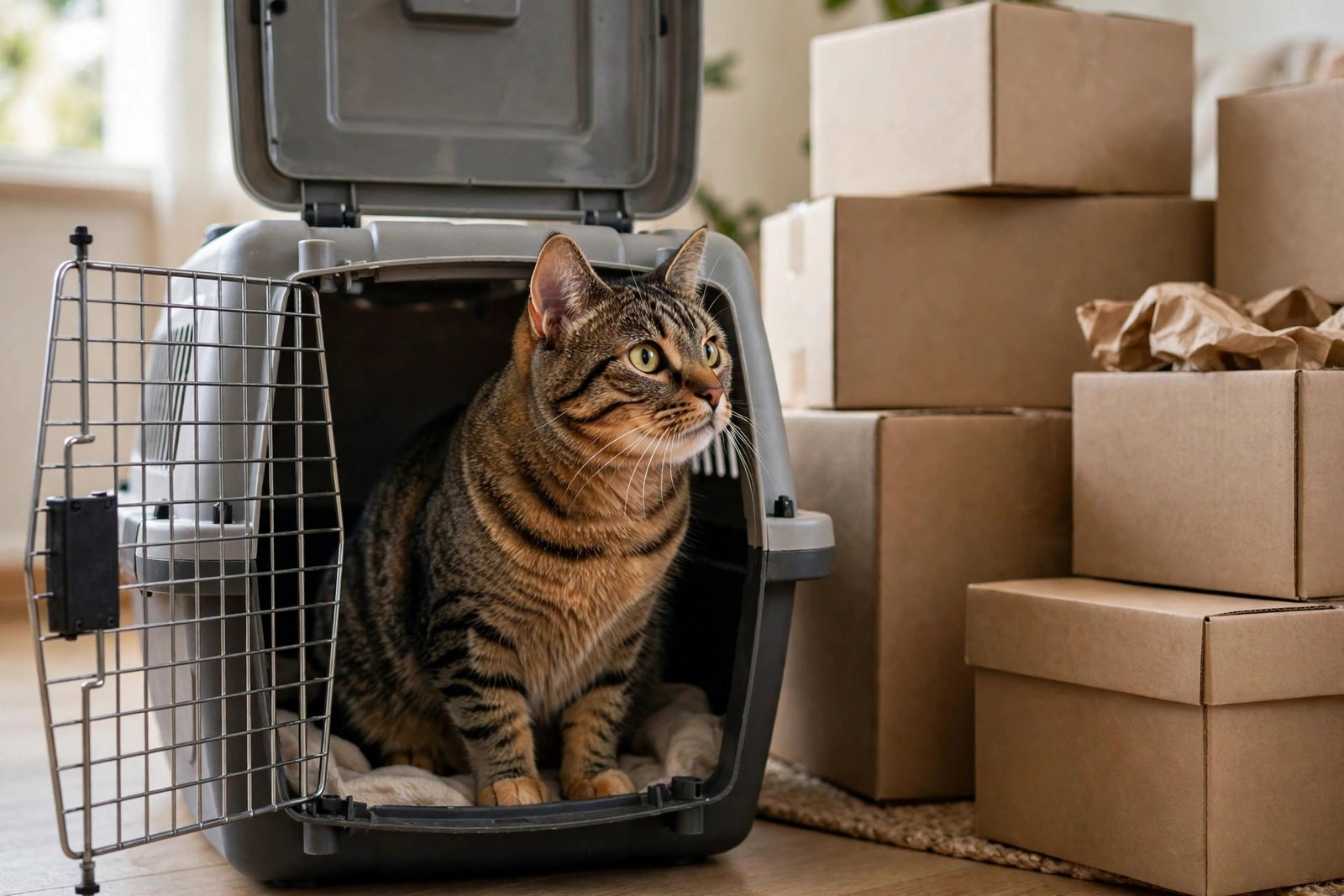

Moving to a New Home With a Cat (Stress-Free Guide)
Cats are creatures of territory. Their entire sense of security is built on knowing exactly which sunbeam lands where at 4 p.m. and which corner smells like them. So when you pack up that entire world into boxes and transport it somewhere unfamiliar, it is no surprise that many cats find moving deeply unsettling. The good news: with the right plan, most cats settle into a new home within a week or two — and the plan is mostly about what you do before and during the move, not after.
This guide covers the full timeline: preparing in the weeks before, surviving moving day itself, and setting up the first week so your cat feels safe as quickly as possible.
Quick Tips
- Start carrier training weeks early — a carrier-savvy cat is a calmer traveler.
- On moving day, confine the cat to one closed room or board it for the day.
- Set up a single “safe room” first at the new home before letting the cat explore.
- Bring unwashed bedding — familiar smells are the fastest comfort.
- Keep food, litter, and routine identical for the first two weeks.
- Most cats settle in 1–2 weeks; hiding at first is normal, not a crisis.
Weeks Before: The Preparation Phase
Make the carrier a happy place. If your cat currently only sees the carrier on vet-visit days, the carrier itself is a stress trigger — which means moving day starts with a chase, a battle, and a terrified cat. Fix this weeks ahead: leave the carrier open in the living room with a soft blanket inside, toss treats in it randomly, feed a meal near it. The goal is a cat that walks into the carrier voluntarily. This single preparation step does more for moving-day calm than anything else.
Get the vet details sorted. If you are moving far, research a new vet before you go and have records transferred. Refill any prescriptions with enough buffer for the transition. And update your cat’s microchip registration with the new address — moves are one of the most common times cats slip out, and a current microchip is the thing that brings them home.
Keep routines boring. In the chaotic weeks of packing, the best gift you can give your cat is normalcy: same feeding times, same play sessions, same cuddle spots. Cats read household disruption clearly, and a steady routine is an anchor while the world rearranges itself into boxes.
Pack the cat’s things last. Leave the bed, the scratching post, the favorite blanket out until the final day. These smell like home and like the cat, and stripping them away early removes the cat’s comfort objects during the most stressful part. Pack one “cat essentials” box separately — food, litter, bowls, medications, a blanket — so it is the first thing you unpack, not the last thing you find.

Moving Day: Survival Protocol
Moving day is loud, chaotic, and full of open doors — the three things cats handle worst. The protocol is simple: the cat does not participate in moving day.
Option one: confine the cat to a single room with the door closed, with food, water, litter, and a hiding spot. Put a big sign on the door — “CAT INSIDE, DO NOT OPEN” — because movers and helpful friends will open every door they see. Option two, and honestly the calmer choice for very anxious cats: board the cat or leave it with a trusted friend for the day, and collect it once the new place is set up.
When it is time to transport, the cat goes in the carrier — secured with a seatbelt in the back seat, never loose in the car and never in the moving truck. A loose cat in a car during a move is how cats end up lost in unfamiliar neighborhoods. For the drive, keep the car calm: no loud music, minimal stops, and the carrier partially covered if the cat seems stressed by the motion.
Feed a smaller meal than usual on moving morning — stressed cats with full stomachs sometimes vomit in the car, and a light meal avoids the worst of it. Water available, litter box accessible at longer stops.
The Safe Room: Your First Setup
Before the cat enters the new home, set up one room completely: litter box in one corner, food and water in another (not next to the litter), the unwashed bed and blanket, a hiding spot like a box or the carrier with the door open, and a scratching post if you have one. This room is the cat’s entire world for the first few days.
Bring the cat in, open the carrier, and then… leave. Sit quietly in the room if you like, but do not pull the cat out, do not invite the whole household in to meet it, and do not worry if it stays in the carrier for hours. Hiding is not a problem — hiding is the cat’s coping strategy working correctly. A cat that hides is a cat managing its stress; a cat with nowhere to hide is a cat in crisis. Provide the hiding spots and let the timeline be the cat’s.
Visit the room regularly for calm, low-pressure company: read a book, talk softly, offer treats without demanding interaction. Most cats begin exploring the safe room within a day or two — first at night when the house is quiet, then during the day. Eating, drinking, and using the litter box within the first 24 hours are the milestones that matter; everything else follows.
Expanding Territory: The First Two Weeks
Once the cat is eating, playing, and behaving normally in the safe room — usually after a few days — open the door and let it explore one new area at a time. There is no need to rush this. A cat that meets the whole house at once can feel overwhelmed; a cat that discovers it room by room builds confidence with each expansion.
Keep everything else consistent during this period: same food, same litter, same schedule. This is not the time to switch to the fancy new litter or reorganize the feeding routine. Familiar inputs in an unfamiliar place are exactly what the cat needs. If you have other pets, introductions wait until the cat is fully settled — my guide to introducing a new cat covers the slow, staged process that works for resident pets too.
Expect some regression behaviors and do not panic: appetite dips for a day or two, extra hiding, more vocalization at night, or a temporary litter box protest are all common. What you are watching for is the trend — gradual improvement over days means settling is happening. If the cat stops eating entirely for more than a day, hides without emerging for very long stretches, or shows any sign of illness, that is a vet call rather than a patience situation.

Special Situations
Indoor/outdoor cats. Keep the cat strictly indoors for at least two to four weeks after a move — this is non-negotiable. Cats that go outside too soon often try to return to the old territory and get lost. When you do start outdoor access, do it gradually: short supervised sessions, ideally before a meal so hunger brings the cat home. A breakaway collar with ID and a registered microchip are essential. For the full debate, my indoor vs outdoor cats guide lays out both sides.
Long-distance moves and flights. For flights, check airline pet policies months ahead — rules on in-cabin vs cargo vary and change. In-cabin is vastly preferable when the cat is small enough. For long drives, plan pet-friendly stops, never leave the cat alone in the car, and consider whether a vet visit beforehand makes sense for a very anxious traveler.
Multiple cats. Move them together in separate carriers, set up the safe room for all of them, and expect the social dynamics to wobble temporarily — even bonded cats may hiss at each other in a new place. It almost always resolves as the territory becomes familiar. Do not introduce any new pets during the settling period.
Frequently Asked Questions
How long does it take a cat to adjust to a new home?
Most cats show major improvement within one to two weeks, though full comfort — the sprawled-out, deeply relaxed kind — can take a month or more. Shy cats and seniors often need longer. The trend matters more than the timeline: steady gradual improvement means it is working.
Should I let my cat explore the new house right away?
No — start with one safe room and expand gradually. A whole unfamiliar house at once can overwhelm a stressed cat, while a single safe room lets it establish a secure base. Open new areas over several days once the cat is eating, playing, and relaxed in its room.
Why is my cat hiding and not eating after the move?
This is a normal stress response in the first day or two. Hiding is healthy coping. Offer food, water, and quiet company without forcing interaction. If the cat has not eaten anything for more than 24 hours, or is hiding without emerging at all, contact your vet — cats should not go long without eating.
Can I sedate my cat for the move?
Do not sedate without veterinary guidance. Sedatives can disorient cats and, paradoxically, increase panic in some cases since the cat feels strange but does not understand why. If your cat is severely anxious about travel, talk to your vet well before moving day about safe options — there are anti-anxiety approaches designed for exactly this situation.
Should I wash my cat’s bedding before the move?
No — bring it unwashed. Familiar smells are one of the fastest comforts in a new place. The bed that smells like your cat and your old home is an anchor; a freshly laundered one is just another unfamiliar object. Wash it a few weeks after settling in instead.
When can my indoor/outdoor cat go outside after moving?
Wait at least two to four weeks, keeping the cat strictly indoors. When you begin, use short supervised outings before meals so the cat associates home with food and return. Make sure the microchip registration shows the new address and the collar ID is current before the first outing.