

How to Teach Your Cat to Use a Scratching Post
If your sofa is starting to look like modern art and your cat couldn’t care less about the expensive scratching post in the corner, take heart — you’re dealing with one of the most fixable cat behavior issues there is. Learning how to teach cat to use scratching post isn’t about forcing anything; it’s about making the post the most attractive scratching option in your home.
Cats don’t scratch to annoy you. Scratching keeps their claws healthy, stretches their muscles, and marks territory with scent glands in their paws. It’s a deep, natural need — which means you can’t eliminate it, but you absolutely can redirect it. Most cats start using a post willingly within a week or two once the setup is right.
Quick Tips
- Choose a tall, sturdy post — wobbly posts are the number-one reason cats say no.
- Place the post right next to the furniture your cat currently scratches.
- Reward every interaction with the post: treats, praise, or a play session.
- Use catnip or a feather toy to make the post interesting, never force your cat’s paws onto it.
- Make forbidden furniture less appealing with temporary covers or double-sided tape.
- Be patient — most cats need 1–2 weeks of consistent encouragement.
Why Your Cat Ignores the Scratching Post
Before you can fix the problem, it helps to understand why the post is losing to your couch. In almost every case, it comes down to one of three things: the wrong post, the wrong location, or no motivation to switch.
The wrong post is the most common culprit. Many store-bought posts are too short for a full stretch, too wobbly to feel safe, or covered in carpet — which, to a cat, feels exactly like the carpet they’re already not supposed to scratch. Location matters just as much: a post tucked in a spare bedroom is useless when your cat wants to scratch the arm of the sofa where the family hangs out. And motivation? If scratching the couch has always been available and consequence-free, your cat has no reason to change. That’s where your training comes in.
If you’re still shopping, our roundup of the best cat scratching posts covers what actually works — tall, stable, sisal-wrapped options that cats genuinely prefer. Getting the right post solves half the battle before training even starts.
Step 1: Pick the Right Post and Put It in the Right Place
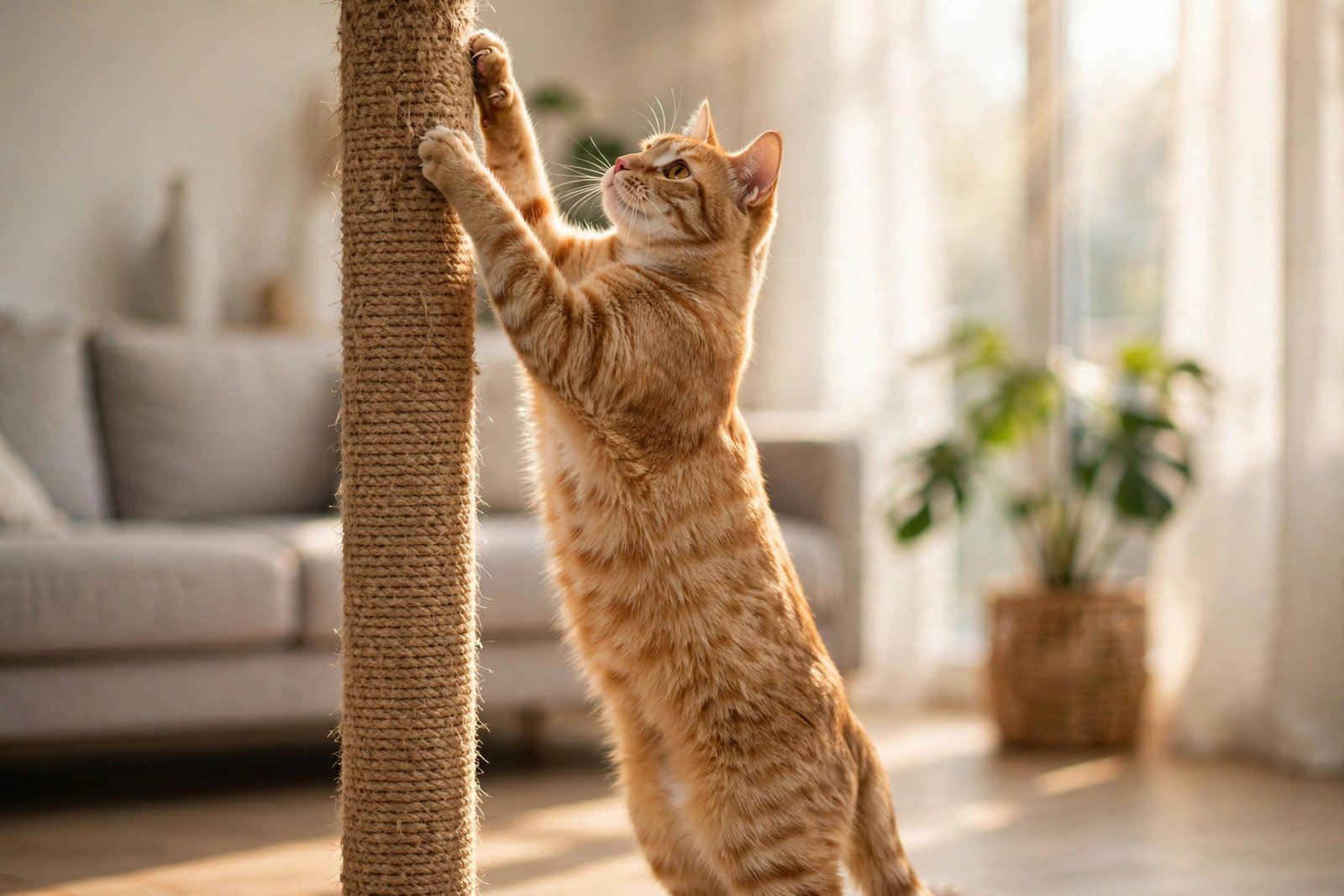
The ideal post is at least as tall as your cat stretched fully upright (about 30 inches for an average cat), heavy enough not to wobble, and wrapped in sisal rope — the texture most cats prefer. Some cats love horizontal scratchers or angled pads instead, so watch your cat’s current habits: vertical couch-scratchers want a tall post; carpet-scratchers often prefer a flat pad.
Placement is everything. Put the new post directly beside the piece of furniture your cat scratches most. Yes, right there in the living room, even if it clashes with your décor — you can move it gradually later. Cats scratch where they hang out, often right after naps, so a post near their favorite sleeping spot gets natural traffic. Our guide on why cats scratch everything explains the territory-marking logic behind this: your cat is marking the social hub of the home, so that’s exactly where the post belongs.
Step 2: Make the Post Irresistible
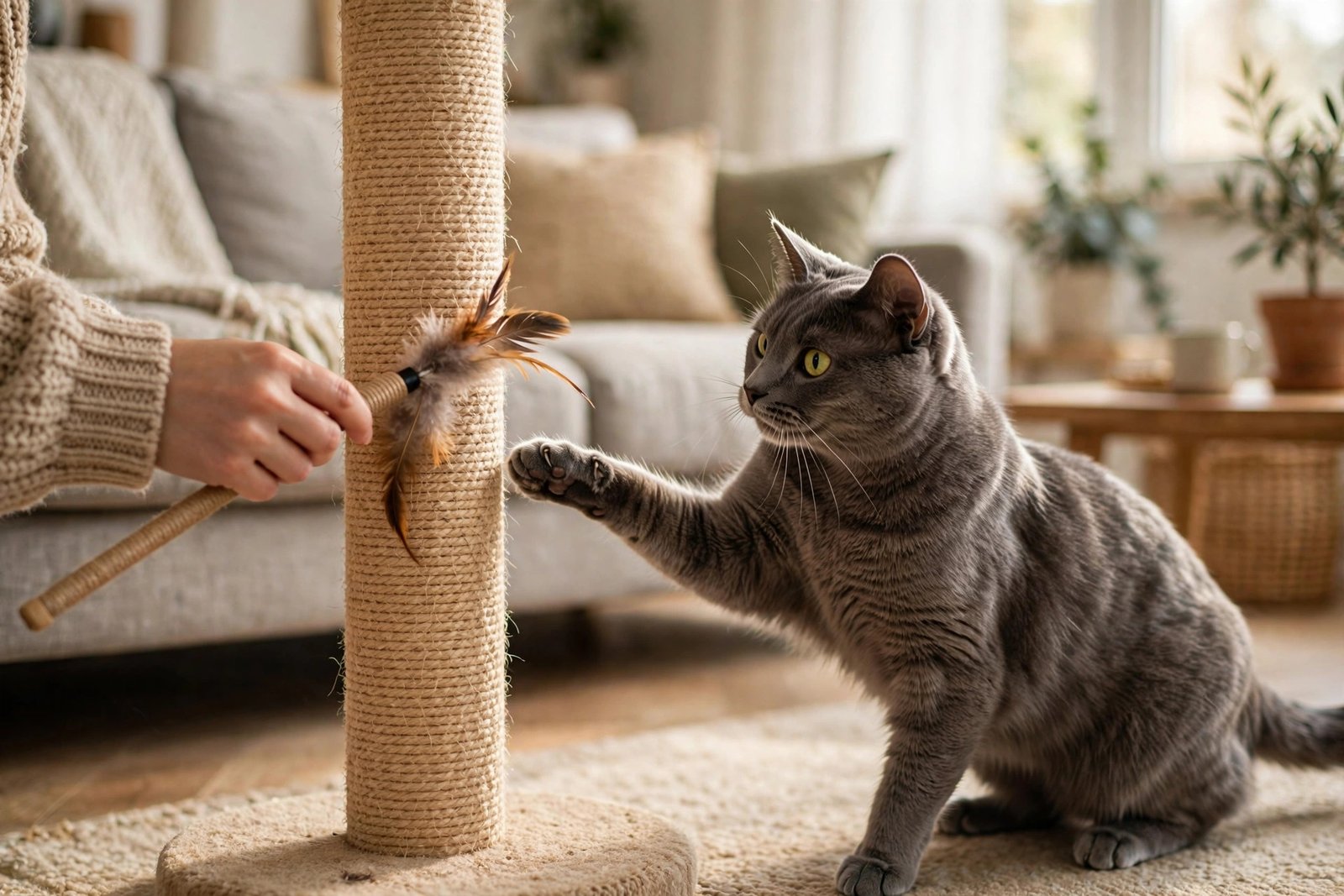
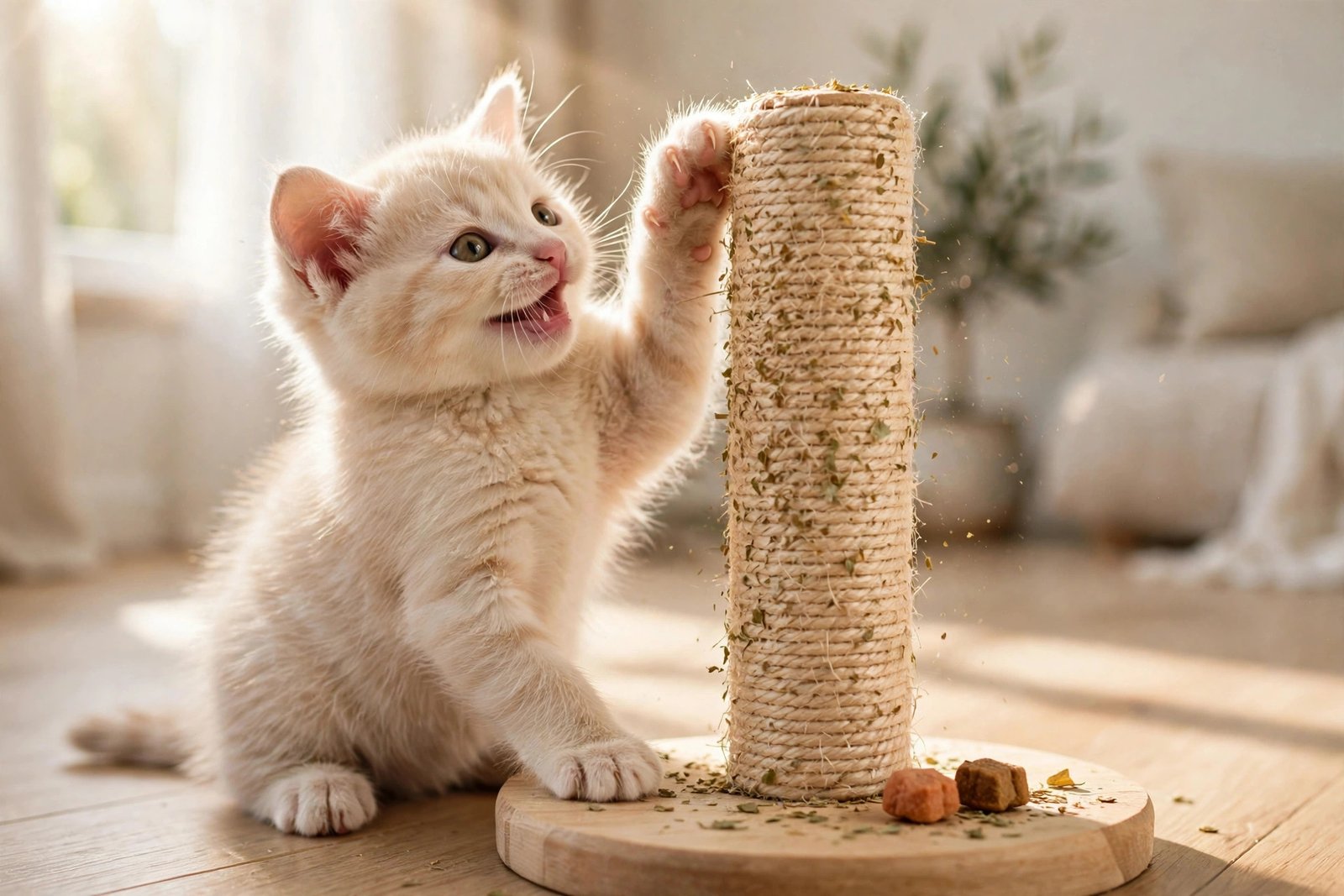
Now make the post the most interesting object in the room. Rub a pinch of dried catnip into the sisal (about half of cats respond strongly to catnip; for the rest, try silvervine). Dangle a feather wand toy up and down the post so your cat’s paws naturally land on the sisal during play. Place a treat on the post’s base platform so investigating pays off. Once you learn how to teach cat to use scratching post this way, the post practically sells itself.
The goal is simple: every time your cat looks at, sniffs, or touches the post, something good happens. You’re building a positive association before asking for any actual scratching. This stage usually takes just a day or two, and it’s genuinely fun — play sessions around the post are great bonding time.
Step 3: Reward Every Scratch
The moment your cat scratches the post — even one casual swipe — celebrate like they just won a prize. A treat tossed nearby, enthusiastic praise, a quick chin scratch if they enjoy it. Timing matters: reward within a couple of seconds so your cat connects the scratch with the payoff.
You can also gently encourage scratching during play: wiggle the wand toy at the base of the post so your cat grabs the sisal. If your cat is food-motivated, smear a tiny bit of wet food or lickable treat on the post at nose height — they’ll paw at it and discover the texture. Never grab your cat’s paws and force them through the scratching motion. It feels threatening, it kills trust, and it almost always backfires.
Step 4: Make the Old Spots Less Appealing
While the post becomes the best option, the couch needs to become a boring one. Cover scratched furniture arms with a throw blanket, a fitted cover, or double-sided sticky tape made for cats (test it on a hidden spot first). The texture change alone deters most cats.
Don’t remove the covers too soon — keep them on for two to three weeks while the post habit solidifies. And resist the urge to scold your cat for using the furniture. A startled cat doesn’t learn “use the post”; they learn “scratching is scary,” which can create sneakier scratching or stress behaviors. Redirection beats correction every time.
Step 5: Be Consistent for Two Weeks
Here’s where most people give up too early. Your cat might use the post on day three, then go back to the couch on day five. That’s normal — habits take time. Keep rewarding post use, keep the furniture covered, and keep the catnip fresh while you learn how to teach cat to use scratching post. Most cats are reliably converted within one to two weeks of consistent effort.
For multi-cat homes, the math changes slightly: provide at least one post per cat, plus one extra, placed in different areas. Cats can be territorial about scratching spots, and competition over a single post sends someone back to the furniture. Kittens usually learn fastest of all — start them on a post from day one and many never develop furniture habits at all.
How to Teach Cat to Use Scratching Post: Keeping the Habit
Once your cat is using the post regularly, you can gradually move it a few feet at a time toward a less prominent spot — but don’t exile it to the garage. The post needs to stay in your cat’s living area to remain relevant. Replace or re-wrap the sisal when it gets shredded; a worn-out post loses its appeal, and that’s when relapses happen.
Keep rewarding occasionally, too. You don’t need a treat every time forever, but an intermittent “good scratch!” with a chin rub keeps the behavior strong. Think of it as maintenance: a little reinforcement now prevents a lot of retraining later.
Frequently Asked Questions
How long does it take to teach a cat to use a scratching post?
The fastest way to learn how to teach cat to use scratching post is getting the setup right: the right post in the right place. Many cats start using it within a few days, and most are reliably converted within two weeks. Kittens and food-motivated cats are usually fastest. If your cat hasn’t touched the post after two weeks, the post itself is probably the problem — try a different style, height, or material.
Should I get my cat declawed instead?
No — declawing is the amputation of the last bone of each toe, not just nail removal, and it’s banned or condemned by veterinary organizations in many countries because of the pain and behavioral problems it can cause. Scratching is a normal, healthy behavior; redirecting it to a post is the humane and effective solution. If your cat’s scratching ever seems frantic or paired with other behavior changes, check in with your vet.
Why does my cat scratch right after I put the post away?
Because the post was the outlet, and removing it left a vacuum. Cats don’t generalize the way we hope — “scratch the post” doesn’t automatically become “don’t scratch anything.” If you need to move or replace a post, do it gradually and keep an alternative available at all times.
My cat only scratches one side of the couch. Do I still need a post?
Yes — and you already know exactly where to put it: right next to that side of the couch. Targeted scratching like that is territorial marking of a favorite spot, so placing the post there gives your cat a legitimate way to keep marking their favorite territory. Once the habit transfers, you can slowly shift the post a few feet away.
Can older cats learn to use a scratching post?
Absolutely. Senior cats can be a little slower to change habits, but the same principles work — especially if you choose a post that’s easy on older joints (stable, not too tall, maybe with a horizontal option). If your older cat suddenly starts scratching much more than usual or seems uncomfortable stretching, mention it to your vet at their next checkup.