

Why Is My Cat Scratching Everything?
The arm of the sofa looks like it lost a fight. The curtains have little ladder runs near the bottom. There is a corner of the bedroom carpet that will never be the same. When a cat first starts going after the furniture, most new owners do the same thing: yell “no,” clap their hands, and buy a scratching post that the cat walks past for three straight weeks like it is invisible. It usually takes far too long to understand that scratching is not misbehavior. It is one of the most hardwired things a cat does.
Once you understand why your cat is scratching everything, the solution stops being a battle and starts being interior design. Cats scratch for reasons that make perfect sense to them — and every one of those reasons can be redirected to something you do not mind them shredding. Here is what is actually going on, and the redirection approach that works in most homes.
Published: May 30, 2026 | Last updated: May 30, 2026
Quick Tips
- Scratching is normal, healthy behavior — the goal is redirecting it, not stopping it.
- Match the scratcher to your cat’s style: vertical stretchers need tall posts, horizontal scratchers need floor pads.
- Place scratchers where your cat already scratches — location matters more than the product.
- Make the sofa unappealing (covers, double-sided tape) while making the post rewarding.
- Never declaw — trim nails regularly instead; it is kinder and actually reduces damage.
- Reward scratching the right thing every time; cats repeat what pays off.
Why Cats Scratch: The Real Reasons
Your cat is not doing it to spite you, however personal it feels at 2 a.m. Scratching serves at least four purposes, and understanding them is the key to redirecting the habit.
Claw maintenance
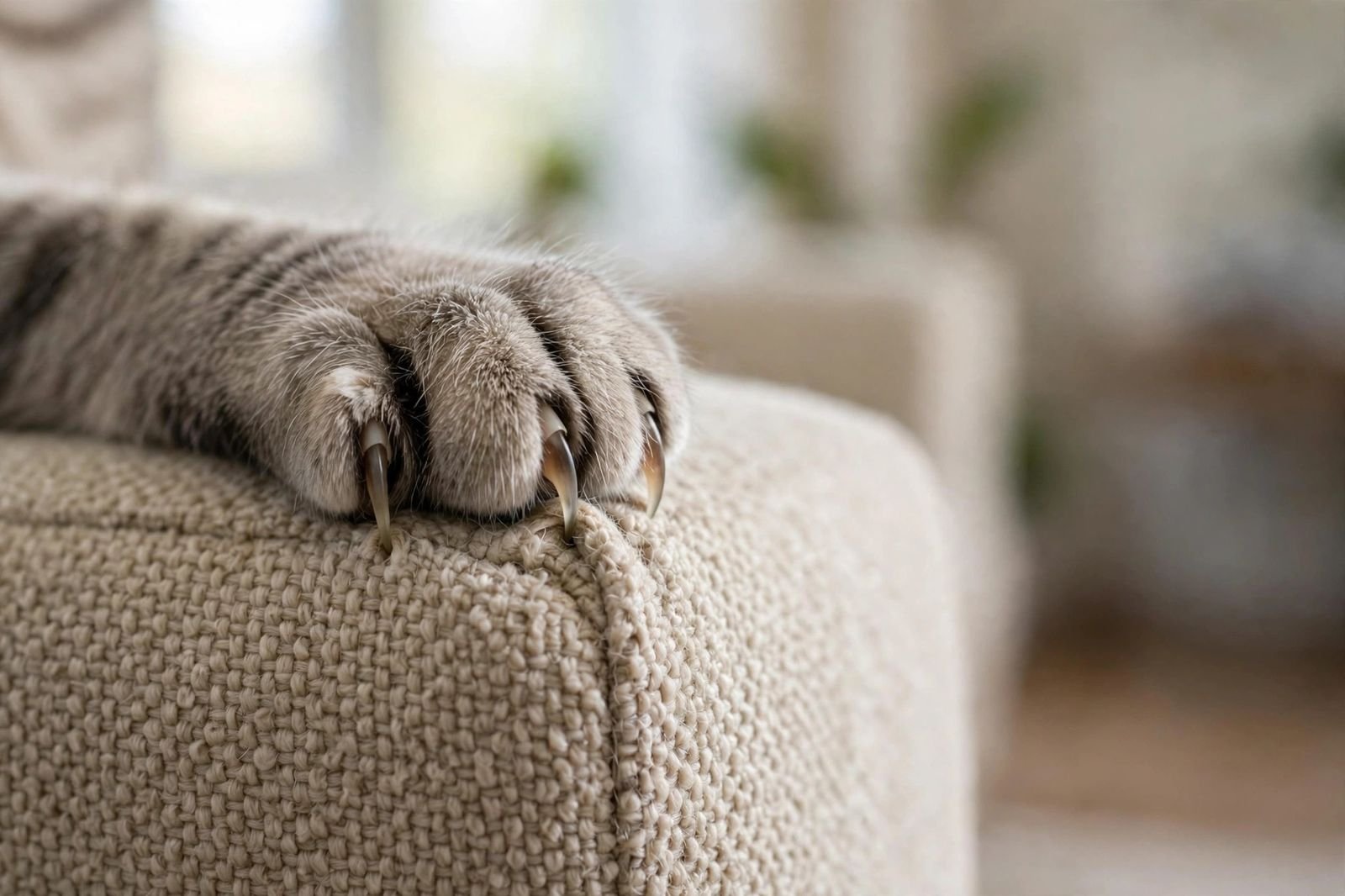
The most practical reason: scratching sheds the dead outer sheaths of the claws, keeping them sharp and healthy. You will sometimes find little hollow claw husks near a favorite scratching spot — that is the system working as designed. Without a good scratching surface, claws can grow thick, catch on fabric, and even curl painfully. This is also why regular nail trims matter: trimmed claws do far less damage even when the cat does scratch the wrong thing.
Stretching
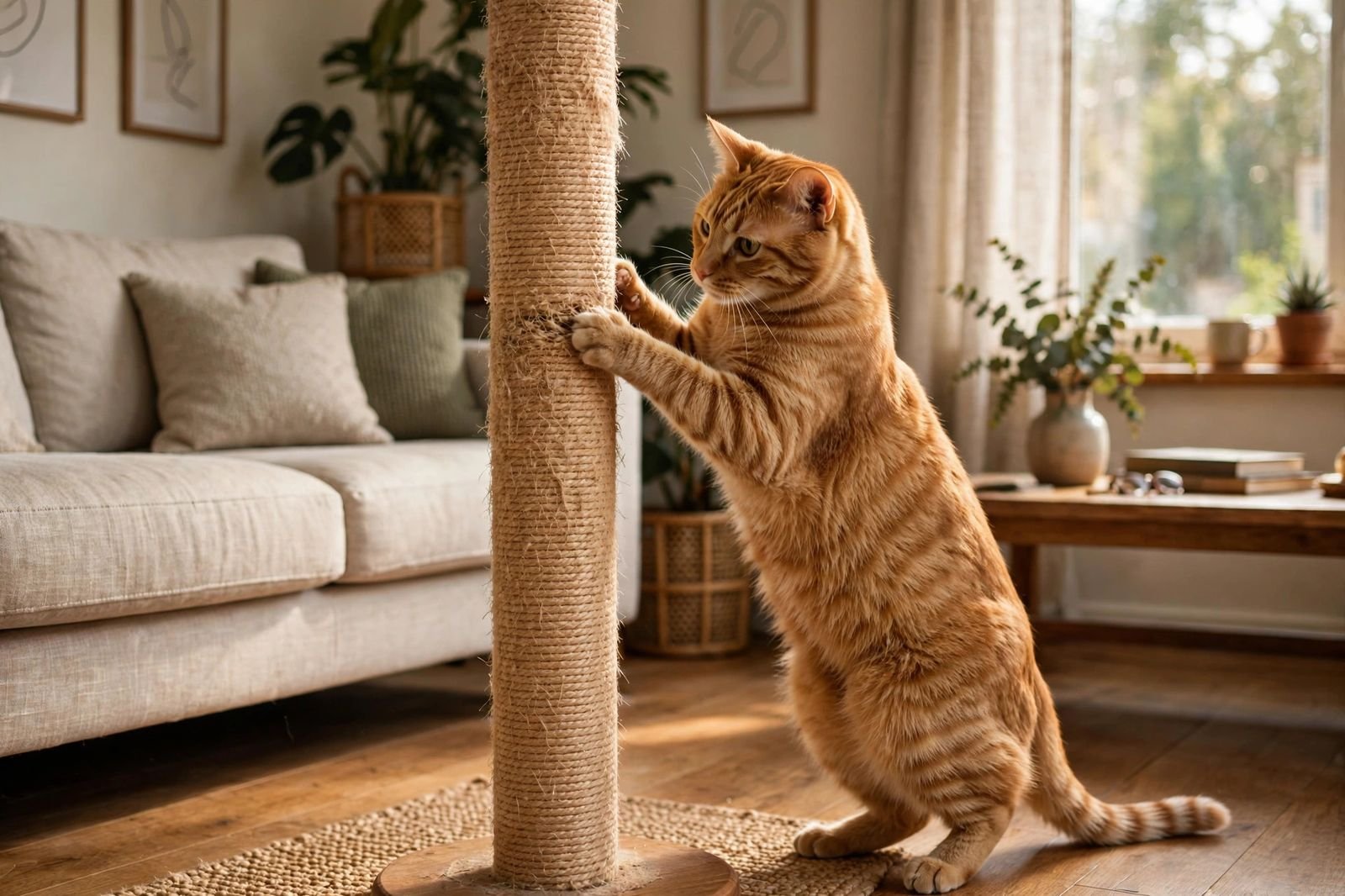
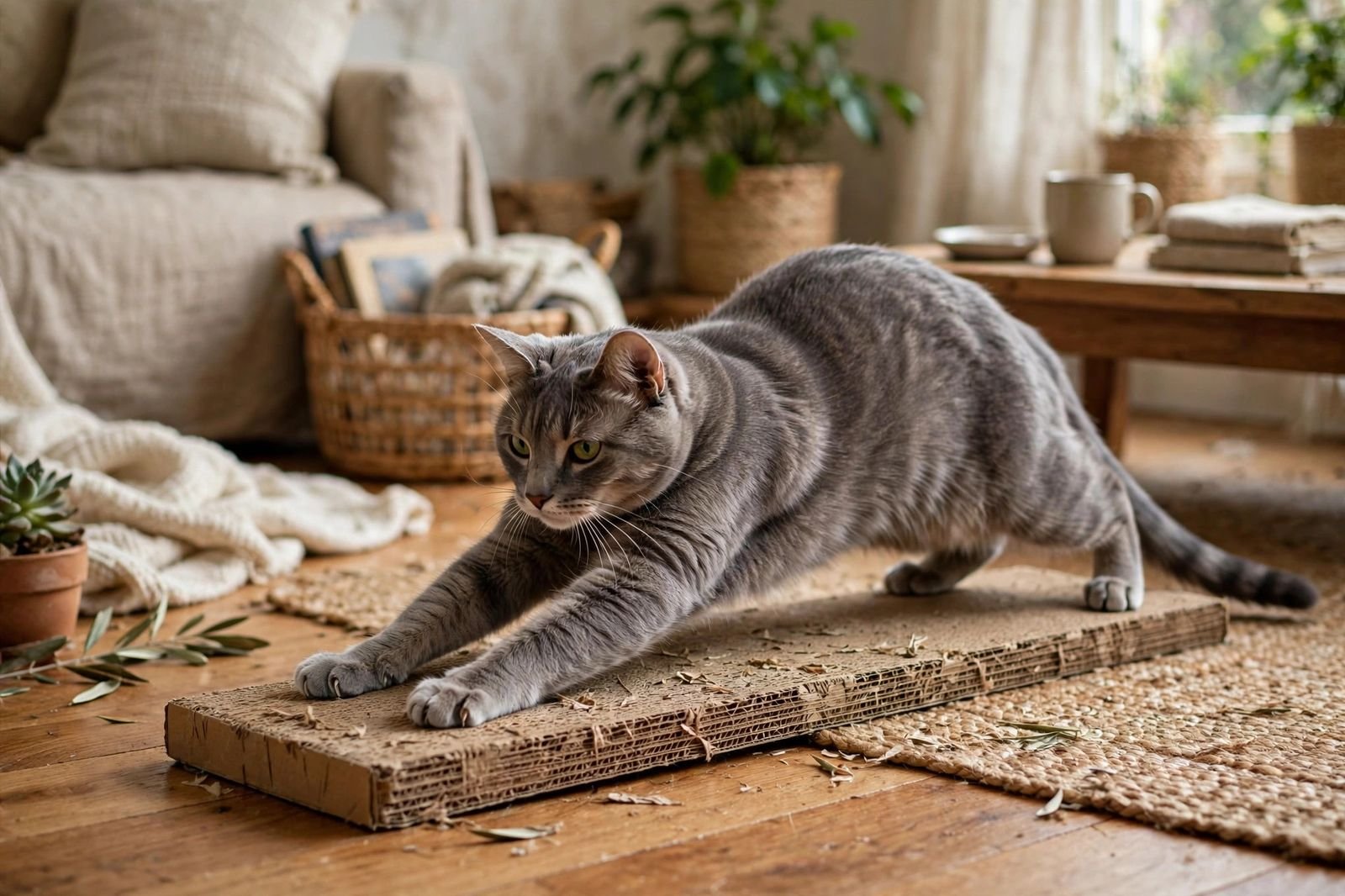
Watch a cat scratch and you will see a full-body stretch — front legs extended, back arched, toes spread. Many cats scratch right after waking up, the way we stretch our arms overhead. This is why scratching posts need to be tall enough: a post your cat cannot fully stretch against will be ignored in favor of the sofa arm, which is conveniently the perfect height.
Marking territory
Cats have scent glands in their paw pads, and scratching deposits both a visual mark and a scent signature. That is why cats so often scratch the same prominent spots — the corner of the sofa facing the room, the doorframe, the chair everyone sits in. Your cat is putting up little “I live here” signs. It is also why scratching often increases when something changes: new furniture, a new pet, a houseguest. The cat is re-marking a world that suddenly smells different.
Stress relief and excitement
Some cats scratch when they are wound up — after play, when you come home, during the evening zoomies. It is a way to burn off arousal. Others scratch more when they are anxious or bored. If your cat’s scratching suddenly intensified, look for what changed in the household before you look for a fancier deterrent. Bored indoor cats are prolific furniture destroyers, and the fix is often enrichment rather than discipline — my indoor cat toy guide has ideas that burn energy before it reaches the curtains.
Why Your Cat Ignores the Scratching Post
This is the part that frustrates new owners for weeks. The typical story: buy a post, watch the cat ignore it, conclude she is just a sofa cat. In hindsight, the purchase usually broke nearly every rule of scratcher selection. Here are the usual reasons a post goes unused:
It wobbles
A scratching post that rocks or tips when the cat leans into it is dead on arrival. Cats put real force into scratching, and an unstable post feels unsafe. The base should be wide and heavy, or the post should be tall enough to wedge somewhere solid. The cheap lightweight posts are the ones most often ignored, and this is usually why.
It is too short
For a vertical scratcher, your cat should be able to stretch to full length with room to spare. For most adult cats that means at least 28–32 inches of scratchable surface, taller for big breeds. The cute little 18-inch posts look nice in the store and get ignored at home.
It is the wrong texture or angle
Watch how your cat scratches the furniture. Does she reach up and rake downward? She is a vertical scratcher and needs a tall sisal post. Does she grip the carpet and pull horizontally? She wants a flat cardboard scratcher on the floor. Does she go for the woven texture of the rug? Try a sisal mat. Matching the scratcher to the cat’s existing style is the single highest-leverage move you can make.
It is in the wrong place
People tuck scratching posts in corners out of the way, which is exactly where the cat does not want them. Cats scratch prominent, high-traffic spots — that is the point of the territorial marking. Put the post right next to the sofa arm she is currently destroying, even if it ruins your living room aesthetic for a month. You can move it gradually once the habit transfers.
The Redirection Plan That Actually Works
Stopping furniture scratching is a two-front campaign: make the wrong thing unappealing and the right thing irresistible, at the same time. Doing only one half is why most efforts fail.
Step 1: Protect the furniture
Cover the targeted spots temporarily. A throw blanket over the sofa arm, double-sided sticky tape on the scratched corner, or a fitted furniture protector — anything that changes the texture. Cats hate sticky paws, so double-sided tape designed for this purpose is remarkably effective. This is not forever; it is for the few weeks while the new habit forms. If you have a new cat still settling in, this kind of management from day one prevents the habit entirely — see my pet-proofing checklist for the full first-week setup.
Step 2: Place the right scratcher in the right spot
Put a sturdy, tall-enough scratcher directly beside the protected furniture. Rub a little catnip into the sisal or dangle a toy from the top to invite investigation. When your cat so much as sniffs it, reward with a treat or praise. The first time she actually scratches it, make it a celebration — treats, fuss, the works. Cats repeat what pays off.
Step 3: Reward, never punish
Yelling, squirting water, or clapping startles the cat mid-scratch, and she learns exactly one lesson: scratch when the human is not looking. Punishment does not teach the alternative. What works is catching her using the post and rewarding it, and calmly redirecting (lure with a toy, place paws gently on the post) when she goes for the sofa. Consistency beats intensity — a week of patient redirection outperforms a month of shouting.
Step 4: Keep the claws trimmed
Blunt claws do dramatically less damage while you are retraining. Trim every 2–3 weeks, taking only the sharp tip. If you have never done it, the learning curve is short and the payoff is immediate. Soft nail caps are another option some owners use — little vinyl covers glued over the claws that fall off naturally as the nail grows. They work, but they need reapplying and some cats chew them off, so trimming plus redirection is the simpler long-term path.
What About Declawing?
It comes up, so let us address it directly: declawing is not a nail trim. It is the surgical amputation of the last bone of each toe, and it is banned or considered unethical by veterinary bodies in many countries, including the UK. Declawed cats commonly develop chronic paw pain, litter box avoidance, and biting — because a cat that cannot scratch or defend itself with claws often turns to teeth instead. It does not solve scratching so much as trade it for worse problems. Everything in this article works better than declawing, without the harm.
When Scratching Signals Something Else
Most scratching is normal. But a sudden, dramatic increase — especially paired with other behavior changes like hiding, appetite shifts, or over-grooming — can mean stress, anxiety, or discomfort worth paying attention to. New cats in the home, construction noise, a new baby, or a change in routine can all spike scratching. Address the underlying stress (safe hiding spots, consistent routine, play sessions) alongside the redirection plan. If the behavior change is sudden and severe, or you notice limping, swelling, or broken claws, have a vet take a look rather than assuming it is just attitude.
Frequently Asked Questions
How do I stop my cat scratching the sofa?
Cover the scratched area with a throw or double-sided tape, place a tall sturdy scratching post right beside it, and reward every use of the post with treats. Keep the cat’s claws trimmed to limit damage during retraining. Most cats transfer the habit within 2–4 weeks if you are consistent — punishment alone just teaches them to scratch when you are not watching.
Why does my cat scratch furniture even with a scratching post?
Usually one of four reasons: the post wobbles, it is too short for a full stretch, it is the wrong texture or angle for how your cat scratches, or it is tucked in a corner instead of placed where the cat actually wants to mark. Watch how your cat scratches the furniture, then match the post to that style and put it in that spot.
Do cats grow out of scratching?
No — scratching is lifelong normal behavior, not a kitten phase. Kittens may scratch more energetically, and seniors scratch less often, but the need to maintain claws and stretch never goes away. The goal at every age is a good scratching setup, not an end to scratching.
Is it cruel to stop a cat from scratching?
Stopping all scratching would be, yes — it is essential for claw health and stretching. But nobody is asking you to do that. Redirecting scratching to appropriate surfaces gives the cat everything it needs while saving your furniture. That is not cruel; it is just good management.
What scratching post material is best?
Sisal rope or sisal fabric is the most widely accepted — it is tough, has the right resistance, and most cats take to it. Corrugated cardboard is cheap, replaceable, and beloved by horizontal scratchers. Carpet-covered posts can confuse cats into thinking all carpet is fair game, so sisal or cardboard is usually the safer choice.
Will catnip help my cat use the scratching post?
Often, yes. Rubbing dried catnip into the post or using a catnip spray makes it more interesting to most cats (though about a third of cats do not respond to catnip at all). Dangling a toy from the top works too — the cat grabs the post while playing and discovers it feels great. Either way, reward the first real scratch generously.