

How to Cat-Proof Your Apartment: A Room-by-Room Guide
Figuring out how to cat proof apartment living spaces is one of the smartest things a new cat owner can do — and it matters just as much in a studio as in a sprawling house. Cats are curious, athletic, and wonderfully determined, which means the average apartment is full of things they can knock over, chew on, climb, or squeeze behind. A weekend of thoughtful preparation prevents most of the common mishaps before they ever happen.
Cat-proofing is not about turning your home into a padded cell. It is about removing genuine dangers, protecting the belongings you care about, and — just as important — giving your cat legal, appealing alternatives for their natural instincts to climb, scratch, and explore. This room-by-room guide covers the hazards to fix, the cheap solutions that actually work, and how to set up a small space so both you and your cat can enjoy it.
Quick Tips
- Walk through your apartment at cat-eye level to spot hazards you’d miss standing up.
- Secure cords, blind cords, and string-like objects — these are among the most common household dangers for cats.
- Lock away cleaning products, medications, and anything toxic under sinks with child-safety latches.
- Check that every window has a sturdy, well-fitted screen before opening it.
- Provide a tall scratching post and at least one high perch so your cat has legal outlets for climbing and scratching.
- Re-check your proofing every few months — cats find new hobbies as they settle in.
Start With the Big Dangers First
Before worrying about your sofa, focus on the things that can genuinely harm your cat. The usual suspects in apartments are cleaning products under the sink, medications on nightstands, and certain houseplants — many common indoor plants can be toxic to cats, so it is worth checking every plant you own against a reliable toxicity list or asking your vet. Anything questionable should move to a room the cat cannot enter or go to a new home entirely. When learning how to cat proof apartment spaces, these real dangers come first — cosmetic worries can wait.
Next on the danger list: anything long and string-like. Yarn, ribbon, dental floss, rubber bands, and dangling blind cords are magnets for cats, and swallowed string can cause serious internal problems that need emergency veterinary care. Tie up blind cords well out of reach or cut the loop, store sewing supplies in closed containers, and keep hair ties in a drawer — any cat owner will tell you hair ties vanish into a mysterious parallel universe otherwise.
Finally, think about escape and fall risks. Cats and open windows are a risky combination, especially in upper-floor apartments. “High-rise syndrome” — cats falling from windows and balconies — is a well-documented reason for emergency vet visits. We will cover windows and balconies in detail below, but the short version is: no open window without a secure, well-fitted screen, ever.
How to Cat Proof Your Apartment, Room by Room
The Kitchen
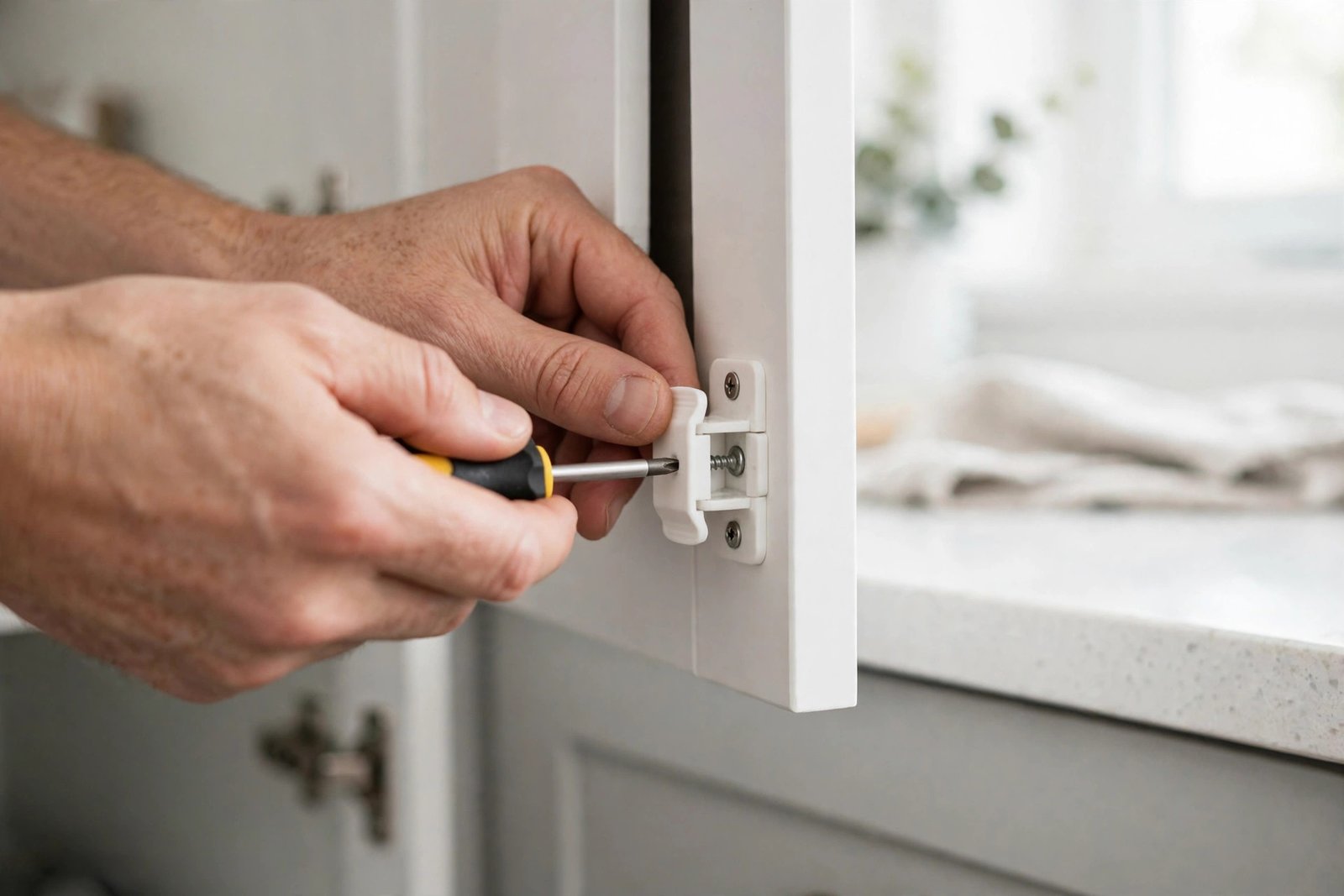
Kitchens concentrate more hazards per square foot than anywhere else. Start under the sink: cleaning products, dishwasher pods, and drain cleaners should be behind a latched cabinet door — simple adhesive child-safety latches work well and come off cleanly when you move out, which renters appreciate. This systematic approach is the heart of how to cat proof apartment kitchens: remove the danger rather than hoping the cat ignores it. Move on to the trash can; a step-can with a locking lid or a can stored inside a latched cabinet keeps your cat out of chicken bones and other garbage.
Think about surfaces too. Stovetops stay hot after cooking, so make it a habit to cover burners or keep the cat out of the kitchen while you cook. Put away food promptly — many human foods are not suitable for cats, and an unattended plate is an invitation. If your cat is a dedicated counter-surfer, our full pet-proofing checklist has extra management strategies, but the simplest fix is consistency: clear counters are boring counters, and boring counters get visited less often.
The Bathroom and Laundry Area
Bathrooms are small but dense with risks: medications, razors, dental floss, and cleaning products. Keep the toilet lid down — small kittens can fall in — and store medicines in a latched cabinet rather than on the counter. In the laundry area, the dryer deserves special respect: cats love warm, enclosed spaces, and there are real cases of cats climbing into open dryers. Make it a habit to check inside before every load, and keep the door closed between uses.
Laundry pods and detergent should be stored up high or behind a latch, just like kitchen cleaners. And if your washing machine has a front-loading door at cat height, keep that closed too. None of this requires major spending — it is mostly about building small habits and using a few cheap latches.
Living Room and Bedroom
This is where cord management pays off. Phone chargers, lamp cords, and TV cables are all chewable, and a determined cat can work through a cord protector if motivated — so bundle cords with covers, run them behind furniture, and unplug what you are not using. Small objects are the other big category: earrings, paper clips, rubber bands, and game pieces all look like prey. A quick nightly scan of floors and low tables becomes second nature fast.
Furniture protection is about redirection, not punishment. Cats scratch to stretch, mark territory, and maintain their claws — it is not spite, even when it is your favorite armchair. Place a tall, sturdy scratching post right next to the furniture your cat targets, and make the post more appealing with a little catnip or play sessions around it. Our guide on why cats scratch furniture and how to redirect it goes deeper into making the right choice easy for your cat. Covering tempting furniture with a throw while the new habit forms also helps.
Windows, Balconies, and High Places
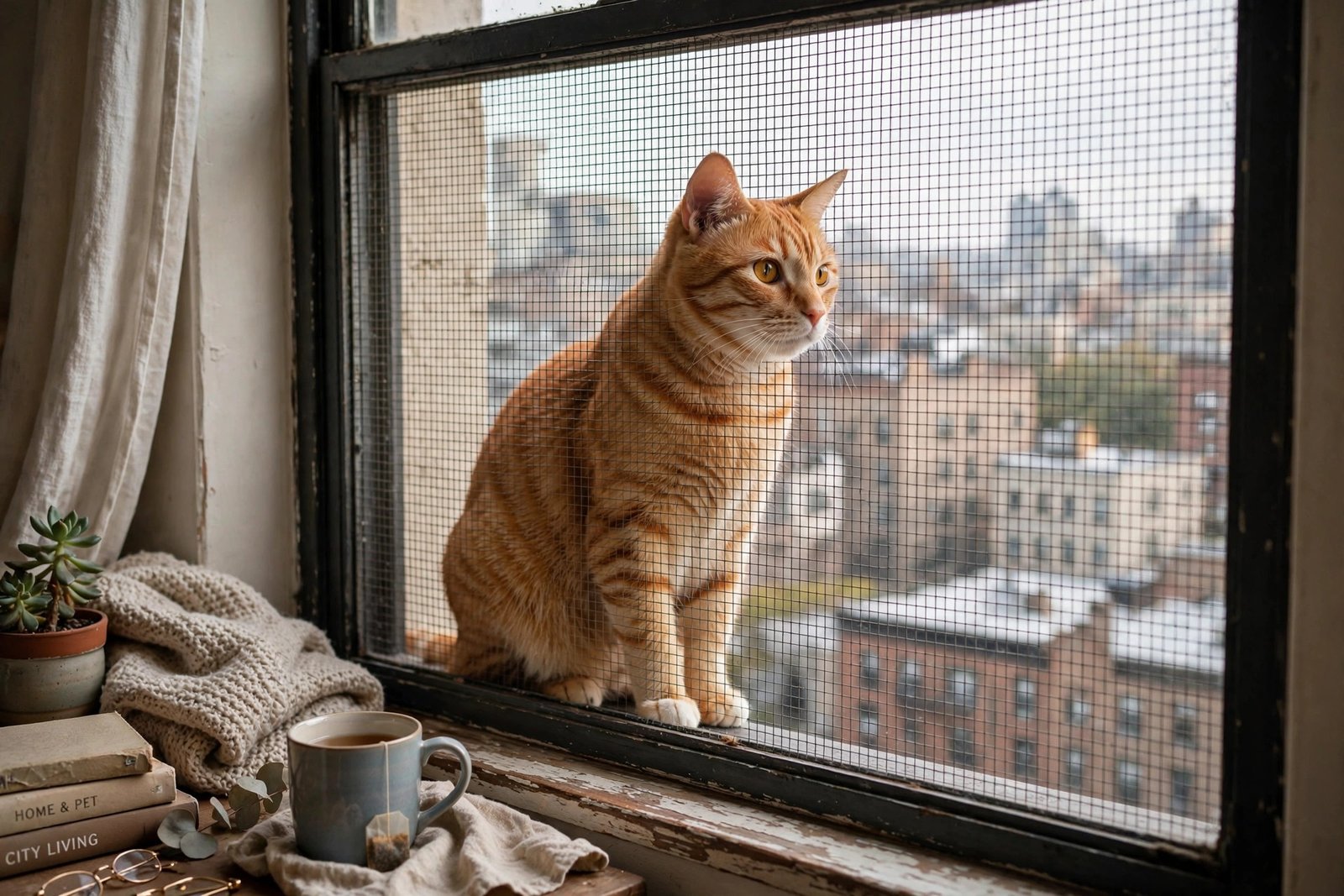
Cats love height and fresh air, and apartments can offer both safely with the right setup. Learning how to cat proof apartment windows properly is one of the highest-value safety upgrades you can make. Every window you open needs a screen that is sturdy, undamaged, and firmly seated in its frame — flimsy screens that pop out under a cat’s weight are a known hazard, so test yours by pressing firmly before trusting them. For windows without screens, inexpensive adjustable window screens or window guards are widely available and renter-friendly.
Balconies need honest assessment. An open, unsecured balcony on an upper floor is simply not safe for unsupervised cat access — many owners choose to keep balcony doors closed or to cat-proof the balcony with netting enclosures designed for the purpose. If you do create balcony access, supervise it, remove toxic plants, and make sure there are no gaps a cat could slip through. Ground-floor balconies have their own version of the problem: escape into traffic or encounters with neighborhood animals.
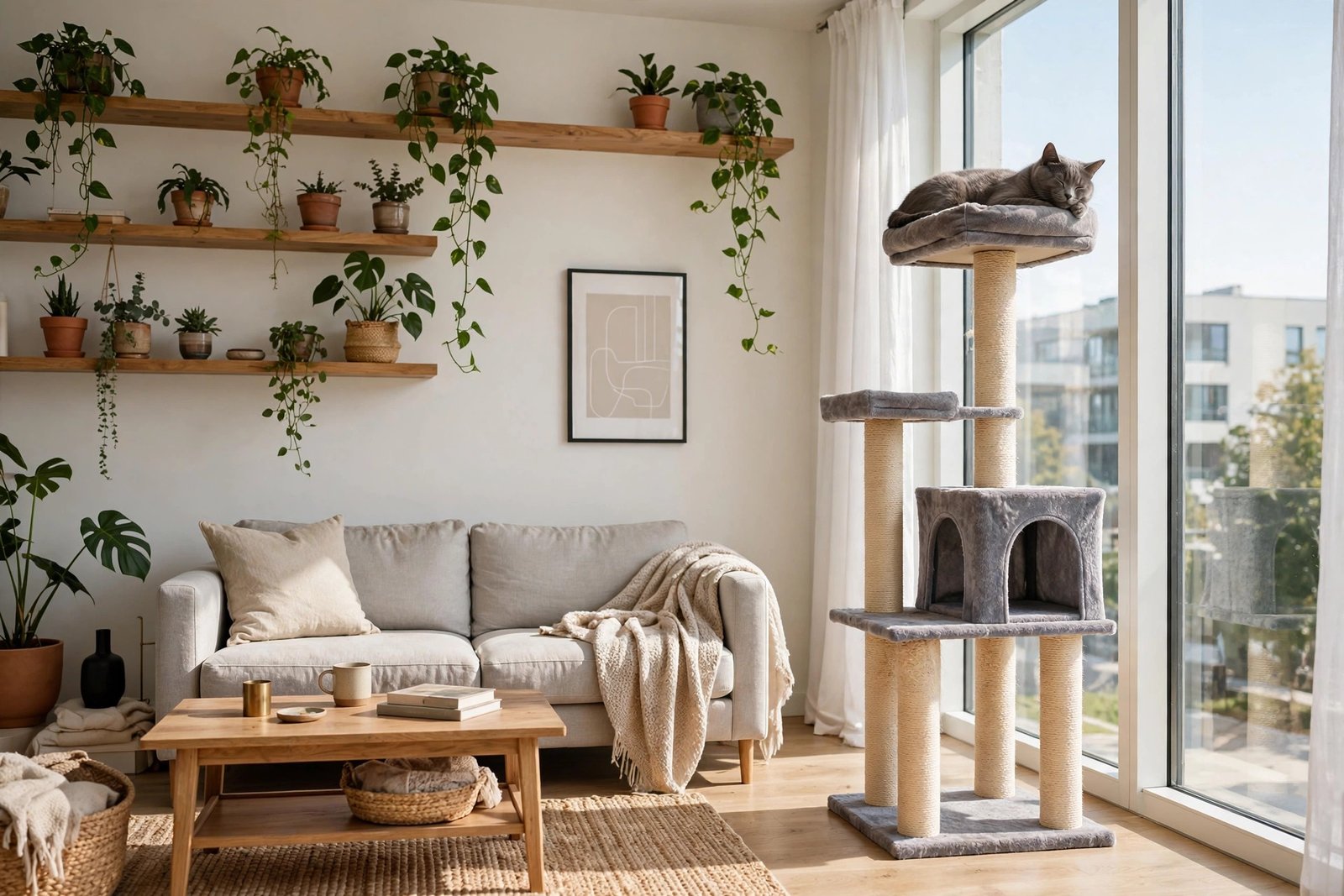
Inside, make height safe rather than forbidden. Cats will climb your bookshelves whether you approve or not, so secure tall, tippy furniture to the wall with anti-tip straps — this protects both the cat and anyone below. Then give them something better: a tall cat tree by a window satisfies the climbing instinct and the people-watching habit in one piece of furniture, and wall-mounted shelves create a “cat highway” that keeps them off your desk.
Set Up the Essentials in a Small Space
Small apartments can absolutely work for cats — many owners find that thoughtful vertical space matters more than square footage. The non-negotiables are: a litter box in a quiet, accessible spot (not next to the food bowls, and ideally not in the noisiest corner), fresh water available at all times, and a scratching post your cat actually uses. In a studio, a covered litter box or a litter cabinet can help with both privacy and odor, though some cats dislike covered boxes — watch your cat’s preference and adjust.
Think in terms of zones even when rooms are shared. A window perch becomes the observation deck, a cozy box in a quiet corner becomes the retreat, and the cat tree becomes the gym. Rotating a few toys keeps things interesting without cluttering your limited space, and a daily play session does more for a small-apartment cat’s happiness than any gadget. Puzzle feeders are another space-efficient win: they turn mealtime into mental exercise, which matters a lot for indoor cats.
Re-Check Your Work as Your Cat Settles In
Cat-proofing is not a one-time project. Newly adopted cats are often cautious for the first week or two, then grow bolder — and bolder cats discover new hobbies, like opening cabinets they previously ignored. Re-walk your apartment after the first month with fresh eyes, crouching to cat-eye level to see what is newly reachable.
Seasonal changes deserve a look too: open windows in summer, holiday decorations in winter, houseguests with unfamiliar bags and medications. Each one introduces new variables. The good news is that once the big dangers are handled, maintenance is mostly small adjustments — and the payoff is a home where you can relax instead of constantly scanning for the next disaster.
Frequently Asked Questions
Do I really need to cat-proof if my cat is a calm adult?
Yes — calm is not the same as uninterested. Even mellow adult cats investigate new spaces thoroughly, and curiosity spikes whenever something changes: a new plant, an open window, a guest’s bag on the floor. The core hazards (toxins, strings, unsecured windows) apply to every cat regardless of temperament. Calm cats just give you fewer dramatic warnings before they get into something.
Which houseplants are dangerous for cats?
Quite a few popular ones, including lilies — which are especially dangerous — as well as sago palm and several others. Rather than memorizing a list, check each plant you own against a reliable toxicity database and assume any unverified plant is guilty until proven innocent. When in doubt, move the plant somewhere the cat cannot reach or rehome it, and ask your vet if your cat has chewed something and you are unsure what it was.
How do I keep my cat off the kitchen counter?
Management beats confrontation. Keep counters clear of food and interesting objects, provide an appealing alternative perch nearby (many counter-surfers just want to be at your height near the action), and be consistent — every family member needs to follow the same rules. Punishment after the fact does not teach cats anything except to avoid you, so focus on making the counter boring and the alternative rewarding.
Is it safe to leave windows open if they have screens?
Only if the screens are sturdy, undamaged, and firmly seated — press on them to test. Standard lightweight screens can pop out under a determined cat’s weight, so consider pet-resistant screening or window guards for windows you open regularly. Never rely on a screen you have not tested, and keep unscreened windows closed or only cracked in a way the cat cannot fit through.
My apartment is tiny — where should I put the litter box?
Prioritize quiet and accessible over hidden: a bathroom corner, a closet with the door propped open, or a ventilated cabinet designed for litter boxes all work. Avoid placing it right next to food and water, and avoid the noisiest, highest-traffic spot in the home. In very small spaces, scooping daily matters even more, since odor builds up fast — your cat (and your guests) will notice.