
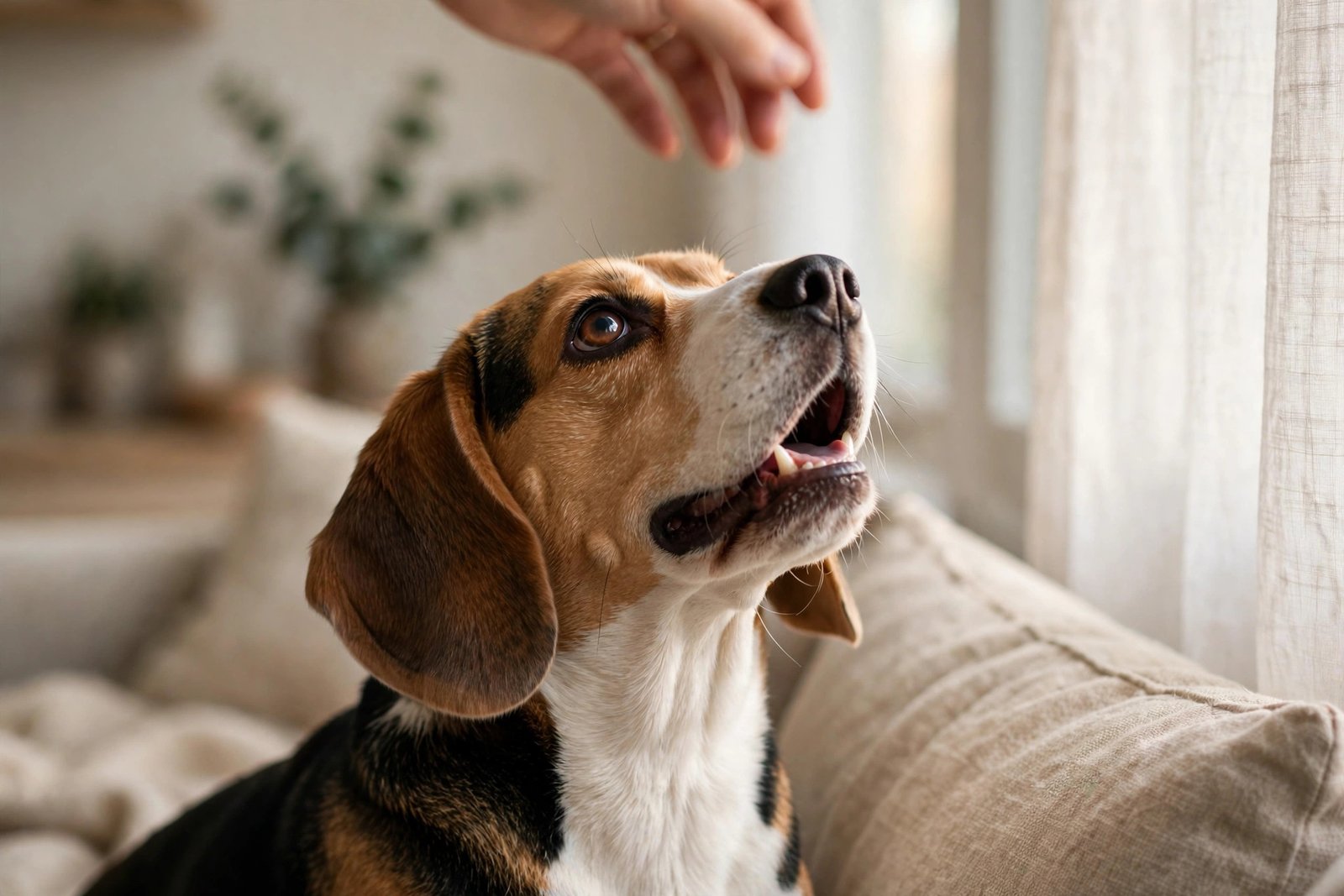

Why Does My Dog Whine? Causes and What to Do
There is no sound quite like it: the high, thin, insistent whine that drills into your skull at 6 a.m., in the car, at the vet’s waiting room, or — worst of all — for no apparent reason while you are trying to work. Whining is one of the most common dog behaviors and one of the least understood, partly because it means so many different things. A whine is not a single message; the meaning depends entirely on context.
This guide breaks down why dogs whine — the real causes, from excitement and attention-seeking to anxiety and pain — how to read what your dog’s whine means, and practical, humane steps to reduce excessive whining without damaging your relationship.
Quick Tips
- Whining means different things — read the context before reacting.
- Never punish whining; it is communication, not defiance.
- Rule out pain or illness first if whining is new or has changed.
- Reward quiet, settled behavior — not just the absence of whining.
- Do not accidentally train more whining by giving in to it.
- Anxiety-based whining needs patience and gradual desensitization, not corrections.
Whining Is Communication, Not Misbehavior
The first reframe: whining is your dog talking to you. Dogs whine because it works — it gets human attention, reliably, across almost every household. Puppies are born whining; it is how they summon their mother. Adult dogs retain it specifically because humans respond to it. We are, in a very real sense, the reason whining persists into adulthood: we answer it.
This means the question is never really “how do I make the whining stop” — it is “what is the dog trying to say, and how do I address that?” A dog whining from pain needs a vet, not training. A dog whining from boredom needs enrichment, not scolding. A dog whining for attention needs a lesson in how attention is actually earned. Same sound, completely different solutions. Punishing the sound without understanding the message is like hanging up on someone calling for help.
So step one is always observation. When does the whining happen? What is the body language? What changed recently? The answers point to the cause — and the cause dictates the fix.
The Most Common Reasons Dogs Whine
Attention-seeking. The classic. The dog wants something — food, play, petting, to go outside — and has learned that whining produces it. The tell: the dog looks directly at you (or the desired object), body relaxed or excited, and the whining stops the instant it gets what it wants. This is the most common cause of chronic whining and, fortunately, the most fixable.
Excitement. Some dogs whine when they are thrilled — greeting a favorite person, anticipating a walk, watching you prepare food. The body language gives it away: wagging tail, bouncy movement, bright eyes. Excitement whining is not a problem to eliminate so much as energy to manage; it usually fades as the dog matures and learns routines.
Anxiety and stress. Whining is a hallmark of anxious dogs — during storms, at the vet, when left alone, in new environments. The body language differs from excitement: tucked tail or low carriage, ears back, panting, pacing, lip-licking, trying to hide or cling. Anxiety whining needs compassion and gradual work, not corrections — punishing a frightened dog for expressing fear makes the fear worse.
Boredom and frustration. An under-stimulated dog whines the way a bored child fidgets. The whining appears during downtime, often paired with pacing, bringing you toys, or escalating into destructive behavior. This is a lifestyle problem, not a training problem — the fix is more exercise, mental enrichment, and engagement, not more rules.
Appeasement. Some dogs whine as a peace offering — when scolded, when a bigger dog approaches, when the household tension is high. It is the dog saying “please don’t be angry.” Responding with more scolding is exactly wrong here; the dog needs reassurance and lower pressure.
Pain or illness. This is the one that matters most. A dog that suddenly starts whining — especially an older dog, especially with no obvious trigger — may be hurting. Whining paired with restlessness, panting, appetite changes, reluctance to move, or sensitivity to touch warrants a vet visit promptly. Never assume a new whine is “just behavioral” without considering the medical angle first — especially in older dogs, where behavior changes earn a vet check before a training plan.
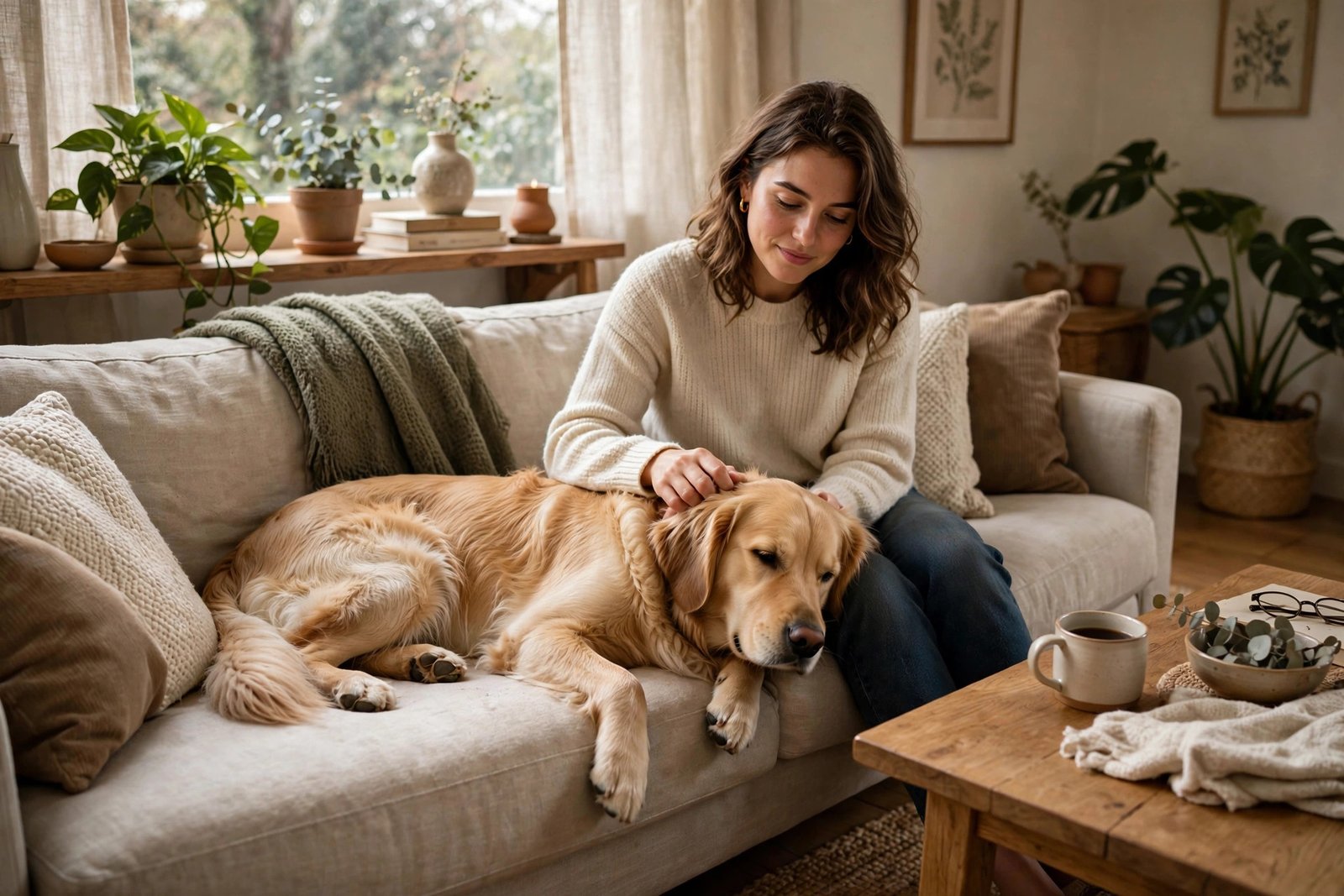
How to Read Your Dog’s Whine
Become a whine detective. For a few days, note three things each time the dog whines:
1. What was happening right before? The trigger is everything. Whining that starts when you pick up the leash means something different from whining that starts when you leave the room, which means something different from whining at 3 a.m. with no trigger at all. (No trigger + new behavior = vet visit.)
2. What does the body say? Relaxed and wiggly suggests excitement or attention-seeking. Tense, panting, ears back suggests anxiety or pain. Play-bowing suggests “let’s go!” Context plus body language narrows the cause dramatically.
3. What makes it stop? If the whining stops when you give the dog what it appears to want, you have found both the cause and the reinforcement maintaining it. If nothing you do stops it, the cause may be internal — pain, anxiety, or a compulsive pattern — and needs a different approach.
This little log often reveals the answer within days. Many owners discover their dog’s whining follows an obvious pattern they had never noticed — always before meals, always when the other dog gets attention, always during the evening wind-down. Patterns are solvable.
Reducing Attention-Seeking Whining
For the most common type — the dog whines, you respond, the cycle continues — the fix is straightforward but requires discipline:
Stop paying the toll. Identify what the whining buys and stop selling it. If whining gets treats, treats now require quiet first. If whining gets the ball thrown, the ball now requires a settled sit first. Expect an extinction burst: whining gets worse before it gets better, then fades.
Reward the quiet. This is the half everyone skips. Do not just ignore whining — actively catch and reward silence. Dog lying quietly while you work? Treat appears, calmly. Dog settling instead of whining before dinner? That earns the meal. You are teaching the alternative economy: quiet pays, whining does not. The same reward-the-quiet principle works for other vocal habits — my guide on why dogs bark so much applies it to excessive barking.
Teach a better way to ask. Dogs whine for things because they have no better way to request them. Teach one: a sit by the door to ask to go out, bringing a toy to ask for play, going to a mat to ask for attention. A dog with a polite “please” stops needing the whiny demand — the same way a child who learns to say “excuse me” stops shouting.
Check the lifestyle. Before concluding the dog is “just whiny,” audit the basics: enough physical exercise? Enough mental stimulation? Enough companionship? A dog that is under-exercised, under-enriched, or lonely will whine no matter how good your training mechanics are. Training cannot fix an unmet need.
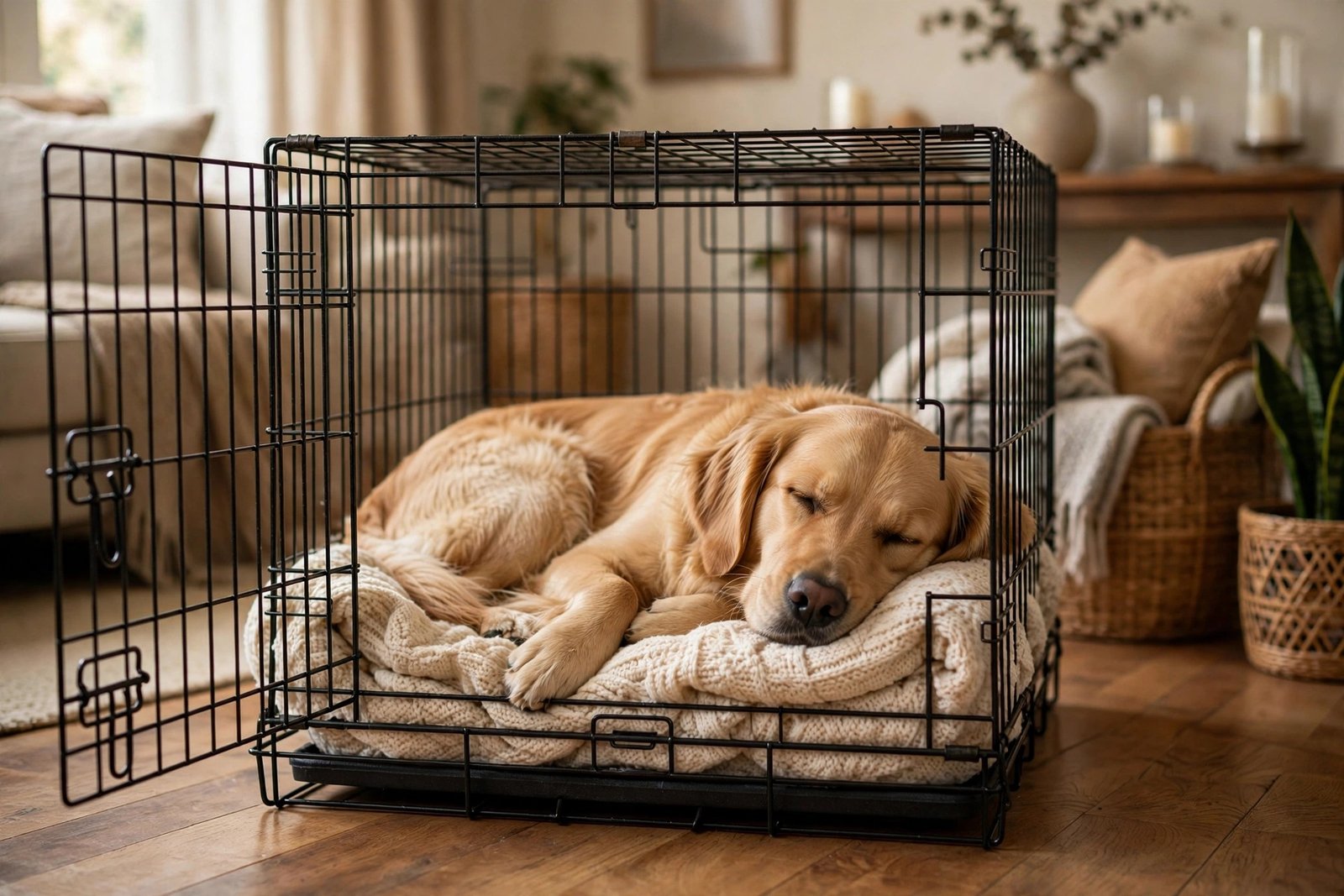
Helping an Anxious Whiner
Anxiety whining plays by different rules. The dog is not being manipulative — it is distressed. Standard “ignore it” advice can backfire here, because ignoring genuine distress does not teach coping; it just leaves the dog suffering quietly (or loudly).
Do not punish. Scolding, spray bottles, or “correcting” an anxious whine adds fear on top of fear. The dog now has two problems. Every anxiety protocol starts with removing punishment from the picture.
Address the trigger, gradually. If the dog whines when left alone, practice absences in tiny increments — seconds, not hours — building up as the dog stays calm. If storms are the trigger, create a safe den space and pair storm sounds (at low volume, gradually increased) with treats. Desensitization is slow but it is the only approach that changes the underlying emotion rather than suppressing its expression.
Stay calm yourself. Dogs take emotional cues from their humans. Fussing over an anxious dog (“oh no, it’s okay, poor baby!”) can confirm that there is something to worry about. Aim for calm, matter-of-fact reassurance — present and steady, not panicked or overly solicitous.
Consider professional help. If anxiety whining is severe — the dog cannot be left alone at all, panics destructively, or shows no improvement with gradual work — consult a certified professional dog trainer or veterinary behaviorist. Severe anxiety sometimes needs a structured plan beyond what articles can provide, and there is no shame in that.
When Whining Needs a Vet Visit
Make the appointment if the whining is new, sudden, or changed in character — especially with any of these companions: appetite loss, lethargy, limping or stiffness, panting at rest, restlessness or inability to settle, whimpering when touched in a specific spot, or house-training regression in a previously reliable dog. Senior dogs get extra caution: pain from arthritis, dental disease, or cognitive changes often announces itself as whining before anything else is obvious.
At the visit, your whine log is gold — when it happens, what the body language looks like, what changed around the time it started. Vets diagnose faster with good behavioral history. And if the vet finds nothing medical, you have cleanly eliminated the most important possibility and can train with confidence.
Frequently Asked Questions
Should I ignore my dog’s whining completely?
It depends on the cause. Ignoring works for attention-seeking whining (paired with rewarding quiet), but it is wrong for pain, anxiety, or genuine needs like needing to go outside. Always identify the cause first — ignoring is a tool for one specific type, not a universal answer.
Why does my dog whine at night?
Common causes: needing to urinate (especially puppies and seniors), anxiety about being alone, discomfort (too hot, too cold, pain), or a learned habit if nighttime whining has previously brought you running. Rule out physical needs first, then address the pattern — a consistent bedtime routine and a comfortable sleep setup resolve most cases.
Do anti-bark collars work for whining?
They are not recommended. Punishment-based devices suppress the sound without addressing the cause — and for anxiety or pain whining, they add suffering. For attention whining, they are unnecessary when reward-based methods work better. Address the cause instead.
Why does my puppy whine in the crate?
Usually protest, anxiety, or a genuine need (bathroom, too hot). The crate should be introduced gradually as a positive place with short, treat-filled sessions — never let a puppy “cry it out” for extended periods, since prolonged distress creates lasting negative associations. And since whiny puppies are often mouthy puppies too, my puppy biting guide covers the other half of early puppy manners.
Can whining become a compulsive habit?
In rare cases, yes — some dogs develop repetitive whining patterns that persist even when the original cause is gone, similar to other compulsive behaviors. If the whining seems disconnected from any trigger and resists normal training, consult a veterinary behaviorist rather than escalating corrections.
My old dog just started whining. Is it just age?
Do not write it off as “just age.” New whining in a senior dog is one of the most common early signs of pain (arthritis, dental issues) or cognitive decline. A vet check is the right first step — many causes are treatable, and the dog’s comfort may improve dramatically with proper care.
[…] distress, not disobedience, and usually needs a structured desensitization plan. (Our article on why dogs whine covers how to read that […]