

Why Does My Dog Follow Me Everywhere?
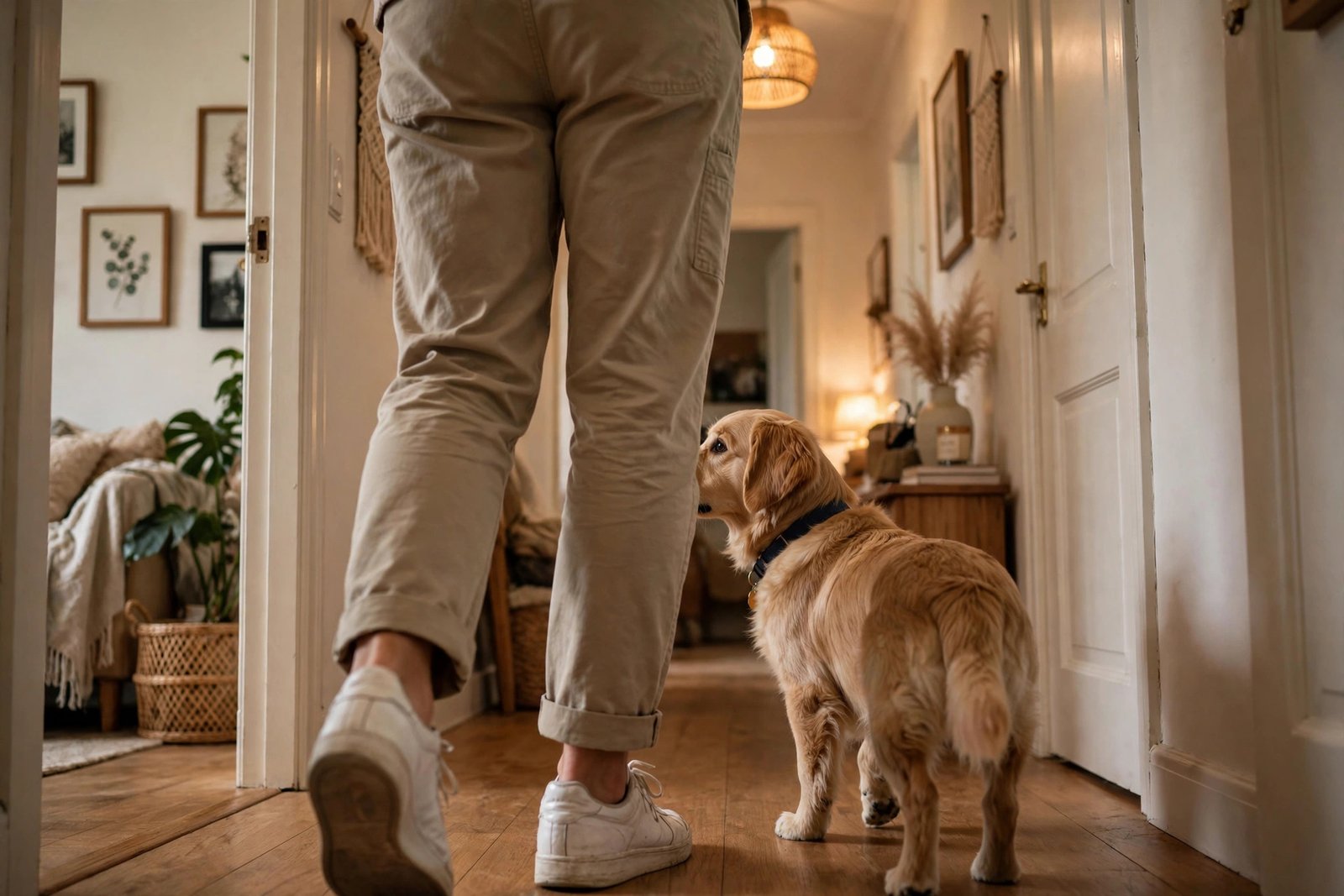
You get up to get a glass of water — your dog gets up. You head to the bathroom — your dog waits outside the door. You shift from the couch to the armchair — your dog relocates to the floor beside the armchair. Congratulations: you have a shadow with four legs.
Dogs that follow their owners from room to room have earned a nickname: velcro dogs. Endearing at first — but it raises questions. Is this normal? Does something’s wrong? Usually, following you around signals a healthy bond — but it’s worth understanding what’s driving it, so you can tell devotion from distress.
Quick Tips
- Following you room to room is normal for most dogs — it’s usually a sign of bonding, not a problem.
- Some breeds (like herding and companion breeds) are naturally more “velcro” than others.
- Sudden clinginess in a normally independent dog is worth mentioning to your vet.
- Teach a “place” or “settle” cue to give your dog a rewarding alternative to shadowing you.
- Make alone time positive with food puzzles and special toys reserved for solo time.
- True separation anxiety involves panic when left alone — that’s different from casual following and may need professional help.
The Simple Reasons Dogs Follow Their People
Before worrying about the behavior, consider how normal it is from a dog’s perspective. Dogs are social animals that evolved alongside humans for thousands of years. You’re not just their owner — you’re their family, their food source, their entertainment, their security, and the most interesting thing in their environment. Of course they follow you.
Companionship and bonding. The most common reason is also the simplest: your dog likes being near you. Dogs form deep attachments to their people, and proximity feels good to them.
You’re interesting. Think about it from the dog’s point of view. You control the food, the door, the leash, the toys, and all the good stuff. You also do unpredictable, fascinating things — you go to the kitchen (food happens there), you pick up keys (walks happen after that), you sit on the couch (prime cuddle location). Shadowing you means never missing out.
Routine and habit. Dogs are creatures of habit, and following you may simply be the routine you’ve both settled into. If every trip to the kitchen has historically resulted in a treat or some attention, your dog has learned that following you pays off. Behaviors that get rewarded get repeated.
Breed tendencies. Some breeds are famously clingy. Herding breeds (like Border Collies and Australian Shepherds) were developed to work closely with humans. Companion breeds (like Cavaliers and Pugs) were bred to be near people. If your dog’s breed is known for velcro behavior, the following is likely just genetics.
When Following Is About More Than Bonding
Most shadowing is harmless, but the behavior can also be driven by less comfortable emotions. The key is watching the whole picture — body language, context, and whether the behavior is new.
Anxiety and insecurity. A dog that follows you with worried body language — panting when it’s not hot, lip licking, tucked tail, restlessness — may be anxious rather than affectionate. Dogs that haven’t learned to feel safe on their own can become dependent on their owner’s constant presence for reassurance. This is more common in rescue dogs still settling in, dogs that went through a frightening experience, and dogs that were never taught to be comfortable alone.
Boredom. A dog with nothing to do will default to following you because you’re the most stimulating thing available. Under-exercised and under-enriched dogs often become professional shadows simply because shadowing is more interesting than staring at the wall. If your dog’s following comes with restlessness, attention-seeking, or destructive behavior, boredom may be the real issue.
Learned behavior. If following you has always earned petting, treats, talking, or eye contact, your dog has learned that shadowing works. This isn’t a problem per se — but if the constant following is starting to wear on you, it’s worth knowing that you may have (lovingly) trained it.
Seeking comfort. Dogs sometimes become clingier during thunderstorms, fireworks, household changes, or other stressful events. Temporary clinginess during scary or disruptive times is a normal coping response. It usually fades once things settle down.
Sudden Clinginess: When to Pay Attention
A dog that’s always been a shadow is probably just a shadow. But a dog that suddenly becomes clingy when they were previously independent is telling you something changed — and it’s worth listening.
Sudden clinginess can sometimes signal physical discomfort. Dogs in pain often seek their owners for comfort. If your normally independent dog abruptly starts sticking to you — especially with other changes like appetite shifts, lethargy, or limping — a vet check is sensible. You’re not overreacting; you’re being observant.
Changes in the household can also trigger clinginess: a move, a new baby, a new pet, a family member leaving, a change in your work schedule. Dogs notice disruptions to their world, and many respond by staying closer to their person. This kind of clinginess usually eases as the dog adjusts to the new normal, especially if you keep routines as consistent as possible.
Aging can play a role too. Senior dogs sometimes become more attached as their senses dull — staying close to you is reassuring when vision or hearing isn’t what it used to be. Canine cognitive changes can also increase neediness. If your older dog’s clinginess is increasing alongside confusion, restlessness at night, or house-training lapses, mention it to your vet.
Velcro Behavior vs. Separation Anxiety
It’s important to distinguish between a dog that likes following you around the house and a dog with true separation anxiety. They’re different things, though one can sometimes develop into the other.
A velcro dog follows you from room to room but is generally fine when you leave the house — they might watch you go, then settle down for a nap. A dog with separation anxiety panics when left alone: destructive behavior (especially around doors and windows), excessive vocalization, house soiling despite being housetrained, drooling, pacing, or attempts to escape.
If your dog shows panic behaviors when alone, that’s beyond casual advice — work with your vet and a qualified trainer or behaviorist. Separation anxiety is genuine distress, not disobedience, and usually needs a structured desensitization plan. (Our article on why dogs whine covers how to read that vocalization.)
For the ordinary velcro dog, though, no intervention is strictly needed. Following you around is not a disorder. It’s only worth addressing if it’s interfering with your life or if you suspect it’s rooted in anxiety rather than affection.
Teaching Healthy Independence
If you’d like your dog to be a little less attached — or if you want to make sure a velcro puppy grows into a confident adult — you can actively teach independence. The goal isn’t to make your dog love you less; it’s to teach them that being alone is safe and even rewarding.
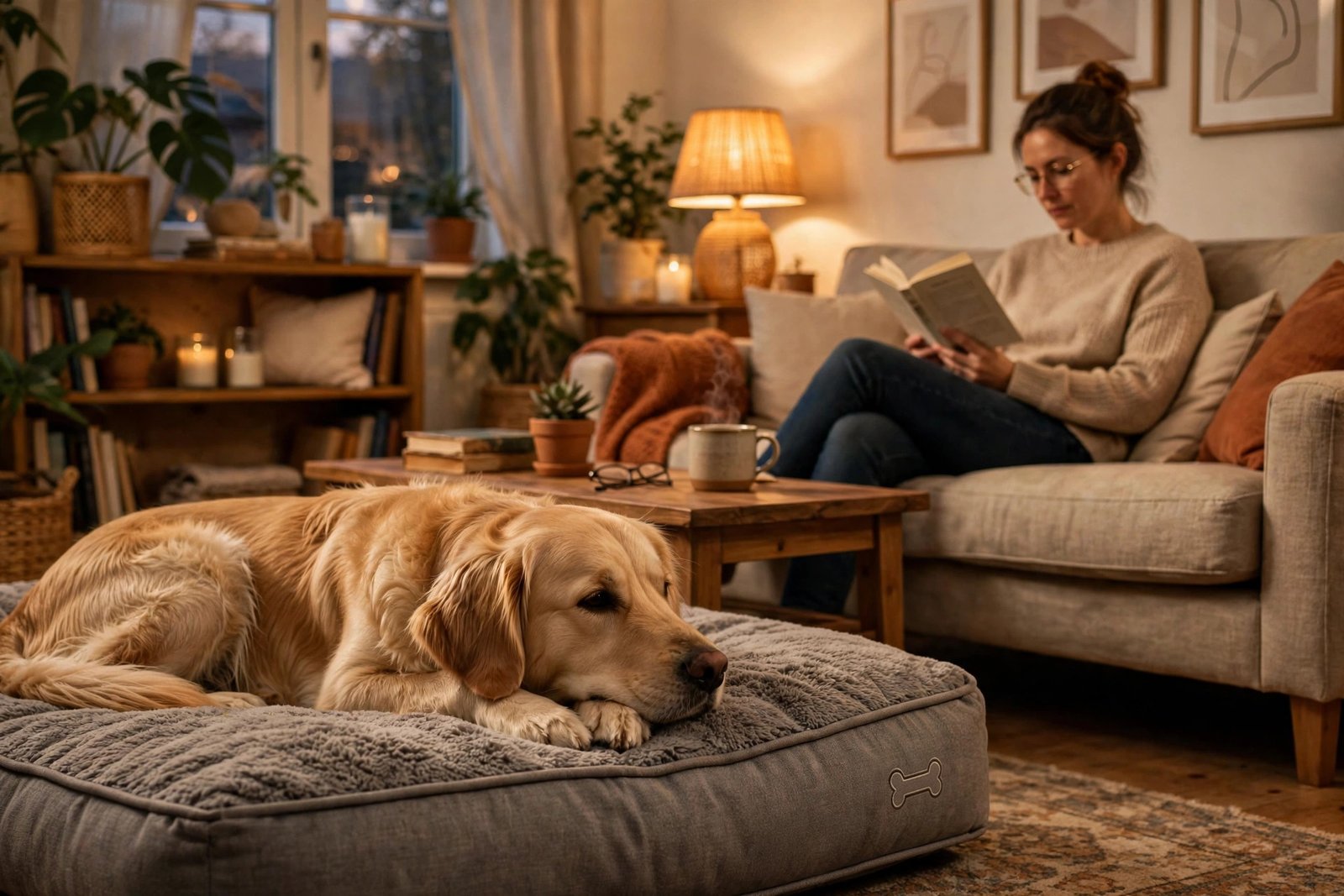
Teach “place” or “settle.” A mat or bed cue gives your dog a specific job that isn’t “follow the human.” Reward them for lying on their spot while you move around. Start with short durations and build up.
Make alone time rewarding. Give your dog something great that only appears when they’re on their own: a stuffed food puzzle or a long-lasting chew. If solo time predicts good things, dogs start to look forward to it.
Practice micro-absences. Step into another room for a few seconds, then return before your dog gets upset. Gradually extend the time. Return while your dog is still calm, so they learn that you leaving predicts you coming back.
Don’t make departures dramatic. Big emotional goodbyes teach your dog that your leaving is a big deal. Keep exits and entrances low-key and boring.
Reward calm independence when you catch it. If your dog chooses their bed while you’re in the kitchen instead of following you, quietly acknowledge it — a calm treat tossed their way. You’re reinforcing exactly what you want more of.
Meeting the Needs Behind the Following
Sometimes the best fix for excessive shadowing is making sure your dog’s needs are fully met. A dog that gets enough exercise, mental stimulation, and quality time with you is often naturally more content to settle on their own.
Quality time matters as much as quantity. Fifteen minutes of focused play or training often does more for a dog’s sense of connection than hours of coexisting in the same room while you work. A dog whose social cup is full is more likely to happily curl up on their bed.
If you recently brought your dog home and they’re still in the adjustment phase, extra patience is warranted. Newly adopted dogs often shadow their owners intensely for the first weeks or months — they’re still figuring out that this home is permanent and you’re permanent. Our puppy’s first week survival guide covers the settling-in period, and much of the advice about building security applies to adopted adult dogs too.
When to Get Professional Help
Most velcro behavior needs no professional intervention. But consider reaching out to your vet or a qualified trainer or behaviorist if:
- The clinginess appeared suddenly and you suspect a medical cause.
- Your dog panics (not just whines, but truly panics) when left alone.
- The following is paired with destructive behavior, house soiling, or self-harm like excessive licking.
- Your dog can’t eat, play, or rest unless you’re present.
- The behavior is escalating despite your efforts to build independence.
There’s no shame in getting help — that’s what professionals are for. A good trainer can assess whether you’re dealing with normal attachment, anxiety, or something else entirely, and build a plan that fits your specific dog. Your vet should always be the first stop when behavior changes suddenly, to rule out medical contributors before assuming it’s purely behavioral.
Frequently Asked Questions
Is it normal for my dog to follow me everywhere?
Yes, for most dogs it’s completely normal. Dogs are social animals bonded to their people, and following you is a natural expression of that bond. It’s only a concern if the behavior is new and sudden, paired with signs of distress, or part of a pattern of panic when left alone.
Does my dog following me mean they have separation anxiety?
Not necessarily. Following you around the house is common and usually harmless. Separation anxiety specifically involves panic and distress behaviors when the dog is left alone — destruction, excessive vocalization, escape attempts, house soiling. A dog can be a champion shadow without having separation anxiety.
Are some breeds clingier than others?
Yes. Herding breeds, companion breeds, and many working breeds tend to be more people-focused by nature. More independent breeds — many terriers, sighthounds, and northern breeds — are often content with more distance. But individual personality matters too.
Should I train my dog to be more independent?
Gentle independence training is healthy for every dog. Reward calm behavior when your dog settles on their own bed, practice short separations that end before anxiety builds, and give them satisfying solo activities like puzzle toys. The goal is a dog that loves your company but copes well without it.
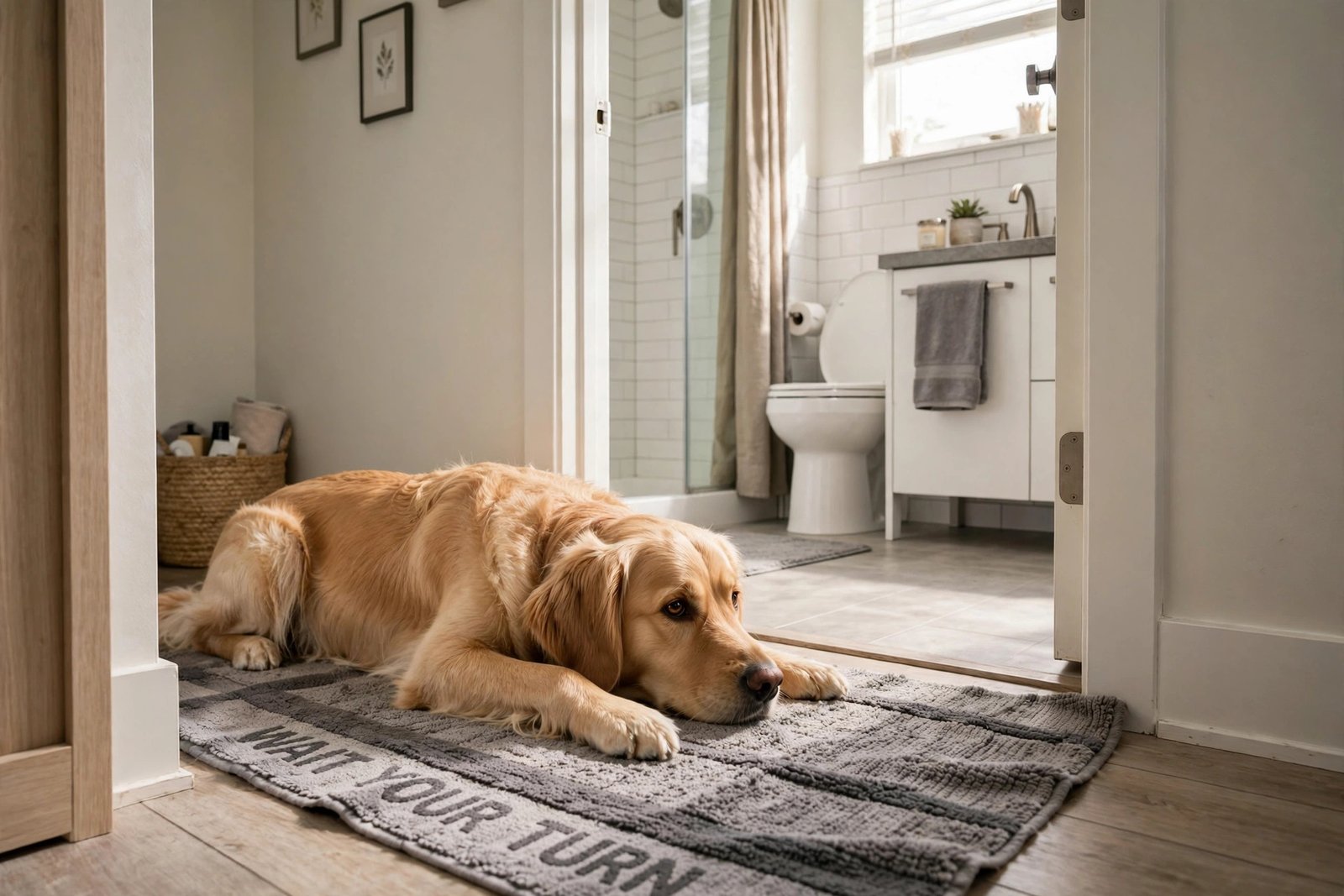
Why does my dog follow me to the bathroom?
Partly habit, partly pack instinct. Bathrooms are small, you are a captive audience, and your dog simply does not understand why the door should ever be closed on them. Many owners find it endearing; if it bothers you, a closed door and a tasty chew toy on the other side work fine.