

Why Do Dogs Dig? Understanding and Redirecting the Habit
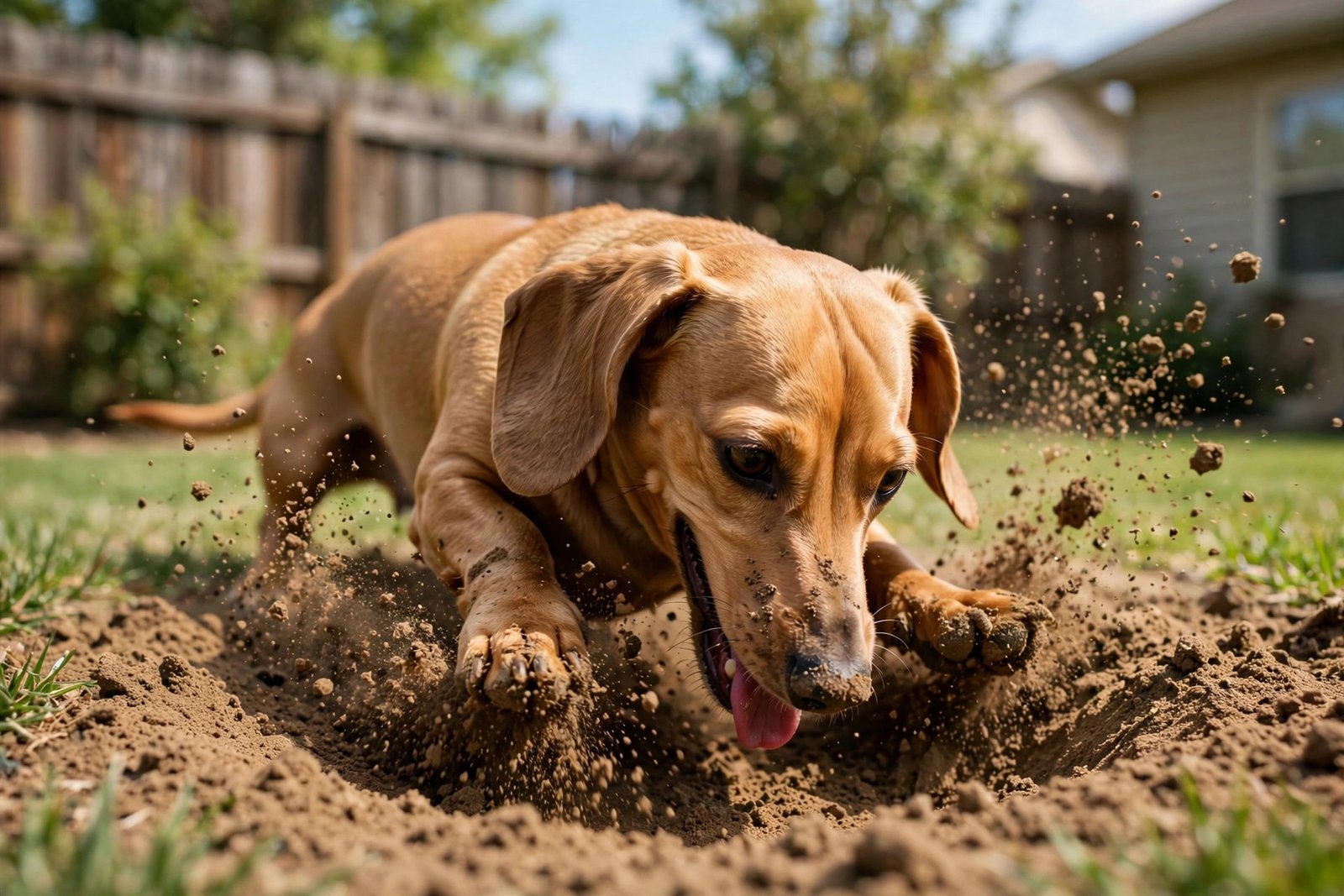
You plant a beautiful garden, and your dog treats it like an archaeological dig site. You fill one hole, and two more appear by morning. If you’ve ever stood over a fresh crater wondering why do dogs dig with such joyful determination, you’re in good company — digging is one of the most common (and most maddening) dog behaviors out there.
Here’s the reassuring part: digging is completely natural. Dogs don’t dig to spite you or ruin your landscaping. They dig because their instincts, their energy, and their environment all point them toward the dirt. Once you understand which reason is driving your dog, you can redirect the urge instead of fighting it — and your yard might actually survive.
Quick Tips
- Identify the “why” first — boredom, instinct, comfort, and escape each need a different fix.
- Increase daily exercise and mental stimulation; a tired dog digs far less.
- Give legal digging an outlet, like a sandbox digging pit with buried toys.
- Supervise yard time and redirect digging early with a cheerful interrupt and a toy.
- Make the yard less tempting: provide shade, water, and cool resting spots.
- Never punish digging after the fact — your dog won’t connect the scolding to the hole.
Why Do Dogs Dig? The 7 Most Common Reasons
Not all digging is the same. Watch when and where your dog digs, and you’ll usually spot one of these motivations.
1. Boredom and excess energy
This is the number-one cause for most pet dogs. A dog left alone in the yard with nothing to do will invent a job — and digging is a fantastic one. It’s physical, it’s mentally engaging, and the ground keeps changing as they go. If your dog digs mostly when left alone outside, boredom is your prime suspect. More walks, play sessions, and puzzle toys often shrink the problem dramatically.
2. Instinct and breed tendencies
Some dogs are simply born diggers. Terriers were bred to dig after burrowing animals; dachshunds, beagles, huskies, and many terrier mixes dig with particular enthusiasm. For these dogs, digging isn’t a behavior problem — it’s a breed feature. You can’t train instinct out, but you absolutely can channel it into an approved digging spot.
3. Hunting buried treasure
Moles, grubs, chipmunks, and interesting smells live underground, and your dog’s nose knows it. If the digging is concentrated in one area and your dog is intensely sniffing before they start, they’re probably hunting. Reducing the prey (grub treatment for the lawn, for example) can help, though your dog may simply move on to the next interesting smell.
4. Comfort: cooling off or nesting
On hot days, dogs dig shallow pits and lie in the cool earth underneath — it’s nature’s air conditioning. Pregnant or nesting dogs may also dig to create a den-like spot. If your dog digs a shallow hollow and then curls up in it, comfort is the motive. Shade, a kiddie pool, or a cool indoor resting spot usually solves it.
5. Burying valuables
Dogs bury bones, toys, and prized chews for later — it’s an ancient food-caching instinct. If your dog carefully buries things with their nose and pats the dirt down, they’re not destroying your yard; they’re running a savings account. Giving them a designated digging area legitimizes the whole operation.
6. Escape attempts
Digging along fence lines is a red flag: your dog may be trying to get out. Escape digging is usually driven by boredom, separation anxiety, or something exciting on the other side (another dog, a squirrel highway, kids playing). This one needs attention beyond landscaping — burying chicken wire or large flat stones along the fence base helps, but also look at why your dog wants out. If your dog seems genuinely distressed when left alone, that’s worth discussing with your vet or a qualified behavior professional.
7. Attention-seeking
Sometimes digging works because it reliably summons a human. You run outside shouting, your dog gets a thrilling game of chase — from their perspective, digging is a fantastic way to start a party. The fix is unglamorous: stop making digging exciting. Calmly redirect without the drama.
How to Redirect Digging (Instead of Fighting It)
Here’s the mindset shift that changes everything: instead of trying to eliminate digging, give it a legal home. This works especially well for instinct-driven diggers who will never simply stop.
Build a digging pit
Set aside a corner of the yard — a child’s sandbox, a framed wooden box, or just a mulched area — and fill it with loose sand or soft soil. Bury toys and treats just under the surface and let your dog discover them there. Praise and reward digging in the pit enthusiastically. Most dogs happily switch to the approved zone within a week or two because it’s easier digging with better payouts.
Supervise and redirect
For the first few weeks, don’t leave your dog unsupervised in the yard. When they start digging in a forbidden spot, interrupt cheerfully (a clap or a happy “let’s go!”) and redirect to a toy or the digging pit. Reward the redirect. You’re not punishing the old habit — you’re making the new one more rewarding.

Burn the energy first
A dog who has just had a great walk, a game of fetch, or a training session is dramatically less interested in excavation. For high-energy breeds, this single change often does more than any training technique. Think of it as draining the battery that powers the digging.
Make forbidden spots boring
Temporarily covering favorite digging spots with large flat stones, garden fabric, or upside-down plant trays breaks the habit loop while the new routine takes hold. You’re not punishing — you’re just removing the opportunity while the digging pit becomes the better option.
What NOT to Do About Digging
A few common reactions make digging worse, so let’s rule them out. Don’t fill the hole with your dog’s waste — it’s unpleasant, unhygienic, and doesn’t address the motivation. Don’t scold your dog for holes you discover after the fact; dogs don’t connect delayed punishment to past actions, so your dog just learns that you sometimes get angry near holes. And don’t chain or confine your dog for long periods as a solution — that amplifies the boredom and frustration driving the digging.
If digging is part of a bigger pattern — like excessive barking, pacing, or destructive behavior when left alone — the underlying issue is often unmet needs rather than a digging problem per se. Addressing exercise, enrichment, and alone-time training usually quiets several behaviors at once.
Pet-Proofing Your Yard for a Digger
While you’re retraining, a few practical yard tweaks protect both your landscaping and your dog. Our full guide to pet-proofing your yard covers this in depth, but the digging-specific highlights are worth repeating: bury a barrier (flat stones or welded wire laid flat) along fence lines to stop escape digging, keep compost and fertilizer secured since freshly turned soil is irresistible, and check that your dog can’t dig under gates — that’s the most common actual escape route.
Also consider what your dog digs near. Freshly planted flower beds smell amazing to a dog nose (fertilizer, bone meal, new soil). A low decorative fence around garden beds — even just 18 inches — is often enough to redirect a casual digger while the pit training takes hold.
Frequently Asked Questions
Will my dog ever stop digging on their own?
Puppies often dig more during their teenage months and may mellow with age, but most dogs don’t simply outgrow digging without intervention — especially breeds with strong digging instincts. The good news is that redirection to a digging pit works at any age, so you don’t have to wait and hope.
Is digging a sign my dog is unhappy?
Not necessarily. Most digging is just a dog being a dog — following instincts, burning energy, or entertaining themselves. Understanding why do dogs dig in your specific case is the fastest route to the right fix. Digging becomes a concern when it’s frantic, paired with escape attempts, or part of a pattern of distress when left alone (pacing, drooling, destructive behavior). If you’re worried your dog is anxious rather than just bored, talk to your vet.
Do those anti-digging sprays actually work?
Bitter or citrus sprays sometimes deter mild diggers from a specific spot, but they wash away with rain and rarely stop a determined dog. They’re best used as a short-term helper while you build the real solution: exercise, enrichment, and a legal digging outlet. Don’t rely on them as the whole plan.
My dog only digs when I’m not home. What should I do?
That’s classic boredom digging (or, less commonly, separation-related distress). Increase exercise before you leave, provide puzzle feeders and long-lasting chews, and consider whether your dog actually needs to be outside unsupervised — many “yard diggers” stop entirely when they get indoor access with enrichment during the day. A pet camera can help you see what’s really happening while you’re away.
Can I train a terrier to stop digging completely?
Honestly? Probably not completely — and that’s okay. Terriers were selectively bred for generations to dig enthusiastically; it’s hardwired. What you can absolutely do is concentrate all that digging joy into one approved pit. Many terrier owners report their dogs prefer the pit once it’s established, because the digging is easy and the buried treasures are guaranteed.