

Why Does My Dog Sniff Everything on Walks?
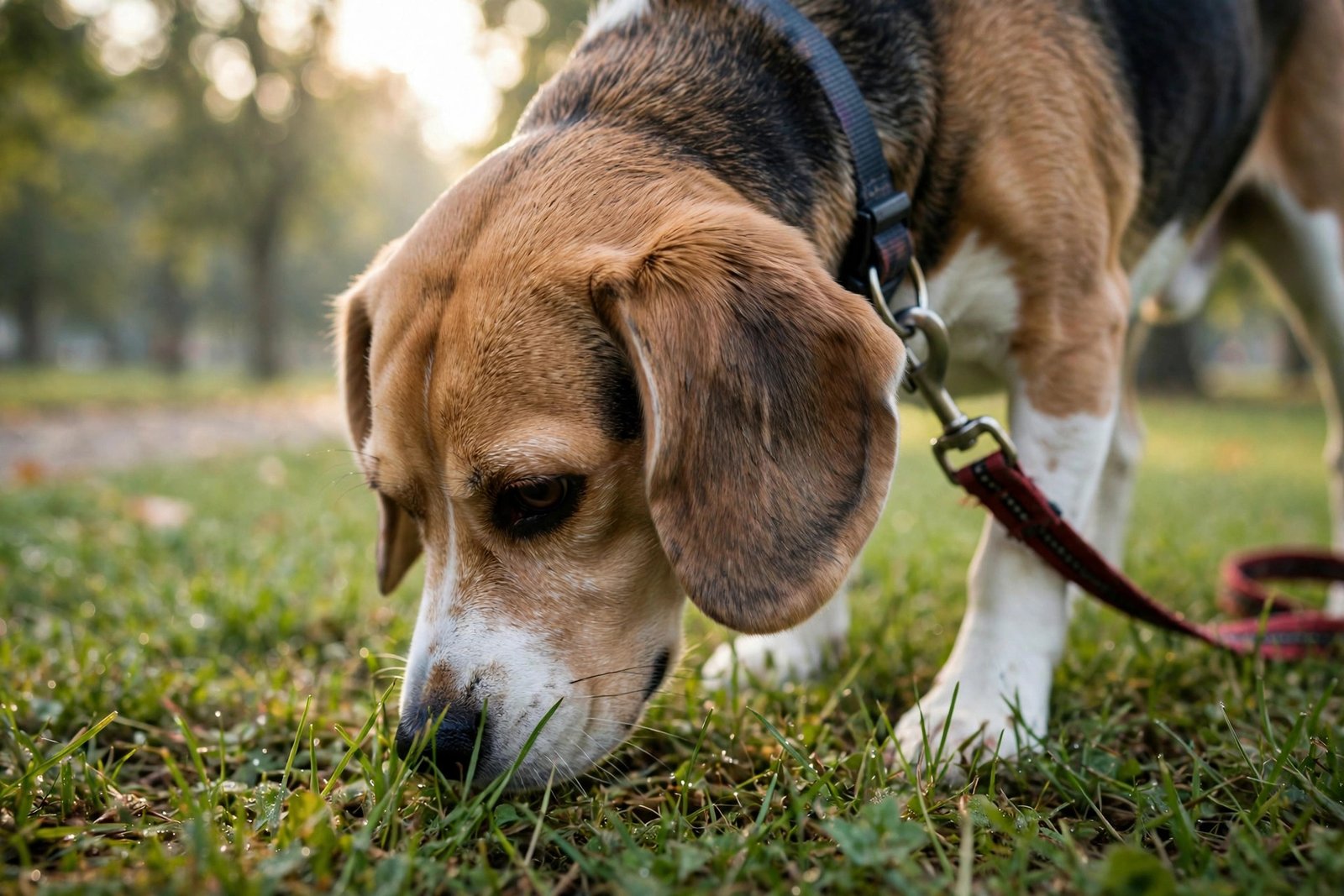
Every dog owner knows the scene: you’ve walked about fifty feet, and your dog has stopped twelve times to investigate patches of grass, lampposts, and mysterious spots on the sidewalk that look like nothing at all. You’re trying to get some exercise. Your dog is trying to read the entire neighborhood.
It can feel like your dog is being stubborn, but constant sniffing isn’t misbehavior — it’s one of the most natural things a dog can do. A dog’s nose is their primary way of understanding the world, and a walk is basically their daily newspaper.
Quick Tips
- Sniffing is normal, healthy dog behavior — not disobedience or stubbornness.
- A dog’s nose can detect scents at concentrations far below what humans can perceive.
- Let your dog sniff freely on at least part of every walk; it’s genuine mental exercise.
- Use a release cue like “go sniff” so your dog learns when free sniffing is allowed.
- A dedicated “sniff walk” where the dog chooses the route can tire some dogs out more than a fast-paced march.
- If sniffing becomes frantic, obsessive, or paired with eating things off the ground, talk to your vet.
Your Dog’s Nose Is a Superpower (Really)
To understand why your dog sniffs everything, it helps to grasp just how different their sense of smell is from yours. Humans have around 6 million scent receptors. Dogs have up to 300 million, depending on the breed, and the part of their brain devoted to analyzing smells is proportionally about 40 times larger than ours.
Put simply: when you walk down a street, you see a street. When your dog walks down the same street, they smell a detailed history of everything that happened there — which dogs passed by, when, which direction they went, whether they were male or female, and possibly how they were feeling. That patch of grass your dog finds fascinating might be carrying a message left hours ago.
Dogs can also smell in layers, separating individual scents from a complex mix. A spot that smells like “grass” to you might smell like grass, three different dogs, a squirrel, and yesterday’s rain to them. No wonder they want to stop and take it all in.
What Your Dog Is Actually Learning From Sniffing
Sniffing serves several real purposes for your dog beyond simple curiosity:
Social information. Much of what dogs smell on walks is communication from other animals. Urine marks, in particular, carry information about the animal that left them. For dogs, sniffing these marks is roughly the equivalent of checking who’s been around the neighborhood — it’s social, not gross, in dog terms.
Environmental awareness. Dogs use scent to build a mental map of their territory. That long sniff at the corner isn’t indecision; it’s your dog confirming that everything is where it should be and noting anything new. Dogs that get to sniff their route tend to be calmer and more confident in their environment.
Mental stimulation. Processing smells is genuinely hard work for a dog’s brain. A twenty-minute walk where your dog sniffs freely may wear them out more than a forty-minute march where they’re hurried along the whole time.
Stress relief. For many dogs, sniffing is calming. Anxious or overstimulated dogs often settle down when given the chance to sniff at their own pace. It’s a self-soothing behavior — one reason trainers sometimes recommend “sniff breaks” for dogs that are struggling on walks.
The Sniff Walk: Letting Your Dog Be a Dog
One of the best things you can do for a sniff-obsessed dog is to dedicate at least some walks (or parts of walks) to pure sniffing. On a sniff walk, your dog sets the pace and the route. You follow. There’s no destination and no exercise target — the walk is for your dog’s nose.
Sniff walks are especially good for days when a long run or hike isn’t possible, for senior dogs with limited mobility, and for rainy days when a quick outing still needs to be enriching. Many owners are surprised at how content their dog is after a slow, sniffy half-hour around the block.
You don’t have to make every walk a sniff walk. A practical structure many owners use is to split walks into phases: an initial “business and sniff” period where the dog can explore freely, then a more structured walking phase where you set the pace, then a final sniff period to wind down. This gives the dog the sniffing they crave while still getting you both some exercise.
Teaching a “Go Sniff” Cue
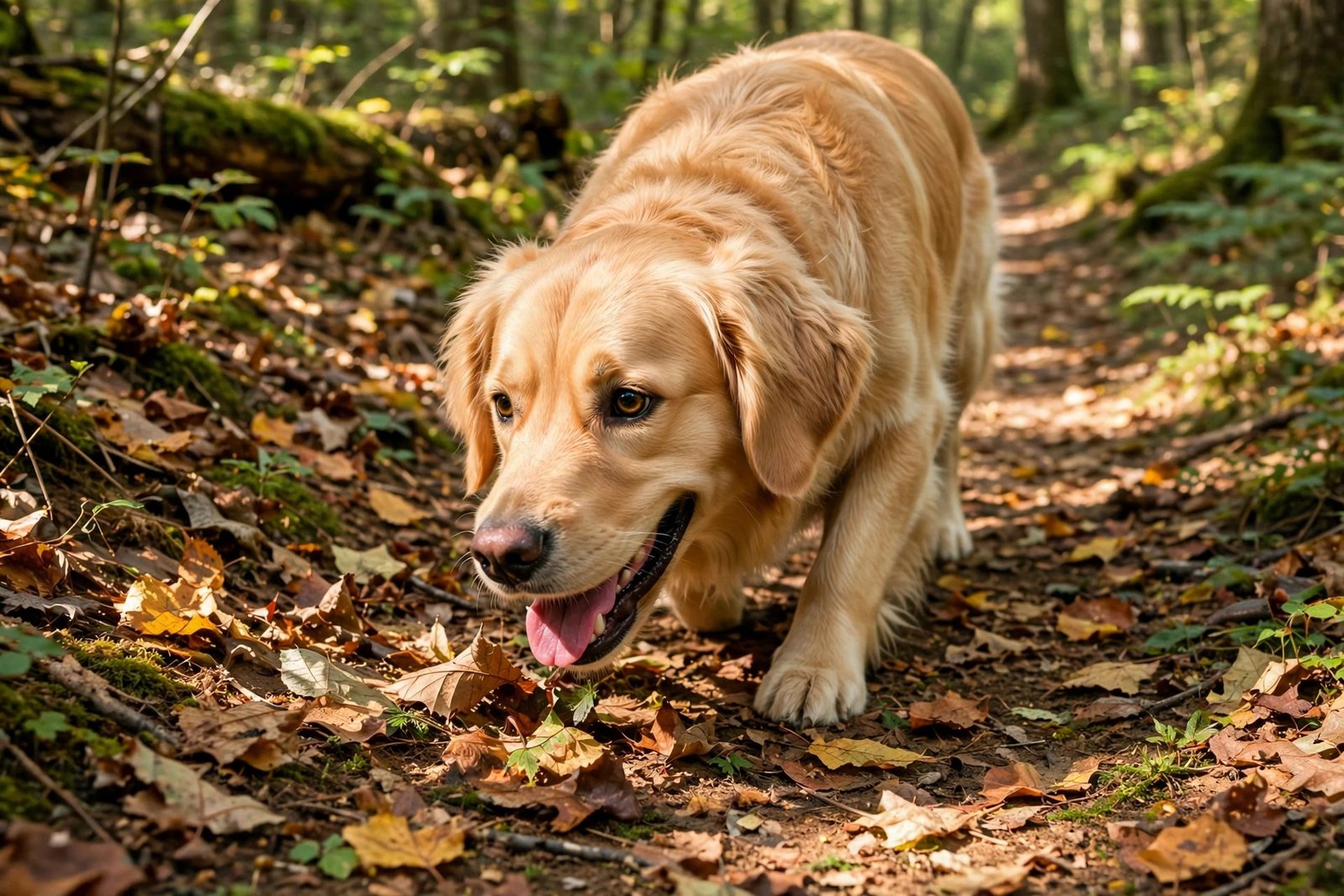
If your dog wants to sniff constantly and you’d like a bit more structure, a release cue is the answer. “Go sniff,” “free,” “okay” — the word doesn’t matter, as long as you’re consistent. The idea is simple: the cue tells your dog that sniffing is currently allowed, and the absence of the cue means it’s time to walk with you.
To teach it, start on a walk. When your dog is walking nicely beside you, say your cue word and let the leash go slack so they can sniff. After a minute, use your regular walking cue and move on. Most dogs pick this up quickly because the reward — getting to sniff — is built in.
When to Hurry Them Along (Gently)
There are times when sniffing needs to be limited, and that’s fine. If you’re on a tight schedule, walking on a narrow sidewalk where stopping blocks pedestrians, or passing through an area where sniffing could be unsafe (broken glass, trash, areas treated with chemicals), it’s reasonable to keep your dog moving.
The key is to redirect rather than punish. A cheerful “let’s go” plus a treat for moving with you works far better than dragging or scolding. Remember that sniffing isn’t defiance — punishing a dog for sniffing is like punishing a person for looking around. If your dog seems to sniff excessively to avoid walking, that may be worth mentioning to your vet, since reluctance to move can occasionally signal discomfort.
Also be mindful of what your dog is sniffing. Watch for discarded food, animal waste, and anything that looks like bait or chemicals. If your dog grabs things with their mouth while sniffing, a “leave it” cue is worth teaching.
Sniffing and Exercise: Finding the Balance
A common worry is that a sniff-heavy walk “doesn’t count” as exercise. For some dogs and some goals, that’s a fair concern — a young, athletic dog that only ever ambles and sniffs may not get enough physical exertion. But for most pet dogs, a mix works well.
Think of it this way: physical exercise tires the body, sniffing tires the brain, and most dogs need both. A walk that’s all marching with no sniffing can leave a dog physically tired but mentally restless — the classic recipe for a dog that comes home from a long walk and immediately starts chewing the furniture.
If your dog needs serious physical exercise, build intervals into one outing — brisk walking stretches punctuated by sniff breaks. For guidance on total walking needs, check out our guide on how often you should walk your dog.
Why Some Dogs Sniff More Than Others
Sniffing intensity varies a lot between dogs, and several factors play a role. Breed is a big one: scent hounds like Beagles and Bloodhounds were developed specifically for their noses, and they tend to be world-class sniffers. But plenty of non-hound breeds are enthusiastic sniffers too.
Age matters as well. Puppies and young dogs often sniff less because everything is new and exciting in a general way — they’re still learning to focus. Many dogs become more deliberate sniffers as they mature. Senior dogs, meanwhile, often lean into sniffing as their physical exercise capacity decreases; the nose keeps working even when the legs slow down.
Individual personality plays a role too. Some dogs are simply more curious and investigative, while others are more interested in moving or playing. Neither style is wrong.
Novelty also drives sniffing. A new route produces far more sniffing than the same old loop, because there’s more new information to process. Varying your walking routes is one of the easiest ways to give your dog a mental workout.
Sniffing Games You Can Play at Home
If your dog loves sniffing, you can channel that interest into games that provide enrichment even when you can’t get outside:
- Treat scatter: toss kibble into the grass or across a room and let your dog find every piece.
- Muffin tin puzzle: place treats in a muffin tin, cover each cup with a tennis ball, and let your dog uncover them.
- Scent trails: drag a smelly treat along the ground, then let your dog follow the trail to the prize.
These games are great rainy-day activities. If your dog also investigates the world with their mouth, our article on why dogs lick everything covers that related habit.
When Sniffing Might Signal Something Worth Checking
Normal sniffing is relaxed and exploratory — the dog sniffs, processes, and moves on. There are a few patterns that are worth paying attention to, though. If your dog suddenly starts sniffing one specific area of their own body obsessively, or if sniffing on walks becomes frantic and compulsive rather than curious, it’s worth mentioning to your vet.
The same goes for any sudden, dramatic change in sniffing behavior. A dog that never cared about smells and suddenly can’t stop sniffing — or a champion sniffer that abruptly loses interest — may be telling you something changed. Dogs’ senses can shift with age and health, and your vet is the right person to help interpret what’s going on.
Eating things off the ground during sniff sessions is a separate concern. Occasional grass nibbling is common and usually harmless, but regularly swallowing unknown objects, trash, or animal waste can cause stomach upset or worse. If your dog is a dedicated ground-scooper, work on that “leave it” cue and consider talking to your vet about whether something dietary might be driving the behavior.
Frequently Asked Questions
Should I let my dog sniff on every walk?
Ideally, yes — at least for part of each walk. Sniffing is natural mental enrichment, and dogs that get sniff time tend to be calmer and more satisfied. You can still have structured walking portions; just build in sniff breaks so your dog’s needs are met too.
Does sniffing actually tire dogs out?
It genuinely seems to. Processing scent information is cognitively demanding for dogs, and many owners and trainers report that sniff-heavy walks leave dogs as settled as physically intense ones. It’s mental fatigue rather than physical fatigue, but the end result — a calm, content dog — looks very similar.
How do I get my dog to stop sniffing and keep walking?
Use a cheerful “let’s go” cue and reward your dog with a treat for moving with you. Avoid dragging or scolding. Teaching a “go sniff” release cue also helps a lot — your dog learns that sniffing happens at certain times, which makes the walking times easier for both of you.
My dog sniffs but won’t actually walk — what should I do?
First, rule out a physical issue: a dog that plants its feet and refuses to move may be sore or uncomfortable, so consider a vet check if this is new behavior. If your dog is healthy, try varied routes, sniff breaks, and rewards for moving — and make sure the walk length suits your dog’s age and fitness.