

Why Does My Dog Lick Everything?
Your face. Your hands. The couch arm. The air itself, for reasons known only to the dog. If you have ever asked yourself why your dog licks everything in sight, you are in enormous company — licking is one of the most common dog behaviors owners ask about, and one of the most misunderstood.
Here is the thing most guides skip: licking is not one behavior. It is a whole toolkit. Dogs lick to gather information, to calm themselves, to get your attention, to taste the interesting residue of your lunch on your fingers, and sometimes because something is bothering them. Decoding which kind of lick you are looking at changes everything about how you respond.
Quick Tips
- Licking is normal dog communication — most of it needs no fixing at all.
- Sudden, obsessive licking of surfaces can signal nausea or anxiety — watch for patterns.
- Never punish licking; redirect to a toy, lick mat, or chew instead.
- Licking you is usually affection or attention-seeking — decide what you want to allow.
- If licking comes with vomiting, drooling, or appetite changes, talk to your vet.
- Boredom drives a huge amount of licking — tired dogs lick less.
Reason 1: It Is How Dogs Explore the World
Dogs experience the world through their mouths the way we do through our hands. A dog licking a new object is doing the equivalent of you picking something up and turning it over — gathering information. Taste carries data: who was here, what happened here, is any of this food.
Puppies are the most enthusiastic practitioners. Everything goes in the mouth, and licking is the gentler end of that spectrum. This kind of exploratory licking usually fades as the dog matures and the world becomes familiar, though some dogs stay mouthy their whole lives. It is not a problem to solve; it is a dog being a dog.
Reason 2: Affection and Bonding
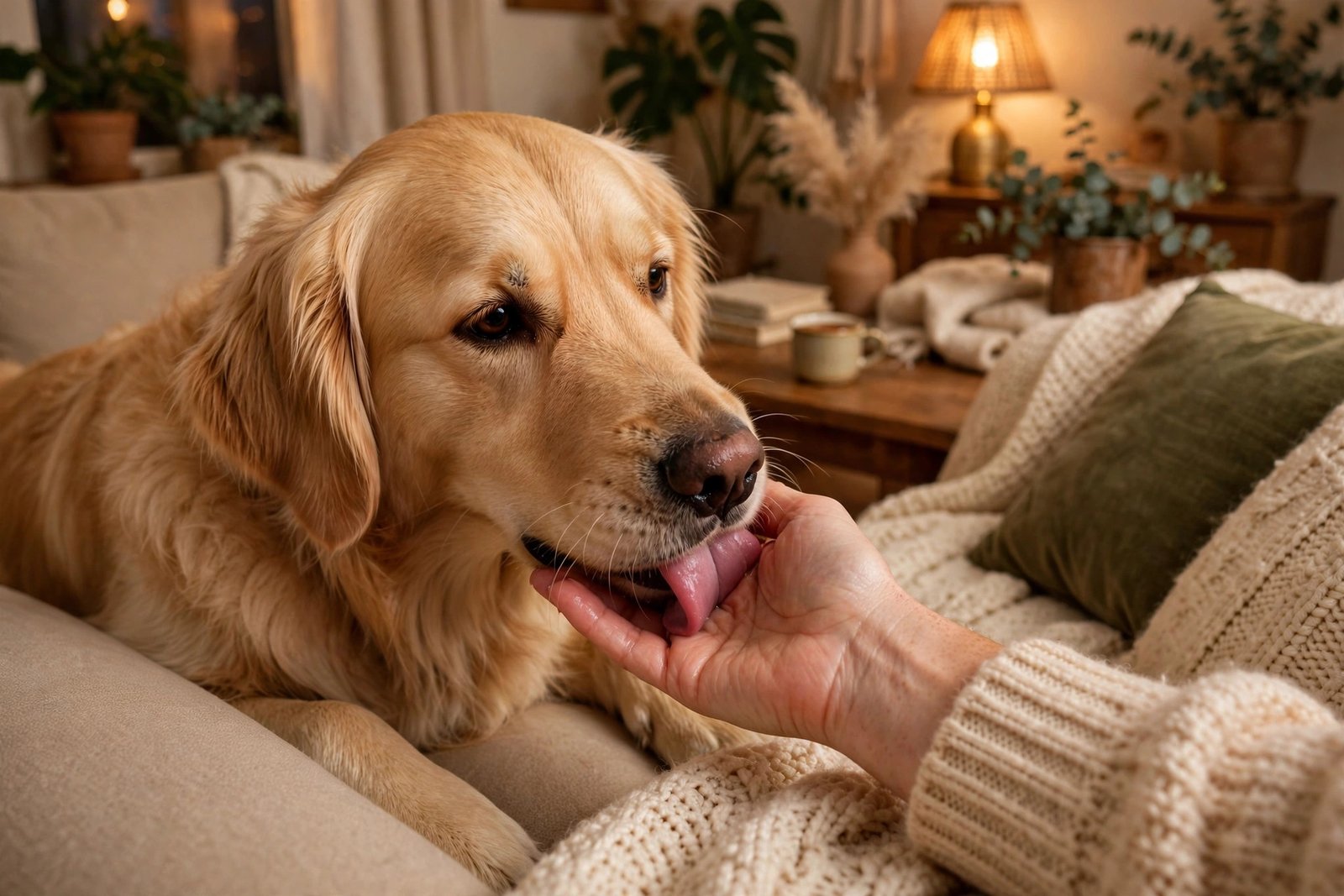
The face licks, the hand licks when you come home, the gentle licking while you pet them — this is social glue. In the wild, canines lick each other’s faces as a bonding and appeasement behavior, and domestic dogs transferred the habit to their humans. When your dog licks you during a cuddle, that is roughly the dog equivalent of a hug.
Licking also releases endorphins in the dog’s brain — it literally feels good and calming. So the dog that licks your hand while you scratch its ears is double-dipping on feel-good chemistry. Whether you allow face licking is entirely a personal hygiene decision; there is no behavioral requirement either way. Plenty of owners redirect face licks to hands or chins, which gives the dog the bonding without the full tongue-to-mouth experience.
Reason 3: Attention — Because It Works
Dogs are brilliant behaviorists. If licking your face makes you laugh, talk to them, or push them away while giggling, the dog has learned a reliable button for getting a reaction. Even negative attention — “no, stop, ugh” — is attention, and for a bored dog, attention of any flavor beats being ignored.
This is the mechanism behind most “excessive” licking of people. The dog licked once, the human reacted dramatically, and a hobby was born. The fix is not punishment — it is making licking boring. Calmly withdraw the body part being licked, wait for a pause, then reward the pause with calm attention or a treat. The dog learns that not-licking is what earns the good stuff. Consistency across the whole household matters enormously here; if one person giggles and encourages it, the training will not stick.
Reason 4: Anxiety and Self-Soothing
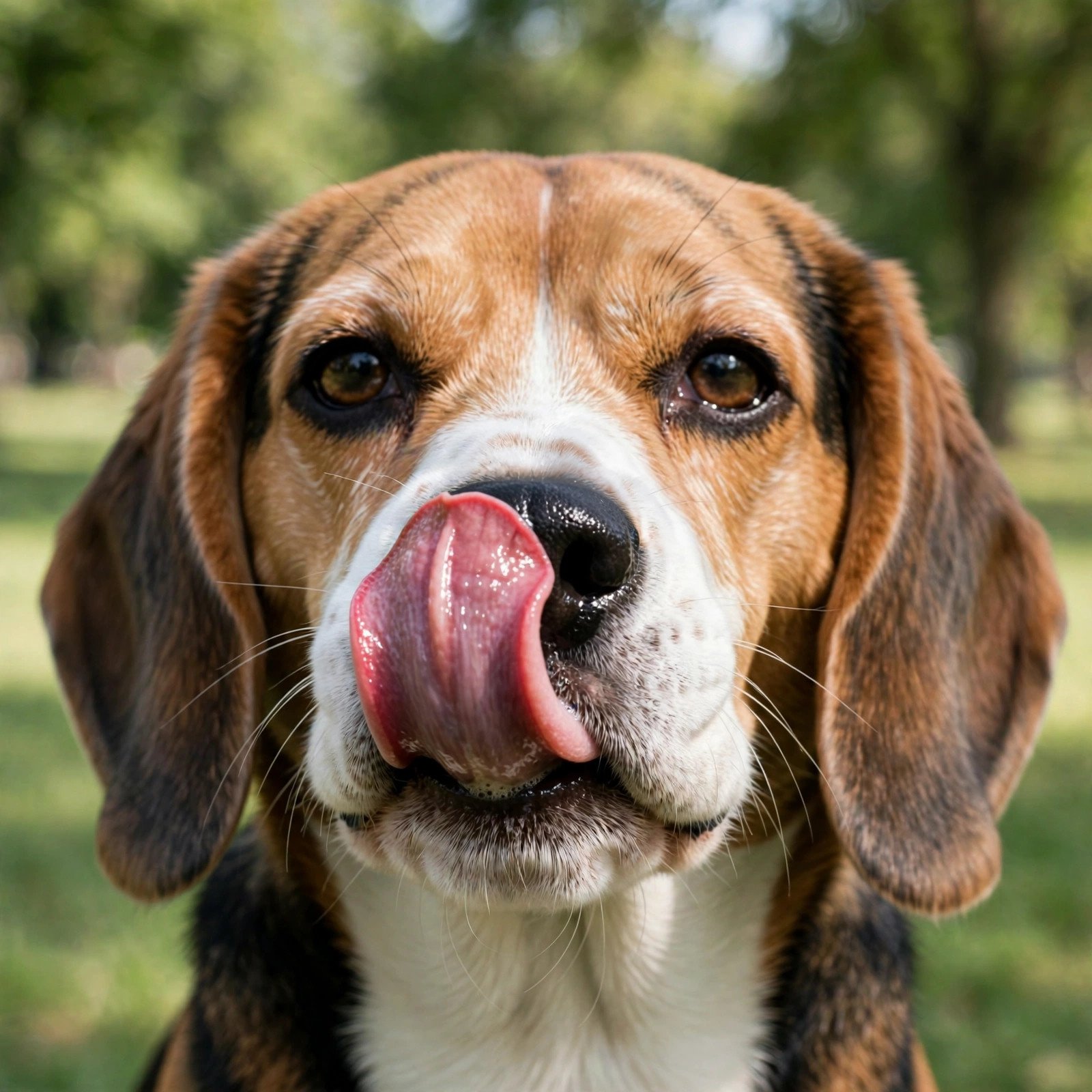
Repetitive licking — of paws, of the air, of the same spot on the couch for twenty minutes — is often a coping mechanism. The endorphin release that makes affectionate licking pleasant also makes it useful for a stressed dog trying to calm itself down. Dogs lick more during thunderstorms, after a scolding, when left alone, or in any situation that makes them uneasy.
The pattern to watch is context. A dog that licks its paws every evening while the household winds down is probably self-soothing the way some people twirl their hair. A dog that suddenly starts licking everything in the house frantically may be working through acute stress. In both cases, the licking is a symptom, not the problem — addressing the underlying anxiety (more exercise, predictable routines, a safe den space) does more than trying to suppress the licking itself.
If the licking becomes truly compulsive — same spot, raw skin, cannot be interrupted — that is worth a vet conversation. There is a line between a soothing habit and a compulsive disorder, and a vet can help you tell which side your dog is on.
Reason 5: Something Tastes Good
Sometimes the explanation is gloriously simple. Your hands taste like lunch. The couch arm tastes like the cheese puff that fell there yesterday. The floor near the trash tastes like adventure. Dogs have about 1,700 taste buds (we have around 9,000, so they are working with less, but smell compensates), and they are deeply motivated by interesting flavors.
Sweat is a particular favorite — salty skin after a workout is irresistible to many dogs, which is why the post-gym greeting involves significantly more tongue than usual. Lotion, sunscreen, and food residue all count. This kind of licking is purely opportunistic and needs no intervention beyond whatever boundaries you prefer.
Reason 6: Nausea and Digestive Upset
This is the one to take seriously. Dogs that feel nauseous often lick surfaces frantically — floors, carpets, walls — and swallow repeatedly. Trainers sometimes call it “the lickies,” and it is distinct from casual licking: it is urgent, repetitive, and the dog looks uncomfortable.
Excessive drooling, lip-smacking, grass eating, and surface licking together are the classic nausea cluster. It often passes — the dog may vomit once and feel better — but if it persists, recurs frequently, or comes with appetite loss, lethargy, or vomiting that will not stop, that is a vet visit, not a wait-and-see. Dogs cannot tell us their stomach hurts, so this particular licking pattern is one of the few visible clues. For more on reading these signals, my guide to signs it is time to call the vet covers the full checklist of when to worry and when to relax.
Reason 7: Boredom, Plain and Simple
A staggering amount of problem licking traces back to one cause: not enough to do. An under-exercised, under-stimulated dog invents its own entertainment, and licking is always available. The dog that methodically licks the sofa every afternoon is often the dog that has not had a proper walk or a good play session that day.
The test is simple: increase exercise and mental stimulation for a week and watch what happens to the licking. Puzzle feeders, sniff walks, training games, and chew toys give the mouth and brain something better to do. A lick mat smeared with a thin layer of peanut butter or plain yogurt is the perfect legal outlet — it satisfies the licking urge in a way that is actually enriching rather than destructive. Tired dogs lick less; it is one of the most reliable equations in dog ownership.

How to Reduce Licking You Do Not Want
First, decide what actually bothers you. A dog that licks your hand when you pet it is expressing affection — “fixing” that means suppressing a bonding behavior, which is a strange goal. Most owners are fine with some licking and want less of it, not zero. Aim for management, not elimination.
Redirect, do not punish. When the dog starts licking something you would rather it did not, calmly offer an alternative: a chew toy, a lick mat, a brief training game. Punishment — yelling, pushing the dog away roughly, spray bottles — tends to increase anxiety, and anxious dogs lick more. You end up feeding the very behavior you wanted to stop.
Reward the absence. This is the part most people skip. When your dog is lying calmly without licking, mark and reward that. Dogs repeat what pays. If calm, non-licky behavior earns treats and attention, the dog will offer more of it. You are not just stopping licking; you are building its replacement.
Check the basics. Before assuming a behavior problem, run through the checklist: enough exercise? Enough mental stimulation? Any recent changes in routine or household? Any physical symptoms — drooling, appetite changes, paw chewing? A surprising number of “behavior problems” resolve when the underlying need gets met.
Frequently Asked Questions
Why does my dog lick me so much?
Usually a mix of affection, attention-seeking, and the fact that you taste interesting. Dogs learn quickly that licking gets a reaction, so the behavior self-reinforces. If it bothers you, calmly withdraw and reward pauses — never punish. If the licking is sudden and frantic rather than affectionate, consider anxiety or nausea as causes.
Is it okay to let my dog lick my face?
It is a personal decision, not a behavioral one. Dog mouths carry bacteria, so most vets suggest keeping licks away from your mouth, nose, and eyes, and washing up afterward — especially for immunocompromised people or small children. Redirecting face licks to your hand or chin is a fine middle ground that preserves the bonding without the hygiene concerns.
Why does my dog lick the air?
Air licking — snapping or licking at nothing — can be a calming signal, a response to an interesting smell, or occasionally a sign of nausea or a focal seizure in rare cases. Occasional air licking during exciting moments is normal. If it is frequent, rhythmic, and the dog seems disconnected or distressed, mention it to your vet, ideally with a video.
Why does my dog lick its paws constantly?
Persistent paw licking has several possible causes: allergies (very common — itchy paws), anxiety or boredom, a thorn or irritation between the toes, or dry skin. Check the paws for redness, swelling, or foreign objects first. If the paws look irritated or the licking is creating sores, that is a vet conversation rather than a training issue.
My dog licks the couch and carpet obsessively. What should I do?
First, rule out nausea — frantic surface licking with lip-smacking often means an upset stomach. If the dog is otherwise well, it is usually boredom or anxiety. Increase daily exercise and mental enrichment, provide legal licking outlets like lick mats, and make sure the behavior is not being accidentally rewarded with attention. If it is truly compulsive and unstoppable, talk to your vet.
How do I stop my dog from licking guests?
Manage the greeting: keep your dog on a leash or behind a baby gate when guests arrive, ask guests to ignore the dog until it settles, and reward calm behavior generously. Teach an incompatible behavior like “go to your mat” for door greetings. And brief your guests — the visitor who encourages the licking with giggles is undoing your training. For the broader picture of excitable greeting behavior, my guide to excessive barking covers the same arousal-management principles.
[…] rainy-day activities. If your dog also investigates the world with their mouth, our article on why dogs lick everything covers that related […]
[…] of course, individual personality matters: some dogs are simply more expressive. A dog that also licks everything in sight and one that tilts its head constantly may just share the same curious, engaged […]