

How to Socialize a Puppy the Right Way
When I brought home my first puppy, I thought socialization meant letting her play with as many dogs as possible, as fast as possible. So on day three I took her to the dog park at peak hour. Within ten minutes a big off-leash labrador bowled her over, she screamed, and she hid behind my legs the rest of the afternoon. It took weeks to undo that one afternoon — done with the best intentions, from completely misunderstanding what socialization actually is.
Learning how to socialize a puppy properly is the highest-leverage thing you can do in your dog’s first months. A well-socialized puppy grows into a dog that stays calm around strangers and handles new places without panic. An under-socialized one often grows into an adult that barks at everything or freezes at ordinary things like umbrellas and trash cans. The good news: socialization is not complicated. It takes a plan, some patience, and resisting the urge to rush it.
Published: May 23, 2026 | Last updated: May 23, 2026
Quick Tips
- The prime socialization window is roughly 3 to 16 weeks — start the day your puppy comes home.
- Socialization means calm, positive exposure to the world, not just playing with other dogs.
- Keep every new experience short, positive, and paired with treats.
- Before vaccinations are complete, carry your puppy or choose low-risk, controlled outings.
- Watch body language: loose and wiggly is good, tucked tail and freezing means back off.
- One bad scary experience can outweigh ten good ones — protect the puppy’s confidence first.
What Socialization Actually Means (Most People Get This Wrong)
Ask five dog owners what socialization means and four of them will say “playing with other dogs.” That is about ten percent of the picture. Real socialization is the process of introducing your puppy to the whole world in small, positive doses: different kinds of people, other animals, surfaces, sounds, objects, vehicles, weather, and handling — all before the puppy’s brain decides what counts as normal.
A puppy’s brain is taking notes on everything it encounters. During the early weeks, those notes get filed under “normal, no big deal.” After the window closes, new things start getting filed under “suspicious until proven otherwise.” Your job is to fill that first folder with as many calm, positive experiences as you can.
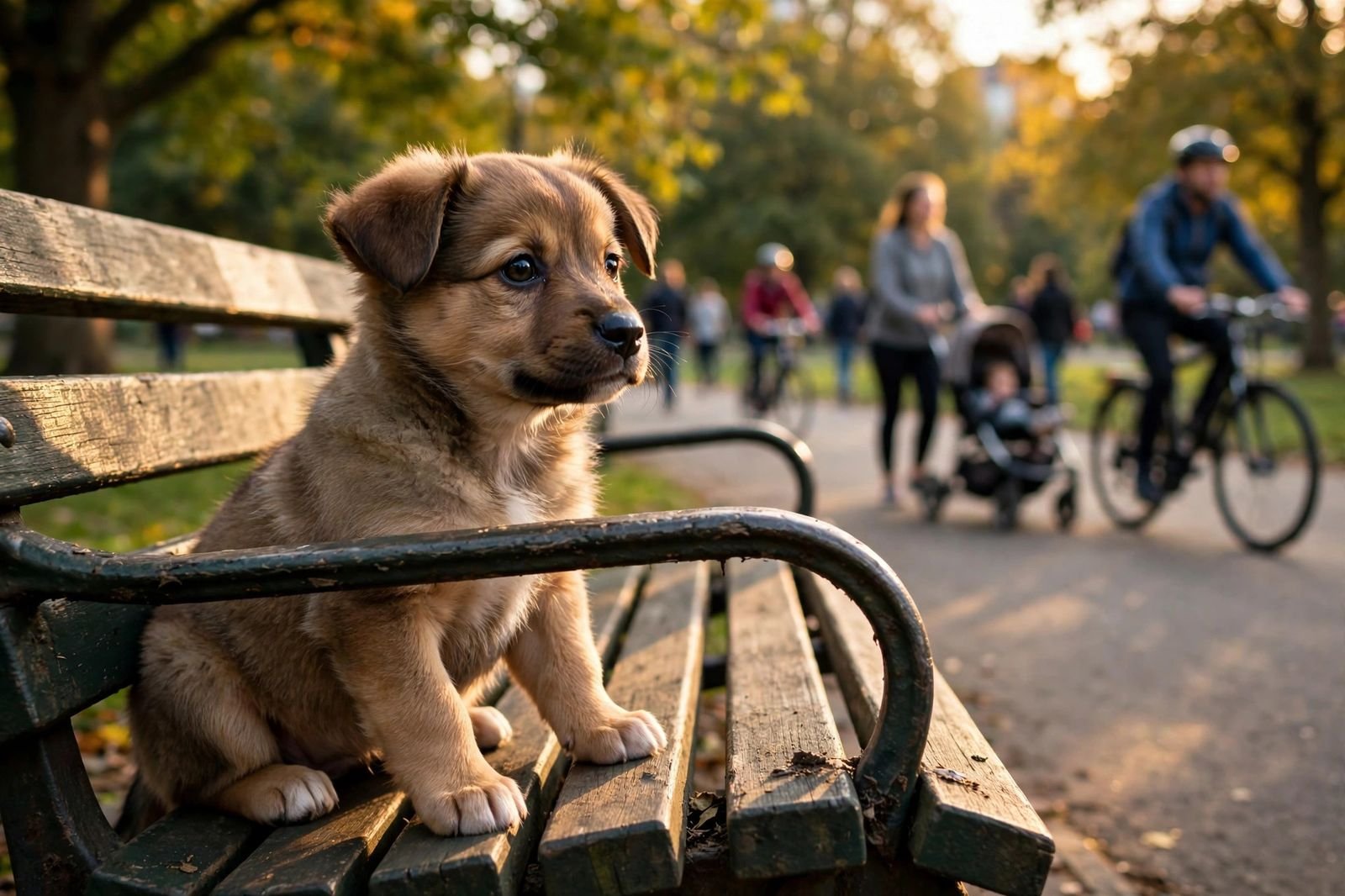
A dog can learn to sit at any age, but fear is much harder to fix than a missed cue. If I could redo my first puppy, I would have spent less time drilling commands and more time sitting on a park bench, letting her watch the world go by with a pocket full of treats.
The Critical Window: Roughly 3 to 16 Weeks
Puppies are most open to new experiences between about 3 and 16 weeks. Breeders handle the first half; you get the puppy around 8 weeks, so you own the most important stretch — when your puppy’s brain is most plastic, most curious, and most forgiving of novelty.
This is also why “we’ll socialize her when she’s fully vaccinated” is such a costly mistake. Full vaccination usually lands around 16 weeks — right as the window is closing. The better approach, and the one most vets and trainers recommend, is to socialize actively during this period while managing the disease risk sensibly. More on exactly how to do that in a minute.
One more thing worth knowing: puppies go through fear periods, typically around 8–10 weeks and again somewhere between 6 and 14 months, when they suddenly become more sensitive to scary experiences. A trash can that was boring last week is suddenly terrifying. During fear periods, do not force anything — keep exposures gentle, let the puppy retreat if it wants to, and keep the treats flowing.
Socializing Before Vaccinations Are Complete
This is the question that stops new owners cold: how do I socialize a puppy that is not allowed on the ground in public yet? The answer is that there is a big middle ground between “locked in the house” and “dog park free-for-all.”
First, know what your vet actually worries about: places with heavy, unknown dog traffic — dog parks, popular trailheads, pet store floors. Your vet can tell you the specific disease risk in your area, so have that conversation early. For the shot timeline itself, my puppy vaccination schedule guide walks through what happens when.
Second, get creative with safe exposure. Carry your puppy through busy areas in your arms or a carrier — farmers markets, outdoor cafés, the sidewalk outside a school at pickup time. The puppy sees, hears, and smells the world without touching risky ground. Invite healthy, vaccinated, calm adult dogs to your home for short visits. Enroll in a well-run puppy class that requires proof of vaccination and sanitizes the space. Sit in your parked car with the windows down near a playground. All of this counts.
The rule of thumb: avoid unknown-dog ground, embrace everything else. A puppy carried through a hardware store is getting world-class socialization. A puppy locked at home until the shots are done is getting none.
The Puppy Socialization Checklist
You do not need a hundred exotic experiences. You need steady, boring, positive repetition of ordinary life. Here is the checklist I give every new puppy owner I know.
People: all shapes, sizes, and accessories
Men with beards, kids of different ages, elderly people with walkers, people in hats, hoods, and sunglasses, joggers, people carrying umbrellas. Let the puppy observe first, then approach on its own terms — never force it toward a stranger. Have the stranger toss a treat near the puppy (not hand-fed at first, which can pressure a shy pup) and move on. Short and sweet beats long and overwhelming every time.
Other animals: calm and controlled
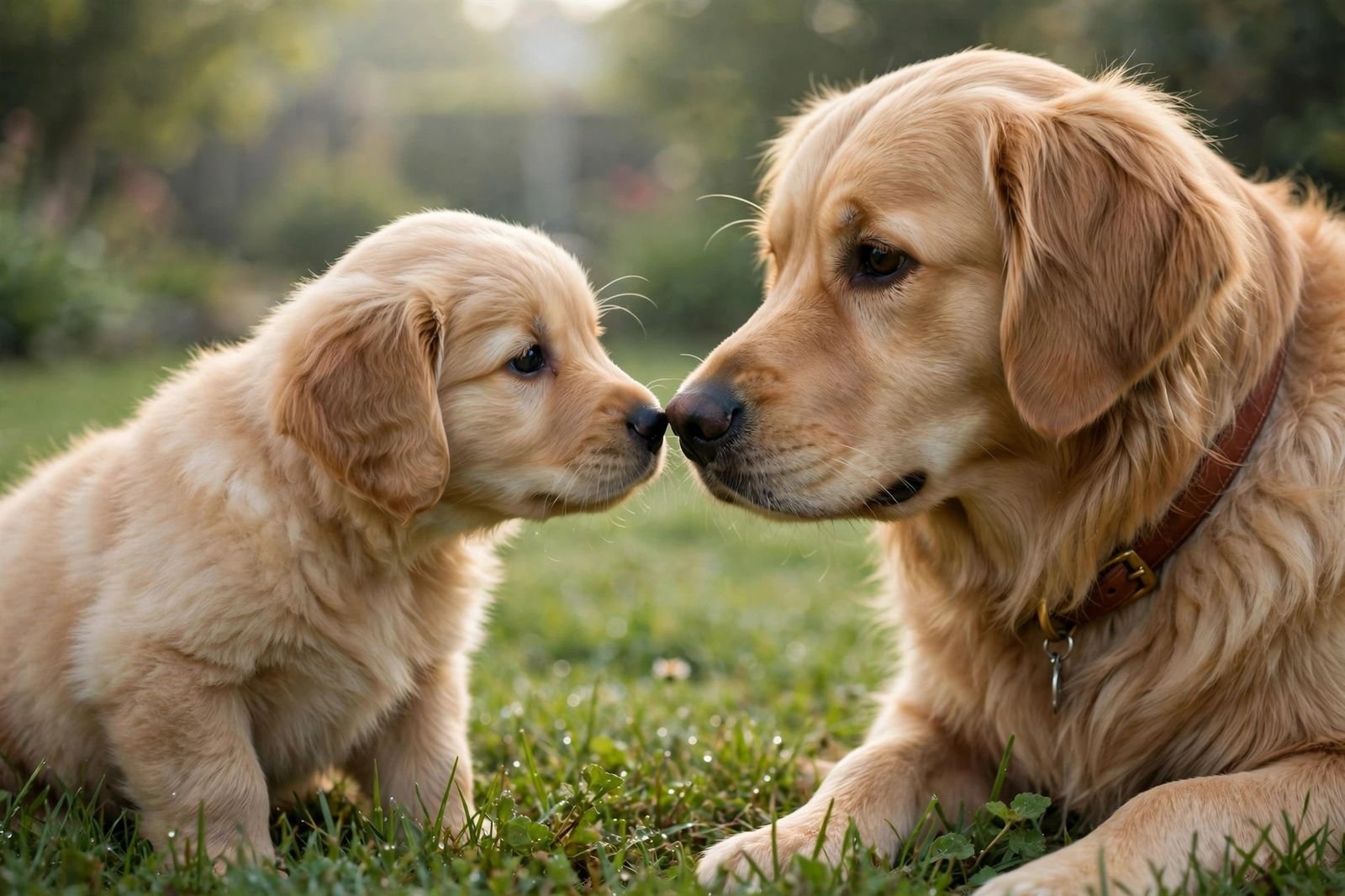
One or two steady, friendly, vaccinated adult dogs are worth more than twenty chaotic puppy playdates. You want your puppy to learn that other dogs are boring and safe, not that every dog encounter is a wrestling match. Keep greetings brief and supervised. If your puppy gets overwhelmed, increase distance — distance is the magic dial for nervous puppies.
Surfaces, sounds, and everyday weirdness
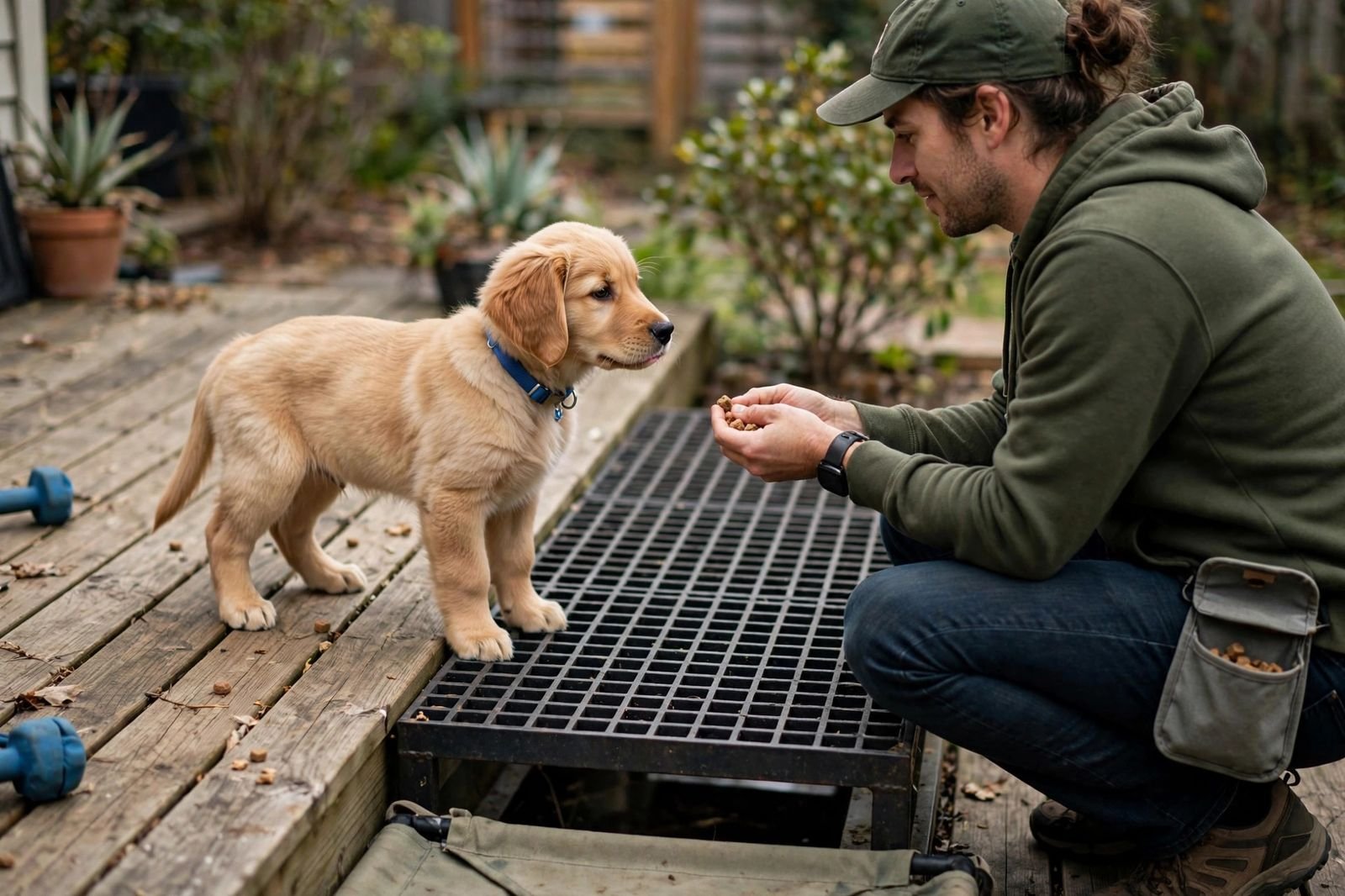
Walk the puppy (carried, or in your own yard) over grass, gravel, wooden decks, metal grates, and wet pavement. Run the vacuum in another room while the puppy eats something delicious. Play recordings of thunderstorms and traffic at low volume during meals, gradually increasing over days. Open umbrellas at a distance. Roll a suitcase past. Every boring household object is a socialization opportunity hiding in plain sight. If the house itself still needs puppy-proofing, my pet-proofing checklist covers the setup side.
Handling and grooming prep
This is the forgotten half of socialization. Touch the puppy’s paws, ears, mouth, belly, and tail daily, pairing every touch with a treat. Practice gentle restraint for a few seconds. Pretend to examine ears the way a vet would. A puppy that learned handling means treats is a dog that does not panic on the exam table. If you want to see what that first vet trip looks like, read my first vet visit guide before you go.
How to Read Your Puppy’s Body Language
Socialization only works if the puppy is actually comfortable. A terrified puppy is not learning that the world is safe — it is learning that the world is scary and you will not protect it. So the most important socialization skill is reading the puppy in front of you.
Comfortable looks like: loose wiggly body, soft eyes, tail wagging at mid-height, approaching voluntarily, taking treats eagerly. Startling at a sudden noise is normal — what matters is recovering within seconds and going back to exploring.
Stressed looks like: tucked tail, freezing in place, trying to bolt, ears pinned flat, whale eye (whites of the eyes showing), or refusing treats it normally loves. That last one is the big tell — a puppy that will not eat is over its stress threshold, full stop. When you see stress, calmly increase distance and try again another day from further away.
Keep sessions short — five to fifteen minutes, several times a day, is plenty. Always end while things are going well, so the puppy’s lasting memory is “that was fun and then it ended.”
The Biggest Socialization Mistakes I See
Flooding. Throwing a puppy into the deep end — the crowded festival, the off-leash dog park — hoping it will “get used to it.” Sometimes it works. Often it creates a lasting fear. Gradual beats intense every time.
Only socializing with other dogs. The puppy that plays with dogs for hours but never meets a man in a hat grows into the dog that loses its mind at the mailman. Dogs are one chapter of the book.
Letting strangers overwhelm the puppy. It is completely fine to tell people “she’s in training, please ignore her for a minute.” Your puppy’s confidence matters more than a stranger’s feelings.
Rewarding fear by accident. Scooping up a scared puppy while cooing in a panicked voice teaches the puppy that fear was the correct response. Stay boring and upbeat. Act like nothing happened.
Stopping at 16 weeks. The window closes, but socialization does not end. Keep exposing your young dog to new things through the first year — adolescent dogs can get weird about novelty again, and maintenance keeps the early work from fading.
Frequently Asked Questions
When should I start socializing my puppy?
The day you bring your puppy home, usually around 8 weeks. The prime window runs from about 3 to 16 weeks, and every week counts. Start with safe, controlled exposure — carried outings, visitors at home, household sounds and surfaces — and expand as vaccinations progress. Do not wait until the final shots; by then the window is closing.
Can I socialize my puppy before vaccinations are complete?
Yes, with sensible precautions. Avoid ground in high-traffic unknown-dog areas like dog parks, but do almost everything else: carry your puppy through busy places, invite healthy vaccinated dogs to your home, and join a reputable puppy class with vaccine requirements. Talk to your vet about the specific disease risk in your area.
How do I know if I’m doing too much at once?
Watch the puppy, not the checklist. If your puppy takes treats eagerly, moves loosely, and chooses to explore, you are in a good zone. If it freezes, tucks its tail, tries to flee, or refuses treats, you have gone too far — calmly add distance and try an easier version next time.
Are puppy classes worth it?
A good puppy class is one of the best investments you can make. Look for small numbers, proof of vaccination, calm exposure rather than chaotic free play, and reward-based methods. Avoid classes that look like unsupervised wrestling matches — that teaches your puppy that other dogs mean mayhem.
My puppy is scared of everything. Did I miss the window?
Not necessarily — some puppies are genetically more cautious, and fear periods can make a well-socialized puppy suddenly spooky. Slow down, work at greater distances, pair scary things with high-value treats, and never force approach. If the fear is severe or getting worse, work with a qualified fear-free trainer. Progress is absolutely possible after 16 weeks; it just takes longer.
Is the dog park good for socialization?
Generally no, especially for young puppies. Dog parks are unpredictable — unknown dogs, unknown manners, no way to control the intensity — and one bad encounter can set socialization back weeks. Controlled playdates with known, stable dogs give you all the benefit with a fraction of the risk.