

Can Cats Eat Tuna? Safe Treat Guide
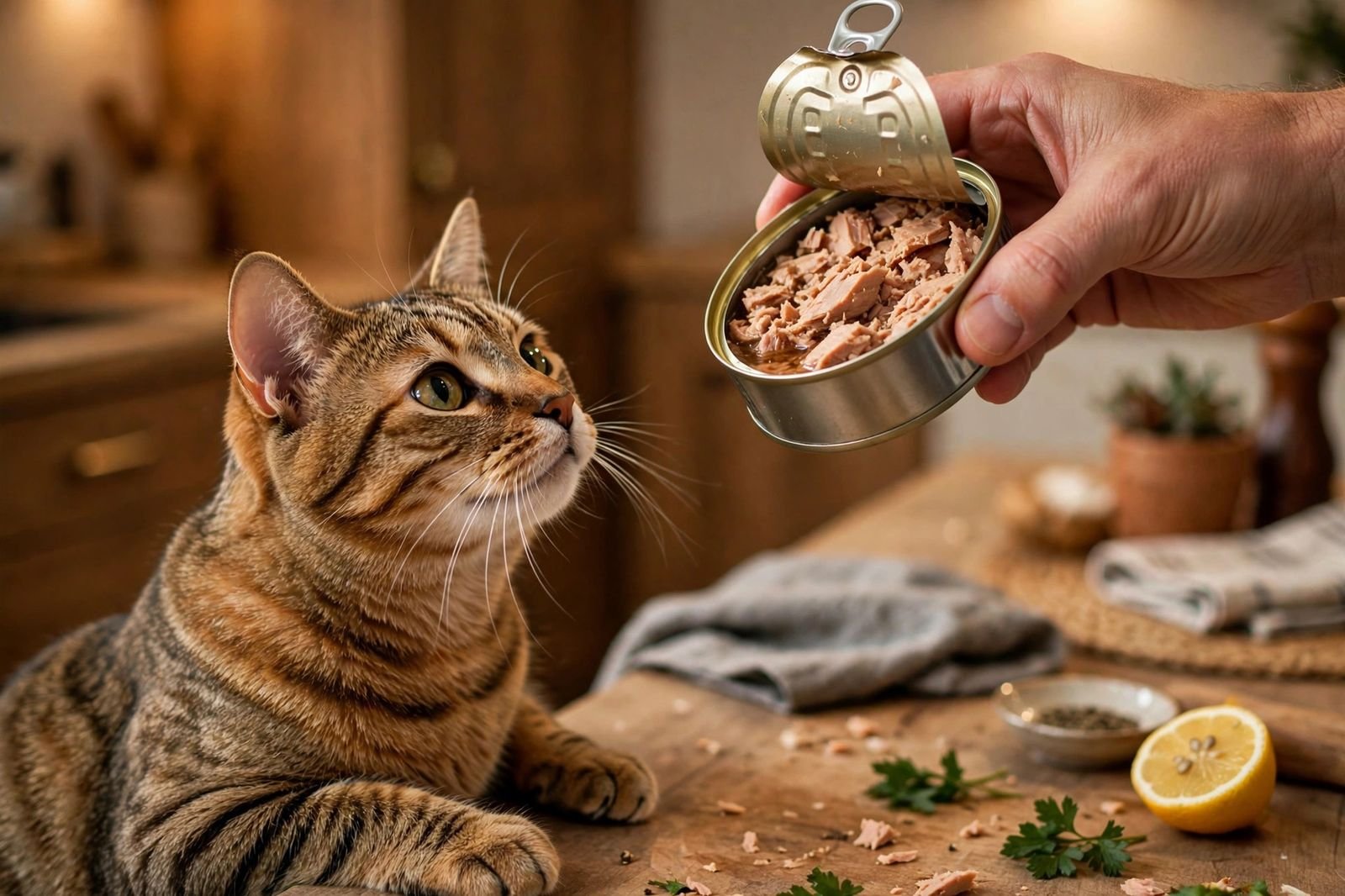
Open a can of tuna anywhere near a cat and one materializes from thin air. It does not matter how deeply she was asleep — the sound of that can opener is a summoning spell. Many owners take this enthusiasm to mean tuna is basically cat food in a different tin, and share the occasional forkful as a treat. But the answer turns out to be more complicated than “cats love it, so it must be fine.”
So can cats eat tuna? The short answer is yes, in small amounts, as an occasional treat. The longer answer involves mercury, nutritional gaps, and why the tuna-flavored cat food at the store is a very different product from the can in your pantry. Here is the full guide to doing it safely.
Published: May 31, 2026 | Last updated: May 31, 2026
Quick Tips
- Plain tuna as an occasional treat is fine; tuna as a diet is not.
- Choose tuna canned in water, not oil or brine — and drain it well.
- Keep tuna treats under 10% of daily calories, ideally far less.
- Mercury is the real concern: small, infrequent portions keep exposure low.
- Never feed tuna with added onion, garlic, or heavy seasoning.
- Tuna-flavored cat food is formulated for cats; human canned tuna is not.
The Short Answer: Yes, But Treat It Like Cake
Think of tuna for cats the way you think of cake for yourself: delicious, harmless in a small slice now and then, a bad idea as a lifestyle. A forkful of plain tuna once or twice a week will not hurt a healthy cat. The problems start when tuna becomes a regular meal or a daily habit — and cats, being cats, will absolutely campaign for it to become a daily habit.
The reason is not that tuna is poisonous. It is that tuna is nutritionally incomplete for cats, and it carries a contaminant risk that builds up over time. Let us take those in order.
The Mercury Problem
Tuna are large predatory fish, and large predatory fish accumulate mercury from everything they eat over their long lives. This is true of the tuna in your sandwich too — it is why dietary guidelines suggest humans limit their own intake. Cats are much smaller than us, so the same can of tuna represents a proportionally much bigger dose.
Mercury is a neurotoxin, and chronic exposure can cause serious health problems. A cat eating tuna daily for months is the scenario vets worry about, not the cat that steals a flake off your plate. The practical takeaway: keep tuna infrequent and portions small, and the mercury math stays firmly in your favor. If your cat has somehow been getting tuna most days, just stop and go back to normal food — mercury risk drops once exposure stops, but mention the history to your vet at the next checkup so they have the full picture.
Which tuna is lower in mercury?
Smaller tuna species accumulate less mercury. “Light” or skipjack tuna generally tests lower than albacore (“white”) tuna, which comes from a larger species. If you are buying a can specifically to share with the cat, light tuna packed in water is the better pick. Either way, we are talking about an occasional treat, not a staple — the species matters less than the frequency.
Why Tuna Is Not a Complete Cat Food
This is the part most people miss. Human canned tuna is just cooked fish — it lacks several nutrients cats must get from food. Cats need taurine (an amino acid essential for heart and eye health), arachidonic acid, vitamin E, and the right calcium-to-phosphorus balance, among other things. Plain tuna is low in several of these, and a tuna-heavy diet can lead to real deficiencies over time.
There is also a specific condition associated with an all-fish diet in cats — a painful inflammation of body fat sometimes called yellow fat disease — that comes from the high levels of unsaturated fatty acids in fish combined with too little vitamin E. It is rare and it requires a genuinely fish-dominated diet, not the occasional treat. But it illustrates the principle: cats evolved eating whole small prey, not single-ingredient meals, and variety plus complete nutrition matters.
This is also why tuna-flavored commercial cat food is fine as part of a balanced diet while your pantry tuna is not equivalent. Commercial cat food labeled “complete and balanced” has the missing nutrients added back in. The flavor on the label is the least important part of what is in the tin.
How to Serve Tuna Safely
When you do share, a few ground rules keep it safe:
Plain and simple. Tuna canned in water, drained. Not in oil (too rich, can cause digestive upset), not in brine (too salty), and definitely not from a seasoned tuna salad or a sandwich filling with onion or garlic — both are harmful to cats. If the ingredient list is just tuna, water, and salt, you are fine.
Small portions. A tablespoon or two of flaked tuna is plenty. For most cats, treats of any kind should stay under 10% of daily calories, and tuna should be well under that ceiling. Think garnish, not meal.
Infrequent. Once or twice a week at most. If you find yourself opening a can “for the cat” every day, that is the habit to break — for the mercury reason above and because cats that fill up on treats start refusing their nutritionally complete food. Treats work best as part of a sane overall routine; my cat feeding frequency guide lays out how meals and extras should fit together.
Watch the reaction. Most cats tolerate a little tuna perfectly. But any new food can disagree with an individual cat. If you notice vomiting, diarrhea, or itchiness after tuna, skip it — some cats are sensitive to fish, and no treat is worth an upset stomach.
The Addiction Problem (Yes, Really)
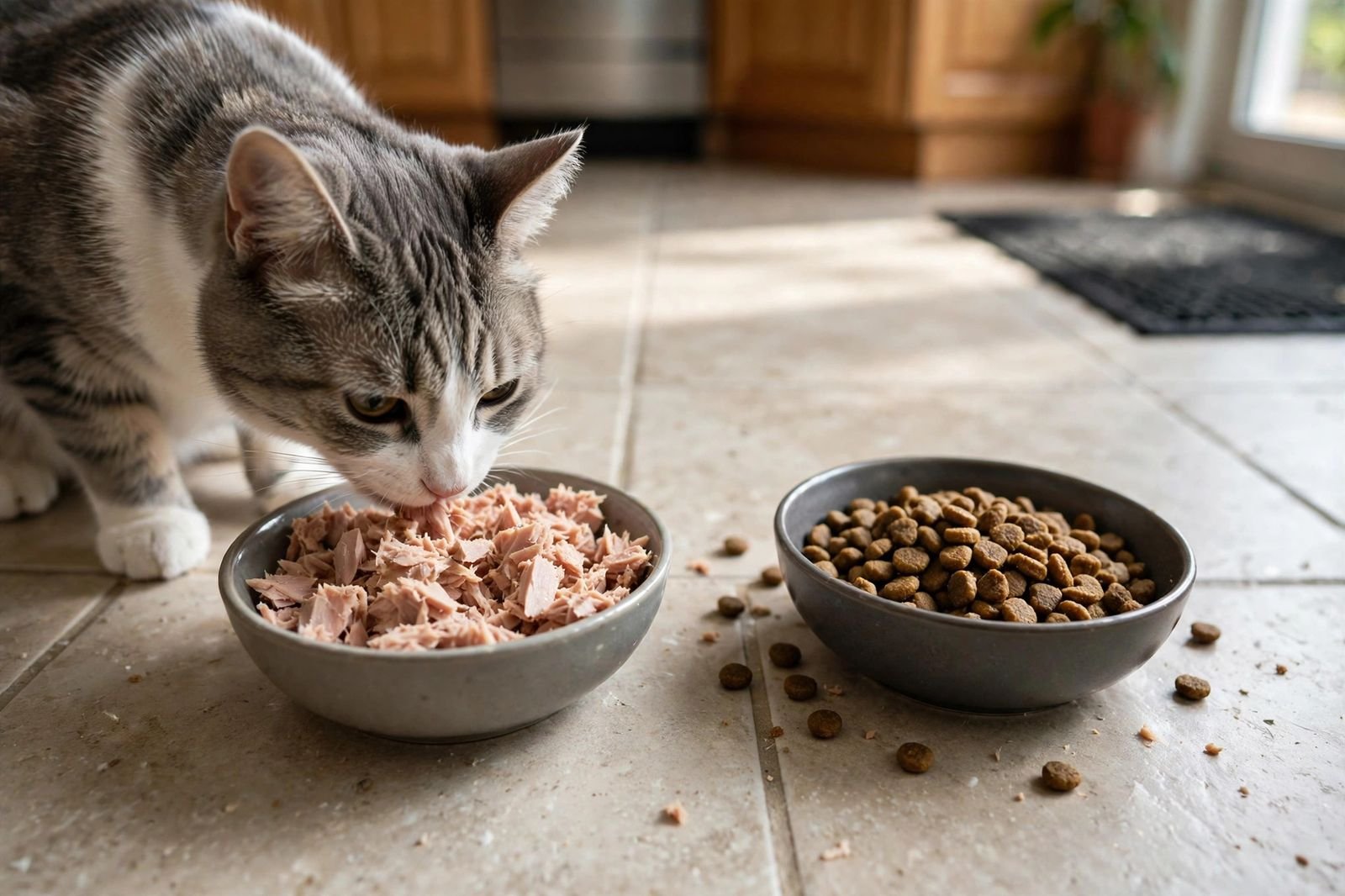
Here is a scenario owners describe all the time: tuna gets shared a few times, the cat becomes obsessed, and within a month the cat is hunger-striking in front of a bowl of perfectly good cat food, holding out for the tuna can. Cats are neophobic about some things and stubbornly fixated about others, and tuna’s strong smell and flavor make it crack for picky eaters.
A cat that refuses balanced food in favor of tuna is heading for nutritional deficiency, so this is worth taking seriously. The fix is boring but effective: stop the tuna entirely for a couple of weeks, serve the regular food on a consistent schedule, and do not cave to the hunger strike. But do not turn it into a waiting game either — if a cat refuses all food, talk to a vet promptly, around the 24-hour mark or sooner if the cat seems unwell, because cats can develop liver problems from not eating. A vet can tell you whether it is stubbornness or something that needs attention. For the broader question of what is and is not safe to share from your plate, my can-dogs-eat-peanut-butter guide covers the dog side of the same “is this human food okay?” puzzle.
Better Fishy Alternatives
If your cat loves fish, you have better options than the pantry can:
Commercial tuna cat food or treats. Formulated to be nutritionally complete (for meals) or at least safe (for treats), with the fish flavor cats want. This is the easiest swap.
Small oily fish as treats. Tiny pieces of cooked plain salmon or sardines (in water, no salt added) give the fish fix with a better nutritional profile than tuna. Still a treat, still infrequent — but a step up.
Fish-flavored treats. The crunchy salmon treats at the pet store exist precisely for this craving. Portion-controlled, nutritionally designed, and no can opener required.
The pattern here: let the fish craving be satisfied by products made for cats, and keep human tuna as the rare bonus. Your cat will not know the difference in intent — only in flavor, and the formulated stuff is engineered to win that contest.
What About Tuna Water?
The liquid from the can — “tuna water” — is a legendary appetite trick. A spoonful drizzled over food can tempt a reluctant eater, and it is useful for encouraging hydration since the strong smell draws cats to the bowl. The same rules apply: water-packed tuna only, small amounts, occasional use. Do not use the oil from oil-packed tuna, and do not make it a daily crutch — a cat that will only eat food soaked in tuna water is developing the same dependency described above. As a short-term tool for a cat that is eating poorly, though, it is one of the genuinely useful tricks in the book.
Frequently Asked Questions
Can cats eat tuna every day?
No — daily tuna is where the risks (mercury accumulation and nutritional deficiency) actually kick in. Keep it to once or twice a week at most, in small portions. If your cat is currently getting tuna daily, phase it out and return to a complete balanced cat food; mention the history to your vet at the next visit.
Is canned tuna in water safe for cats?
Yes, as an occasional treat. Choose light/skipjack tuna canned in water with no added flavorings, drain it well, and serve a tablespoon or two. Avoid tuna in oil, in brine, or mixed with onion, garlic, or heavy seasoning.
Can kittens eat tuna?
A tiny taste is unlikely to harm a kitten, but kittens have very precise nutritional needs for growth, so treats should be minimal and their diet should be overwhelmingly a complete kitten food. There is no reason a kitten needs tuna, and early exposure can create a picky eater. When in doubt, skip it until they are grown.
Why do cats love tuna so much?
Tuna is high in protein with a strong, meaty aroma that hits all of a cat’s scent-driven food instincts. Cats are obligate carnivores wired to find animal protein irresistible, and tuna’s intense smell makes it especially compelling. That enthusiasm is exactly why portion discipline matters — the cat’s judgment about quantity is terrible.
Is tuna-flavored cat food the same as canned tuna?
No. Commercial cat food labeled complete and balanced contains added taurine, vitamins, and minerals that plain canned tuna lacks — the tuna is just the flavor and protein base. That is why tuna cat food can be a regular meal while human canned tuna should only be a treat.
My cat stole tuna and now won’t eat regular food. What do I do?
Stop all tuna for two weeks and serve regular meals on a fixed schedule — put the food down for 20–30 minutes, then pick it up. Most cats resume eating within a day or two. Do not offer alternative human foods as bargaining chips. If the cat refuses all food, contact a vet promptly — around the 24-hour mark, or sooner if the cat seems unwell — since cats can develop liver issues from prolonged not eating.
[…] favorite kitchen perfume. If fishy tins are already a battleground in your house, my tuna treat guide explains where the human-can stuff fits […]