

Toxic Foods for Dogs: The Complete Avoid List
Every vet clinic has a version of this story: a labrador eats an entire fruitcake off the counter — raisins, rum-soaked, the works — and spends the night at the emergency vet. The dog recovers; the vet bill does not. Stories like that are why so many owners end up auditing their entire kitchen like a health inspector. Until that moment, most people’s mental list of dangerous foods for dogs is basically “chocolate, probably.” It turns out the real list is longer, stranger, and full of things that look completely harmless sitting on your counter.
This is the complete toxic foods for dogs avoid list every owner should know — not to scare you, but because most poisonings happen from ordinary foods in ordinary kitchens, and knowing the list in advance is the whole game. Bookmark it, share it with everyone who feeds your dog, and tape the short version inside a kitchen cabinet.
Published: June 3, 2026 | Last updated: June 3, 2026
Quick Tips
- The most dangerous everyday foods: chocolate, grapes/raisins, xylitol (birch sugar), onion, garlic, macadamia nuts, and alcohol.
- Keep your vet’s number and the nearest emergency vet’s number saved in your phone now, not during a crisis.
- If your dog eats something toxic, call your vet immediately — do not wait for symptoms.
- Never induce vomiting unless your vet specifically tells you to.
- Prevention beats treatment: dog-proof the kitchen like you would for a clever toddler.
- Teach a solid “leave it” — it is the cheapest insurance policy you own.
The Big Offenders: Know These Cold
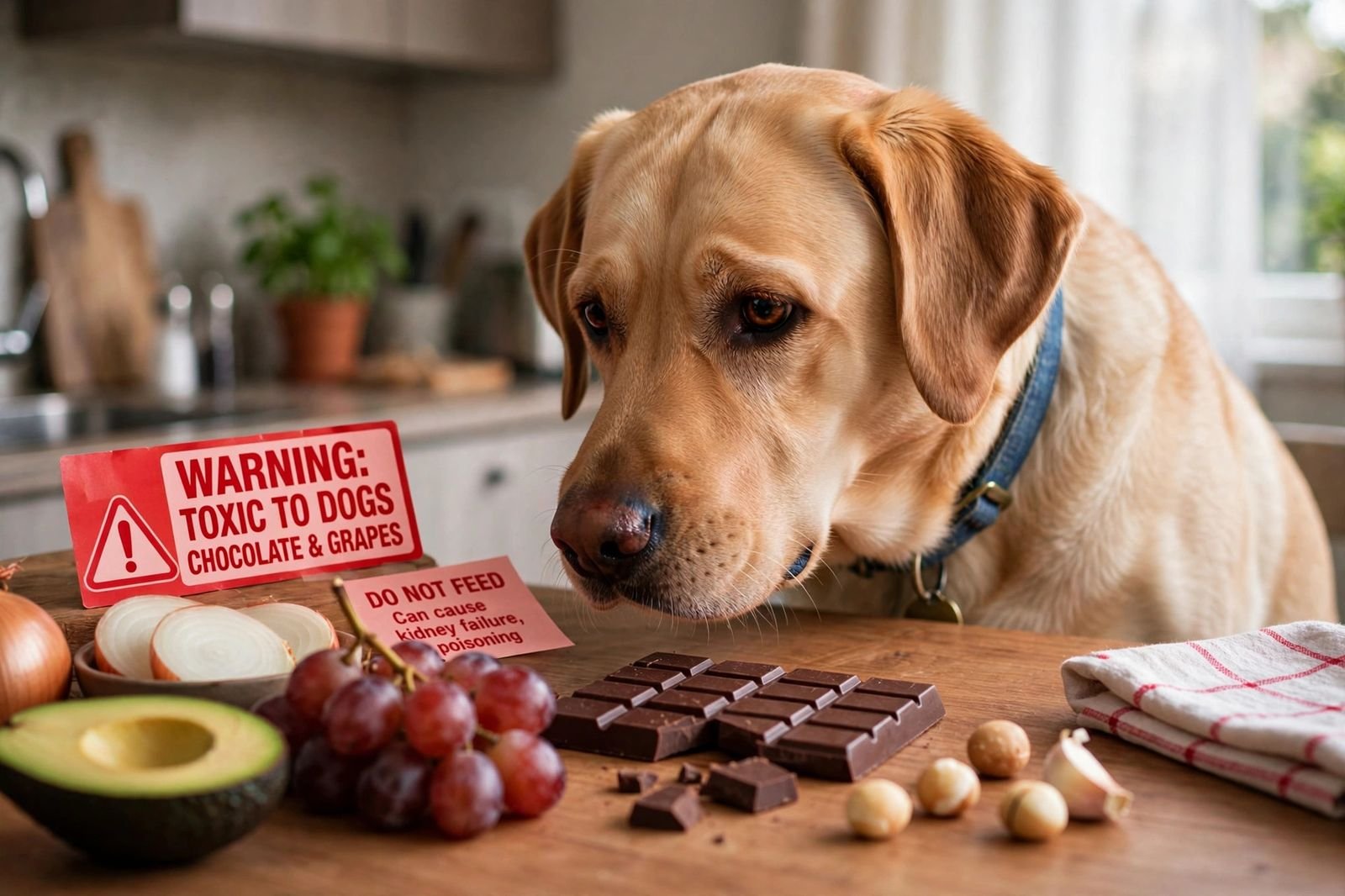
If you memorize nothing else, memorize this section. These are the foods responsible for the most emergency vet visits, and several of them are sitting in the average kitchen right now.
Chocolate (and cocoa)
The famous one. Chocolate contains theobromine and caffeine, which dogs process far more slowly than humans. Dark chocolate and baking cocoa are the most dangerous by far — a small amount of baker’s chocolate can be serious for a medium dog — while milk chocolate is milder but still risky in quantity. White chocolate has very little theobromine but is still not a treat. Symptoms can include vomiting, diarrhea, restlessness, rapid breathing, and in severe cases seizures. The darker the chocolate, the smaller the dangerous dose.
Grapes and raisins
The sneaky one. Grapes, raisins, currants, and sultanas can cause sudden kidney failure in dogs, and nobody fully understands why — some dogs eat a handful with no effect while a few grapes hospitalize another. There is no safe dose and no way to know your dog’s sensitivity in advance, so the rule is simple: zero grapes, zero raisins, including foods that contain them (trail mix, fruitcake, some cereals and baked goods).
Xylitol (birch sugar)
The modern one. Xylitol is a sugar substitute found in sugar-free gum, mints, some peanut butters, sugar-free baked goods, and even some medications and mouthwashes. In dogs it triggers a massive insulin release that crashes blood sugar, and larger amounts can cause liver failure. It acts fast — symptoms can appear within 30 minutes. Always check the ingredient label on peanut butter before sharing; my peanut butter safety guide explains exactly what to look for, since most peanut butter is fine but xylitol-containing brands are not.
Onion and garlic
All members of the onion family — onions, garlic, leeks, shallots, chives — damage dogs’ red blood cells and can cause anemia. This includes powdered forms in seasoning blends, which are more concentrated than fresh. The danger is cumulative: small amounts over several days can be as harmful as one large dose. That leftover onion-heavy stir fry is not a suitable dog dinner.
Macadamia nuts
Even a small number of macadamia nuts can cause weakness, vomiting, tremors, and overheating in dogs. The mechanism is not fully understood, but the effect is well documented. Other nuts are less acutely toxic but still problematic — high fat content can trigger pancreatitis, and walnuts can harbor mold toxins.
Alcohol
Dogs are far more sensitive to alcohol than humans. Beer, wine, spirits, and alcohol-containing foods (rum cake, unbaked yeast dough — which also expands in the stomach) can cause dangerous drops in blood sugar, blood pressure, and body temperature. Desserts and cocktails left at dog height during parties are a classic holiday emergency.
The Second Tier: Still Dangerous
These cause fewer emergencies but deserve a permanent spot on the avoid list:
Caffeine. Coffee, tea, energy drinks, and caffeine pills affect dogs much like chocolate does — restlessness, rapid heart rate, tremors. Coffee grounds and tea bags are concentrated sources; dogs are attracted to the smell.
Unbaked yeast dough. The dough rises in the warm stomach, causing painful bloating, and the fermenting yeast produces alcohol. Baked bread itself is fine; the raw dough is the hazard.
Cooked bones. Not toxic, but dangerous enough to include: cooked bones splinter into sharp shards that can injure the mouth, throat, and intestines. Raw bones carry their own risks and are a separate debate — but cooked bones are a clear no.
High-fat foods. Bacon grease, turkey skin, deep-fried scraps, and rich gravies can trigger pancreatitis — a painful, sometimes serious inflammation of the pancreas. The Thanksgiving turkey skin handout is the classic trigger.
Salt in quantity. A salty chip stolen off the floor is nothing; a whole bag of salted snacks, a salt dough ornament, or de-icing salt can cause salt poisoning. Keep very salty items out of reach.
Nutmeg and other potent spices. Nutmeg contains a compound that causes hallucinations, increased heart rate, and disorientation in dogs. Most spice-rack quantities in cooked food are too small to matter, but whole nutmeg and concentrated sources are worth keeping away.
Stone fruit pits and apple seeds. The flesh of apples, peaches, and plums is fine, but pits and seeds contain compounds that release cyanide when chewed, and pits are also choking and intestinal-blockage hazards. Core the apple, skip the pit.
What To Do If Your Dog Eats Something Toxic
Speed and calm beat everything here. This is the drill:
1. Figure out what and how much. Check the packaging, estimate the quantity, and note the time. A photo of the ingredient label is gold for the vet. If it was chocolate, the type (dark, milk, baking) and the weight of the product matter enormously.
2. Call your vet or an emergency vet immediately. Do not wait for symptoms — with several of these toxins, by the time symptoms appear, treatment is harder. If your regular vet is closed, call the nearest emergency clinic or an animal poison hotline. Have the product info from step 1 ready.
3. Do NOT induce vomiting unless told to. This is the mistake well-meaning owners make most. Vomiting is wrong or dangerous for some substances (corrosives, petroleum products, sharp objects), and the timing and method matter. Only do it on direct veterinary instruction.
4. Do not “wait and see” with the big offenders. Grapes, xylitol, and significant chocolate ingestion all warrant immediate professional advice even if the dog looks completely fine. Looking fine means nothing in the first hours with these.
Save your vet’s number and the nearest 24-hour emergency clinic in your phone today — ideally before you ever need it. If you are still building your sense of when a situation warrants a vet call versus watchful waiting, that guide is worth a read before the stressful moment arrives.
Prevention: Dog-Proofing the Kitchen
Almost every accidental food poisoning comes down to access, not malice. Dogs are opportunistic, tall when standing, and astonishingly fast. Prevention is mostly logistics:
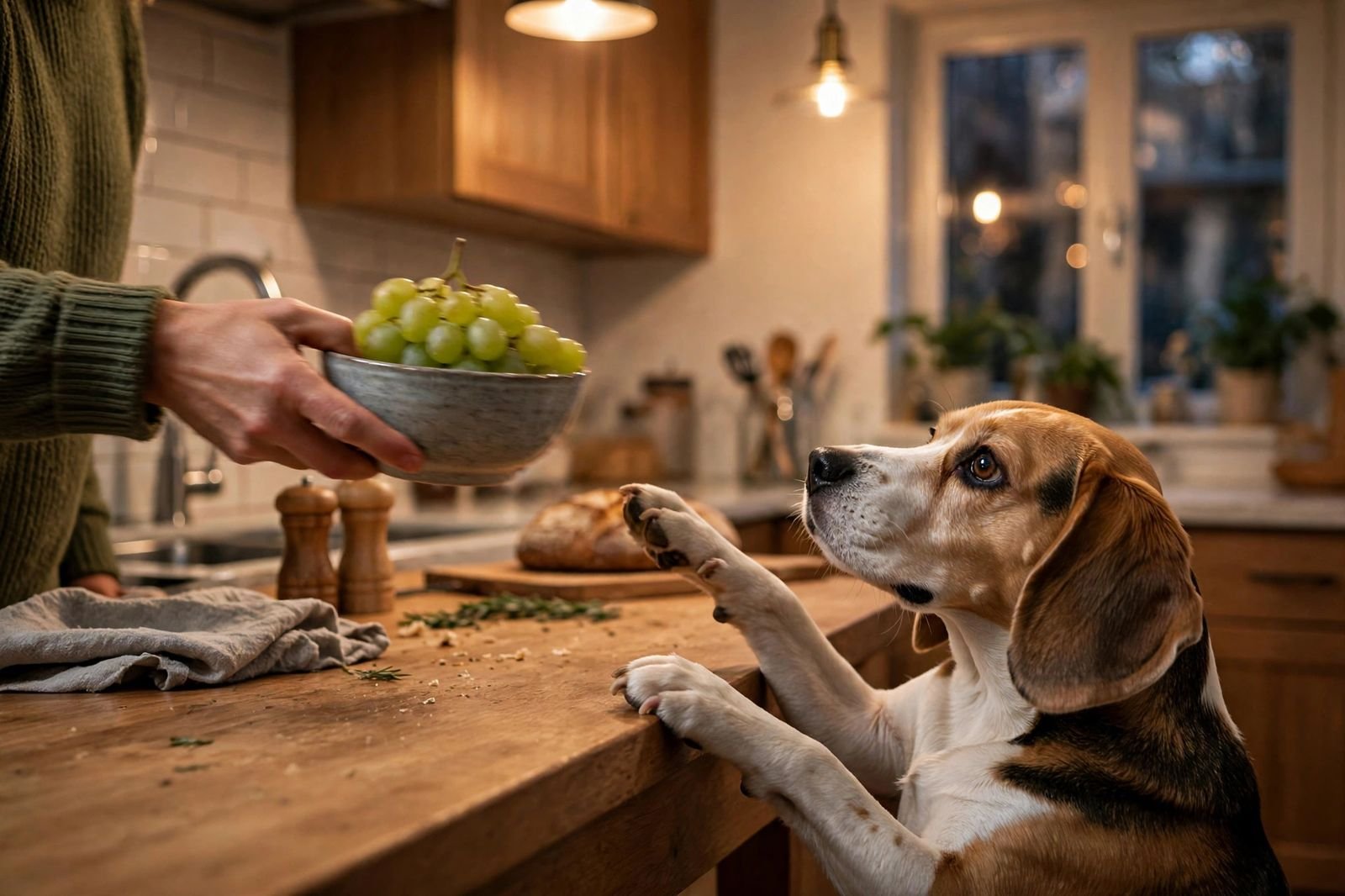
Counters are not safe. A medium dog standing on hind legs reaches further than you think, and large dogs can sweep a counter clean without jumping. Push food to the back, use the microwave or oven as a holding cell during parties, and never leave a grocery bag on the floor “for a second.”
Secure the trash. Coffee grounds, onion scraps, grape stems, chocolate wrappers, and xylitol gum all live in the trash. A locking-lid bin or a bin inside a latched cabinet ends the midnight trash raids. For the full room-by-room approach, my pet-proofing checklist covers kitchens plus every other hazard zone.
Brief the humans. Kids, guests, and grandparents are the leading cause of “but he looked so hungry” incidents. A simple house rule — no feeding the dog from the table, ever — is easier to enforce than a list of exceptions. During holidays and parties, consider gating the dog out of the food zone entirely.
Train “leave it” and “drop it.” These two cues are genuine lifesavers. A dog that reliably drops a found chicken bone on cue is a dog that survives its own curiosity. Training takes weeks, not minutes, but it pays off for the dog’s entire life.

Frequently Asked Questions
What is the most toxic food for dogs?
Xylitol is arguably the most acutely dangerous common item — even small amounts can cause a life-threatening blood sugar crash within an hour. Grapes/raisins and dark chocolate/baking cocoa round out the top tier. All three warrant an immediate vet call even if the dog seems fine.
My dog ate chocolate. What should I do?
Note the type of chocolate and how much was eaten, then call your vet right away for advice — do not wait for symptoms. Dark and baking chocolate are far more dangerous than milk chocolate. Do not induce vomiting unless your vet specifically instructs you to.
Are grapes really that dangerous for dogs?
Yes. Grapes and raisins can cause sudden kidney failure in dogs, and sensitivity varies unpredictably between individuals — there is no known safe amount. This includes currants and sultanas, and foods containing them like trail mix and fruitcake. If your dog eats any, call your vet immediately.
Can dogs eat peanut butter?
Most plain peanut butter is safe for dogs in small amounts — but you must check the label for xylitol (also listed as birch sugar), which is extremely toxic to dogs. Choose a brand with just peanuts and salt. See my full peanut butter guide for label-reading details.
What human foods CAN dogs eat?
Plenty: plain cooked chicken, turkey, and lean beef; carrots, green beans, cucumber, and blueberries; plain cooked rice and pumpkin; small amounts of apple (no seeds) and banana. The pattern is plain, unseasoned, and in moderation — treats should stay under about 10% of daily calories.
How long after eating something toxic do symptoms appear?
It varies widely: xylitol can act within 30 minutes, chocolate symptoms often appear within 6–12 hours, and grape-related kidney issues may take 24–72 hours to show. This delay is exactly why you should call your vet immediately rather than waiting to see if symptoms develop.