


How to Groom Long Haired Cat Without the Mats
Learning how to groom long haired cat coats is mostly learning one skill: preventing mats before they form. Persians, Maine Coons, Ragdolls, and other long-haired beauties have glorious coats, but that length comes with a catch — loose hairs tangle into the surrounding fur, and a small tangle left alone for a week can tighten into a mat that pulls painfully on the skin. The whole secret of mat-free grooming is simply frequency: a few minutes of combing several times a week beats an hour-long rescue session once a month.
This guide covers the tools that actually work on long fur, a simple routine you can sustain, the body areas where mats love to hide, and how to deal with tangles safely when you find them. No fancy skills required — just the right comb, a calm approach, and a schedule you can stick to.
Quick Tips
- Comb — don’t just brush — long-haired cats 3–4 times a week; the comb reaches down to the skin where mats start.
- Always work from the ends of the fur toward the skin, never yank downward from the roots.
- Check the armpits, behind the ears, the belly, and the britches (back of the thighs) every session — mats hide there first.
- Use a mat splitter or blunt-tipped tool on tangles; never use sharp scissors near the skin.
- Reward calm behavior with treats so grooming stays a pleasant ritual, not a wrestling match.
- If a mat is tight against the skin or your cat reacts in pain, let your vet or a professional groomer handle it.
Why Long-Haired Cats Mat (and Why It Matters)
Mats form when loose, shed hairs get trapped in the surrounding coat instead of falling away. Friction speeds the process up — the spots where a cat’s legs rub against the body, where a collar sits, or where the cat sleeps curled in a ball are classic mat territory. Once a tangle starts, it acts like velcro, catching more loose hair every day and drawing tighter.
A mat is not just a cosmetic problem. As it tightens, it pulls on the skin underneath, which is uncomfortable and can restrict airflow to the skin, sometimes leading to irritation or sores in long-neglected cases. Cats in discomfort may over-groom the area or become grumpy about being touched, which makes future grooming harder. The encouraging part is that mats are almost entirely preventable with regular combing — they are a maintenance issue, not a mystery. If you ever find a mat that is hard, large, or sitting right against the skin, resist the urge to cut it out yourself and get professional help instead; cat skin is thin and tears easily.
The Tools That Actually Work on Long Fur
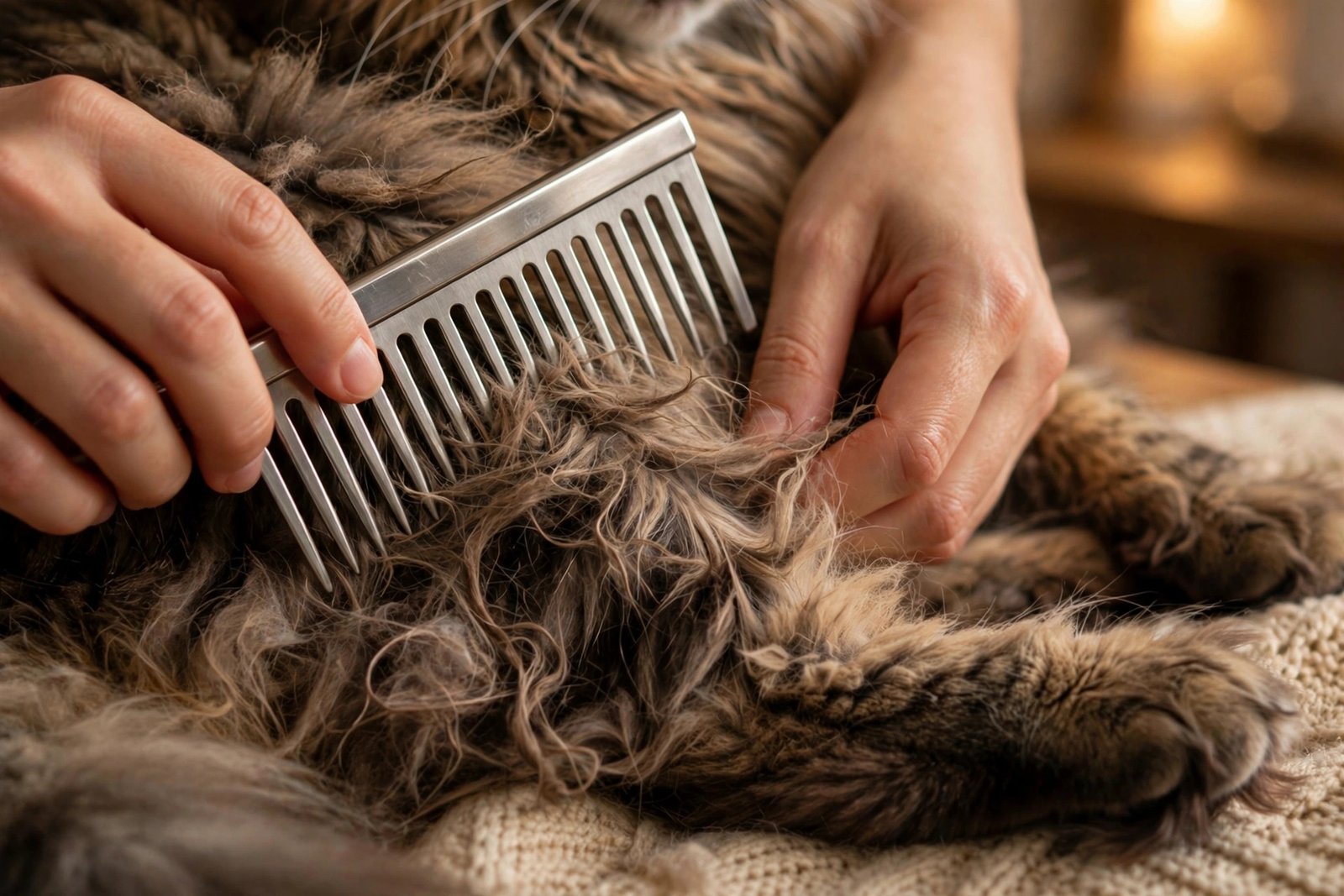
Long coats need a small, specific toolkit. The single most important tool is a wide-tooth steel comb — it glides through long fur down to the skin, finds tangles a brush would skate over, and tells you honestly whether the coat is truly tangle-free. If the comb passes smoothly from skin to tip, the job is done; if it snags, you have found tomorrow’s mat.
A slicker brush with fine bent pins is the second staple. It is excellent for the finishing pass — fluffing the coat, removing surface loose hair, and giving that full, flowing look. Use it gently, though: pressing a slicker brush hard can scratch the skin, especially on thin-skinned areas like the belly. A mat splitter — a small tool with blunt, guarded blades — safely slices through established tangles without the danger of scissors. A light detangling spray made for cats can help the comb glide through slightly tangled areas. That is genuinely the whole kit. For the fundamentals of feline grooming technique, our complete guide to brushing your cat pairs well with this article.

How to Groom Long Haired Cat Coats: The Weekly Routine
Here is a sustainable routine that keeps most long-haired cats mat-free. The full session takes ten to fifteen minutes; once it becomes habit, it often takes less.
Start With the Comb, Section by Section
Have your cat settle somewhere comfortable — many owners groom on a lap or a favorite blanket. Begin with the wide-tooth comb and work through the coat in sections: one side, then the other, then the chest, belly, and legs. Comb in the direction the fur grows, starting a few inches from the ends and working your way toward the skin as each section clears. This “ends first” approach is the key technique — it untangles without pulling from the roots.
Hit the Mat Hotspots
Every session, deliberately check the four places mats form first: the armpits, behind and below the ears, the belly and groin area, and the britches — the long feathering on the backs of the thighs. These spots combine friction, moisture, and fine fur, which is the perfect recipe for tangles. A quick comb-through of these areas takes two minutes and prevents the vast majority of mats.
Finish With the Slicker Brush
Once the comb passes freely everywhere, do a light finishing pass with the slicker brush to remove surface loose hair and fluff the coat. Keep the pressure feather-light and skip the slicker on any area where the skin looks pink or your cat flinches. End with a treat or a short play session. Many owners find that grooming right before a meal works beautifully — the cat learns that comb time predicts dinner time.
Dealing With Tangles Safely
Even with a good routine, you will occasionally find a tangle. For a small, loose tangle, hold the base of the fur near the skin with one hand — this stops the pulling sensation — and gently work the tangle apart with the comb or your fingers, starting from the outer end. A spritz of detangling spray can help stubborn ones release.
For a firmer tangle that will not comb out, use a mat splitter: slide it under the tangle and saw gently outward, away from the skin, to divide the mat into smaller pieces that can then be combed out. Work slowly and keep your holding hand between the tool and the skin. What you should not do is reach for scissors — it is frighteningly easy to nick thin cat skin hiding inside a mat, and those cuts often need veterinary care. If a mat is tight, large, or right against the skin, or if your cat cries or bites when you touch it, stop and book a groomer or vet visit. There is no shame in it; professionals deal with severe mats every day and have the right tools and restraint techniques.
Bathing, Shedding Season, and Extra Care
Bathing a long-haired cat is not required often — most indoor longhairs do fine with brushing alone — but an occasional bath can help during heavy shedding or if the coat gets greasy. The critical rule is to comb out every tangle before the bath, because water tightens mats dramatically and turns a small tangle into a solid lump. After bathing, dry the coat thoroughly and comb it out again while drying; a damp, uncombed long coat will mat faster than a dry one. Our guide to bathing a cat walks through the whole process step by step.
Shedding season — typically spring and fall — is when your routine matters most. Knowing how to groom long haired cat coats through shedding season is mostly about increasing frequency: loose undercoat is the raw material of mats, so during heavy shedding weeks, bump combing up to daily or every other day, even if your normal schedule is three times a week. Senior cats and overweight cats deserve extra attention too: seniors may groom themselves less effectively due to stiffness, and rounder cats cannot always reach their own belly and britches. A few extra minutes of human help keeps these cats comfortable and mat-free well into old age.
Frequently Asked Questions
How often should I groom my long-haired cat?
Three to four times a week is the sweet spot for most long-haired breeds, with daily sessions during spring and fall shedding season. The sessions do not need to be long — ten minutes of proper combing beats thirty minutes of surface brushing. What matters is that the comb reaches the skin regularly enough to catch tangles before they tighten.
Brush or comb — which is better for long-haired cats?
The comb is the essential tool and the brush is the finishing touch. A wide-tooth steel comb reaches down to the skin where mats begin and honestly reports whether the coat is tangle-free. A slicker brush is great for fluffing and removing surface loose hair afterward, but it can glide over hidden tangles without catching them. If you only buy one tool, buy the comb.
Can I cut out a mat with scissors?
It is strongly discouraged. Cat skin is very thin and often tents up inside a mat, so it is easy to cut the skin while thinking you are cutting fur. Those cuts frequently need veterinary treatment. Use a mat splitter for tangles you can manage, and let a groomer or vet handle anything tight against the skin.
Why does my cat hate being groomed?
Usually because grooming has hurt in the past — often from brushing over hidden mats, pressing too hard with a slicker brush, or marathon sessions that went on too long. Reset by keeping sessions under five minutes, using only the comb with a feather-light touch, working ends-first, and rewarding generously. Many “grooming-hating” cats turn around within a few weeks once the experience stops hurting.
Do long-haired cats need professional grooming?
Not necessarily, but it can be a smart backup. Many owners handle routine combing at home and visit a groomer once or twice a year — often before summer or during heavy shedding — for a thorough de-shed and sanitary trim. If mats ever get beyond what you can safely manage, a professional groomer is the right call rather than a DIY rescue mission.