
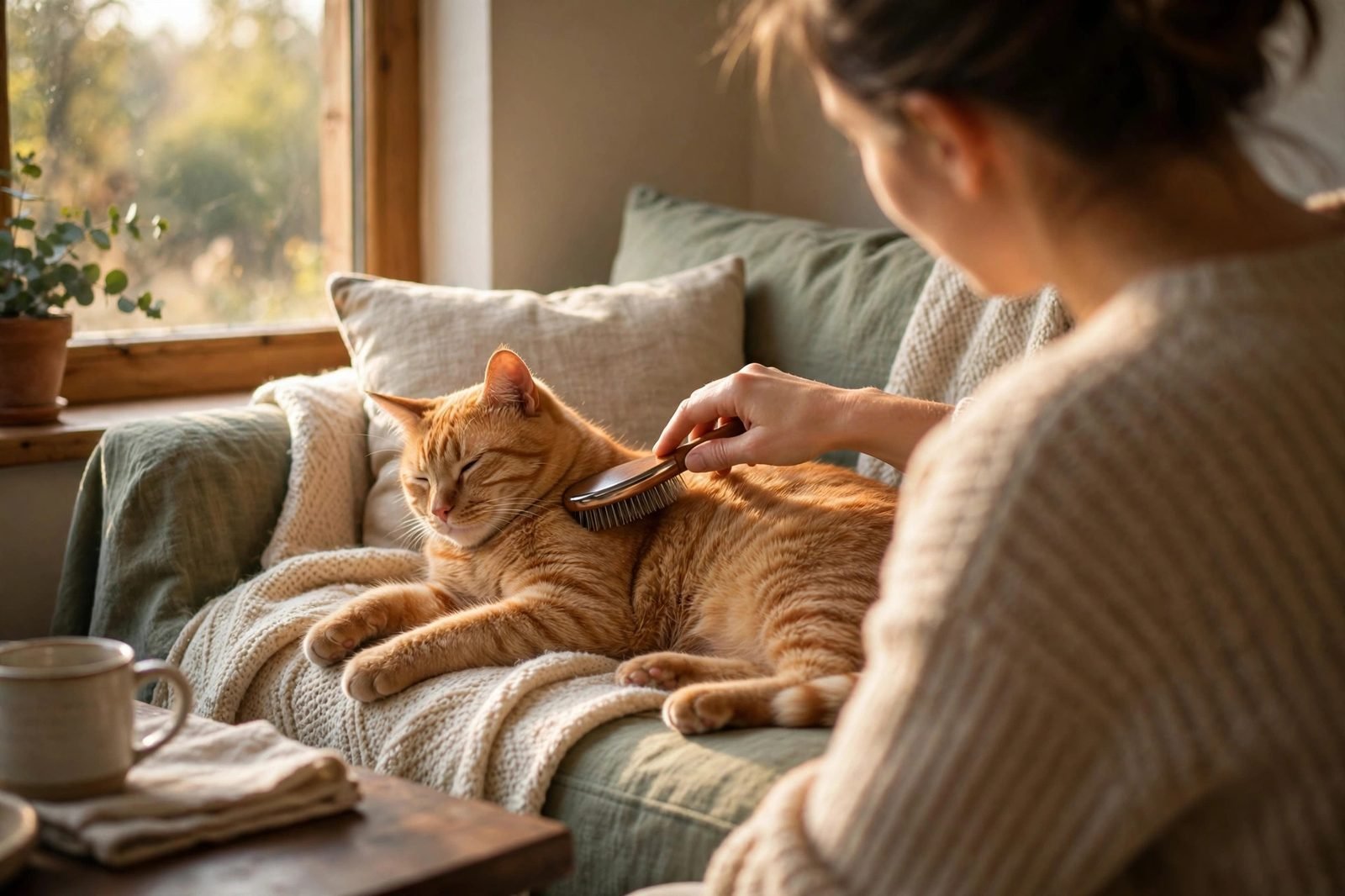

I’ll be honest: I didn’t brush my first cat for the first six months I had her. Luna was short-haired, she groomed herself obsessively, and brushing seemed like one of those things fancy cat people did — like buying organic catnip or whatever. Then shedding season hit, and I found cat hair in my coffee, my laptop keyboard, and, memorably, inside a sealed bag of chips. That’s when I bought my first brush and discovered something I didn’t expect: Luna loved it. Within a week she was climbing into my lap and headbutting the brush.
Cats are famously self-cleaning, which makes brushing feel optional. It isn’t — not quite. Regular brushing cuts down on hairballs, prevents painful mats, reduces the fur tumbleweeds rolling across your floors, and doubles as a health check you didn’t know you were doing. This guide covers how often to brush based on coat type, which brush actually works (the pet aisle is overwhelming), and what to do when your cat treats the brush like a mortal enemy.
Published: May 7, 2026 | Last updated: May 7, 2026
Quick Tips
- Short-haired cats: brush once a week. Long-haired cats: brush daily or every other day.
- Slicker brushes suit most coats; wide-tooth combs handle tangles gently.
- Keep sessions short — 5 minutes beats 20 minutes of squirming.
- Always brush in the direction the fur grows.
- Reward with treats so brushing predicts good things.
- Brushing doubles as a health check: feel for lumps, mats, and skin changes.
- Never yank mats — work them apart gently or ask a groomer.
How Often Should You Brush? It Depends on the Coat
The single biggest factor is coat length. Short-haired cats — your typical domestic shorthair — do well with a weekly brushing. That’s enough to remove loose fur, cut down on hairballs, and keep shedding manageable. I brush Luna every Sunday evening while we watch TV. It takes five minutes and she now considers it her constitutional right.
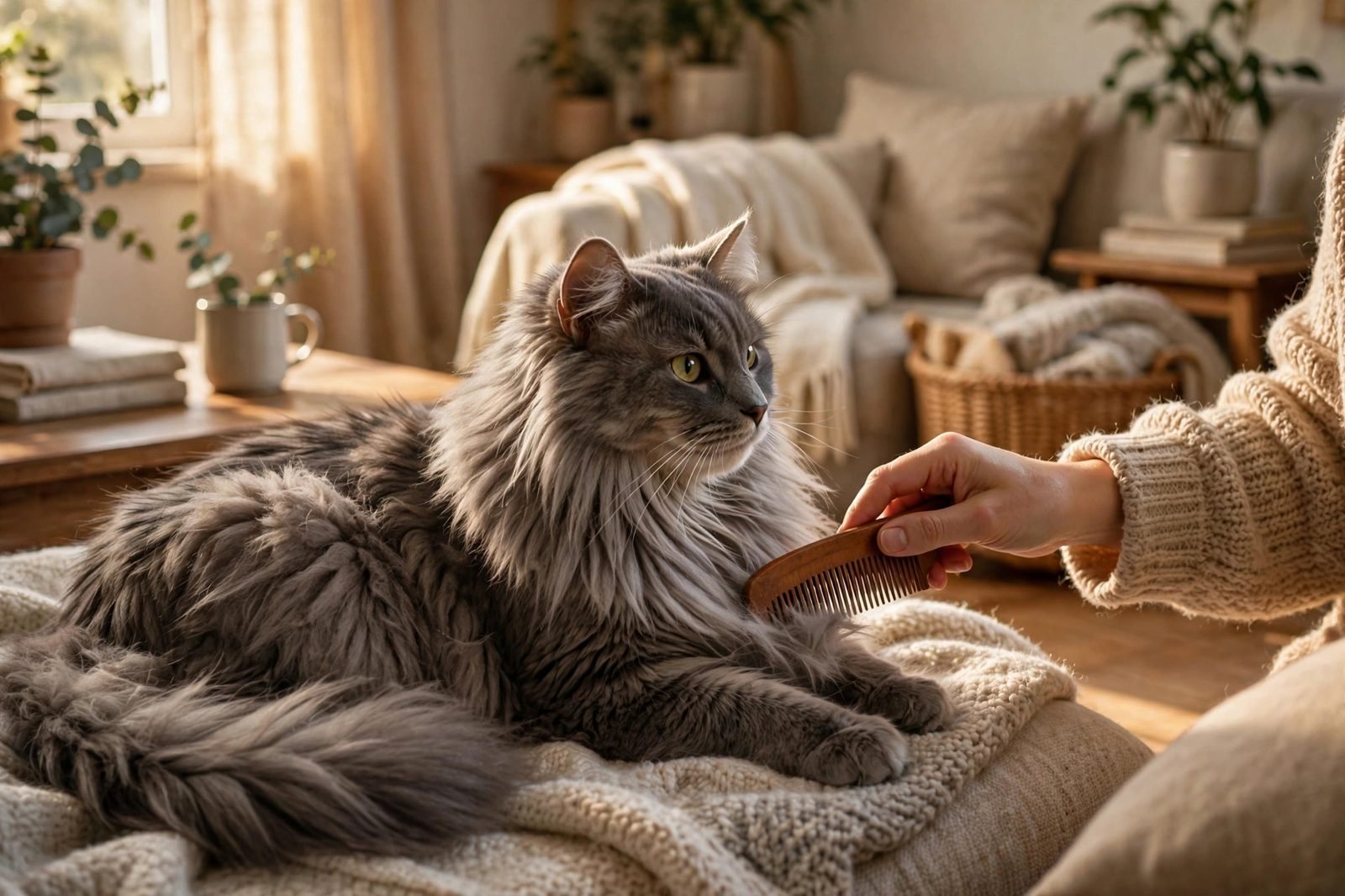
Long-haired cats are a different commitment: daily brushing is the ideal, every other day the realistic minimum. Long fur mats fast — what looks like a small tangle on Monday can become a felted knot by Friday, and mats pull on the skin painfully. If you’re considering a long-haired breed, factor in this daily five minutes honestly. My friend’s Persian gets brushed every morning with coffee — pleasant, but non-negotiable, like walking a dog.
Shedding season changes everything
Most cats shed more heavily in spring and fall. During those weeks, I double Luna’s brushing to twice a week, and the difference in household fur is dramatic. Indoor cats can shed year-round thanks to artificial lighting, so more frequent brushing just becomes the norm. All that loose fur has to go somewhere — better in the brush than in your cat’s stomach as a hairball. (On household fur management, keeping the litter area clean helps too — I cover that in my guide on how often to clean the litter box.)
Choosing the Right Brush (Without Buying Six)
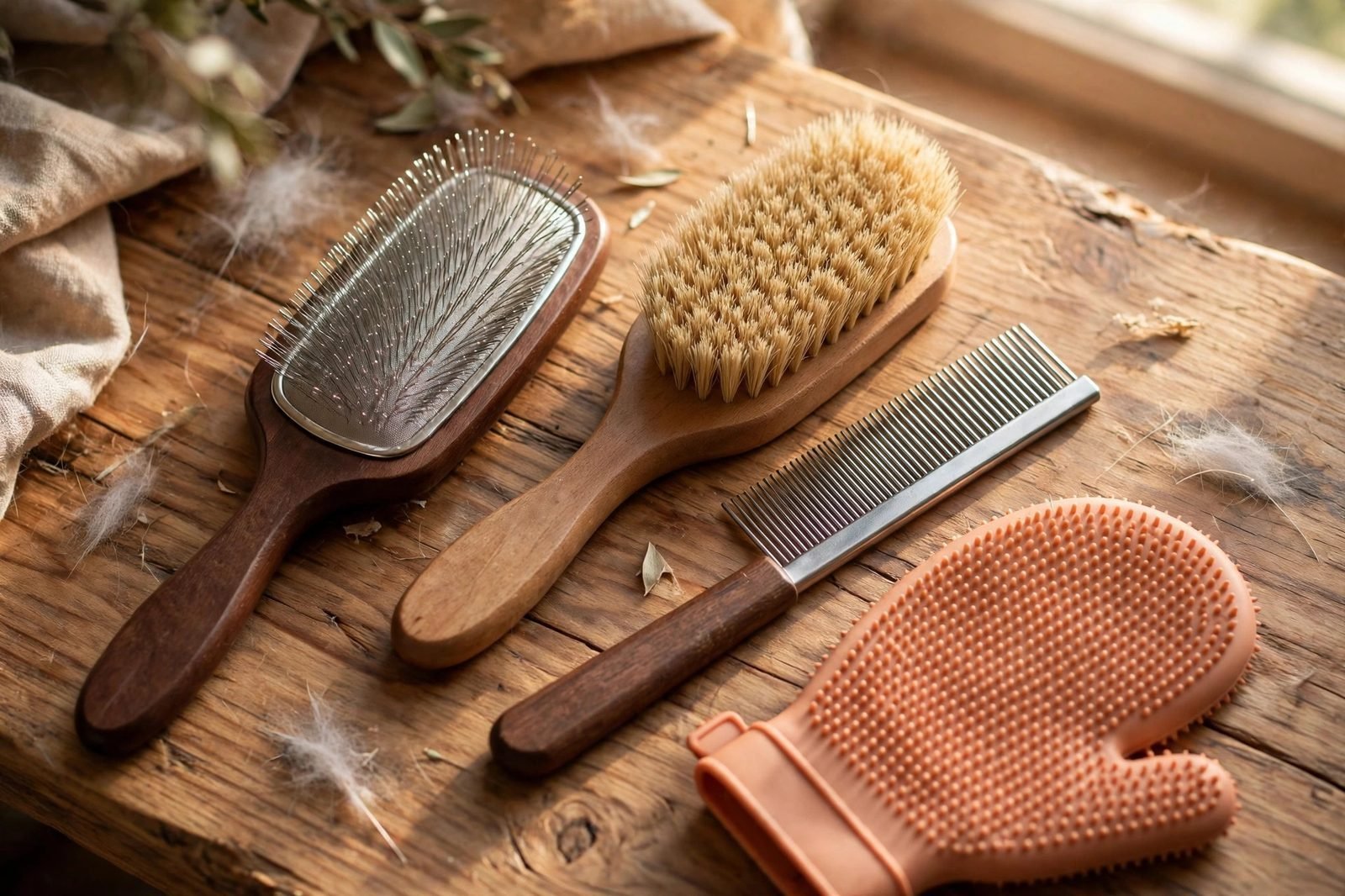
The pet aisle presents roughly forty brushes, all claiming to be essential. You need one or two. Here’s what actually works.
Slicker brush: the workhorse
A slicker brush — the one with fine bent wire bristles on a flat head — is the most versatile cat brush. It removes loose undercoat, smooths the topcoat, and works for short and medium coats. Use a light touch; pressing hard with a slicker can scratch the skin, which is the fastest way to make a cat hate brushing. Short, gentle strokes in the direction of fur growth. This is the brush I reach for 90% of the time.
Wide-tooth comb: the tangle specialist
For long-haired cats, a wide-tooth metal comb is essential backup. It glides through long fur and finds tangles before they become mats. Comb first to detangle, then follow with the slicker to smooth. If the comb snags, don’t pull — hold the fur at the base near the skin and work the tangle apart gently from the tip inward.
Rubber brush or grooming mitt: the gateway brush
If your cat is suspicious of brushes, start here. A rubber curry brush or grooming mitt feels like petting, removes a surprising amount of loose fur, and most cats accept it immediately. Luna started on a grooming mitt before graduating to the slicker. These are also great for short sessions on cats who only tolerate brief grooming — something is always better than nothing.
The Technique: Short, Gentle, and Always With the Grain
Technique matters more than tools. Start when the cat is already relaxed — after a nap, not during zoomies. Let them sniff the brush first. Begin with a few strokes along the back where most cats enjoy touch, using light pressure in the direction the fur grows. Watch the body language: slow blinks and purring mean continue; tail flicking, skin rippling, or ears flattening mean you’re pushing it.
Work through the body in sections: back, sides, chest, and — if the cat allows — the belly and legs, where mats love to hide. The belly is sensitive territory for many cats; don’t force it. Five calm minutes beats twenty minutes that ends with the cat fleeing under the bed. End every session before the cat wants it to end, with a treat. You’re training the cat to think “brushing ends too soon,” which is exactly the association you want.
The health check hiding inside every brushing
Here’s the underrated benefit: your hands learn what’s normal for your cat’s body. While brushing, you’ll notice lumps, scabs, mats, or flakiness weeks before you’d spot them visually. I found a small scab behind Luna’s ear during a routine brushing that turned out to be from scratching at an ear issue — caught early because my hands were there every week. If you find anything unusual, that’s a vet conversation, not a brushing problem to solve at home.
Dealing With Mats
Mats are the enemy of long-haired cats, and they form fast — behind the ears, under the collar, in the armpits. A mat pulls on the skin constantly and traps moisture underneath. Small tangles can be worked apart gently: hold the fur at the base near the skin so you’re not pulling, and tease the tangle apart with a comb from the tip inward, a few hairs at a time.
For serious mats — tight, felted, close to the skin — don’t be a hero. It’s easy to nick the skin tented up inside a mat with scissors. A groomer or vet can shave them out safely in minutes. If mats keep recurring in the same spots, brush those areas more often. Prevention beats cure here.
When Your Cat Hates Being Brushed
Some cats act like the brush is a personal attack. The fix is the same desensitization approach used for dogs: go absurdly slow. Day one, brush on the floor near the cat, treat the cat for existing nearby. Day two, one stroke on the back, treat, done. Build up one stroke at a time. Most cats come around within a week or two because gentle brushing genuinely feels good — they just need to learn that.
A few tactical notes: try different brushes, because texture matters to cats — some hate slickers but love rubber mitts. Try different times of day; a sleepy cat is a tolerant cat. And never restrain a panicking cat for brushing. Forcing it teaches them that grooming is exactly as awful as they feared, and you’ll pay for that lesson for months. If a cat is truly unhandleable, a professional groomer experienced with difficult cats is money well spent.
Hairballs: What Brushing Prevents
Hairballs are the most visible payoff of regular brushing. Cats swallow loose fur while self-grooming; most passes through, but some accumulates in the stomach and comes back up as a hairball. Brushing removes that loose fur before the cat ingests it. Since I started brushing Luna weekly, her hairballs dropped from a regular unpleasant event to a rare one.
An occasional hairball is normal. Frequent hairballs — weekly or more — or a cat that’s retching without producing anything, losing appetite, or seems constipated deserves a vet visit rather than just more brushing. Excessive grooming itself can signal stress, allergies, or skin issues, so if your cat is over-grooming to the point of bald patches, ask your vet about it. Brushing helps with the fur; it doesn’t diagnose the cause.
Making It a Ritual You’ll Both Keep
The secret to long-term brushing isn’t the perfect brush — it’s the routine. Same time, same spot, same short session. I do Luna on the couch every Sunday evening; she hears the TV theme music and walks over. Pair it with something the cat loves: treats after, chin scratches. Cats often knead during grooming — that rhythmic paw-pressing is a comfort behavior, so take it as a compliment. I wrote about that quirk in my piece on why cats knead.
Frequently Asked Questions
How often should I brush my short-haired cat?
Once a week is the standard recommendation, and it’s enough for most short-haired cats. During heavy shedding seasons in spring and fall, bump it to twice a week. Each session only needs to take about five minutes — you’re removing loose fur before it becomes hairballs or furniture decoration.
How often should I brush my long-haired cat?
Daily is ideal; every other day is the realistic minimum. Long fur mats quickly, and mats are painful and harder to remove the longer they sit. If daily brushing sounds like too much, be honest with yourself about whether a long-haired cat fits your routine — the brushing isn’t optional for these coats. Keep sessions short and pair them with treats so the cat looks forward to it.
What is the best brush for cats?
For most cats, a slicker brush with a light touch is the best all-rounder. Add a wide-tooth metal comb if your cat has long hair or tangles easily. If your cat is brush-shy, start with a rubber grooming mitt — it feels like petting and still removes loose fur. You don’t need a drawer full of tools; one or two good brushes cover nearly every situation.
Should I brush against the direction of the fur?
No — always brush in the direction the fur grows. Brushing against the grain pulls painfully, irritates the skin, and teaches the cat that brushing is unpleasant. The only partial exception is a very light back-brush with a rubber mitt to lift loose undercoat on some short-haired cats, and even then, keep it gentle and watch the cat’s reaction.
My cat gets aggressive when I brush certain spots. What should I do?
Respect it and skip those spots for now. Belly, legs, and tail base are common sensitive zones. Pain is also a possibility — if a cat suddenly hates being brushed in an area they used to tolerate, that can signal a skin issue, mat pulling, or soreness worth mentioning to your vet. For sensitive spots, try the gentlest tool you have (usually the grooming mitt) in very short sessions, and build tolerance gradually with treats.
Does brushing really reduce hairballs?
Yes — noticeably. Hairballs form from fur the cat swallows during self-grooming, and brushing removes that loose fur before it’s ingested. Most owners see a real drop in hairballs within a few weeks of starting regular brushing. It won’t eliminate them entirely, but it turns a frequent problem into an occasional one. Frequent hairballs despite regular brushing, though, warrant a vet check.
[…] the touch separately from the clipping is what separates peaceful trims from battles. My cat brushing guide uses the same gradual approach for […]
[…] not a routine. Regular brushing does the daily work; if you need a refresher on that, my cat brushing guide covers it […]