
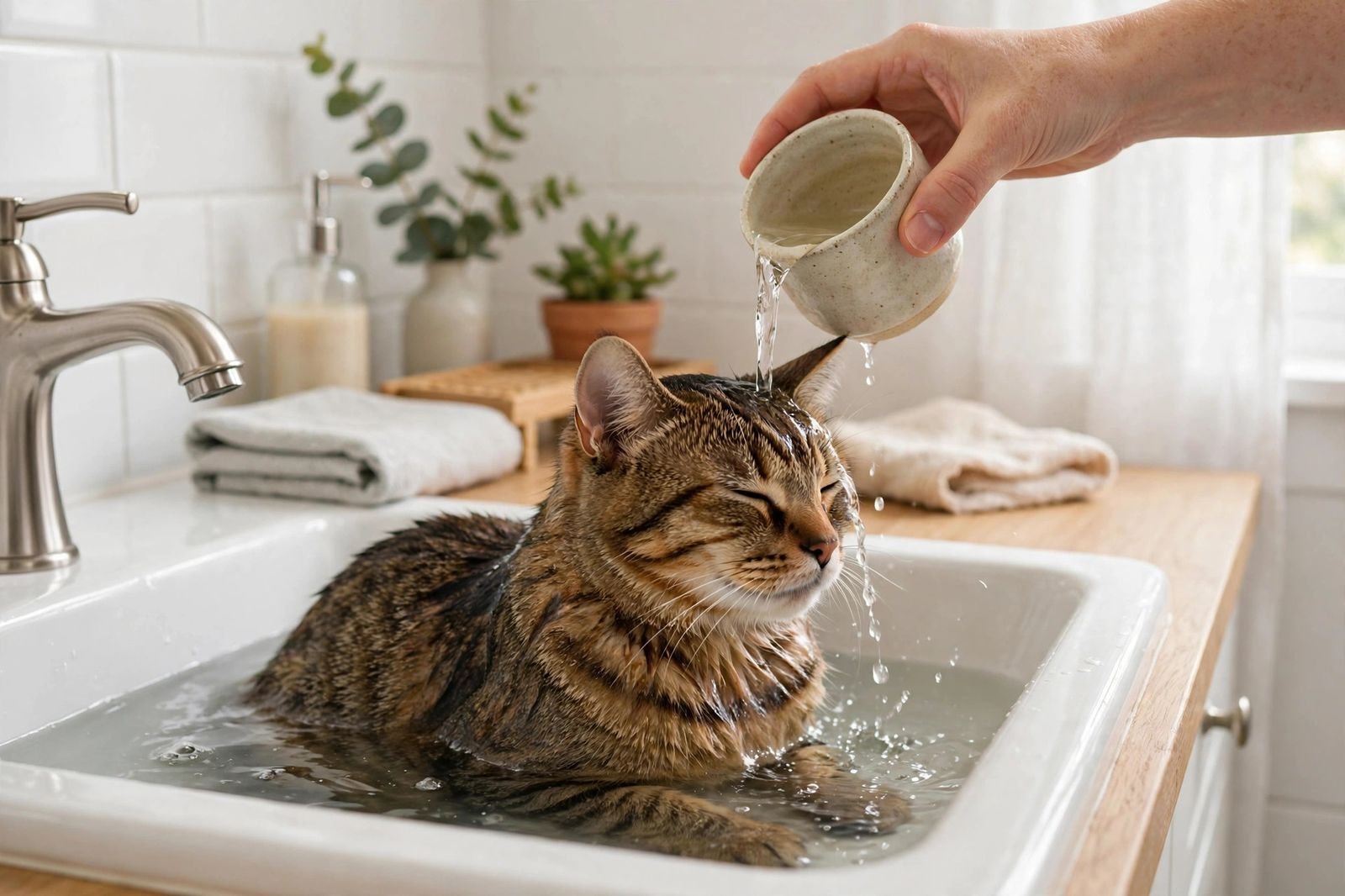

How to Give Your Cat a Bath (Without the Drama)
Here is the honest preview: a first cat bath usually goes wrong. The typical story involves a smelly rescue or a litter-box disaster that makes the bath non-negotiable, a tub filled with high hopes, and — within about four seconds — a perfect understanding of why cartoons depict this as a natural disaster. Water everywhere, a yowling cat on top of the shower curtain rod, a scratched forearm. The second bath, a month later, usually goes smoothly — because by then the golden rule of cat bathing is clear: preparation is the bath.
Here is the thing most new cat owners don’t realize: how to bathe a cat is a rarely-needed skill. Cats are self-cleaning machines, and most never need a bath in their lives. But “rarely” is not “never” — fleas, litter-box mishaps, greasy coats, and medical shampoos all create bath days. When that day comes, the difference between a horror story and a non-event is entirely in your setup. This is the calm, drama-free method.
Published: June 6, 2026 | Last updated: June 6, 2026
Quick Tips
- Most indoor cats never need baths — regular brushing handles 95% of coat care. Bathe only when there’s a real reason.
- Always use cat-specific shampoo; dog or human products can irritate cat skin and some contain ingredients toxic to cats.
- Prepare EVERYTHING before the cat gets wet: lukewarm water, shampoo, towels, and a non-slip mat within arm’s reach.
- A sink is easier than a tub for most cats — smaller space, less water, better control, and easier on your back.
- Keep water away from the face and ears; wash the head last (or just wipe it with a damp cloth).
- Dry thoroughly in a warm room — cats chill easily, and a damp cat in a cold house is miserable.
Do Cats Actually Need Baths?
Short answer: usually no. Cats spend an absurd portion of their waking lives grooming — it’s not vanity, it’s a highly effective cleaning system of barbed tongues and meticulous habit. A healthy indoor cat with regular brushing essentially maintains itself. If you’re bathing your cat monthly “just because,” you’re probably overdoing it and stripping the coat’s natural oils for no benefit.
So when is a bath justified? The list is short but real: your cat got into something sticky, greasy, or smelly; there’s a flea problem and your vet recommended a flea bath as part of treatment; litter or waste got matted into long fur; the coat is genuinely greasy or flaky despite brushing; or your vet prescribed a medicated shampoo for a skin condition. “He smells a bit like cat” is not on the list. Cats smell like cats. That’s allowed.
Senior cats and overweight cats sometimes need help, too — when a cat can’t comfortably reach to groom, the coat gets unkempt and baths (or professional grooming) fill the gap. But for the average healthy adult cat, think of bathing as an occasional intervention, not a routine. Regular brushing does the daily work; if you need a refresher on that, my cat brushing guide covers it properly.
Preparation: The Part That Decides Everything
I’m going to say this twice because it matters that much: set up everything before the cat gets involved. A wet, soapy cat waiting while you hunt for a towel is how bathrooms get destroyed. Lay out your supplies in the bathroom with the door closed — a closed door is not optional, it’s load-bearing.
Your kit: cat-specific shampoo (never dog shampoo, never human shampoo — cats groom themselves afterward and ingest residue, and their skin pH differs from ours), two or three large towels, a rubber bath mat or folded towel for the sink bottom (slipping panics cats more than water does), a plastic cup or gentle sprayer for rinsing, cotton balls for the ears if you’re careful, and treats for afterward. Trim your cat’s nails a day or two before the bath — not the same day, or you’ll stack two stressful events.
Brush the cat thoroughly before the bath. This is the step everyone skips and regrets: water turns tangles into mats, and mats turn a bath into an ordeal. Ten minutes of brushing first makes the actual bath twice as fast. Fill the sink with a few inches of lukewarm water before bringing the cat in — the sound of running water next to a nervous cat is an avoidable stressor. Test the temperature on your wrist like you would for a baby: comfortably warm, never hot.
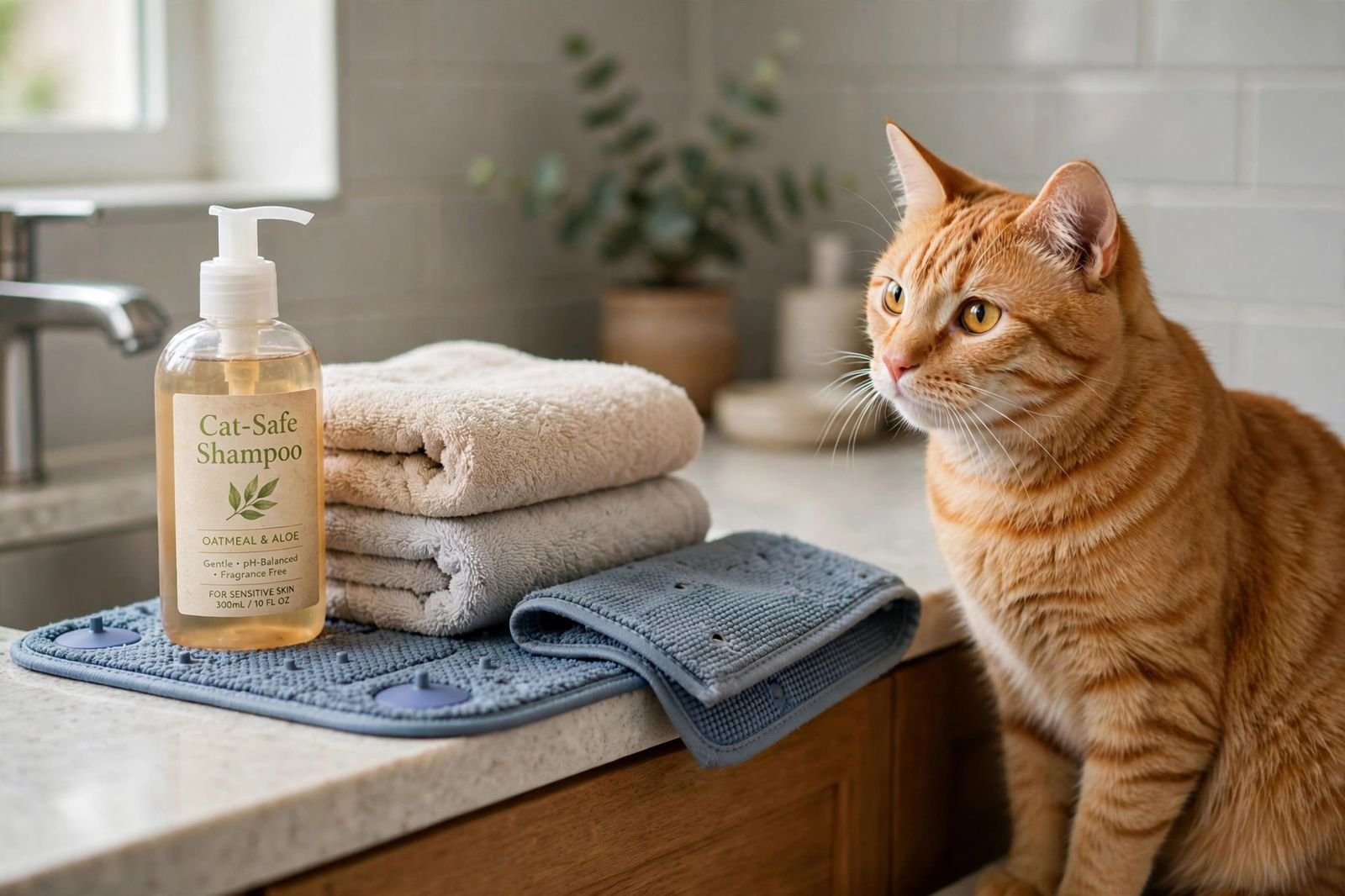
The Bath Itself, Step by Step
With everything ready and the door closed, bring the cat in calmly. Talk in a low, boring voice — you’re aiming for “dullest event of the day” energy. Place the cat gently in the sink on the non-slip mat. Most cats freeze for a moment in new situations; use that moment.
Step 1: Wet the body, not the head
Using the cup, pour lukewarm water over the body starting from the neck down, avoiding the face and ears entirely. Work slowly. Many cats tolerate this phase fine — it’s not the water they hate, it’s the surprise and the loss of control. Keep one hand resting gently on the cat’s shoulders; the steady contact is calming.
Step 2: Shampoo gently
Apply a small amount of cat shampoo and work it into the coat with your fingertips, following the direction of the fur. Be thorough but gentle — you’re washing a cat, not scrubbing a pan. Pay attention to the belly, legs, and rear, where grime collects. Keep it quick: the longer the shampoo sits, the more the cat’s patience drains.
Step 3: Rinse, rinse, rinse
This is the most important step and the most commonly rushed. Shampoo residue left in the coat causes itching and flaking — and since cats ingest what they groom off, incomplete rinsing is genuinely a health issue, not just a cosmetic one. Rinse until the water runs completely clear and the fur squeaks slightly between your fingers. When you think you’re done, rinse once more.
Step 4: The head (maybe)
Unless the head is actually dirty, skip shampooing it entirely — wipe the face with a damp washcloth instead. If the head needs washing, use a barely-damp cloth with the tiniest amount of shampoo, carefully avoiding eyes and ears, then wipe clean with a fresh damp cloth. Never pour water over the head. Water in the ears is uncomfortable and can contribute to infections.
Drying: Don’t Skip This Part
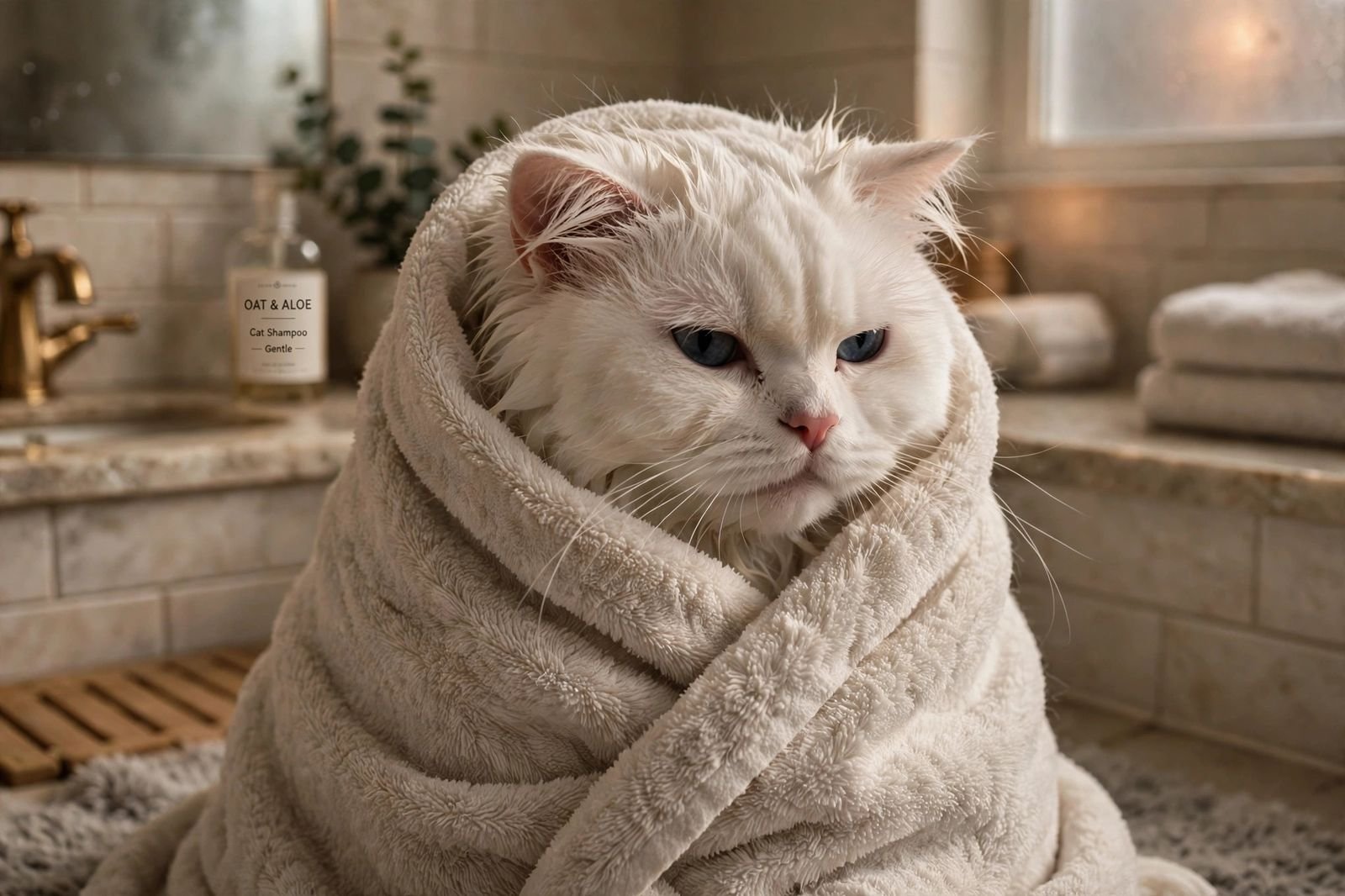
A wet cat is a cold cat, and cats lose body heat fast. Lift the cat out onto a dry towel and wrap gently — don’t rub vigorously, which tangles the coat; press and blot. Swap to a second dry towel once the first is soaked. Then keep the cat in a warm room until fully dry, away from drafts.
Most cats hate hair dryers with the fire of a thousand suns, so don’t default to one. If you must use a dryer — long-haired cats in winter, for example — use the lowest heat and lowest speed setting, hold it well away from the cat, and keep it moving. Watch the cat’s body language; if she’s terrified, towel-dry patience beats dryer speed. Never use a dryer on hot — cat skin burns more easily than you’d expect.
Once dry, give the coat a gentle brush-out to prevent tangles as it settles. Then produce the treats with great ceremony. The post-bath treat is not bribery; it’s training. You’re building the association that bath day, while undignified, ends well. Most cats go from curtain-rod acrobat to merely offended by the third bath, and the treat ritual is half the reason.
Special Cases and When to Call a Professional
Kittens can be bathed from a young age if needed, and starting young actually helps — a kitten who learns baths are survivable becomes an adult who tolerates them. Keep kitten baths extra short, extra warm, and extra gentle, and dry them promptly since tiny bodies chill fastest.
Senior cats deserve extra care: arthritis can make the sink slippery and scary, warm (not hot) water soothes stiff joints, and everything should take a little longer with more support. If your senior cat can’t groom herself anymore, talk to your vet about whether assisted grooming or professional help makes more sense than DIY baths.
Know when to outsource. A severely matted cat, a cat who becomes genuinely aggressive (not just dramatic — there’s a difference between yowling and biting), or a medical shampoo situation you’re unsure about: these are groomer-or-vet territory. A professional groomer handles difficult cats daily and has the equipment and restraint techniques to do it safely. There’s no prize for doing it yourself. If litter-box issues are part of why your cat keeps needing baths, by the way, my litter box cleaning guide might solve the root problem.
Frequently Asked Questions
How often should I bathe my cat?
Most indoor cats: rarely to never. Bathe only when there’s a specific reason — dirt, grease, fleas, matted waste, or a vet’s instruction. Over-bathing strips natural oils and dries the skin. Regular brushing is the real coat-maintenance routine; baths are the emergency backup.
Can I use dog shampoo or human shampoo on my cat?
No. Cats have different skin pH than dogs and humans, and they ingest shampoo residue when they groom afterward. Some dog flea shampoos contain permethrin, which is toxic to cats. Always use a shampoo formulated specifically for cats.
Why does my cat hate water so much?
It’s mostly about control and sensation, not the water itself. A soaked coat is heavy and cold, wet fur hampers their agility, and the whole experience is unpredictable — cats hate unpredictable. That’s why the calm, prepared, quick method works: it minimizes the surprise and the duration, the two things they actually object to.
Should I bathe my cat if she has fleas?
A bath can be part of flea treatment, but it’s not the whole treatment — fleas live in the environment too. Use a cat-safe flea shampoo only as your vet directs, and pair it with proper flea prevention for the cat and treatment of bedding and carpets. Bathing alone won’t solve a flea problem.
Is it safe to use a hair dryer on my cat?
With caution. Use only the lowest heat and speed, keep it moving and at a distance, and stop if the cat is terrified. Most cats do fine with thorough towel drying in a warm room. Never use high heat — cat skin is thinner than ours and burns easily.
My cat groomed herself right after the bath — is the shampoo safe?
If you used a cat-specific shampoo and rinsed thoroughly, yes — these products are formulated knowing cats will groom. This is exactly why thorough rinsing matters so much and why human or dog products are risky: residue is guaranteed to be ingested.