
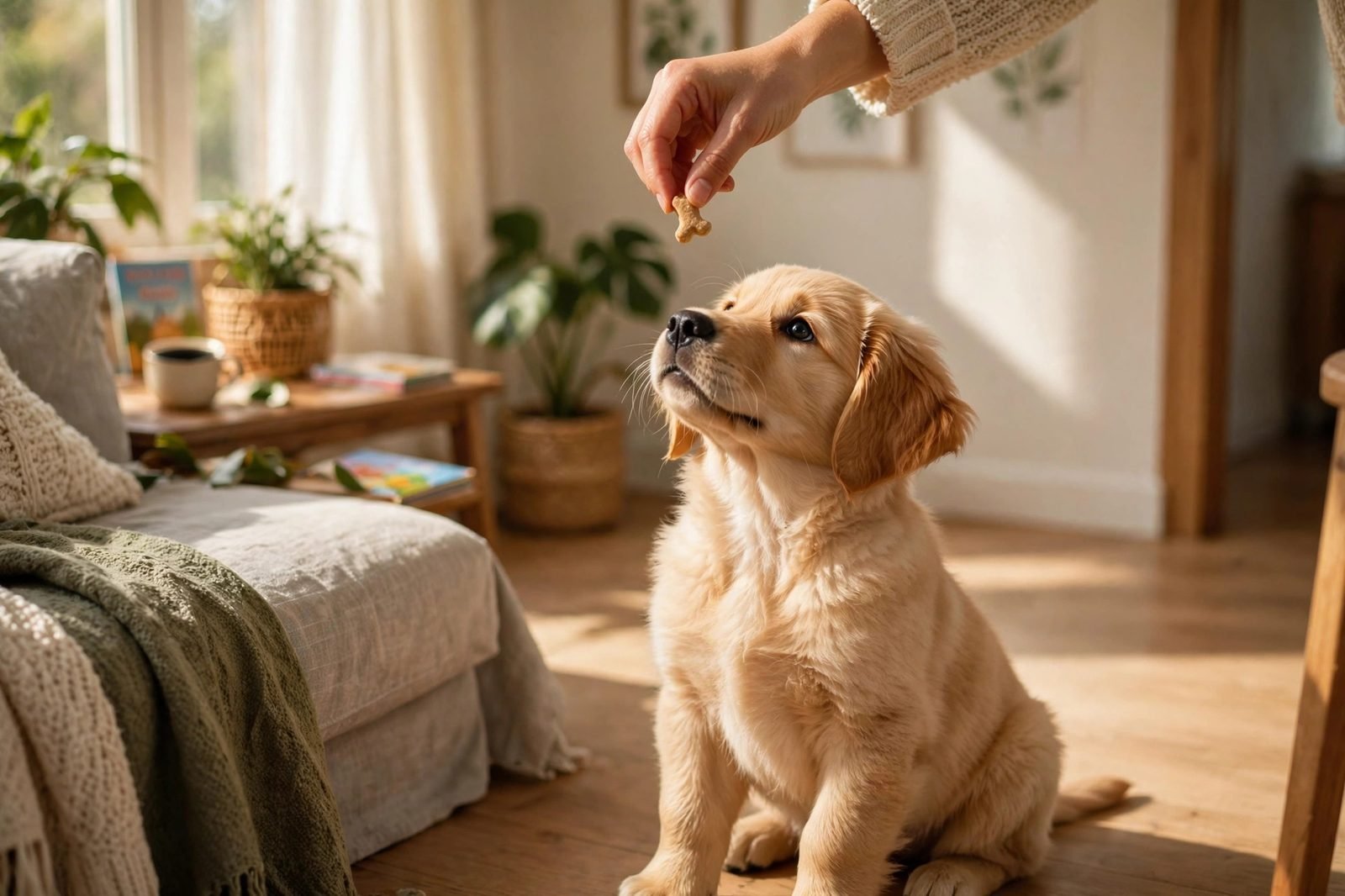

Sit is where everything starts — not the most impressive trick, but the first real conversation with your dog. You ask for something specific, the dog figures out what you want, and you both realize this communication thing works. Every other command builds on that moment.
Published: May 10, 2026 | Last updated: May 10, 2026
I taught my first dog to sit in ten minutes, then spent two weeks convinced I’d imagined it — he’d only do it in the kitchen, only for cheese, only if my hand was at exactly the right angle. That taught me: dogs don’t learn commands, they learn patterns. This guide covers the pattern properly, so your dog learns “sit” anywhere, for anyone.
Quick Tips
- Train before meals when your dog is hungry and treats actually matter.
- Keep sessions to 3–5 minutes — end while your dog still wants more.
- Reward the instant the bottom hits the floor, not three seconds later.
- Say the cue once. Repeating “sit, sit, SIT” teaches your dog to wait for the third one.
- Practice in different rooms and outdoors so “sit” works everywhere, not just the kitchen.
- Use tiny, soft treats your dog can eat in one second — big biscuits kill the training rhythm.
- If your dog keeps failing, you’re asking for too much. Make it easier, not louder.
Why Sit Comes First
Trainers recommend sit first for good reasons. It’s physically easy — most dogs offer a sit naturally within a minute or two of food near their nose, giving you quick wins and your dog quick rewards. Quick wins matter enormously early on because they build enthusiasm for the whole game.
Second, sit is genuinely useful daily in a way “shake” never will be. A dog that sits on cue waits at doors instead of barging through, sits for their leash, sits before meals instead of mugging the bowl, sits for visitors instead of launching at their chests. You’re installing a polite default you’ll use fifty times a day for a decade.
Third — the one nobody tells beginners — sit teaches you how to train: timing, treat delivery, reading body language, knowing when to quit. You learn it all on the easiest command, so harder things feel manageable later.
What You Need Before You Start
The equipment list is gloriously short: treats, and a dog. But the kind of treats matters. You want small, soft, smelly bits your dog can swallow in a second — pea-sized. Big crunchy biscuits are terrible training treats because the dog spends ten seconds crunching while the training moment evaporates. I use tiny bits of cheese, hot dog, or commercial training treats, kept in a pouch so I’m never fumbling. Some owners use a dab of peanut butter as a jackpot reward — just make sure it’s xylitol-free, since xylitol is toxic to dogs; I covered label-checking in can dogs eat peanut butter.
Figure out what your dog goes crazy for — my spaniel would do calculus for cheese but ignored dry biscuits; my friend’s labrador considered carrot a delicacy. There’s no universally best treat, only what makes your dog’s eyes go wide. Training right before dinner helps, when motivation peaks. Getting the feeding rhythm right matters too — my piece on the best feeding schedule for adult dogs covers structuring meals so training slots in naturally.
Pick your moment: a calm dog, a quiet room, no distractions. Not right after a walk when they’re buzzing. Five calm minutes beat twenty chaotic ones.
The Lure Method, Step by Step
This is the standard beginner method, and it’s standard because it works: use a treat to guide your dog’s body into a sit, then mark and reward the moment it happens.
Step 1: Get their attention with the treat
Hold a treat between thumb and forefinger at your dog’s nose level and let them sniff it. You want that locked-on focus. If your dog jumps or mouths at your hand, just wait — be a statue. The instant they stop and have four paws on the floor, you’re ready.
Step 2: Move the treat up and back
Slowly move your hand up and slightly back over your dog’s head, toward their ears — guiding, not teasing. As the nose follows the treat up, the head tilts back, weight shifts rearward, and physics takes over: the bottom drops. Most dogs sit within seconds. It looks like magic; it’s biomechanics.
If your dog walks backward instead of sitting, you’re moving the treat too far back — keep it closer to the head. If they jump, you’re holding it too high — lower it so they can reach it without leaving the ground. Small adjustments, big difference.
Step 3: Mark and reward the instant they sit
The microsecond that bottom touches the floor, say “yes!” (or click) and deliver the treat, then praise warmly. That marker tells the dog exactly which moment earned the reward — without it, they know treats appear but not which part of the last five seconds caused it.
Step 4: Repeat, then add the word
Do this five to ten times — and don’t say “sit” yet. Just reward the action. Once your dog eagerly offers sits, start saying “sit” just before moving your hand. The word goes on after the dog understands the game — saying it earlier just teaches them it’s a meaningless human sound.
Step 5: Fade the lure
Once your dog sits reliably to the word plus hand motion, make the motion smaller — then just an empty hand signal, then the word alone. Keep rewarding, but shift to every other sit, then every third, mixing in praise-only successes. This fading is how you get from “performs for visible cheese” to “performs because it’s habit.”
The Mistakes Everyone Makes (I Made All of These)
Repeating the cue
“Sit. Sit. SIT.” Every new owner does this. The problem: your dog learns the cue is “sit-sit-SIT” and waits for the loudest version. Say it once, then wait three full seconds — it feels like forever. If nothing happens, don’t repeat the word; make it easier. Lure again, or move somewhere less distracting. One cue, one chance, then help.
Pushing the dog’s bottom down
Please don’t do this. Manhandling a dog into position produces something that looks like a sit, but the dog learns nothing except that your hands on their rear are annoying. Some dogs find it genuinely unpleasant and start avoiding training altogether. The lure method exists so you never need to push, pull, or press. If the lure isn’t working, the problem is your technique or the environment — not the dog.
Training too long
The classic beginner error: the twenty-minute “training session” that ends with a bored dog and a frustrated human. Dogs — especially puppies — learn in short bursts. Three to five minutes, two or three times a day, beats one long weekend boot camp. Always end on a success: if the last two reps were great, quit there. You want your dog thinking “that was fun, when’s the next one,” not “thank god that’s over.”
Only training in one place
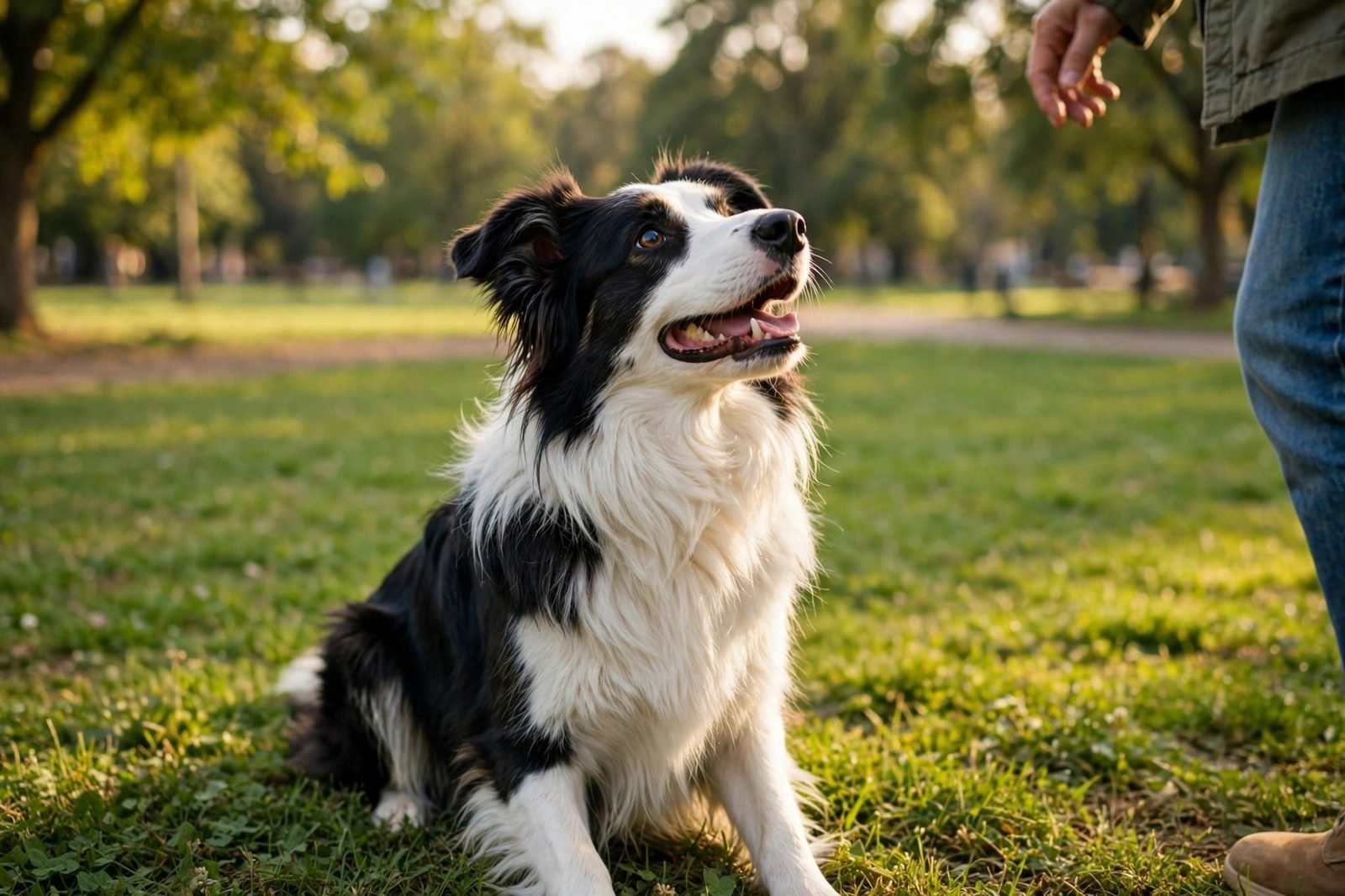
Dogs are terrible at generalizing. Your dog may sit perfectly in the kitchen and stare blankly in the garden — not stubbornness; to the dog’s brain, “kitchen sit” and “garden sit” are different tricks. Once sit is solid in one room, deliberately practice in every room, then the hallway, the garden, then on walks. Each new location needs a few easy reps. This is also why I recommend sits during real walks — a quick sit before crossing a road turns training into daily life. If you haven’t dialed in your routine yet, my guide on how often to walk your dog is a good companion to this one.
When Sit Doesn’t Click: Troubleshooting
Your dog backs up instead of sitting. Practice with their rear near a wall or furniture so backing up isn’t an option. The wall does the work for you.
Your dog jumps for the treat. The treat is too high. Keep it low, close to the nose, moving slowly. If jumping persists, start from a calm position rather than an excited one.
Your dog sits but pops straight back up. You’re rewarding too slowly or the environment is too exciting. Get the treat in their mouth within a second of the sit; work on duration later. A rewarded one-second sit beats an untrained five-second one.
Your dog won’t sit on certain surfaces. Some dogs dislike wet grass, cold tile, or gravel. Fair enough — would you sit on wet grass in shorts? Train on comfortable surfaces first and don’t take it personally.
Big dog, sore hips, or an older dog that struggles. Sitting is physically demanding for some dogs. Never force it. If your dog consistently avoids sitting or seems stiff, that’s a vet conversation, not a training failure. I’m not a vet, but pain changes behavior, and it’s always worth ruling out.
Turning Sit Into a Daily Habit
Here’s where sit goes from “trick” to “lifestyle.” Once your dog knows the cue, ask for sits in real situations — and reward them, at least sometimes. Sit before the food bowl goes down. Sit before the leash clips on. Sit before the door opens. Sit at the curb before crossing the street.
You’re building automatic polite behavior. Within weeks, many dogs offer sits unprompted — at the door, because sitting there has always paid off. That’s the dream: a dog defaulting to calm behavior because it works. It starts with cheese and a hand over the head; it ends with neighbors calling your dog “so well behaved,” as if by accident.
It wasn’t an accident — it was three-minute sessions, tiny treats, and a lot of “yes!” Those sessions were some of my favorite early moments: the little lightbulb, the wagging tail, the immediate offer of another sit just in case there’s more cheese. Enjoy it. This is the fun part of dog ownership.
Frequently Asked Questions
How long does it take to teach a dog to sit?
Most dogs learn the basic motion in one to three short sessions. Reliable sits — anywhere, with distractions, on the first cue — typically take two to four weeks of consistent practice. Puppies learn the motion fast but take longer to become reliable; adult dogs may take a session or two longer to learn but generalize faster. Both get there.
What age should I start teaching sit?
As soon as you bring them home. Puppies as young as eight weeks can learn sit — keep sessions to two or three minutes and playful. There’s no “too early”; it’s gentle, reward-based, and doubles as bonding. Older rescues learn it fine too.
Should I use a clicker?
A clicker is a great marker tool — precise, consistent, distinct — but optional. A marker word like “yes!” works just as well if you use it consistently at the exact moment. Use whichever you’ll actually remember to use correctly.
My dog knows sit at home but ignores me outside — why?
Because “kitchen sit” and “park sit with squirrels” are, to your dog, completely different challenges. The fix is gradual: practice in slightly harder environments step by step, reward generously in new places, temporarily lower your criteria. Never punish failure in a harder environment — they haven’t disobeyed, they’ve hit their training limit so far.
Can I train sit without treats?
Use whatever motivates your dog — toys, praise, a chance to go through the door. But treats are the fastest, clearest currency for most dogs, especially beginners. You don’t need them forever; once the behavior is reliable, fade to intermittent rewards. Starting with no meaningful reward is like asking someone to work for free on day one.