

Why Does My Cat Purr? The Real Reasons
The first night my rescue cat finally climbed onto the couch beside me — after three weeks of hiding under the bed — she started purring so loudly I could feel it through the cushion. I sat there grinning like an idiot, because I knew what everyone knows: purring means a happy cat. Except that is only about half the story, and the other half is far more interesting.
Why does my cat purr? It is one of the most-asked questions in all of cat ownership, and the answer turns out to be richer than “because she is happy.” Cats purr when they are content, yes — but also when they are frightened, in pain, giving birth, or dying. Purring is not a single message. It is a whole language, and once you learn to read the context around it, you understand your cat on a completely different level.
Published: May 27, 2026 | Last updated: May 27, 2026
Quick Tips
- Purring is not only happiness — cats also purr when stressed, hurt, or frightened.
- Context is everything: relaxed body + purr = content; tense body + purr = check on them.
- Kittens are born purring — it is one of their first forms of communication.
- Cats may purr to self-soothe, the way people hum when nervous.
- A sudden change in purring habits is worth paying attention to.
- If purring comes with hiding, appetite loss, or lethargy, call your vet.
How Purring Actually Works
Before the reasons, the mechanics — because they are genuinely cool. Purring is produced by rapid twitching of the laryngeal muscles (the muscles around the voice box), which open and close the glottis as the cat breathes in and out. The muscles fire at an astonishing 25 to 150 vibrations per second, and the result is that familiar rumble on both the inhale and the exhale. That is why purring sounds continuous while meowing does not.
The signal to start comes from the brain — specifically a region called the hypothalamus, the same area involved in emotion. This is a neat detail, because it means purring is wired directly into how the cat feels, not just a sound the cat decides to make. It is closer to a laugh or a sob than to a word: involuntary-ish, emotional, and hard to fake.
Big cats, incidentally, cannot truly purr — lions and tigers roar instead, thanks to a differently shaped throat bone. Your housecat’s purr is a small-cat specialty, shared with cougars and cheetahs.
Reason #1: Contentment (Yes, the Obvious One)
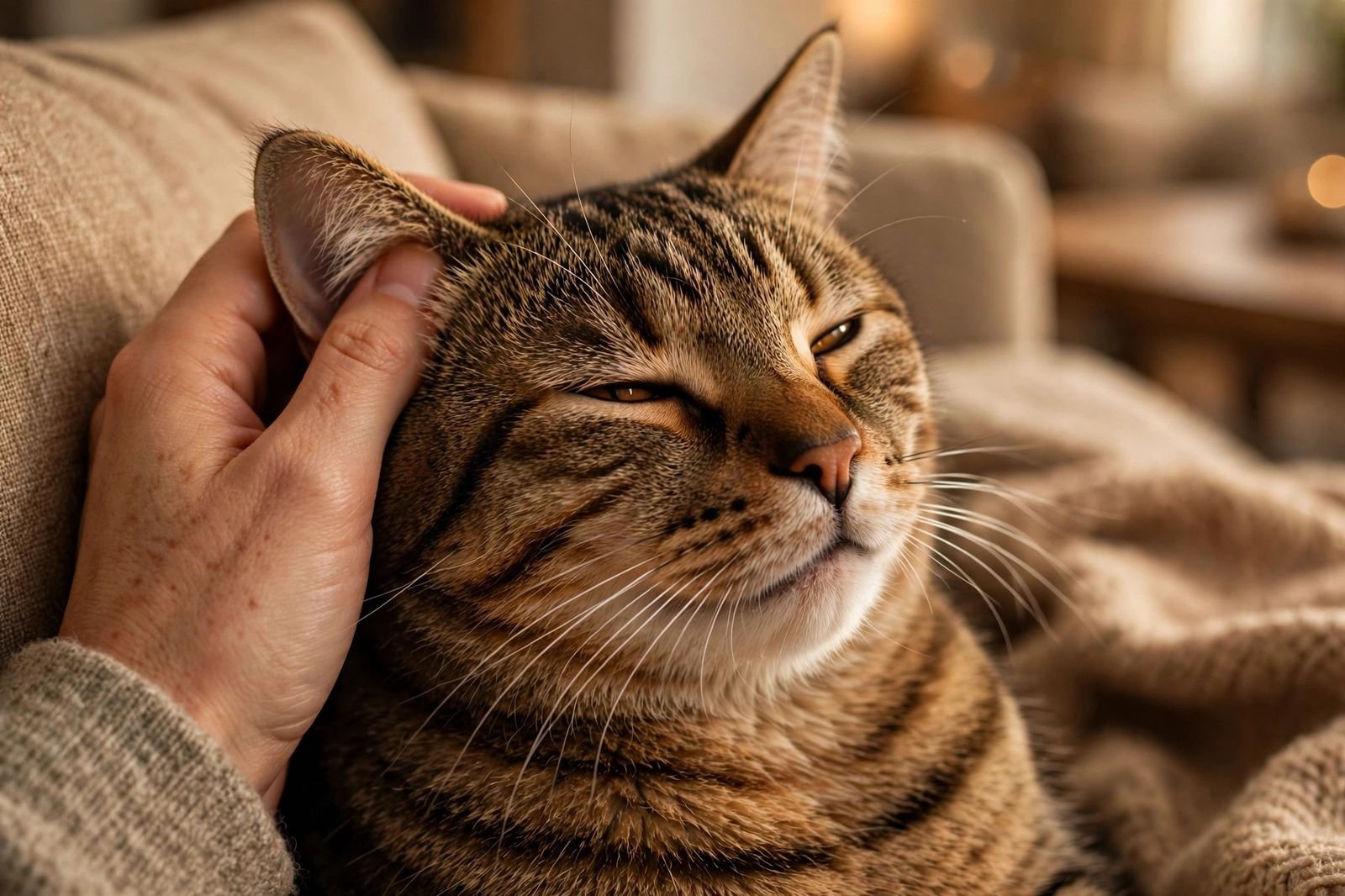
Let us start where everyone starts, because it is real. The classic purr — cat relaxed, eyes half-closed or slow-blinking, body loose, maybe kneading with the paws — is contentment, pure and simple. Lap time, chin scratches, sunbeams, a full belly after dinner: these are the moments the stereotype comes from, and the stereotype earned its reputation honestly.
This is also a social signal. Cats purr at their humans the way kittens purr at their mother — it is affiliative, a way of saying “I am safe with you, keep doing what you are doing.” When my cat purrs on my lap, she is not just enjoying herself; she is actively maintaining our bond.
If your cat purrs and kneads at the same time, you are seeing two kitten behaviors stacked together — kneading is the nursing motion kittens make, and the combination basically means maximum comfort. My cat kneading guide digs into that particular quirk if you want the full story.
Reason #2: Self-Soothing and Stress Relief
Here is where it gets interesting. Cats purr at the vet’s office. They purr when injured. Mother cats purr while giving birth. None of these are happy occasions, which tells us purring does more than express pleasure — it manages distress.
The working theory: purring is self-soothing, the feline equivalent of a person humming nervously or rocking a crying baby. The rhythmic vibration is calming to produce, and it may trigger the release of endorphins — the body’s natural feel-good chemicals. A frightened cat purring in a carrier is not enjoying the ride; it is trying to talk itself down.
There is also a wilder hypothesis that gets a lot of attention: the frequencies of purring (25–150 Hz) overlap with frequencies shown to promote bone density and tissue healing in some studies. The idea is that purring might literally help cats heal — a built-in, low-energy physical therapy they run while resting. The evidence is suggestive rather than conclusive, but it is a lovely thought. Either way, a cat that purrs while resting is doing something restorative — the kindest response is to let it rest. A calm home helps enormously here — if your cat is new and still settling in, my new cat introduction guide covers how to keep stress low in those early weeks.
Reason #3: Communication — Especially With Kittens
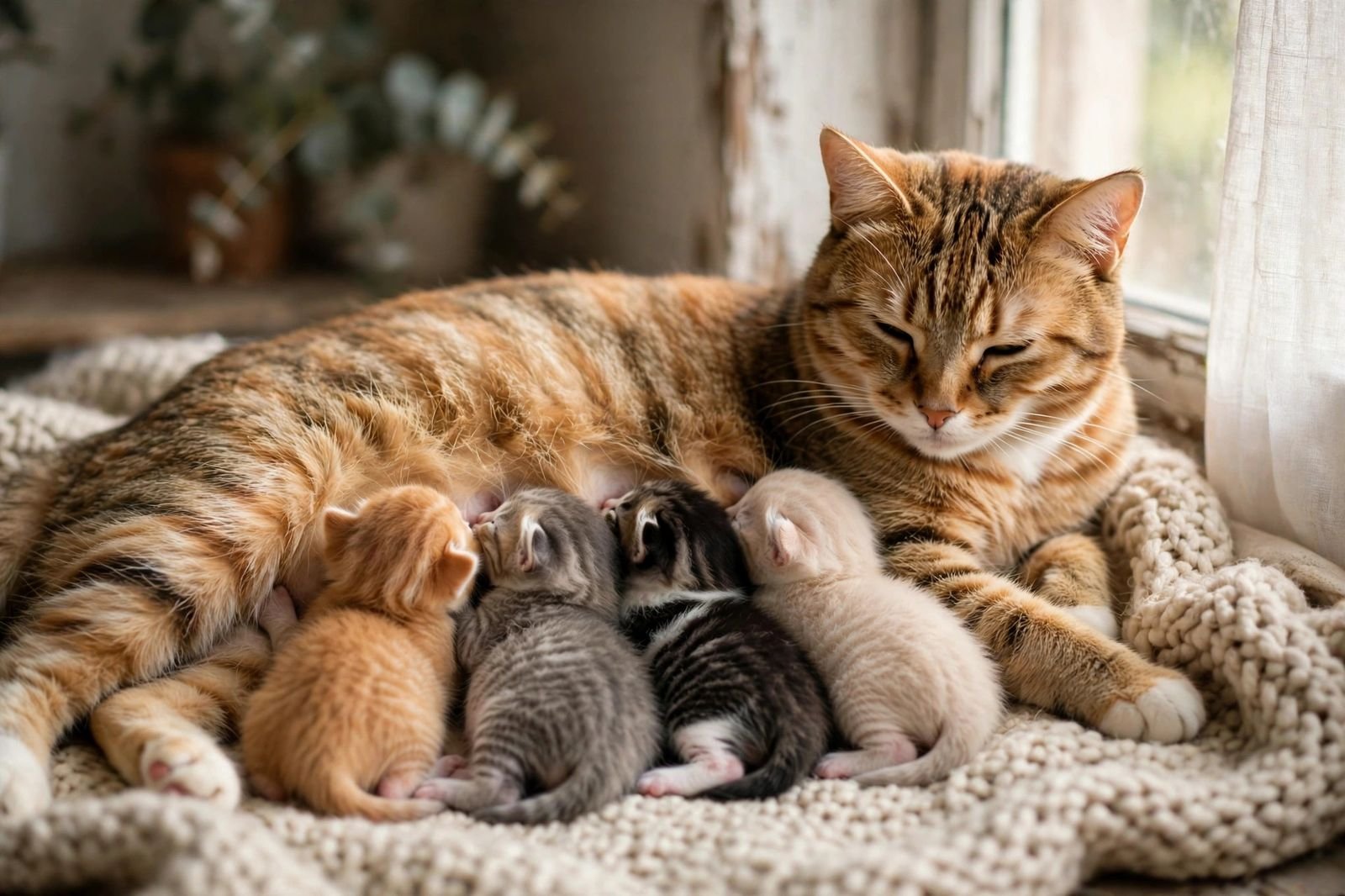
Purring starts astonishingly early. Kittens are born blind and deaf, but they can purr within days of birth — and they need to, because purring is how they talk to their mother before they can meow properly. A nursing kitten purrs to say “I am here, I am okay, keep the milk coming.” The mother purrs back, and since kittens cannot hear her well yet, the vibration itself acts as a homing beacon guiding them to her.
Adult cats mostly stop purring at each other — feral adult cats rarely purr in each other’s presence. But they keep purring at humans, which tells you something: domestic cats have essentially extended their kittenhood communication into adulthood, treating us as permanent mother figures. Every time your adult cat purrs at you, it is using baby talk. You are, to your cat, mom.
Cats also use purring as a careful social tool. A cat that wants to approach another cat without triggering a fight may purr to signal “I come in peace.” At the vet, some cats purr while being examined — part self-soothing, part appeasement signal toward the scary stranger handling them. It is diplomacy as much as emotion.
Reason #4: “Please” — The Solicitation Purr
I mentioned this briefly above, but it deserves its own moment because it is so brazen. Researchers found that cats have a distinct purr they deploy when they want something — usually food — which layers an urgent, baby-like cry into the low rumble. In studies, humans rated this purr as significantly more urgent and harder to ignore than a regular purr, even people who did not own cats.
Here is the kicker: cats seem to use it strategically. The same cat will purr normally when cuddling and switch to the solicitation purr when standing by the empty food bowl. They have learned which sound opens the treat bag. If your cat has a special 5 a.m. purr that drills directly into your skull, now you know its name — and that you have been trained, not the other way around.
When Purring Means Something Is Wrong
This is the part of the article that matters most. Because purring covers both comfort and distress, you cannot read the purr alone — you have to read the whole cat. A purring cat with a relaxed body, slow blinks, and normal appetite is fine. A purring cat that is hiding, tense, breathing oddly, off its food, or lethargic deserves your attention.
Cats are famously stoic about pain — in the wild, showing weakness gets you eaten, so domestic cats hide illness as long as they can. Increased purring, or purring in unusual situations, can be one of the few outward signs that something is off. Other things to watch alongside it: hiding more than usual, changes in appetite or water intake, litter box changes, unusual aggression, or just a general sense that your cat is “not itself.” You know your cat’s baseline better than anyone; trust that feeling.
If purring comes bundled with any of those changes, call your vet and describe what you are seeing. You do not need a diagnosis — that is the vet’s job. Your job is noticing early, and a change in purring patterns is a legitimate reason to pick up the phone. My when to call the vet guide walks through how to tell a monitor-at-home situation from a call-now one.
How to Respond to Purring
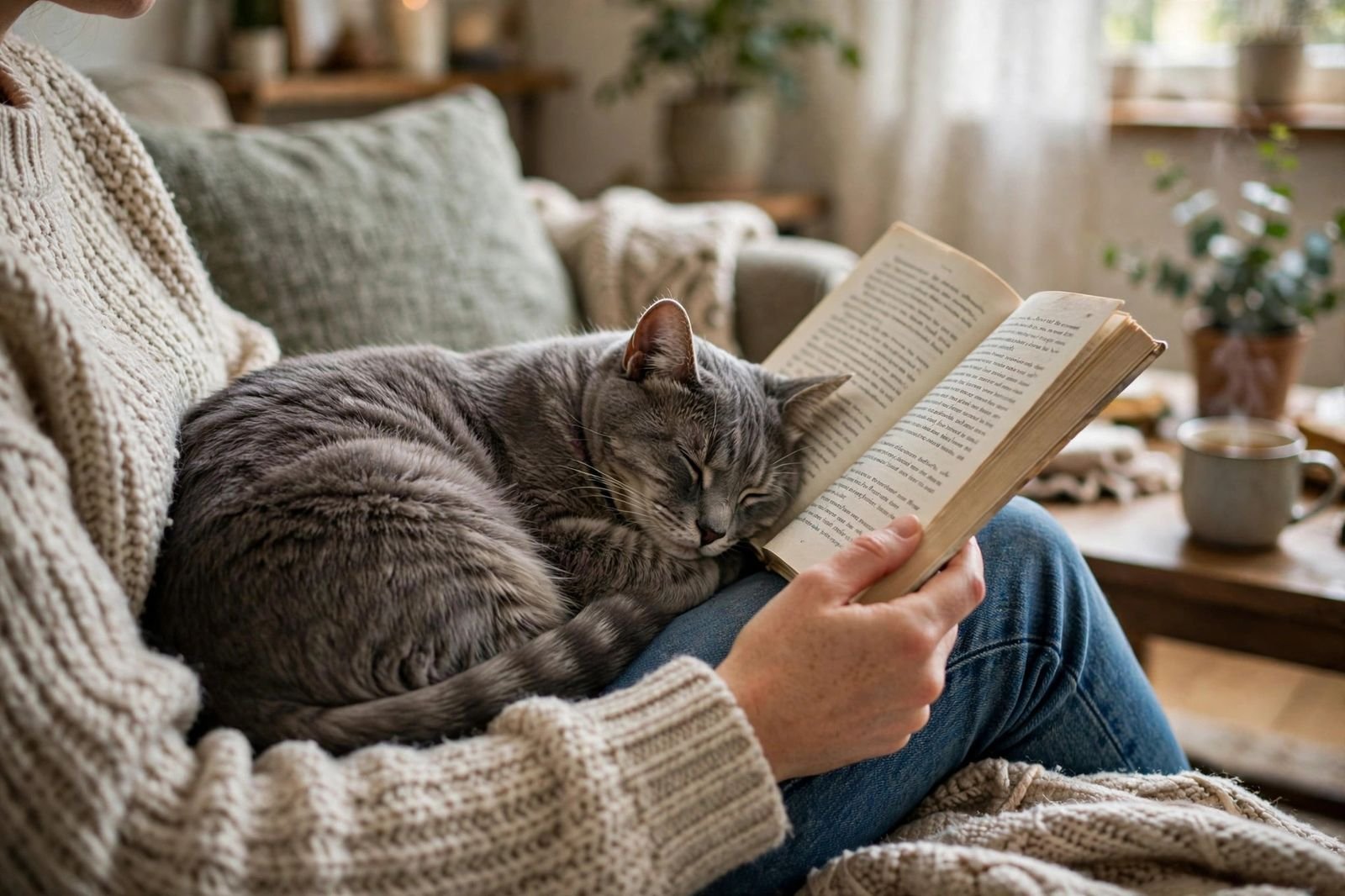
Mostly, the answer is: enjoy it, and reciprocate appropriately. If your cat is purring contentedly on your lap, keep doing what you are doing — gentle petting, calm voice, no sudden moves. That is the whole transaction, and it is a good one.
If your cat is purring in a stressful situation — the carrier, the vet waiting room, during a thunderstorm — do not assume it means “I am fine.” Offer comfort the way you would to a nervous friend: calm presence, a familiar-smelling blanket over the carrier, soft voice, no forcing interaction. Let the cat set the terms.
And if your cat rarely purrs at all, do not worry. Some cats are just quiet — they show contentment through slow blinks, head-butts, following you room to room, or sleeping on your stuff. Purring volume varies enormously between individuals. My friend’s cat purrs like a distant lawnmower; mine sounds like a small engine room. Both are normal. The absence of purring is not the absence of happiness.
Frequently Asked Questions
Do cats purr only when they are happy?
No — this is the biggest myth about purring. Cats purr when content, but also when frightened, in pain, stressed, or ill. Purring seems to serve as both an expression of pleasure and a self-soothing mechanism. Always read the context: a relaxed, loose-bodied purring cat is happy; a tense, hiding, purring cat may need help.
Why does my cat purr so loudly?
Volume varies hugely between cats and means nothing about health or happiness on its own — some cats are just loud. Excitement can turn the volume up, which is why many cats purr loudest at mealtimes. As long as the loud purring is your cat’s normal pattern, enjoy the surround sound.
Can cats control their purring?
Partially. Purring starts as an involuntary response driven by the brain’s emotion centers, but cats can clearly deploy it strategically — the solicitation purr for food is the best example. Think of it like human laughter: mostly automatic, but you can force a laugh when the situation calls for it. Cats appear to do something similar.
Why does my cat purr and bite me at the same time?
This is usually overstimulation, not aggression. The cat is enjoying the petting, the enjoyment builds, and at some point it tips over into “too much” — the gentle bite is the circuit breaker. Watch for warning signs before the bite: skin twitching, tail flicking, ears rotating back. When you see those, pause the petting and let the cat reset.
My cat used to purr a lot and now barely does. Should I worry?
A gradual change in purring habits is worth noticing, especially if it comes with other changes — appetite, energy, sociability, litter box habits. Cats hide illness well, and behavior shifts are often the first clue. Mention it at your next vet visit, or call sooner if anything else seems off. It may be nothing, but it is always worth checking.
Do all cats purr?
Almost all domestic cats can purr, though some do it so quietly you have to feel for the vibration rather than hear it. Big cats like lions and tigers cannot truly purr — they roar instead. If your cat has never purred audibly, try resting your hand gently on its throat while it is relaxed; you may feel a faint rumble you have been missing.