

Best Dog Beds: How to Choose the Right One
The classic first dog bed purchase is chosen entirely on looks: a handsome plaid thing, the kind that photographs well next to a fireplace — and the dog wants absolutely nothing to do with it. For three weeks he sleeps on the cold hallway tile beside it like a small, furry protest. Swap it for an ugly, overstuffed rectangle with a washable cover, and he claims it within minutes and barely leaves it since. The lesson: the best dog bed is the one your dog actually sleeps on, not the one that matches your rug.
Shopping for dog beds is weirdly overwhelming for what is, at the end of the day, a cushion. Donut beds, orthopedic beds, raised cots, crate pads — the options all claim to be the one. This guide cuts through that: how beds differ, how to size one, which materials matter, and how to match a bed to your dog’s age and sleep style.
Quick Tips
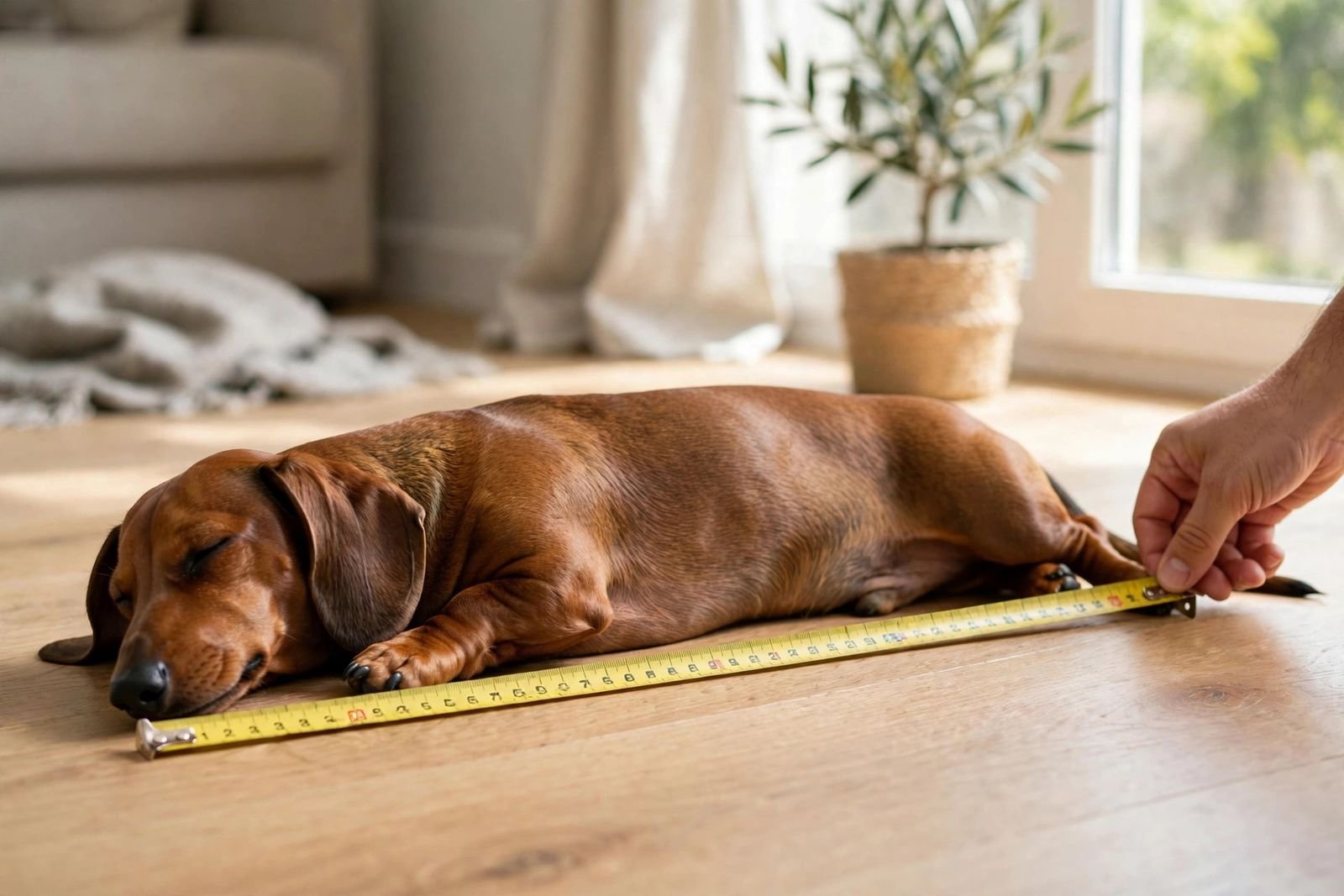
- Measure your dog from nose to tail while stretched out, then add 6–12 inches — that is your minimum bed size.
- A removable, machine-washable cover is the single most important feature on any dog bed.
- Orthopedic memory foam is worth it for seniors, big breeds, and any dog with stiff joints.
- Watch how your dog sleeps: sprawlers need flat rectangles, curlers love donut beds, leaners want bolsters.
- Cheap beds that flatten in a month cost more in the long run than one good bed.
- Place the bed where your dog already naps — the location matters as much as the bed.
Why the Right Bed Actually Matters
Dogs sleep a lot — adult dogs average 12 to 14 hours a day, and puppies and seniors sleep even more. That is a huge fraction of your dog’s life spent on whatever surface you give them. A thin, flattened pad on a hard floor is fine for a young dog in the short term, but over months and years, poor sleep support shows up as stiffness, restlessness, and a dog that relocates to your couch at 2 a.m.
There is also a training angle: “go to your bed” only works if the bed is somewhere the dog genuinely wants to be. A beloved bed becomes a settle-down station when guests arrive or the vacuum runs.
The Main Types of Dog Beds
Nearly every dog bed on the market is a variation on a handful of designs. Learn the handful and the wall of options gets manageable fast.
Donut and cuddler beds
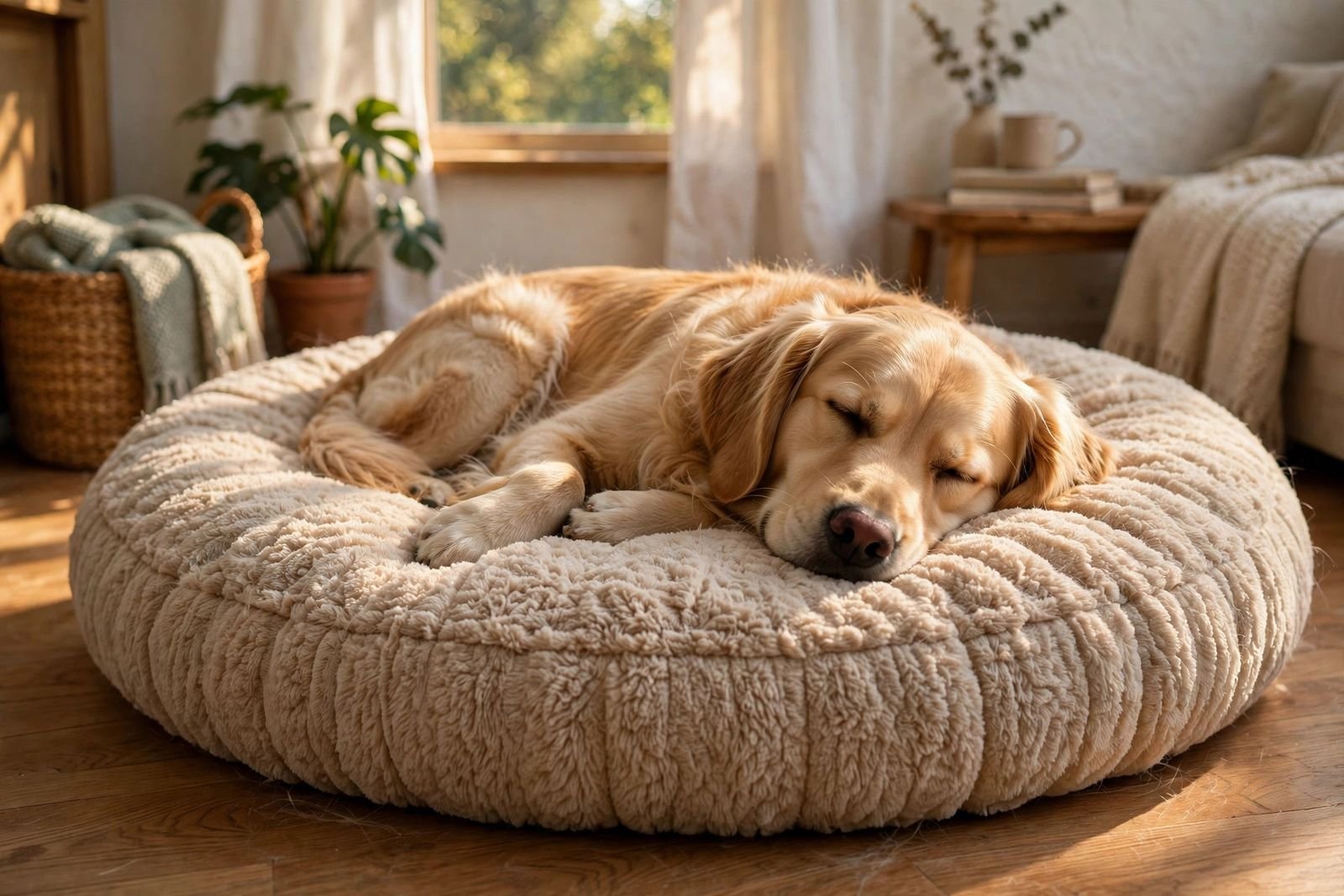
Round beds with raised edges. Ball-curlers love pressing against the bolster — it seems to feel secure. Great for anxious dogs and small breeds, but the center flattens fast on cheap models and sprawlers will hang off the edges.
Orthopedic and memory foam beds
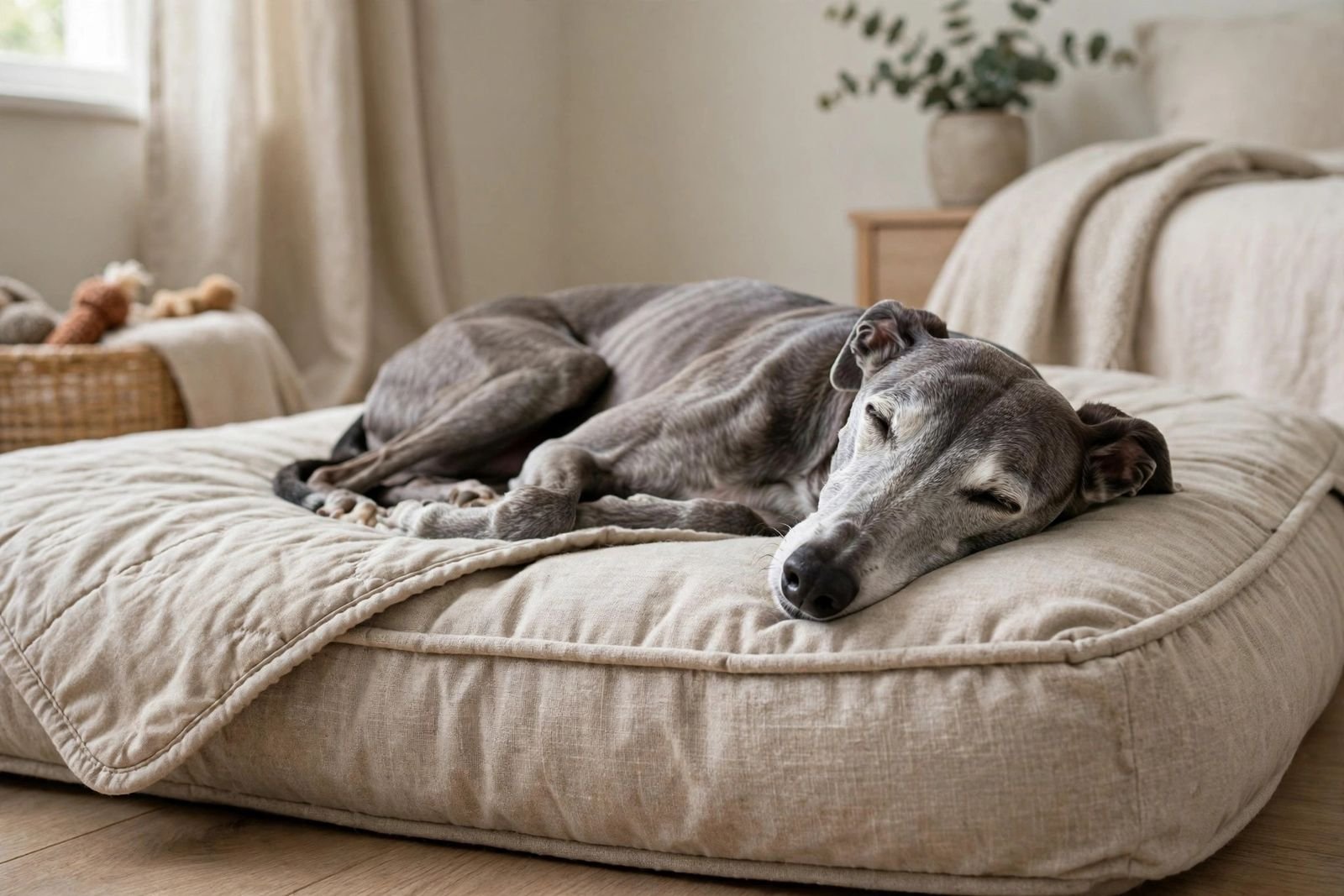
Flat rectangular beds with a solid foam base, sometimes with bolsters on two or three sides. The foam distributes weight and takes pressure off joints, which is why vets so often recommend them for seniors and large breeds. A good one keeps its shape for years; a bad one is just a thin slab of foam with a fancy name. If your dog is over seven, or a breed prone to joint stiffness, this is where your money should go.
Raised cots and cooling beds
A fabric platform stretched over a frame, lifting the dog a few inches off the ground. Air circulates underneath, so they stay cool in summer and off cold floors in winter. They are nearly indestructible, easy to hose down, and great for chewers and outdoor use. The trade-off is comfort — some dogs find them less inviting than a plush bed, and older dogs with mobility trouble can struggle to climb on.
Crate pads and mats
Thin, fitted pads designed to sit inside a crate. They make the crate cozier without taking up the space a full bed would. If you are crate training, a simple pad beats a bulky bed — and it is cheaper to replace if a puppy has an accident on it. Speaking of which, if you have not picked a crate yet, my dog crate sizing guide walks through measuring for that too.
How to Pick the Right Size
This is where most people go wrong, and it is the simplest thing to get right. Measure your dog lying stretched out — nose to the base of the tail — and add 6 to 12 inches. That total is the minimum length of the bed. A bed your dog has to curl tightly to fit is a bed they will abandon for the sofa.
When in doubt, size up. Dogs rarely complain a bed is too big, and many like room to shift positions through the night. The exception is anxious dogs who like to feel enclosed — for them, a snugger donut bed is a feature, not a bug. And remember that weight ratings matter as much as dimensions: a bed rated for 40 pounds will bottom out under an 80-pound dog no matter what the measurements say.
Puppies complicate this because they grow. Buy for the adult size and let the puppy grow into it — with one exception: tiny puppies rattle around in large donut beds and will not use them. A cheap interim bed now, plus a proper one later, is the economical play.
Materials: What to Actually Look For
Marketing copy loves words like “luxury” and “premium.” Here is what those words should mean in practice.
The cover matters more than the fill
The cover takes all the abuse. Look for a removable cover with a sturdy zipper that survives dozens of machine washes — weekly washing is realistic. Canvas, denim, and microsuede hold up well. Avoid spot-clean-only covers.
Fill that does not quit in a month
Polyester fiberfill is standard in budget beds and goes flat fast — fine for a puppy’s temporary bed, poor long-term. Memory foam or high-density foam holds shape for years; a foam base with a fiberfill top layer gives plushness plus support.
The boring features that save you
A non-slip bottom stops the bed skating across hardwood. A waterproof liner under the cover protects the foam from accidents — once foam soaks through, it never recovers. Double-stitched seams survive the pre-sleep digging ritual. None of this is glamorous; all of it matters more than the color.
Matching the Bed to Your Dog
Age and habits narrow the choice faster than any review site.
Puppies
Assume destruction: get something cheap, washable, and easily replaced. Skip the expensive orthopedic bed until the chewing phase passes. A waterproof liner is smart during house training — see my puppy’s first week survival guide for the full rundown.
Adult dogs
Match the bed to sleep style. Sprawlers who sleep on their backs with legs in the air need a flat rectangular bed with room. Curlers want a donut or a bed with bolsters. Leaners — dogs that press against furniture — love bolsters on at least two sides. If you are not sure, a rectangular bed with three-sided bolsters is the most versatile shape going.
Seniors
This is where bed quality affects quality of life: thick orthopedic foam makes standing up easier, and low sides help dogs that struggle to climb over tall bolsters. Place it somewhere warm and draft-free. If you are unsure how much rest your older dog needs, my dog sleep guide covers what is normal by age.
Chewers and diggers
Some dogs treat beds as a puzzle to disassemble. For committed chewers, a raised cot or a chew-resistant canvas bed removes the stuffing temptation entirely. Avoid beds with tempting extras — squeakers, dangling tags, exposed zippers — until the habit fades. And never buy an expensive bed as a test to see if they will destroy it. They will. You know they will.
Anxious dogs
High-sided, den-like beds can genuinely help nervous dogs settle — the raised rim matters more than any “calming” marketing. Place it in a quiet corner against two walls, away from foot traffic.
What to Check Before Buying Any Bed
Run every bed through the same mental checklist before it goes in the cart:
1. Is the cover removable and machine washable? If no, keep scrolling — this one rule eliminates half the bad options.
2. Does the size fit your dog stretched out, plus extra? Measure once and trust the tape, not the product photo with a suspiciously small dog on it.
3. Is the support real or decorative? Check foam thickness and density. Two inches of genuine support foam beats four inches of fiberfill that will be a pancake by March.
4. What is the return policy? Some dogs reject beds for reasons known only to them. Do not remove the tags until the dog has slept on it three nights — first-night suspicion is normal.
5. What does it cost per year, not per purchase? A $40 bed replaced every six months is more expensive than an $90 bed that lasts three years. Read reviews specifically about flattening and zipper failure, not just first impressions.
Getting Your Dog to Actually Use It
Sometimes the bed is perfect and the dog still treats it like a suspicious object. Put the bed where the dog already sleeps, not where you wish they would. Toss a worn t-shirt on it, reward any interaction, feed a few meals beside it. Most dogs come around within a week.
What does not work: dragging the dog onto it or scolding them for choosing the floor. The classic plaid-bed disaster is usually a location disaster — the bed sat in a drafty corner the dog never chose. Same dog, bed moved next to the couch where he already naps, and it was love at first sight.
Frequently Asked Questions
How often should you wash a dog bed?
Wash the cover every one to two weeks — more often for swimmers and hikers — and the inner pad monthly. If it smells right after washing, the fill is done and the bed needs replacing.
Does my dog need more than one bed?
One good bed is enough to start. Many owners end up with two — bedroom and living area — because dogs follow their people and then sleep on hard floors. If yours naps in two rooms regularly, a second bed is a kindness, not a luxury.
My dog ignores the new bed. What should I do?
Give it a week, move the bed to where the dog already sleeps, and reward any interaction. If the dog still avoids it after two weeks, the issue is usually size, location, or type — a sprawler will never love a small donut. Check the return window before giving up.
Are orthopedic dog beds worth the extra money?
For seniors, large breeds, and stiff joints, yes — genuinely. For a young, healthy small dog, a standard bed is fine and the upgrade can wait.
Should I get a bed or just a crate pad if my dog sleeps in a crate?
Use a crate pad inside the crate — cheaper to replace after accidents. Put a full bed wherever the dog sleeps outside it. Many crate-trained dogs eventually earn free roam at night, and that is when the real bed earns its keep.
When should I replace a dog bed?
When the fill stays compressed and does not spring back, when the cover zipper fails or the fabric thins through, or when it smells despite washing. For most decent beds that is every two to three years; for cheap fiberfill beds it can be under a year.
[…] bed, chosen with the same care you would give any purchase, serves them just as well. Our guide to choosing the best dog bed walks through what matters when warmth is not the […]
[…] usually do better in the smaller option, since snugness is part of the point. Our broader guide on how to choose the best dog bed covers sizing and materials in more […]