
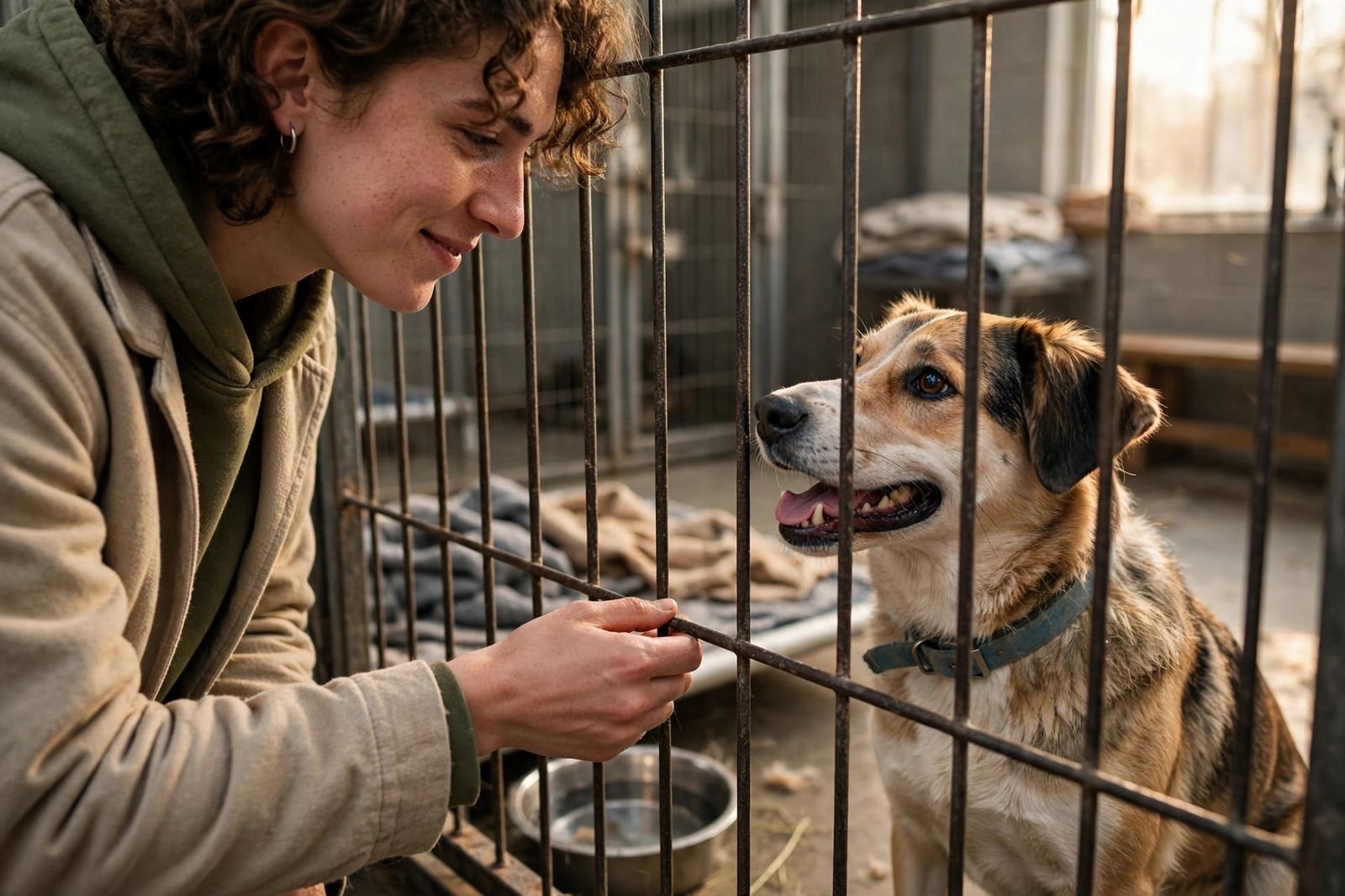

Adopting a Shelter Dog: What to Expect
The typical shelter visit goes like this: the lobby smells like disinfectant and nervous dogs, you walk in trying to look like someone who has it all figured out, and three hours later you are driving home with a trembling, middle-aged mutt pressed against the passenger door like the seat is lava. That drive is the easy part. The next three months rewrite everything most new owners thought they knew about dogs — and it turns out to be one of the best decisions they ever made.
Adopting a shelter dog is different from bringing home a puppy from a breeder in ways that matter. You are getting a dog with a history you will never fully know, habits formed somewhere else, and a stress level that does not show up on day one. None of that is a reason not to adopt — shelter dogs make extraordinary companions — but going in with honest expectations is the difference between a rough first month and a returned dog. Here is what the process really looks like, from choosing the dog to the day it finally feels like home.
Quick Tips
- Most shelter dogs are there through no fault of their own — moves, money, breakups, not behavior.
- Meet a dog at least twice, and ask shelter staff what they are really like day to day.
- Remember the 3-3-3 rule: 3 days to decompress, 3 weeks to learn routine, 3 months to feel home.
- Keep the first week quiet and boring — no parties, no dog parks, no big adventures.
- Expect some regression: house training, appetite, and confidence all dip before they recover.
- An adult shelter dog’s personality is already visible; a puppy’s is still a lottery ticket.
Why Shelter Dogs End Up There
The single most useful reframe for a new adopter: the vast majority of shelter dogs did nothing wrong. The common reasons are painfully human — an owner moved to a no-pets apartment, a landlord changed the rules, money got tight, a relationship ended, a baby arrived and the household panicked, an owner passed away. Behavior surrenders happen too, but they are the minority, and even then the “behavior problem” is often just an under-exercised young dog in an apartment with no plan.
This matters because adopters often arrive braced for a “damaged” dog and misread normal adjustment as deep trauma. A dog that hides for two days is not broken; it is overwhelmed. Start from the assumption of a normal dog in an abnormal situation.
Before You Visit the Shelter
Falling in love with the wrong dog is the classic shelter mistake, and the building is practically designed to make you do it — all those faces, all that hope. A little preparation protects both of you.
Be brutally honest about your life
How many hours is the house empty? Do you actually run, or just like the idea? Apartment or house? Other pets? Kids? A high-energy herding mix is wonderful — for someone who hikes daily. For a first-timer working ten-hour days in a studio, that dog becomes a surrender statistic. Match the dog to the life you have.
Bring the whole household
Everyone who lives with the dog should meet the dog first, including existing dogs on neutral ground. Surprising your household with a new family member is a movie plot, not a plan. Renters: confirm the pet policy in writing — “my landlord is chill” has ended adoptions before they started.
Have the basics ready at home
Have the essentials waiting: food (ask the shelter what they feed — sudden switches cause stomach upset), bowls, collar and leash, an ID tag, a crate or confinement area, and a bed. Starting from zero? My first-time dog owner checklist covers the full supply list.
Choosing the Right Dog
Slow down at the shelter. The dog bouncing off the kennel walls is not necessarily the best fit — kennel behavior is a terrible predictor of home behavior. Stressed dogs shut down or amp up; neither state tells you who they are.
Ask the staff the real questions
Shelter staff know these dogs best. Ask about leash manners, other dogs, cats, kids, mealtimes, and what the foster home reported. Ask about energy level settled — not in the kennel, on a walk. A good shelter answers honestly, including the unflattering parts; be wary of anywhere that calls every dog perfect.
Meet more than once
One visit is a snapshot; two or three are a pattern. Walk the dog if allowed, sit quietly together, and notice whether they check in with you or fixate on everything else. You are not looking for instant magic — just a temperament you can live with and shape.
Consider the overlooked dogs
Puppies get adopted in hours; the dogs who wait are the middle-aged, the shy, the ones with a medical note. These are often the easiest adoptions — an adult dog’s size, energy, and personality are already visible. A four-year-old dog that is house-trained from day one can be the best choice an adopter makes.

The First 72 Hours: Decompression
Here is what nobody warns you about: the dog you met at the shelter is not the dog you brought home, and the dog you brought home is not the dog you will have in three months. Shelter behaviorists talk about the 3-3-3 rule — 3 days to decompress, 3 weeks to learn your routine, 3 months to feel truly at home. The first three days are the strangest.
Expect shutdown: barely eating, no playing, one hiding spot. This is normal. Do not drag them out, flood them with visitors, or take them to the dog park to “cheer them up.” Keep it boring — quiet house, predictable meals, short potty trips. Let the dog come to you; the first tail wag might take days.
Set up confinement from hour one — a crate or a baby-gated room. Not punishment; structure. A new dog with free roam on day one is set up to chew the wrong thing and get overwhelmed. Small world first, bigger world later — my crate sizing guide covers the setup.
The First Month: Routine Is Everything
Dogs, especially stressed ones, are calmed by predictability. Same feeding times, same walk route, same bedtime. Within a couple of weeks you will see the real personality start to surface — and this is when the surprises arrive, both delightful and challenging.
Common surprises, all normal
House training regression. A dog that was clean in foster care may have accidents in your home — different doors, smells, signals. Treat it like puppy training for two weeks: frequent outings, big rewards outside, zero punishment for accidents. My house training guide applies word-for-word to adult adoptees.
The personality unfolds in layers. Week one: angel. Week three: suddenly full of opinions. That is a good sign — the dog feels safe enough to be itself. Adjust your management as the real dog emerges rather than mourning the honeymoon version.
Separation anxiety. A dog that has lost one home may panic when you leave. Build alone-time gradually: short departures, boring exits and entrances. If the panic is severe — destruction, escape attempts — get professional help sooner rather than later.
Resource guarding. Some shelter dogs guard food or toys. Manage it by feeding in a quiet spot and trading up rather than taking things away — and get a trainer’s guidance if it involves people, especially kids.
Training: start day one, keep it kind
Do not wait until “he settles in” to start training — training is settling in. Keep sessions short, reward generously, and start with their name and “sit” (my teaching sit guide covers it). Skip any trainer who talks about dominance or “showing them who’s boss” — fear-based methods are especially harmful for dogs rebuilding trust.

The Vet Visit and the Paperwork
Book a vet checkup within the first week or two, even after a shelter intake exam. Bring every record — vaccination history, spay/neuter certificate, test results. Ask what is due next, and get the microchip transferred to your name immediately; a chip still registered to the shelter is a common, heartbreaking gap. My first vet visit guide covers what to bring and ask.
Also: pet-proof before you need to. A new dog will find the one thing you forgot. Do a floor-level sweep of every accessible room — my pet-proofing checklist walks you through it.
When It Is Harder Than Expected
Some adoptions are hard — bigger behavioral needs than expected. Feeling overwhelmed in month one does not mean you made a mistake, but get help early: a trainer contacted in week three can prevent problems that entrench by month six.
Most shelters would rather help you through a rough patch than take the dog back — ask about post-adoption support before things reach a crisis. And if, after genuine effort and professional help, the fit is truly wrong, returning the dog is a responsible decision, not a moral failure.
But the more common ending: around month three, something shifts. The dog that hid under the table now waits by the door. The trembling first ride becomes a favorite memory, because of everything that came after it.
Frequently Asked Questions
Are shelter dogs damaged or problematic?
Overwhelmingly, no. Most are normal dogs displaced by human circumstances — moves, money, breakups. What you see in the kennel is stress behavior, not personality; the real dog emerges over weeks, not minutes.
Should I adopt an adult dog or a puppy from a shelter?
For most first-time owners, an adult dog is the easier adoption — size, energy, and temperament are already visible. Shelter puppies are wonderful but still puppies: chewing, house training, unknowable personality. Choose based on the life you have.
How long does it take a shelter dog to adjust?
The 3-3-3 rule is the standard guide: about 3 days to decompress, 3 weeks to learn your routine, and 3 months to feel fully at home. Shy or undersocialized dogs can take longer. Progress is rarely linear — expect good weeks and weird setbacks.
What if the adoption does not work out?
Contact the shelter early — most offer post-adoption support or trainer referrals, and they would rather help than take the dog back. If after real effort the fit is genuinely wrong, returning the dog is responsible, not a failure.
Can I adopt a shelter dog if I have cats?
Often yes, but verify rather than assume. Ask specifically for cat-tested or cat-friendly dogs, and do proper slow introductions over days or weeks — not a face-to-face meeting on day one. High prey-drive breeds need extra caution. A good shelter will be honest about which dogs are safe bets with cats.
Do shelters tell the truth about a dog’s behavior?
Reputable shelters do — their reputation depends on successful placements. Ask specific questions (leash manners, kid and cat history) rather than “is he a good dog,” and ask what the foster home reported. Vague answers to specific questions are the red flag.
[…] or playful, good with kids, fine with cats, house-trained, leash manners, noise sensitivities. My shelter dog adoption guide covers the general process, but with seniors the “what am I getting” question has an […]
[…] literal sense, the adoption that saves a life. If you are going the shelter route generally, my shelter dog adoption guide walks through the whole process from application to […]
[…] self-check first: if one pet would stretch your budget, time, or space, two will break it. Read our shelter dog adoption guide to pressure-test your […]
[…] rule isn’t a deadline; it’s permission to be patient. If you’re adopting, our shelter dog adoption guide walks through the whole process from choosing a dog to these first months at […]