
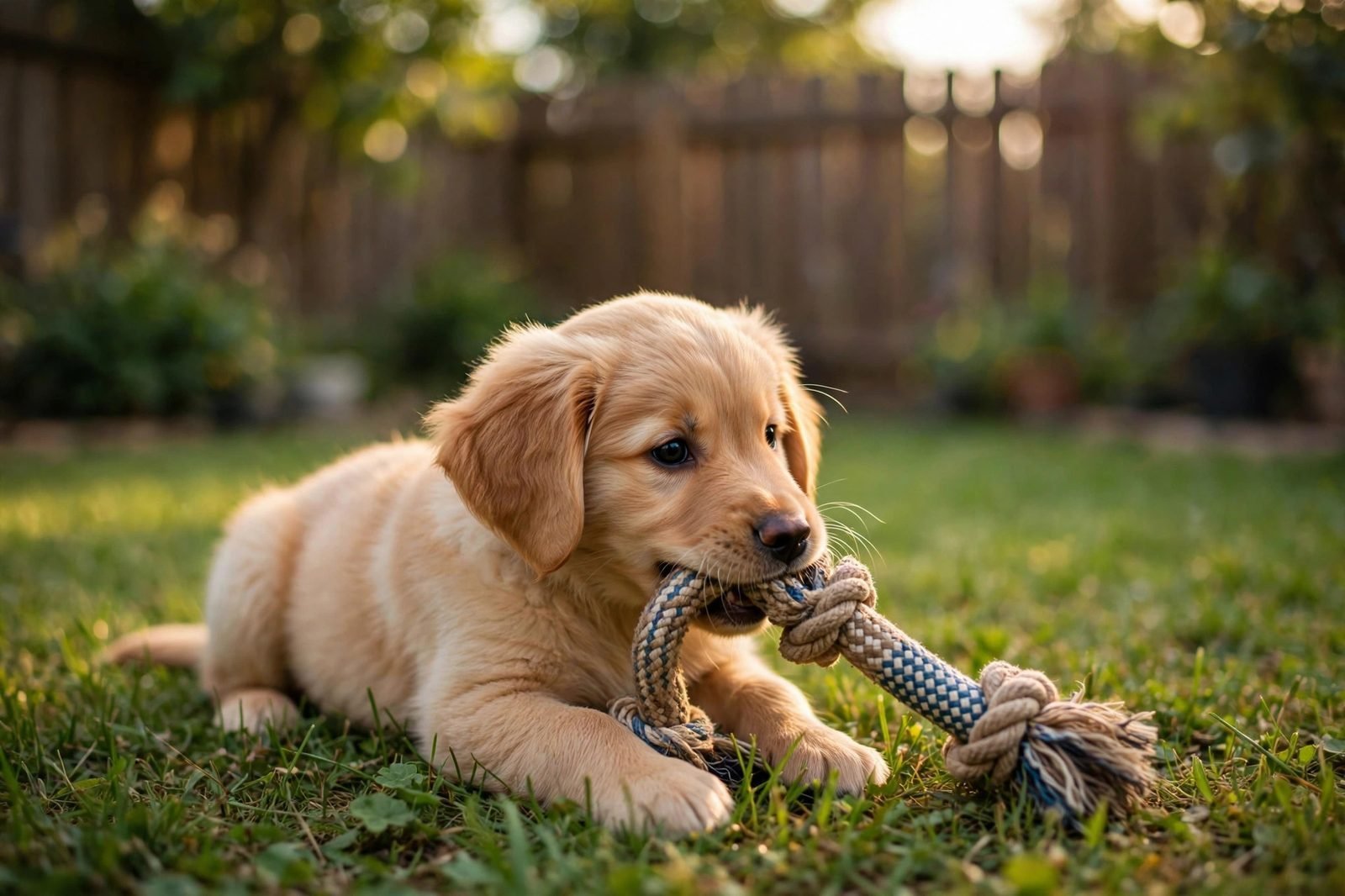

Let me tell you about the worst advice I ever followed. When Biscuit — my sister’s beagle puppy, who I “temporarily” fostered for four months — hit twelve weeks old, a well-meaning guy at the dog park told me the way to tire out a land-shark puppy was a long run. So I took a three-month-old puppy on a forty-minute jog. She was limping slightly the next morning, and the guilt I felt when the vet explained what I had done to her growing joints could have filled a swimming pool.
Biscuit was fine — rest, and a stern talking-to for me, sorted it out. But that scare taught me the thing every puppy owner needs to learn early: puppies are not small adult dogs, and more exercise is very much not better. Here is the age-by-age guide to puppy exercise by age that I wish someone had taped to my fridge in the Biscuit era.
Published: April 24, 2026 | Last updated: April 24, 2026
Quick Tips
- The classic rule of thumb: about 5 minutes of structured walking per month of age, once or twice daily.
- Free play on soft ground counts differently than forced marching — let puppies set the pace.
- Sleep is exercise’s partner: puppies need 18–20 hours of sleep a day. A cranky puppy is usually a tired puppy.
- Avoid repetitive high-impact activity (long runs, stairs, jumping) until growth plates close.
- Mental exercise — training, sniffing, puzzle toys — tires puppies out safely at any age.
- Large and giant breeds mature slower; keep exercise conservative for longer.
Why Puppy Exercise Is a Different Game
Here is the bit of biology that changes everything. A puppy’s bones are still growing, and the ends of those bones — the growth plates — are soft cartilage that does not fully harden into bone until somewhere between 12 and 18 months, depending on breed. Repetitive impact on soft growth plates can cause real, lasting damage: uneven growth, joint problems, early arthritis.
That does not mean puppies should be bubble-wrapped. They need movement for muscle development, coordination, and burning off the maniac energy that makes an under-exercised puppy chew your skirting boards. The trick is the type of exercise. Free play — where the puppy runs, stops, flops, and starts again on its own schedule — is natural and self-limiting. Forced exercise, like leashed walks at your pace or jogging, is where trouble starts, because the puppy will keep going to stay with you long past the point its body wants to stop.
Biscuit taught me this distinction the hard way. After the jogging incident, her vet explained it in one sentence I have never forgotten: “Let her be a puppy on grass; don’t make her be an athlete on pavement.” Everything below follows from that.
8–12 Weeks: The Sniffari Phase
At this age your puppy is basically a tiny drunk person — wobbly, easily exhausted, and asleep before you finish blinking. Formal walks are barely a thing yet, and in many cases your vet will want vaccinations completed before your pup meets the wider world anyway. Those first weeks home are organized chaos — my first-week survival guide covers the routine that gets you both through them in one piece.
What exercise looks like now
Short bursts of free play in the house or garden, 5–10 minutes at a time, several times a day — followed by enormous naps. Gentle wrestling with a soft toy, toddling after a rolling ball, exploring the garden at their own pace: this is plenty.
What to focus on instead
This is the prime socialization window, and it matters more than physical exercise. Carry your puppy places so they see traffic, hear buses, and watch other dogs from a safe distance. Training-wise, this is the age for name recognition, “sit,” and not biting human hands — five-minute training sessions count as serious mental exercise and will flatten a puppy faster than any walk. Housetraining starts now too — my house training guide covers the routine that actually sticks.
3–4 Months: Short Walks Begin
This is where the famous rule of thumb kicks in: roughly 5 minutes of structured, on-leash walking per month of age, once or twice a day. So a 3-month-old gets about 15 minutes; a 4-month-old gets about 20. It sounds absurdly small. It is not — watch a 14-week-old puppy at minute 18 of a walk and you will see the battery die in real time.
How to spend those minutes
Make them count. These early walks are less about distance and more about the world: new surfaces underfoot, traffic sounds, meeting polite strangers, learning that the leash is not a tug-of-war rope. Let the puppy sniff. A 15-minute walk with generous sniffing teaches more and tires more than 15 minutes of marching.
Free play still rules
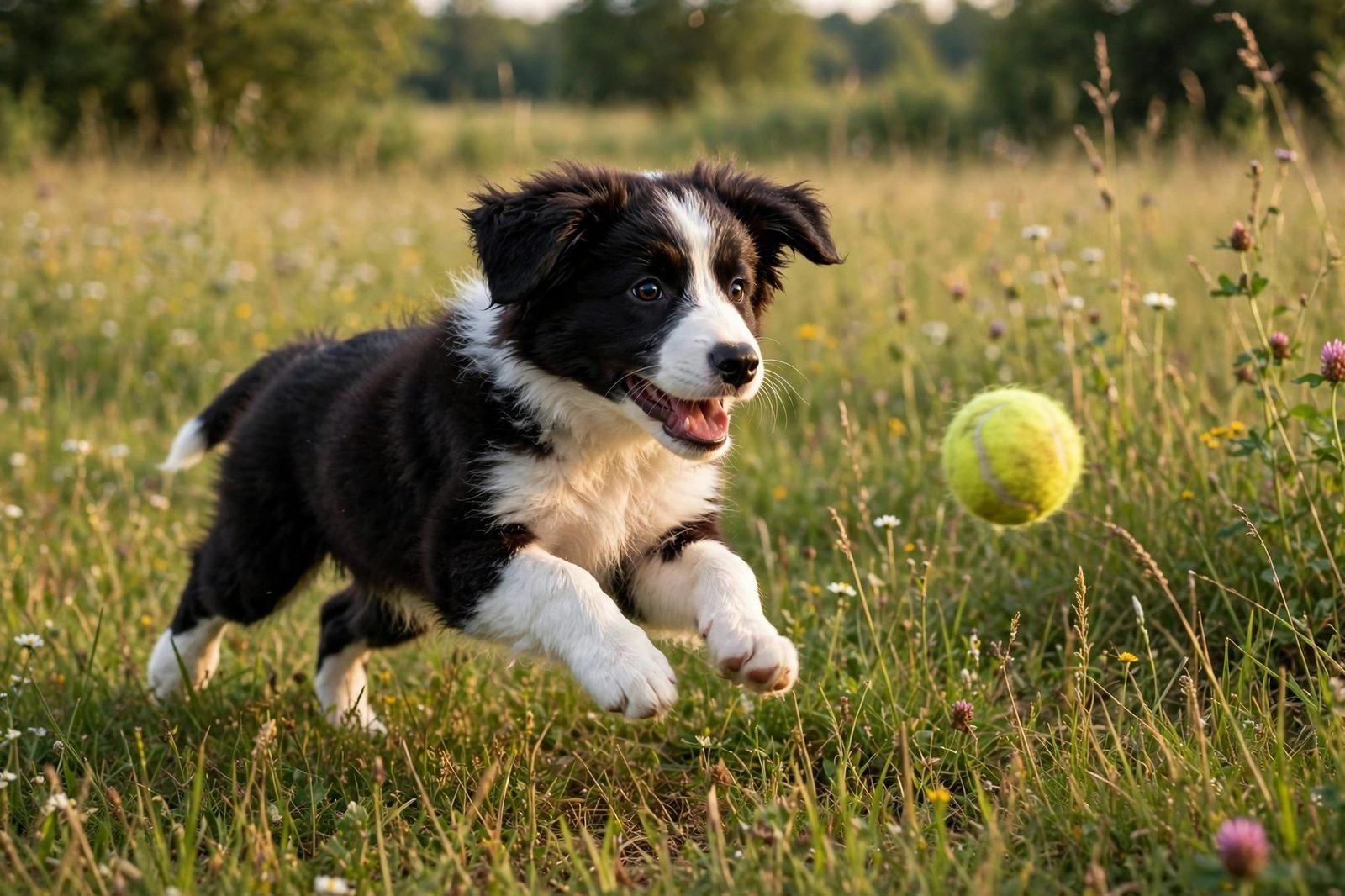
On top of the short walks, puppies this age can have a few play sessions a day in the garden or a safe enclosed area — chasing a ball, gentle tug, romping with a friendly dog. Puppies are terrible at self-regulating when something is exciting, so you be the one who calls the break: when play gets frantic, that is overtiredness talking, not a second wind.
One thing I got wrong with Biscuit at this age: I counted garden zoomies as “not real exercise” and kept adding walks on top. The zoomies were the exercise. Once I stopped stacking structured walks on top of wild free play, the evening witching hour calmed down noticeably. If you are building your general daily rhythm alongside this, the dog care basics guides cover the rest of the routine puzzle.
5–6 Months: Building Stamina Carefully
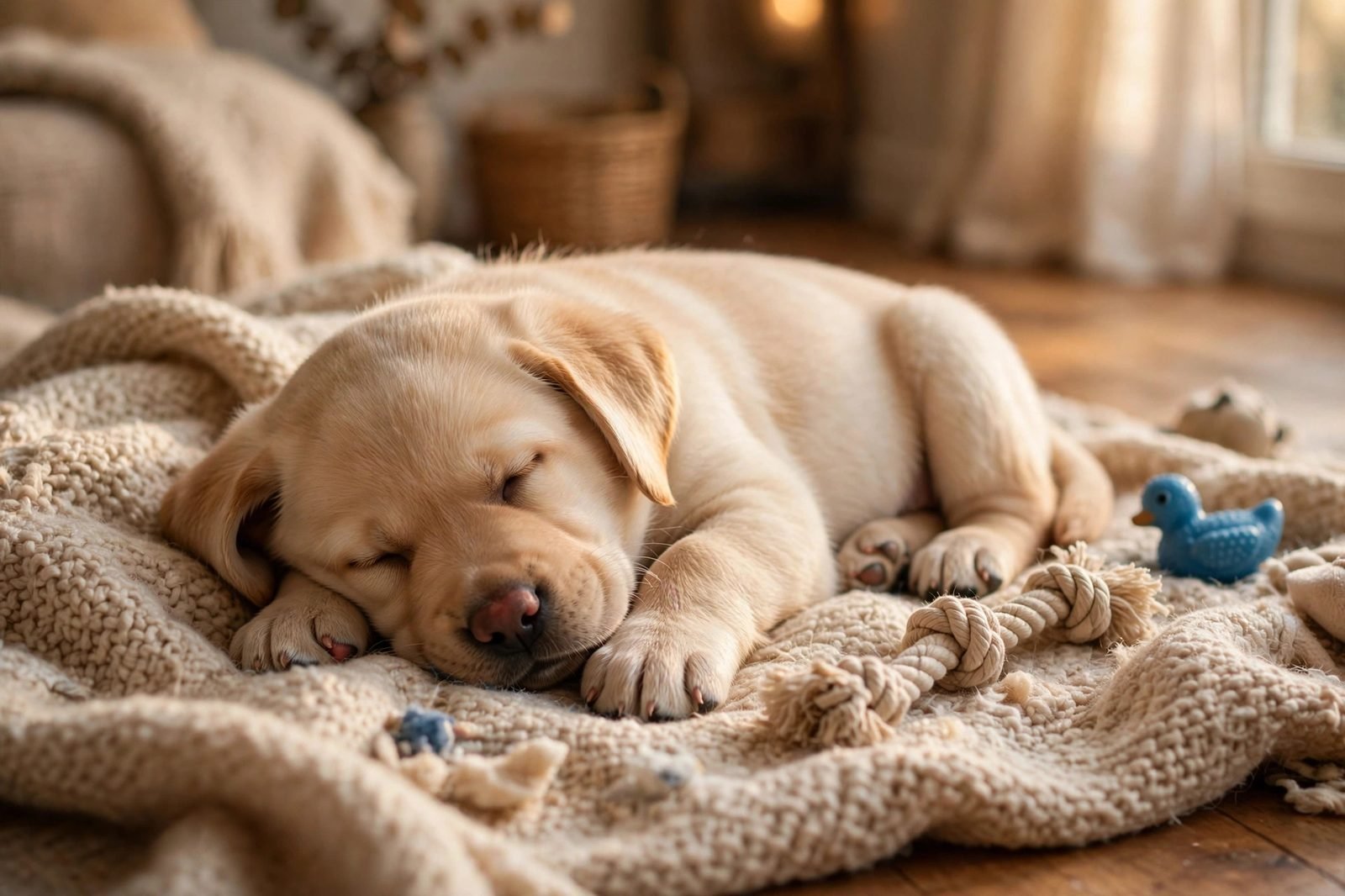
By five or six months, most puppies look like real dogs and act like toddlers hopped up on birthday cake. The rule of thumb now gives you 25–30 minutes of structured walking once or twice a day. Energy is climbing fast, but the skeleton is still very much under construction — this is actually the highest-risk window for over-exercise injuries, because the puppy looks sturdy enough for anything.
What to add
Longer sniff walks, gentle exploration of new routes, and real training as exercise — “stay” practice, recall games in a safe area, find-the-treat nose games. Swimming, introduced gently in warm, clean water, is a brilliant low-impact workout; many vets love it because it builds muscle without pounding joints.
What to still avoid
Running with you on hard surfaces, long hikes, repetitive fetch marathons, agility jumping, and stairs as a workout. A flight of stairs a couple of times a day in a house is normal life; using stairs for exercise is not. Same for jumping in and out of the car — lift them or use a ramp while they are small enough to lift.
7–12 Months: The Teenage Phase
Welcome to adolescence, where your sweet puppy develops selective hearing and the knees of a kangaroo. Exercise needs keep rising — by 8–10 months many puppies handle 40–50 minutes of walking plus play — but growth plates are still closing, especially in medium, large, and giant breeds.
Adjusting by breed size
Small breeds generally finish growing around 10–12 months and can graduate to near-adult exercise sooner. Medium breeds land around 12–14 months. Large and giant breeds may not finish until 18–24 months — with a big-breed puppy, keep exercise conservative well into the second year. When in doubt, your vet can tell you where your specific dog is in its growth.
Channeling teenage energy
This is the age where under-exercised puppies become destructive teenagers. The fix is not longer forced marches — it is variety. Mix walks with training sessions (mental work exhausts adolescents), safe off-leash time in enclosed areas, play dates, and nose games. A 45-minute walk plus a 15-minute training session beats a 90-minute slog for a teenage brain.
Signs You’re Overdoing It
Puppies will not file a complaint; they will just keep going until something gives. Watch for these instead:
During exercise
Lagging behind, lying down and refusing to move, heavy panting that does not ease with a short rest, or stumbling. Any of these means stop, rest, and head home — and shorten the next outing.
After exercise
Excessive soreness or stiffness the next day, limping, reluctance to play, or sleeping so deeply they are hard to rouse. A well-exercised puppy naps contentedly; an over-exercised puppy crashes like it has been sedated. And here is the counterintuitive one: a puppy that gets wilder after exercise is often overtired, not under-exercised.
When to call the vet
Any limping that lasts more than a day, visible swelling, yelping when touched, or a puppy that suddenly will not bear weight on a limb — do not wait and see. Puppies hide pain well, so visible pain means it is significant. I am not a vet; this is the “when in doubt, call the professional” rule that has never steered me wrong.
Mental Exercise: The Secret Weapon
If I could go back and tell new-puppy-owner me one thing, it would be this: a tired brain beats tired legs, and it is infinitely safer. Fifteen minutes of training or nose work will settle a puppy more than twice the walk time, with zero joint risk.
The greatest hits, all puppy-safe from early on: scatter feeding (toss kibble in grass and let them hunt), snuffle mats, frozen stuffed Kongs, “find it” games, five-minute trick sessions, and cardboard boxes with treats inside for supervised destruction. Rotate them so they stay novel. On rainy days, a circuit of three or four of these replaces a walk entirely.
This is also where you build the dog you want later. Every training session is exercise and education. The recall game you play at five months is the off-leash freedom you enjoy at two years. Think of mental exercise as compound interest — boring to describe, magical in the returns. For the bigger picture of raising a happy, healthy dog from day one, start at the PawsGuide homepage and work through the basics at your own pace.
Frequently Asked Questions
How long should I walk my 3-month-old puppy?
About 15 minutes of structured, on-leash walking, once or twice a day — the 5-minutes-per-month-of-age guideline. Add free play and short training sessions on top, and let the puppy rest whenever it flops. The limit exists to protect growing joints, not because puppies get bored at minute sixteen.
Can I take my 8-week-old puppy for a walk?
Real walks in public places usually wait until vaccinations are done — typically around 12 weeks, but follow your vet’s advice. Before that, carry your puppy out to see the world, and let them explore your own garden freely.
Is it bad to over-exercise a puppy?
Yes — repetitive high-impact exercise on soft growth plates can contribute to joint problems years later. Puppies will not self-limit when having fun, so the human must enforce rest.
How much sleep does a puppy need?
Far more than new owners expect: 18–20 hours a day for young puppies, including naps. Sleep is when growth hormone does its work, so a puppy that is not getting enough sleep will be cranky, bitey, and harder to train — exactly like an overtired toddler.
When can my puppy start running with me?
For sustained running on hard surfaces, most vets suggest waiting until growth plates close — around 12 months for small breeds, 14–18 months for large breeds. Start with short intervals on soft ground and build gradually, and check with your vet first.
Does playing in the garden count as exercise?
Absolutely — and it is the best kind for young puppies. Free play lets the puppy control its own pace: sprint, flop, sniff, repeat. That self-regulation is exactly what protects growing bodies. So yes, garden zoomies are real exercise; you do not need to add a long walk on top of them.
[…] treat for curiosity, and move on when they are ready. Once those first walks are going well, my puppy exercise guide shows how to build stamina safely, month by […]
[…] puppy into the ground to balance extra food. Growing joints need care. I’ve written about how much exercise a puppy needs, and the short version is: multiple short sessions beat one long one, and the right amount depends […]
[…] ankle-biting. Getting the amount right matters — overtired is as bad as under-exercised — and how much exercise a puppy needs helped me calibrate, because “tire them out” is terrible advice without […]
[…] feeding questions, the stuff that never fit into a Google search. If you’re wondering how much exercise a puppy needs at this age, or when puppies can go outside safely before they’re fully vaccinated, your […]
[…] a lifetime. Speaking of early days, getting the walking gear right pairs naturally with knowing how much exercise a puppy needs so you’re not overdoing it while the joints are still […]