
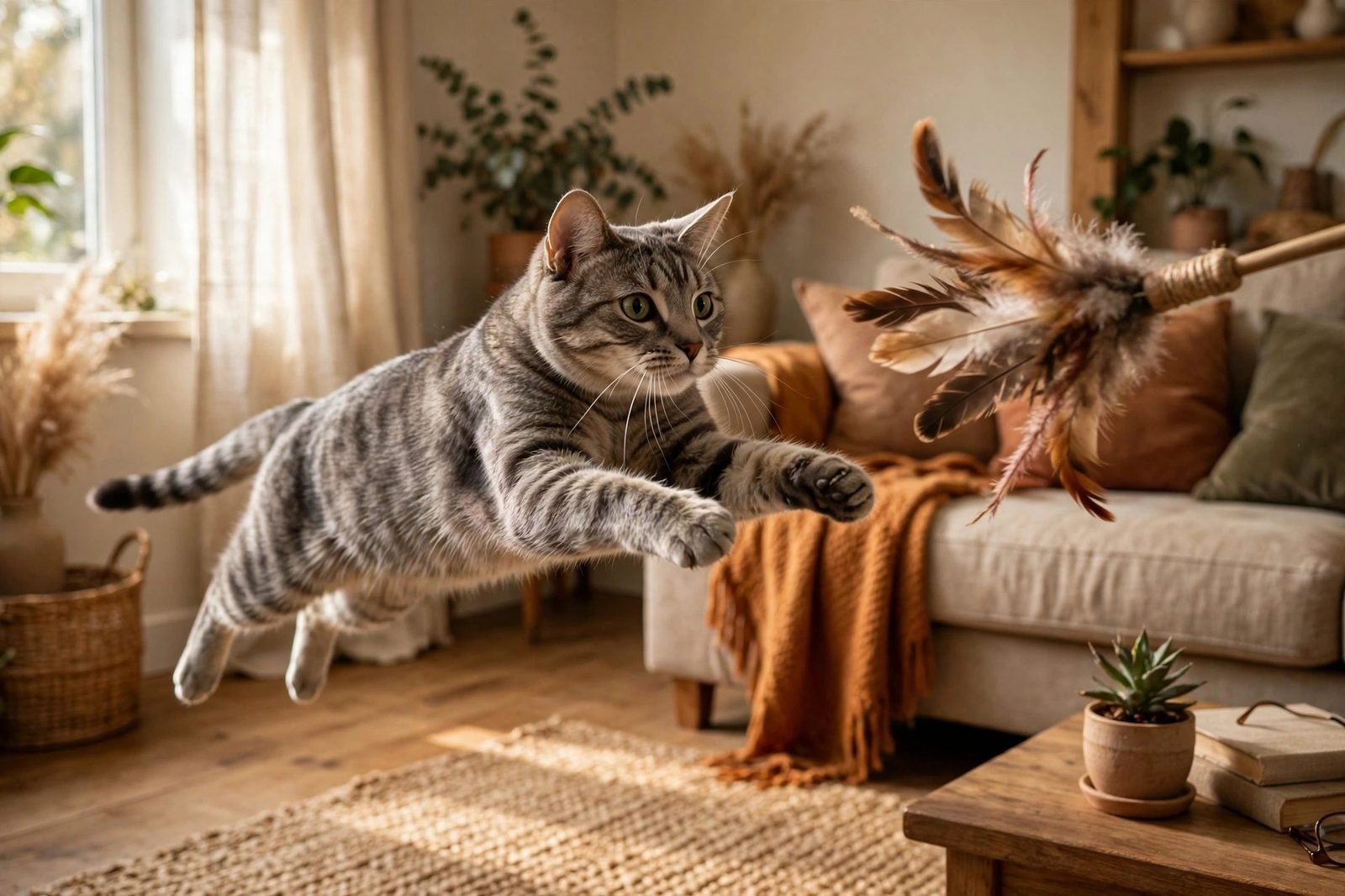

My cat Miso once spent an entire afternoon staring at a wall. Not a fly on the wall, not a shadow — just the wall. And then, at 3 a.m., she sprinted down the hallway like she was being chased by ghosts, knocked a plant off the bookshelf, and yowled at the bedroom door until I got up. That’s when it clicked: my cat wasn’t weird. She was bored out of her mind.
Indoor cats live safer, longer lives than outdoor cats — that’s not even a debate, and if you’re weighing the two lifestyles, my piece on indoor vs outdoor cats lays out the full comparison. But the trade-off is real: the average apartment doesn’t offer much in the way of hunting, stalking, or exploring. Without an outlet, all that predator energy has to go somewhere, and “somewhere” usually means your curtains, your ankles, or the aforementioned 3 a.m. hallway sprints.
Over the years I’ve bought — and my cats have thoroughly evaluated — dozens of toys. Some were instant hits. Many were expensive dust collectors. This is the honest shortlist of toys for indoor cats that actually get played with in my house, plus the rotation trick that keeps them interesting and the cheap DIY options that embarrass the fancy ones.
Published: May 19, 2026 | Last updated: May 19, 2026
Quick Tips
- Wand and feather toys beat everything for bonding — 10–15 minutes a day is plenty.
- Rotate toys weekly; a “new” toy is just an old one they haven’t seen in a while.
- Puzzle feeders turn mealtime into hunting time and slow down fast eaters.
- Catnip works on about 50–70% of cats — try silvervine if yours is unimpressed.
- The box the toy came in will probably get more love than the toy. Accept this.
- Retire any toy with loose strings, small detachable parts, or torn seams.
How to Tell If Your Indoor Cat Is Actually Bored
Cats don’t file complaints, so you have to read the signs. Miso’s wall-staring was one. Here are the classics I see over and over:
The 3 a.m. zoomies. A cat who sleeps all day and explodes at night isn’t nocturnal by nature — they’re under-stimulated. A good evening play session before bed works wonders. I do 15 minutes with the wand toy around 10 p.m., and the difference in overnight chaos is night and day.
Destructive “creativity.” Shredded toilet paper, knocked-over everything, clawed furniture that a scratching post sits untouched next to. Bored cats manufacture their own entertainment, and their taste in entertainment is terrible.
Overeating or obsessive grooming. Some cats eat out of boredom just like people do. Others lick themselves raw. If your vet has ruled out medical causes (always the first step), enrichment is the next thing to try.
Aggression out of nowhere. The ankle ambush. The swat at your hand for no reason. Often that’s not a “bad” cat — it’s a hunter with nothing to hunt, redirecting onto the nearest moving target, which is you.
The Toy Categories That Actually Work
After years of trial and error, every toy worth buying falls into one of four buckets. You don’t need all of them, but a mix of at least two or three keeps things interesting.
1. Interactive Wand Toys (The Non-Negotiable)
If you buy one thing from this entire article, make it a wand toy — a stick with a string and feathers or fabric at the end. This is the closest thing to actual hunting your indoor cat will experience, and it’s the toy that builds your relationship too. Miso goes from zero to full predator mode in about four seconds flat when the feather wand comes out.
The trick is how you move it. Don’t dangle it in their face — drag it along the floor like prey trying to escape, let it “hide” behind furniture, make it flutter and pause. End the session by letting them “catch” it, then feed a small meal or treat. That hunt-catch-eat sequence is deeply satisfying to a cat’s brain. Ten to fifteen minutes, once or twice a day, and you’ve solved half of all boredom problems right there.
2. Puzzle Feeders (Dinner Becomes a Game)
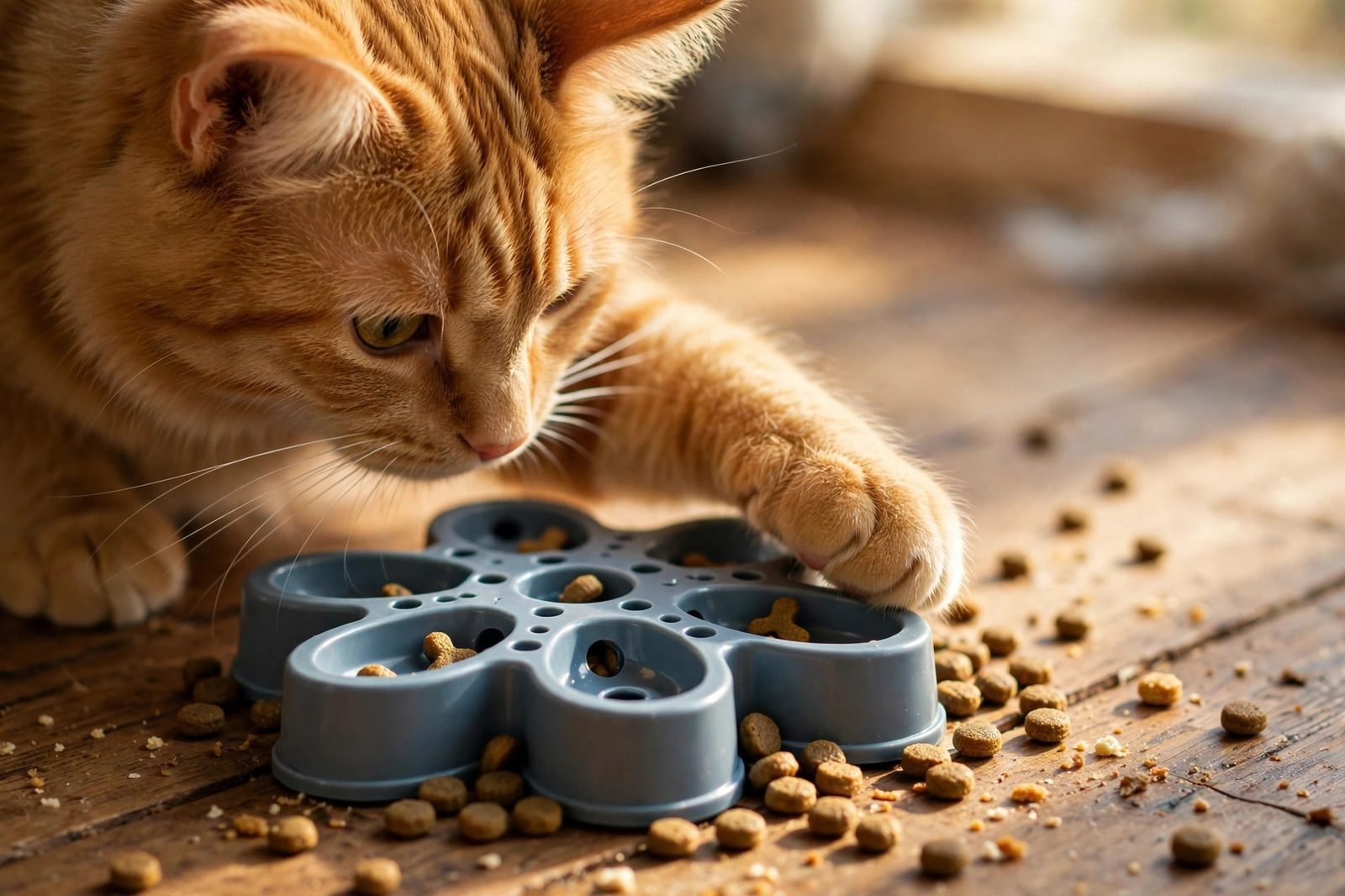
In the wild, cats work for their food — stalking, chasing, pouncing. In our homes, we dump kibble in a bowl and call it a day. Puzzle feeders close that gap: your cat has to bat, roll, or fish the food out. It slows down speed-eaters, burns mental energy, and genuinely seems to make meals more satisfying.
Start easy. A muffin tin with kibble in the cups and a ball on top of each one is a perfect beginner puzzle. If your cat takes to it, graduate to rolling treat balls or the more elaborate maze-style feeders. My older cat, Bean, took to puzzle feeding instantly; Miso stared at hers like I’d insulted her and needed the easiest version for a week. Every cat learns at their own pace.
3. Solo Toys (For When You’re Not Home)
Wand toys are great, but you can’t be the entertainment director 24/7. Solo toys fill the gaps: crinkle balls, small stuffed mice, springs that bounce unpredictably down the hallway. Miso’s all-time favorite solo toy is a cheap pack of fuzzy mice she carries around like kittens, chirping.
Catnip mice deserve a mention, but manage expectations: catnip sensitivity is genetic, and roughly a third to half of cats don’t react to it at all. Bean couldn’t care less about catnip. Silvervine sticks, on the other hand, get a reaction from a much higher percentage of cats, and they’re cheap to try. If your cat ignores catnip, don’t assume they’re broken — try silvervine before giving up on herbal enrichment.
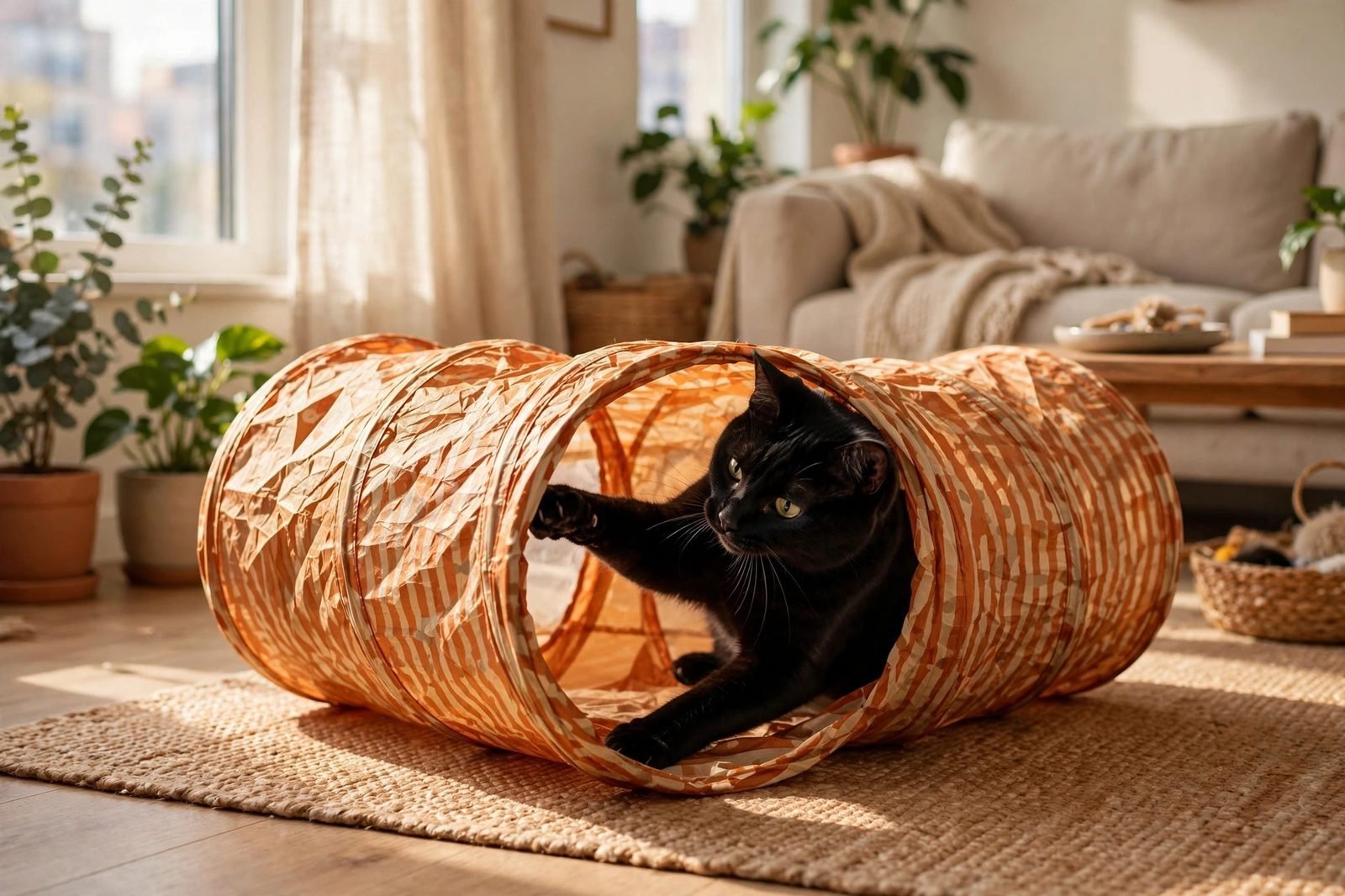
One more solo winner: tunnels. The crinkly collapsible kind. Cats love running through them, hiding in them, and ambushing innocent passersby from inside them. Ours lives permanently unfolded in the hallway because every time I fold it away, someone stages a protest by sitting exactly where it was.
4. Catnip, Silvervine & Sensory Toys
Beyond the classics, there’s a whole world of sensory enrichment: snuffle mats sprinkled with treats, lick mats smeared with a little wet food (great for anxious cats), and even cat grass pots for nibbling. Miso goes through phases with cat grass — ignores it for a month, then demolishes it in a weekend. Indoor cats especially benefit from safe greens since they can’t graze outside.
The Rotation Trick That Saves You Money
Cats habituate — a toy that’s always available becomes furniture. Put two-thirds of the toys in a closet, leave a few out, and swap them every week or two. Every rotation feels like Christmas morning. Miso once greeted a toy she’d ignored for months like a long-lost friend.
This also stretches your budget. Instead of buying new toys monthly, you’re just re-releasing old ones. I keep a small bag in the hall closet for this — the system works embarrassingly well.
DIY Toys That Beat the Expensive Ones
I’m going to be honest: some of the most-played-with “toys” in my house cost literally nothing. Before you spend money on a motorized gadget, try these:
The box. Obviously. Leave a cardboard box on the floor and watch what happens. Cut a couple of holes in the sides and you’ve built a fortress. I’ve watched my cats ignore an expensive cat tree in favor of the box it shipped in.
Paper bags. The rustle drives them wild. (Remove the handles first — they can get tangled.) Crumple a piece of packing paper into a ball and you’ve got a toy with better physics than most store-bought options.
Toilet roll puzzles. Fold one end of an empty roll, drop in a few treats, fold the other end. Instant puzzle feeder. Slightly more advanced: cut holes in a sealed box, put treats inside, let the cat fish them out.
Ice cubes in the bathtub. A cat batting an ice cube around an empty tub is pure joy — for them and for you. Supervise, and skip it if your cat hates water-adjacent situations.
Toys to Skip (or at Least Supervise)
Not everything marketed to cat owners is a good idea. A few honest warnings from experience:
String, yarn, and ribbon toys left unattended. Cats love them, but swallowed string can cause serious intestinal problems. Wand toys are for supervised play only — put them away when you’re done. This is the one safety rule I never bend.
Laser pointers as the only toy. Fun in the moment, but the cat never gets the satisfaction of catching anything. If you use one, end by tossing a real toy they can “catch,” or lead the dot to a hidden treat. Never shine it near eyes.
Tiny toys with glued-on parts. Eyes, bells, and noses that can be chewed off become choking hazards. Squeeze-test new toys — if a part feels like it could come off, it will.
Anything that smells strongly of chemicals. Cheap toys sometimes arrive reeking of plastic fumes. Air them out for a day or two; if the smell doesn’t fade, bin them. Cats’ noses are far more sensitive than ours.
Frequently Asked Questions
How many toys does an indoor cat need?
Honestly, fewer than the pet store wants you to believe. A good wand toy, a few solo toys, and a puzzle feeder cover 90% of it — especially if you rotate them. I’d rather see a cat with five well-chosen toys in rotation than thirty toys scattered around gathering dust. Quality of play matters more than quantity of stuff.
Why does my cat ignore expensive toys?
Because cats are contrarians with fur. Texture, smell, and movement preferences vary wildly — Miso adores feather wands and ignores electronic toys; Bean is the opposite. If a toy flops, try a different category, or try again after a month in the closet. And remember the box rule: the packaging is often the real gift.
Are puzzle feeders good for overweight cats?
They can genuinely help. Puzzle feeders slow down eating and add mental and physical activity to mealtimes, which supports healthy weight management alongside proper portion control. Start with easy puzzles so your cat doesn’t get frustrated and give up. As always, if your cat is significantly overweight, talk to your vet about a feeding plan — toys support the plan, they don’t replace it.
My cat kneads everything — is that related to boredom?
Not usually. Kneading is a comfort behavior most cats carry over from kittenhood — it’s a sign of contentment, not boredom. My Miso kneads her favorite blanket every evening before settling down. If you’re curious about the behavior, I wrote about why cats knead in more detail. Boredom looks more like destruction, night zoomies, and ankle ambushes.
How often should I play with my indoor cat?
Aim for at least one focused session of 10–15 minutes daily, ideally in the evening to burn off energy before bed. Two shorter sessions are even better. The key word is “focused” — you actively working the wand toy like prey, not waving it while scrolling your phone. They can tell the difference.
Is it okay for indoor cats to play rough?
Rough play with toys is great — let them kick, bite, and bunny-thump a stuffed toy all they want. Rough play with your hands is where problems start: a kitten biting fingers is cute, but an adult cat with the same habit is not. Always redirect hand-biting onto a toy. If your cat gets overstimulated during play (dilated pupils, twitchy tail, sudden biting), end the session calmly and try again later.