
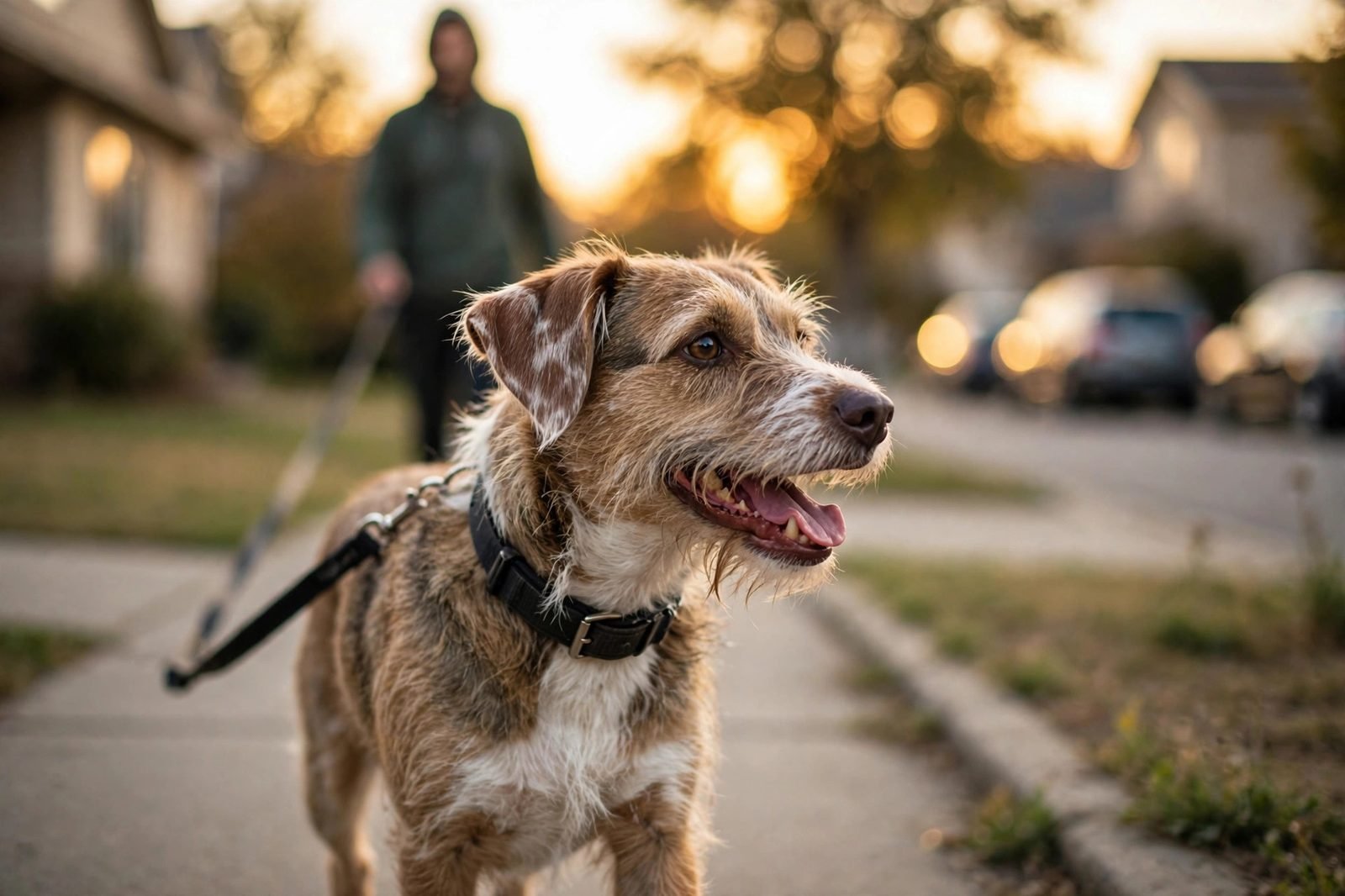

Every morning at 6:40, my alarm goes off and roughly four seconds later, a cold nose touches my elbow. That is Rusty — a scruffy terrier mix with the timekeeping skills of a Swiss train station. When I first brought him home, I thought walks were simple: take him out when he looked restless. Within two weeks my shoes were chewed, my sleep schedule was wrecked, and a neighbor asked if my dog “always yelled like that.” He did not always yell like that. He yelled like that because he was bored out of his skull, and I had no idea how much walking he actually needed.
Figuring out how often to walk your dog is one of the first real puzzles of dog ownership, and the honest answer is less one-size-fits-all than most people hope. A senior bulldog and a teenage border collie are not playing the same sport. What follows is everything I learned the long way — through over-tired puppies, under-walked terriers, muddy shoes, and eventually, a routine that keeps everyone sane.
Published: April 23, 2026 | Last updated: April 23, 2026
Quick Tips
- Most healthy adult dogs need at least 1–2 walks a day, 30 minutes minimum each.
- High-energy breeds may need 2+ hours of activity daily; low-energy breeds can be fine with less.
- Two shorter walks beat one long one for most dogs — morning and evening works well.
- Puppies and seniors need shorter, gentler walks; adjust for age and joints.
- Hot pavement, icy ground, and extreme heat change the rules — walk early or late.
- A tired dog is a good dog, but a wired dog usually needs mental exercise too, not just miles.
The Short Answer (and Why It Comes With an Asterisk)
If you want a number to start with: most healthy adult dogs need a minimum of two walks a day, at least 30 minutes each. That is the baseline. For a medium-energy adult dog — think labrador, beagle, standard poodle — that baseline keeps weight in check, burns off restlessness, and gives enough bathroom breaks to avoid accidents indoors.
Here is the asterisk, though. “Most dogs” is doing a lot of heavy lifting in that sentence. When a friend’s husky stayed with us for a weekend, my Rusty’s usual hour left her dog looking deeply insulted. Some dogs are built for marathon work, and two polite neighborhood laps are a warm-up, not a workout.
On the flip side, when Rusty tore a ligament at age nine and spent six weeks on restricted movement, his vet had him down to three 10-minute sniffy strolls a day — and he was perfectly content. Age, breed, health, and individual personality all move the dial. The number below is a starting point; your dog will tell you the rest.
Walking Frequency by Breed Energy Level
Breed is the single biggest predictor of how often your dog needs to walk. Not a perfect predictor — I have met a lazy vizsla and a greyhound that acted like a cat — but the best shortcut we have.
High-energy breeds: 2–3 walks, 90+ minutes total
Border collies, huskies, Australian shepherds, German shorthaired pointers, Jack Russell terriers, and most working breeds fall here. These dogs were developed to run, herd, or hunt for hours — give a border collie a single 20-minute stroll and you have teased it, not walked it. Skip a day and you will pay in chewed furniture and operatic whining.
Medium-energy breeds: 2 walks, 60 minutes total
Labradors, golden retrievers, beagles, standard schnauzers, cockapoos, and most spaniels. This is where Rusty sits. Two solid walks — one in the morning, one in the evening — plus some playtime, and he is a gentleman. This is also the group most beginner owners land in, which is convenient, because this routine fits a normal workday.
Low-energy breeds: 1–2 walks, 30–45 minutes total
Bulldogs, basset hounds, shih tzus, pugs, and most giant breeds like mastiffs. These dogs conserve energy like it is a precious resource, because for them it is. One or two gentle walks a day keeps them fit without asking more of their joints and breathing than they can comfortably give. Do not let the couch-potato reputation fool you, though — skipping walks entirely still leads to weight gain and stiffness.
And if you have a rescue mix with no clear breed? Watch the dog, not the pedigree. After two weeks of consistent walking you will know: a dog that bounces off the walls at 9 p.m. is under-walked. For more breed-specific guidance as your routine develops, browse the dog care basics section — it is built for exactly this kind of everyday question.
Age Changes Everything
A puppy, an adult, and a senior dog have completely different walking needs, and getting this wrong is one of the most common beginner mistakes I see.
Puppies: short and frequent
Puppies need lots of outings but very short walks — think 5 minutes of walking per month of age, once or twice a day, as a rough guide. An 8-week-old pup is not going on a hike; it is going on a sniffari around the block. Growing joints are vulnerable to repetitive pounding, and an over-walked puppy will not complain — it will just quietly accumulate damage you notice at age six. Multiple tiny walks also double as bathroom training, which is the real win at this age. If you want the full breakdown of safe exercise limits as your pup grows, see my puppy exercise by age guide.
Adults: the standard routine
From about 18 months (longer for large breeds, whose growth plates close later), your dog is ready for the full adult routine described above. This is the golden era of walking: your dog has stamina, coordination, and an attention span that can handle a real route.
Seniors: shorter, slower, just as important
Dogs over 7–8 (earlier for giant breeds) still need daily walks, but shorter and gentler. Twenty minutes of slow sniffing does more for an old dog than an hour of marching. Watch for lagging behind or stiffness after walks — signals to shorten the route. If anything about your senior dog’s mobility changes, talk to your vet rather than guessing.
How to Tell If You’re Walking Enough (or Too Much)
Dogs are not subtle. They just communicate in a language most of us take a while to learn. Here is the translation cheat sheet I wish someone had handed me on day one.
Signs your dog needs MORE walking
Excessive barking at nothing, pacing, destructive chewing, zoomies at midnight, jumping on guests, and that special whine that sounds like a kettle. Rusty’s tell was always the “hallway laps” — full-speed circuits of the apartment at 11 p.m. More daytime walking fixed it within two days, every time.
Signs your dog needs LESS walking
Refusing to continue, lying down mid-walk, excessive panting long after stopping, limping, or sleeping so hard afterward they look sedated rather than satisfied. Puppies are the classic over-walked group: they will run until they drop because they do not know how to pace themselves. You have to be the adult in the relationship.
Walks Are Not Just Exercise
This is the part nobody told me, and it changed everything. A walk is three things at once: physical exercise, bathroom break, and — most underrated — a sniffing expedition. A dog’s nose is its window on the world. Letting your dog stop and smell things is not indulgence; it is the point.
I used to march Rusty around the block like a drill sergeant, tugging the leash every time he stopped. He came home physically tired and mentally wired. Then a trainer friend told me to try a “sniff walk” — same route, but he leads and I follow his nose. Twenty minutes of sniffing tired him out more than forty minutes of marching. If your dog is walked but still restless, the missing ingredient is often nose work, not miles. And if your dog pulls like a sled dog on the lead, the gear makes a bigger difference than you would think — my collar vs harness guide walks through which suits pullers best.
Weather will wreck the schedule. In summer, walk early morning or late evening and check pavement with the back of your hand — if it is too hot for you, it is too hot for paw pads. On truly miserable days, an indoor play session plus a short potty outing is a perfectly fine substitute. Consistency over the week matters more than perfection on any single day. If you want a broader grounding in the everyday rhythms of dog ownership, the PawsGuide homepage is a good place to start exploring.
Building a Routine That Actually Sticks
The best walking schedule is the one you will keep. Here is the routine that finally worked for us, built around a normal workday:
Morning walk (before or after breakfast)
Thirty minutes, brisk pace. This is the business walk — bathroom, energy burn, and it sets a calm tone for the day.
Midday break (if possible)
A quick 10–15 minute potty outing. Not everyone can do this — if you work away from home, a dog walker or a midday check-in from a neighbor is worth every penny. Puppies and seniors genuinely need it.
Evening walk (the long one)
Thirty to forty-five minutes, slower pace, generous sniffing allowance. This is the walk that prevents midnight hallway laps. In summer I push it past sunset; in winter it is a headlamp situation.
The secret is not the exact times; it is the predictability. Dogs are creatures of habit, and a dog that knows the evening walk is coming can relax the rest of the day. Within three weeks of a consistent schedule, Rusty’s mystery whining dropped by about ninety percent. The remaining ten percent is terrier.
Frequently Asked Questions
Is one walk a day enough for a dog?
For some low-energy adult dogs, one decent walk plus yard time or indoor play can be enough. For most dogs, though, one walk a day is the minimum survival ration, not the ideal — bathroom needs alone usually argue for at least two outings. If one walk is all your schedule allows, make it a good one (45+ minutes) and add play or training at home.
How long should each dog walk be?
Thirty minutes is the standard useful walk for a healthy adult dog. Forty-five to sixty minutes is a great main walk for medium and high-energy breeds. Puppies need much less — around 5 minutes per month of age per walk. Seniors do best with 15–25 gentle minutes. Quality matters as much as quantity: a sniff-rich 30 minutes beats a forced march of the same length.
Do dogs need walks every single day?
Ideally, yes — daily walks keep weight, digestion, joints, and behavior on track. Realistically, life happens. Missing one day occasionally will not ruin anything. On bad-weather days, swap the walk for indoor play, training games, or puzzle feeding so the routine does not fully collapse.
Can you walk a dog too much?
Yes — especially puppies, seniors, flat-faced breeds, and dogs with joint issues. Signs include reluctance to start, lying down mid-route, limping, and soreness the next day. Puppies are the biggest risk group because they will keep going past their limit. When in doubt, shorter is safer, and persistent lameness deserves a vet visit.
Is it better to walk before or after meals?
Either works for most dogs, but avoid vigorous exercise immediately around meals — give it at least 30–60 minutes after a big meal before a hard walk or run. A gentle potty stroll right after eating is fine and actually helps digestion.
Do small dogs need fewer walks than big dogs?
Not necessarily — size and energy are different things. A Jack Russell needs far more walking than a Great Dane. Match the walk to the breed’s energy and the individual dog, not the size. Small dogs still need the outing for bathroom breaks, sniffing, and mental stimulation.
[…] is built into the daily routine in a way a cat’s isn’t. I’ve written about how often you should walk your dog, and the underlying principle is the same: regular, predictable activity beats occasional […]
[…] routine involves a lot of outdoor time, paw wipes after walks (which I also mention in my guide on how often to walk your dog) cut down on full baths enormously — most daily dirt lives on the paws, not the whole […]
[…] down. Dogs who walk daily on pavement or concrete — I go into walking routines in my guide on how often to walk your dog — often need trims far less frequently, because the rough surface files the nails with every […]
[…] — I’d been under-employing him. If you’re unsure of the baseline, my guide on how often to walk your dog covers what different dogs […]
[…] and makes the first few hours much smoother. For guidance on tiring out different energy levels, my dog walking guide breaks it down by breed […]
[…] beats one heat emergency every time. For the full breakdown of matching exercise to conditions, my dog walking guide covers how to adjust by breed and energy […]